In the marketing landscape of 2026, the distance between a raw product idea and a live, lead-generating asset has shrunk from weeks to minutes. We have officially exited the era of "Copilots"—those helpful but passive assistants—and entered the age of the autonomous agent. Today, a single founder or growth marketer can orchestrate a full-scale Go-To-Market (GTM) strategy using agentic marketing workflows that execute while they sleep.
According to recent market projections, the global AI in marketing sector is set to reach $41 Billion by the end of 2026, growing at a rapid CAGR of 26.7%, as reported by Bayelsa Watch. This shift isn't just about speed; it's about autonomous lead generation and efficiency. Mature AI programs are now seeing a 68% increase in lead volume compared to traditional methods, with companies earning an average of $5.44 for every $1 invested in AI automation platforms.
The Shift from Assistive AI to Autonomous Agents
The defining characteristic of 2026 is the "Agentic" capability. Tools no longer just suggest copy; they execute workflows. Industry legend Scott Brinker notes that 90.3% of marketing organizations now utilize AI agents within their stack. These agents function as digital employees capable of reasoning through failures and adjusting tactics autonomously.
Traditional funnels relied on linear, manual steps that took 2–6 weeks to build. The AI Marketing Funnel 2026 model focuses on "Agent Swarms"—where a Strategy Agent briefs a Creative Agent, who is then vetted by a Compliance Agent—all without a single human prompt. This has led to a 37% reduction in costs and a massive 5x increase in content production speed, according to research from AnyRoad.
"The funnel is no longer a linear journey; it's a living ecosystem that predicts when a user will loop back into the brand experience."
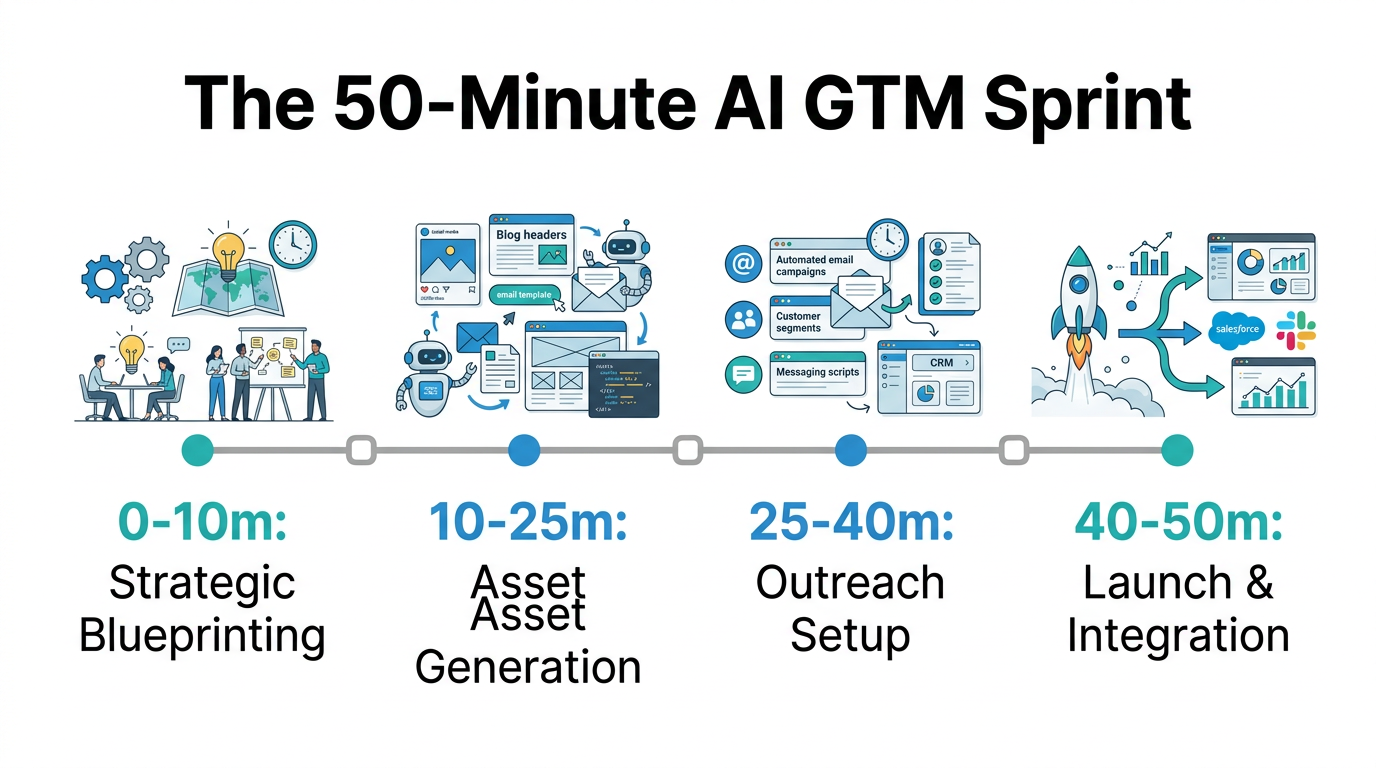
Step 1: Strategic Blueprinting (Minute 0–10)
The first ten minutes of your sprint are dedicated to Automated GTM Strategy. You cannot build an effective funnel without knowing exactly who you are targeting and where they reside online. In 2026, we've moved past generic personas into hyper-specific behavioral mapping.
Start by using SparkToro to identify the exact digital hangouts of your target audience. Instead of guessing, you get a data-driven map of the podcasts they listen to, the newsletters they read, and the influencers they trust. Once you have this data, feed it into HubSpot Breeze. Breeze’s Autonomous Prospecting Agent will instantly generate an Ideal Customer Profile (ICP) and map out the necessary funnel stages based on current market intent signals.
This "Fractal Model" of discovery allows you to move beyond basic demographics. As The Media Online suggests, modern marketers must use these tools to create adaptive journeys that respond to intent rather than following a rigid path.
Step 2: Rapid Asset Generation (Minute 10–25)
With your blueprint ready, the next fifteen minutes focus on building the physical assets. In the old world, this required a web designer, a copywriter, and a graphic artist. In 2026, you use text-to-site and text-to-asset engines.
- Landing Pages: Use Durable to generate a fully functional, conversion-optimized landing page in 60 seconds. Durable handles the layout, SEO, and initial copy.
- Lead Magnets: High-value content is still the king of conversion. Use Inkfluence AI or Jasper to generate a 10-page "Quick Start Guide" or industry whitepaper in PDF format. This ensures you have something tangible to offer in exchange for contact information.
- Content Quality: Be wary of "AI Slop." As Funnel.io warns, 23% of marketers believe repetitive, generic AI content is eroding brand trust. Always include a "Human-in-the-Loop" for a 2-minute edit to ensure your unique brand voice shines through.
For those looking to integrate creator-led content into these assets—a must for trust-building in 2026—platforms like Stormy AI allow you to discover and vet UGC creators who can provide the authentic video testimonials that AI alone cannot replicate.
"Efficiency is useless if it creates 'AI Slop'—the modern marketer's job is to provide the emotional hook that agents can't yet master."
Step 3: Traffic and Creative (Minute 25–40)
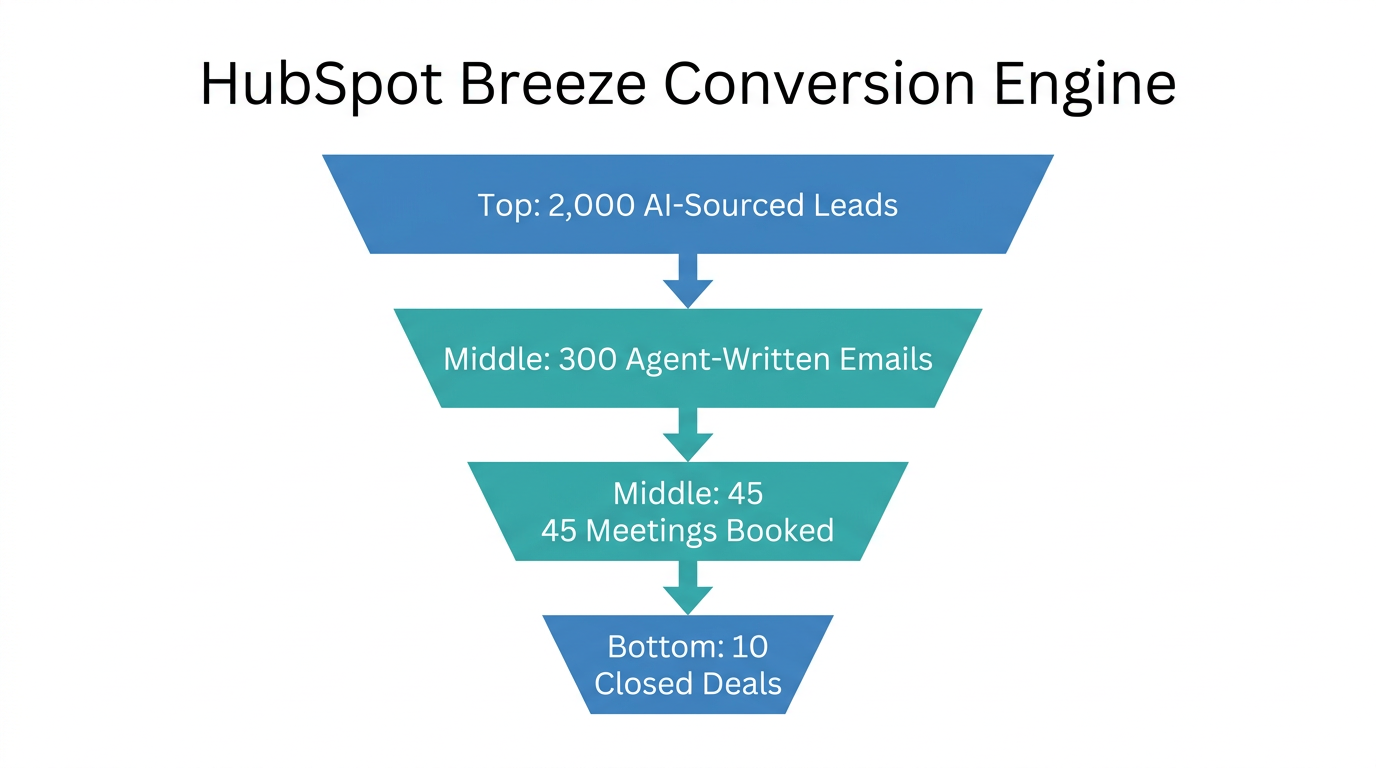
A funnel without traffic is just a parked car. This phase involves deploying autonomous agents to find and engage prospects. Instead of manual A/B testing, you use multivariate autopilot systems. AdCreative.ai can generate 50+ conversion-focused ad variations in minutes, optimized for the psychological profiles of your ICP.
Simultaneously, deploy an AI SDR (Sales Development Representative) like 11x.ai. These agents scrape platforms like LinkedIn for high-intent signals and begin personalized outreach. This is where the math of the 50-minute funnel becomes undeniable: AI SDRs now average a cost of $39 per qualified lead, compared to the $262 per lead cost of human-led outreach, as cited by Leads at Scale.
| Platform | Philosophy | Best For |
|---|---|---|
| HubSpot Breeze | "Out of the Box" Ease | SMBs & Rapid Scaling |
| Salesforce Agentforce | Custom Complexity | Enterprise Infrastructure |
| Gumloop | Linear "Assembly Line" | Specific Data Workflows |
This speed isn't just about volume; it's about Response Speed. AI agents respond to inbound leads in under 60 seconds, a 2,500x advantage over the human average of 42 hours. This responsiveness alone can increase your qualification probability by 21x.
Step 4: Integration and Launch (Minute 40–50)
The final ten minutes are the most critical: Integration. You must ensure your "agent silos" talk to each other. Use Zapier Central or Gumloop to create a seamless flow of data. When a lead lands on your Durable page, their data should flow into your CRM, which then triggers an automated, personalized email sequence.
Personalized AI email campaigns in 2026 generate 320% more revenue than traditional sequences, with open rates averaging nearly 40% according to Primal. To achieve this, tools like Instantly.ai or Lemlist can be connected to your agents to send messages that reference a prospect's latest social media activity or company news.
Comparing the 50-Minute Sprint to Traditional Cycles
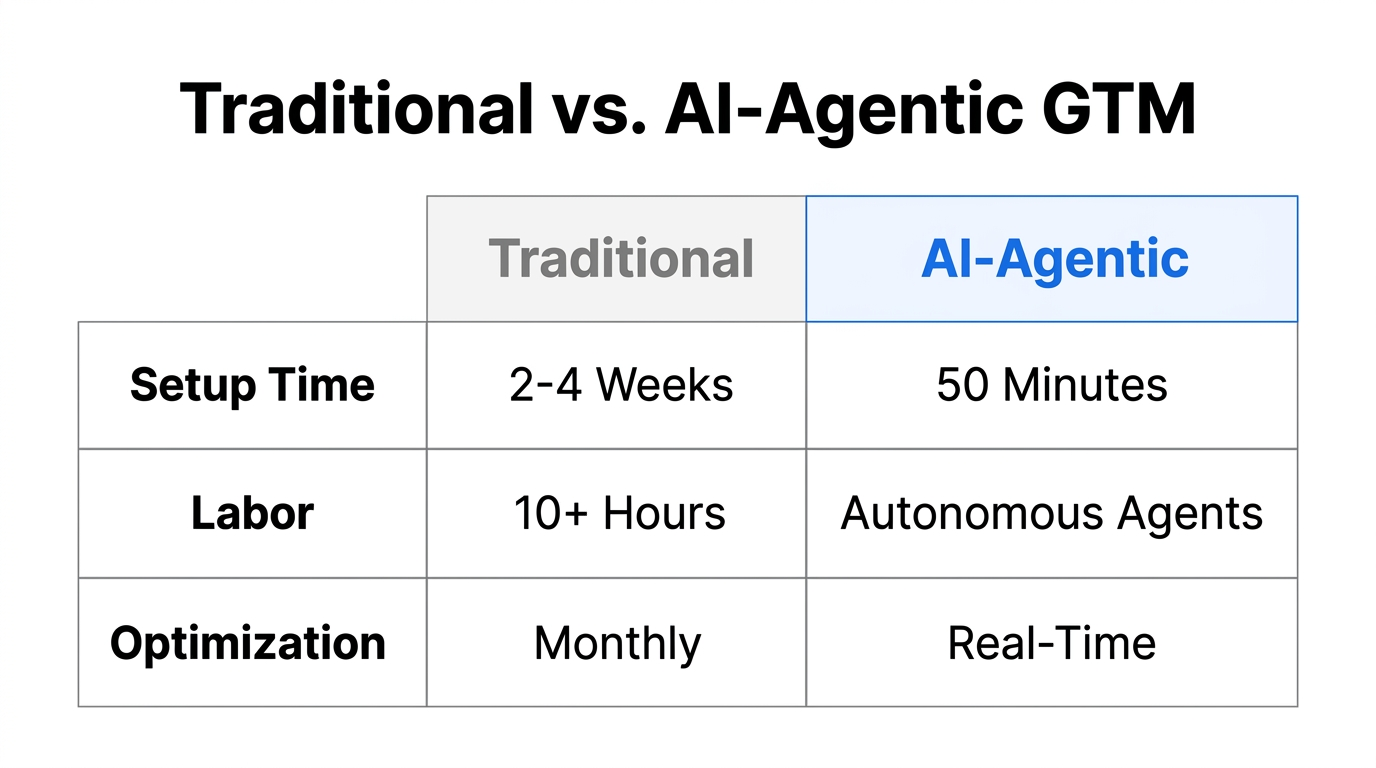
The difference between the old way and the agentic way is more than just time; it's the shift from static logic to dynamic reasoning. Traditional funnels were built on "If-This-Then-That" logic, which broke the moment a customer did something unexpected. The 2026 funnel uses Agentic Reasoning to pivot in real-time.
| Feature | Traditional Funnel (2023) | AI Marketing Funnel (2026) |
|---|---|---|
| Launch Speed | 2–6 Weeks | < 50 Minutes |
| Optimization | Manual A/B Testing | Real-time Autopilot |
| Targeting | Demographic-based | Behavioral & Intent-based |
| Cost Basis | High Fixed (Labor) | Low Variable (API/Credits) |
However, speed comes with risks. As Flowlyn points out, only 16% of RevOps professionals fully trust their data. Feeding "dirty data" into an autonomous funnel will only result in hallucinated lead scores. Always ensure your CRM, whether on Shopify or HubSpot, is the "single source of truth" before turning the agents loose.
"The revenue paradox is real: AI is 54x cheaper than humans, but humans still generate 2.6x more revenue per meeting because they win on 'emotional nuance'."
Conclusion: The Future of GTM is Hybrid
As we navigate 2026, the 50-minute AI funnel is no longer a futuristic concept—it is the baseline for staying competitive. By leveraging tools like HubSpot Breeze for strategy, Durable for assets, and Stormy AI for creator-driven trust, founders can launch and iterate at a pace that was previously impossible.
The goal isn't to replace the marketer, but to replace the monotony of marketing. By automating the "plumbing" of the funnel, you free yourself to focus on what AI still struggles with: cultural nuance, authentic storytelling, and genuine relationship building. Start your first sprint today—your next lead-generation engine is only 50 minutes away.