The influencer marketing industry is currently undergoing its most significant transformation since the inception of social media. As we approach a projected market valuation of $32.55 billion by the end of 2025, the shift from manual creator sourcing to autonomous AI agents has become the defining characteristic of modern digital strategy. According to data from indaHash, brands are no longer satisfied with simple reach; they are demanding deeper accountability and verifiable results. In an era where 60.2% of marketers are already utilizing AI for identification and optimization, the focus has shifted from finding the loudest voices to finding the most authentic ones.
However, this rapid adoption of technology has created a new set of challenges. High-growth brands often fall into the trap of "tool bloat," managing dozens of fragmented platforms that lead to siloed data and compromised brand safety. To succeed in the 2025-2026 landscape, marketers must move beyond vanity metrics and leverage advanced influencer engagement analytics to ensure every partnership is built on a foundation of data-backed trust. This guide explores how to navigate this AI-driven evolution while maintaining the human-centric creativity that remains the heart of the creator economy.
Moving Past Follower Counts: The Rise of Sentiment Analysis
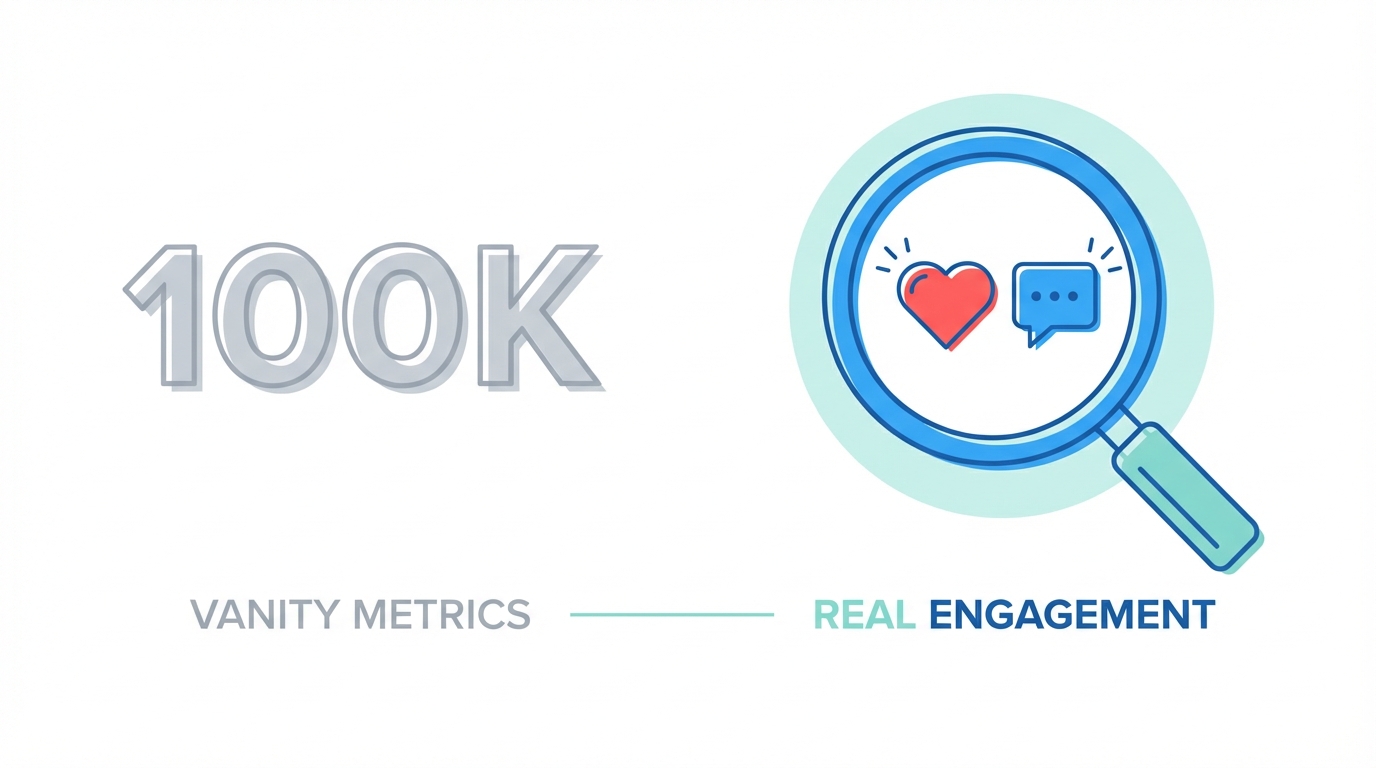
For years, the industry relied on follower counts as the primary measure of a creator's value. We now know that these numbers are easily manipulated and often decoupled from actual influence. Modern influencer vetting tools have evolved to prioritize social media sentiment analysis and "Authenticity Scores" over raw reach. By analyzing the language patterns in a creator's comment section, AI can differentiate between genuine community engagement and bot-driven "pods" that artificially inflate metrics.
Advanced AI models now perform real-time analysis of the emotions expressed by a creator's audience. Is the community truly inspired, or are they criticizing the creator's recent partnerships? This level of nuance allows brands to avoid creators who may have high reach but negative associations. Research indicates that AI is expected to assist in producing 30% of outbound marketing messages for large organizations by 2025, according to The Shelf, making it imperative that the initial creator selection is rooted in positive sentiment.
"The vanity metric trap is real. AI shouldn't just rank creators by reach; it must rank them by storytelling skill and the quality of their audience's emotional response."
Furthermore, the shift toward influencer fraud detection has become automated. AI agents can now detect "engagement spikes" that don't align with content quality or posting frequency, flagging potential fraud before a single dollar is spent. This automated vetting process ensures that your marketing budget is invested in real human attention rather than digital ghosts.
The Danger of 'Tool Bloat' and Data Fragmentation
As marketing technology (MarTech) stacks expand, many organizations find themselves suffering from "tool bloat." This occurs when a team uses one AI tool for discovery, another for email outreach, a third for vetting, and a fourth for payments. Nicole Leffer, a prominent AI marketing expert, warns against this fragmentation. She advises that instead of implementing 10 niche tools, brands should focus on a unified partnership platform to avoid data silos that make ROI attribution impossible.
When data is fragmented across multiple influencer engagement analytics tools, it becomes nearly impossible to track a customer's journey from a TikTok video to an Amazon purchase. Tools like Logie AI are leading the way in AI-powered link management to ensure clean, cross-platform data. By centralizing the creator lifecycle, brands can maintain a single source of truth for every interaction, negotiation, and conversion.
This centralized approach also enables better brand safety in influencer marketing. When all vetting data is housed in one place, historical performance and safety flags are preserved, preventing the team from accidentally re-hiring a creator who previously violated brand guidelines or performed poorly. As noted by Landrum Talent experts, the focus should remain on end-to-end efficiency rather than individual feature sets.
Automated Deep Vetting: Scanning the Last 100 Posts
Manual vetting is slow, subjective, and prone to error. A human might scan a creator's last five posts, but an AI agent can scan the last 100 posts in seconds to identify brand safety risks. This deep vetting process looks for more than just controversial language; it identifies competitive brand mentions, inconsistent messaging, and shifts in audience demographics over time.
By utilizing AI-powered influencer vetting tools, brands can set specific parameters for their "ideal creator profile." If a creator has mentioned a direct competitor more than three times in the last quarter, or if their audience sentiment has trended downward, the AI can automatically remove them from the outreach list. This level of precision is what allows brands like GoPro to scale their community content without increasing headcount, as they successfully automated the curation of over 43,000+ UGC entries using AI-driven systems reported by MagicUGC.

When looking for high-quality partners, platforms like Stormy AI can help source and manage UGC creators at scale. Stormy's AI engine allows you to type natural-language prompts to find creators who fit specific audience psychographics, then instantly vets them for fake followers and engagement fraud. This eliminates the manual labor of scrolling through profiles, allowing your team to focus on the high-level strategy that Stormy AI was designed to support.
"Autonomous agents are moving past simple database filters to handle discovery, vetting, and even multi-round fee negotiations without human intervention."
The 'Broken Process' Trap: Why Manual Optimization Comes First
One of the most common mistakes in the transition to AI is automating a broken process. If your current influencer workflow relies on messy spreadsheets and disorganized communication, plugging in an AI agent will only "speed up the mess-making." Before implementing advanced automation, brands must map and optimize their manual workflows.
As discussed in recent industry analysis on Medium, the most successful brands treat their influencer strategy as a pipeline. They define clear stages: Discovery, Vetting, Outreach, Negotiation, Content Review, and Payment. Only once these stages are clearly defined and manually tested should AI agents be introduced to handle the repetitive tasks within each stage. For example, Janney AI negotiation agents have shown the ability to reduce influencer fees by up to 43%, but this only works if the brand has already established clear "Max Fee" and "Target CPM" parameters.
Once the process is optimized, you can introduce a "Human-in-the-Loop" model. In this model, the AI handles the bulk of the vetting and initial outreach—often managing the first 5-10 back-and-forth emails—while a human "Creative Director" steps in to refine the final partnership and ensure the brand voice remains intact. This balance ensures efficiency without losing the human touch that Stormy AI facilitates through its personalized outreach tools.
Ensuring Data Integrity Across the Creator Economy
The final pillar of a robust AI-vetting strategy is link management and attribution. Without clean data, your vetting efforts are wasted because you cannot prove which creators actually delivered value. AI-powered link management tools allow brands to track cross-platform conversions in real-time, even across "walled gardens" like TikTok or Instagram. This is particularly vital for social commerce campaigns that drive traffic to platforms like Shopify or Amazon.
By integrating social listening nodes and performance triggers, brands can automate post-campaign actions. For instance, platforms like impact.com (a legacy leader in the space) allow for automated bonus payments the moment a creator hits a specific engagement threshold. This "real-time optimization" turns influencer marketing into a high-performance channel similar to paid search or social ads.
Furthermore, as we move toward Algorithmic Trust, brands are using creators to ensure their products appear in the training data of AI assistants like ChatGPT and Google Gemini. Vetting creators based on their "searchability" and SEO authority is becoming as important as their social media engagement. Authenticity is the new currency, and AI is the only way to measure it at scale.
"The future belongs to brands that use AI to influence the algorithms by building a web of authentic reviews and mentions that AI search engines can trust."
Conclusion: Building a Sustainable AI Vetting Strategy
Moving beyond vanity metrics is no longer optional; it is a requirement for survival in a $32 billion industry. By leveraging AI for social media sentiment analysis, deep vetting, and automated fraud detection, brands can protect their reputation and maximize their ROI. The goal of AI is not to replace the human element of marketing, but to strip away the manual labor that prevents marketers from being creative.
To start building your AI-powered creator pipeline, remember to:
- Prioritize Authenticity Scores and audience sentiment over raw follower counts.
- Consolidate your MarTech stack to avoid the "Tool Bloat" that leads to data fragmentation.
- Optimize your manual workflows before plugging in autonomous AI agents.
- Use deep vetting to scan at least the last 100 posts for brand safety and fraud.
The brands that win in 2025 and beyond will be those that use AI as a scalpel, precisely selecting and vetting partners who offer genuine alignment and verifiable influence. With the right tools and a "pipeline" mentality, your influencer marketing can move from a speculative expense to a predictable, high-growth engine.