By the end of 2025, the influencer marketing industry is projected to reach a staggering $32.55 billion. As the landscape grows, the manual workflows of 2020—manually scouring hashtags, cold-emailing from spreadsheets, and chasing down screenshots for reporting—are becoming obsolete. We are entering the era of agentic AI, where autonomous systems don't just suggest creators; they execute the entire lifecycle of a campaign. Today, 60.2% of marketers are already utilizing AI for influencer identification, and 95% of brands have integrated AI into some part of their marketing stack. This guide provides a detailed, step-by-step playbook for marketing managers looking to transition to a high-performance AI influencer marketing pipeline.
Step 1: Agentic Discovery and Natural Language Search
The first shift in a modern influencer marketing automation workflow is moving away from keyword-based searches. In the past, you might have searched for "fitness" or "travel" in a database. Today, agentic discovery allows you to search based on audience psychographics and natural language prompts. Instead of a keyword, you might tell an AI agent: "Find me creators in the Pacific Northwest who appeal to eco-conscious parents interested in minimalist living."
AI-native platforms like Stormy AI allow you to filter through millions of profiles based on granular audience data, ensuring you aren't just finding a creator who posts about a topic, but one whose audience actually cares about it. This level of precision is how brands like Dunkin' Donuts achieved a 57% boost in app downloads—by matching hyper-local creators with highly specific regional promotion data through AI-driven campaigns.
"The shift from tools to agents is the defining marketing trend of 2025. We are moving from simple filters to autonomous systems that understand human context."
Step 2: Implementing Automated Deep Vetting
Scale is meaningless if your creators are followed by bots. Automated deep vetting uses AI to analyze the last 100+ posts of any creator to detect "vanity metric" inflation and brand safety risks. Unlike traditional auditing, AI-powered vetting performs sentiment analysis on comments to determine if the engagement is genuine or part of a "pod."
Advanced vetting methodologies provide specific "Authenticity Scores" that flag suspicious growth patterns. This is critical because, as Afluencer notes, over-relying on follower counts is the number one mistake in modern marketing. AI marketing agents can now automatically disqualify creators who don't meet a minimum engagement quality threshold before a human ever sees their name.
Step 3: Autonomous Outreach and Negotiation Agents
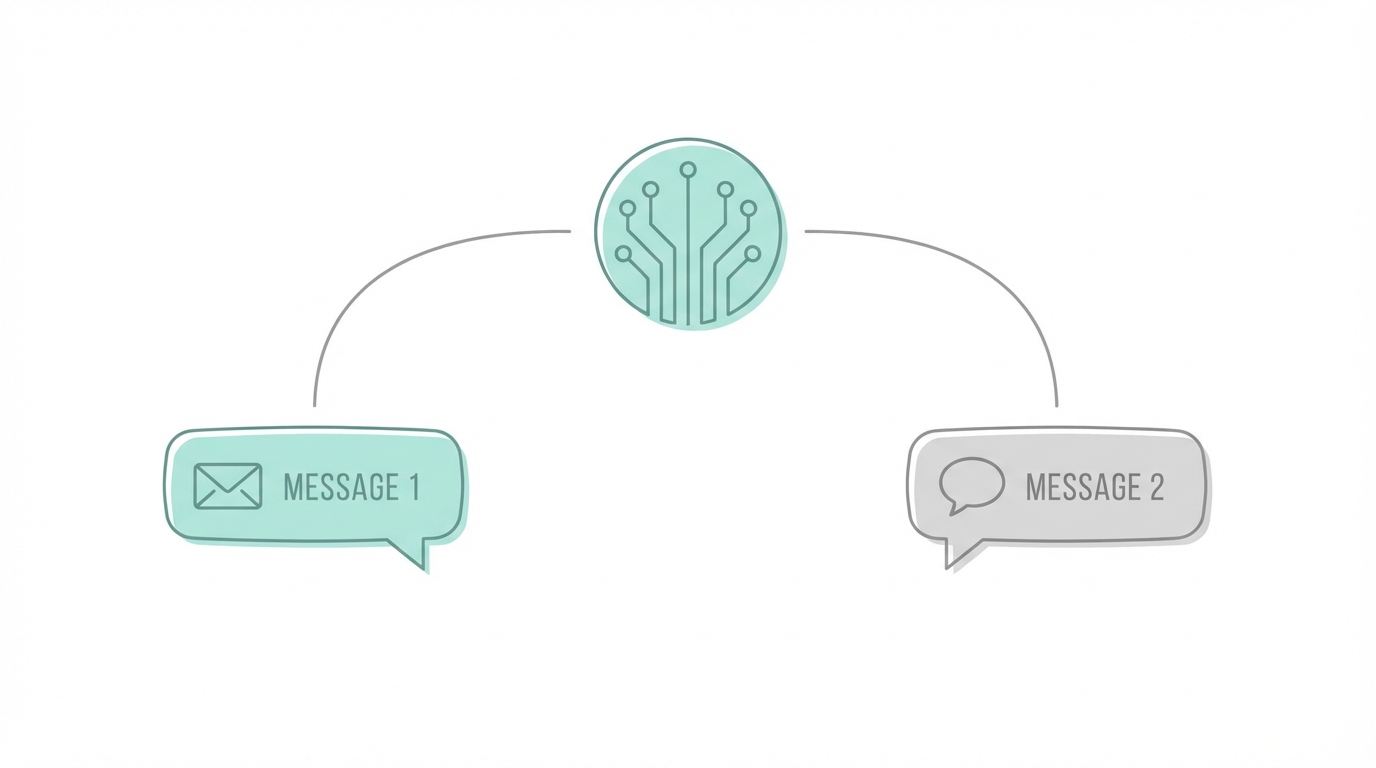
The most time-consuming part of an influencer marketing workflow is the back-and-forth of outreach. Modern automated influencer outreach involves setting "Target CPM" or "Max Fee" parameters and letting an AI agent handle the initial negotiation. According to data from Janney AI, autonomous negotiation agents can reduce influencer fees by up to 43% through multi-round automated bidding based on real-time market data.
This is where platforms like Stormy AI provide significant leverage. By using an AI search engine across TikTok, YouTube, and Instagram, brands can discover creators and instantly initiate hyper-personalized outreach. These agents can manage the entire email follow-up sequence on a schedule, essentially acting as a 24/7 recruitment department while your team focuses on strategy.
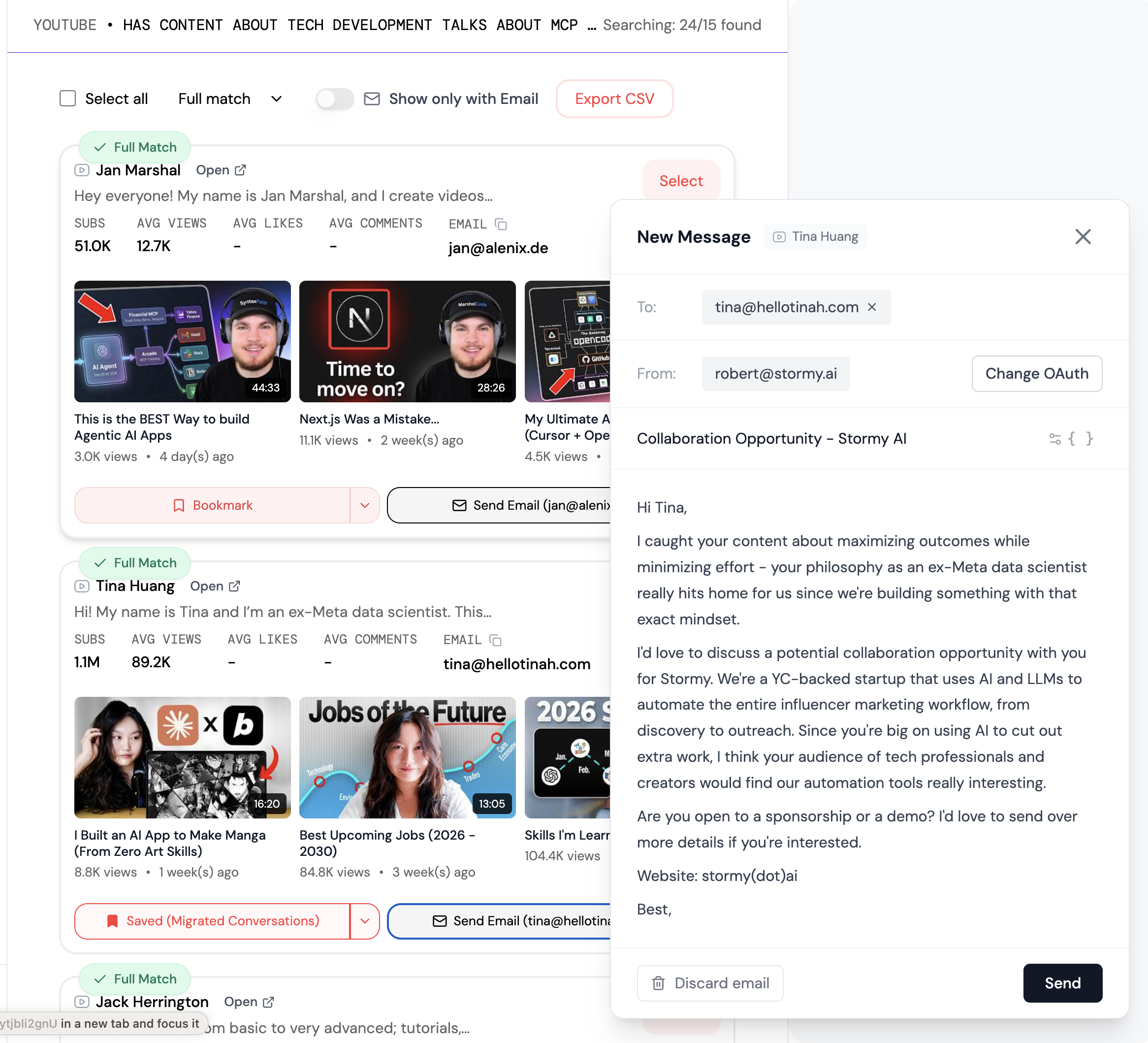
By automating this "top of the funnel," marketing managers report a 60-70% reduction in manual coordination time. Instead of writing 100 individual emails, you spend 10 minutes refining the AI's outreach template and let the system handle the volume.
"Autonomous agents have demonstrated the ability to reduce influencer fees by up to 43% through data-backed, multi-round automated bidding."
Step 4: Social Listening and Real-Time Optimization
Once a campaign is live, the work isn't over. In a manual world, you'd wait for a weekly report to see which posts performed. In an AI influencer marketing pipeline, you integrate social listening nodes that trigger actions based on real-time performance. For instance, you can use automation platforms like Latenode to set up a "trigger": the moment an influencer's post hits a 5% engagement rate or 50,000 views, the system automatically sends a performance bonus or a "thank you" message.
This level of automation was used by GoPro to scale their community content. By automating the curation and tagging of over 43,000 UGC entries using AI, they managed to scale their social presence without increasing their headcount. This ensures that high-performing content is identified and amplified immediately, rather than days later.
Step 5: Automated ROI Attribution and Tracking
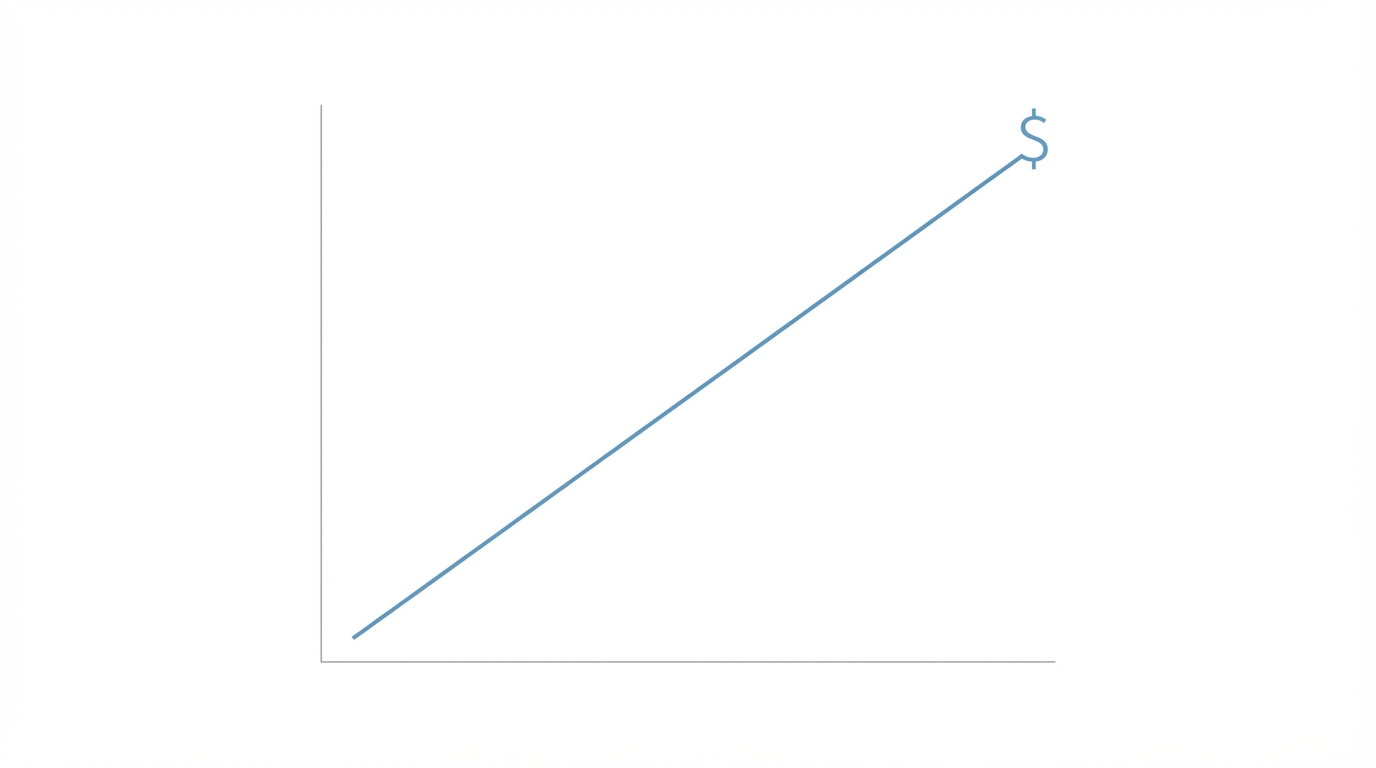
The final step in the playbook is solving the attribution puzzle. Tracking conversions across platforms—especially from a TikTok video to an Amazon purchase—has historically been difficult. AI-powered link management tools like Logie AI now allow for real-time, cross-platform tracking.
By using these tools, brands can move beyond simple "likes" and see the actual dollar value generated by every creator. This data then feeds back into Step 1, telling the AI agent to find more creators who look like the ones driving the most sales. Unilever, through its AI-powered "U-Studio," used similar creative analysis to achieve a 30% reduction in content costs while speeding up campaign turnarounds by 50%.
The 'Human-in-the-Loop' Necessity
While influencer marketing automation handles the heavy lifting, human oversight remains non-negotiable. Experts like Mary Ann O'Brien warn that success still relies on storytelling and character development. AI-generated captions can sometimes feel sterile or lack the nuanced brand voice that only a human Creative Director can provide.
The goal is to use AI for drafting and distribution, but keep a human in the loop for refinement. As LinkNow points out, failing to review AI output can lead to embarrassing brand safety issues or a disconnect with the audience's culture.
Conclusion: Building Algorithmic Trust
Looking toward 2026, the focus is shifting from "influencing people" to "influencing the algorithms." Mark Schaefer suggests that the most successful brands will focus on Algorithmic Trust—ensuring their brand appears in the web of reviews that AI search engines (like ChatGPT or Google Gemini) crawl. By scaling influencer mentions through automation, you aren't just reaching human followers; you are training the AI assistants of the future to recognize your brand as a market leader.
The transition from manual to automated isn't just a convenience; it's a competitive necessity. By implementing this 5-step pipeline, brands can achieve 2.3x higher conversion rates and finally treat influencer marketing as a scalable, data-driven performance channel rather than a high-touch experiment. If you're ready to start, platforms like Stormy AI can help you source and manage UGC creators at scale, providing the foundational tools for your automated future.