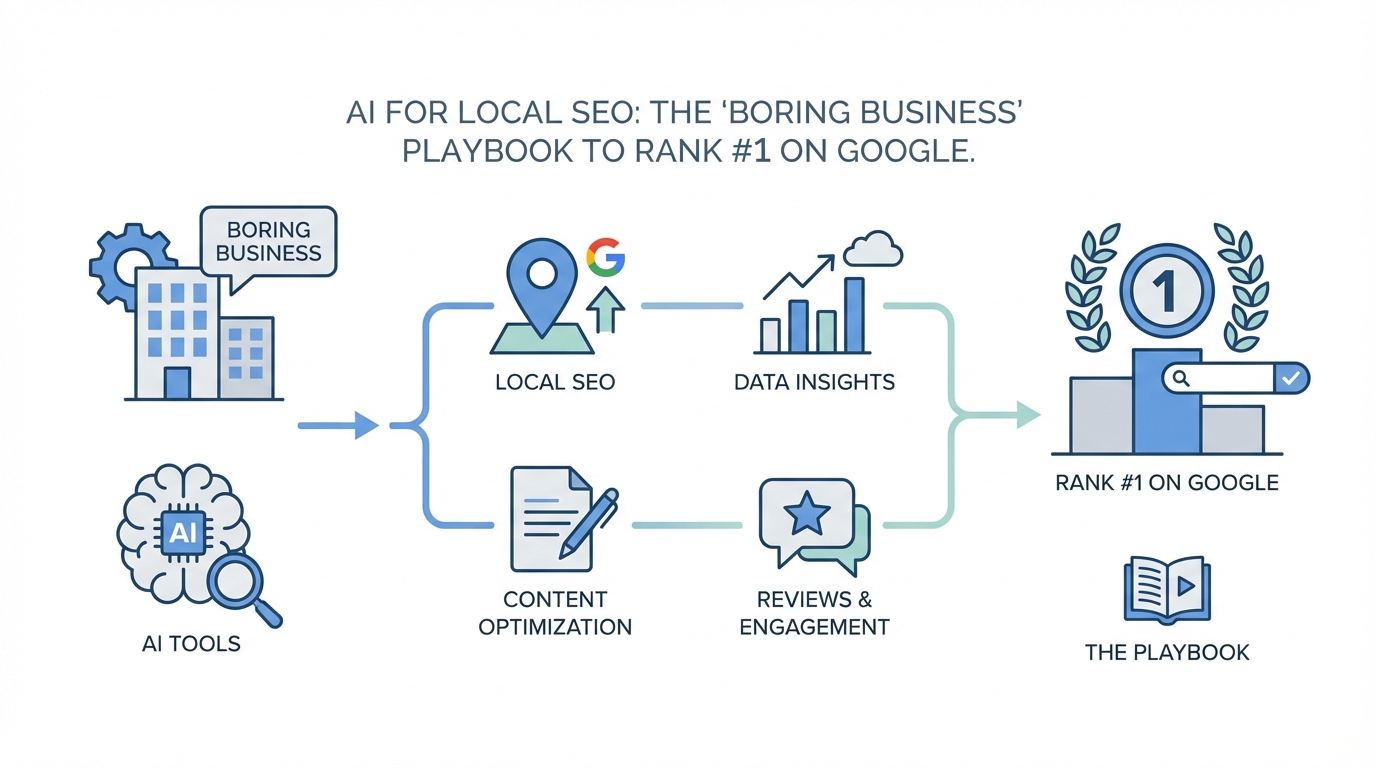
While the tech world is obsessing over the next GPT wrapper or high-level MicroSaaS, there is a massive, multi-billion dollar opportunity sitting right in your backyard. It is the world of "boring businesses"—the HVAC companies, diesel mechanics, and plumbing services that keep society running. According to recent business trends, these essential services are among the most resilient investments available today. Most of these businesses are operating with digital strategies from 2010, creating a perfect arbitrage opportunity for AI-savvy marketers. By leveraging tools like Claude Code, you can now build, optimize, and rank a local service site in under 24 hours, generating thousands in revenue before the weekend is over. This guide breaks down the exact playbook to dominate local markets using automated local SEO.
The Multi-Billion Dollar Arbitrage Opportunity
The concept is simple: boring businesses have high defensibility and low digital competition. While AI might disrupt digital copywriting or basic coding, it isn’t going to fix a broken tractor-trailer on the side of I-77 anytime soon. These services have staying power. However, the owners of these businesses are often too busy operating to worry about their local seo strategy. Their websites are slow, outdated, or non-existent, often failing to meet the Google Search Essentials required for modern ranking.
For an entrepreneur, this is a gold mine. You can partner with a local operator—someone who knows the craft—and handle the 1% of the work they can't do: the digital growth engine. By using Claude Code and advanced LLMs, you can bridge the gap between old-school service and modern AI-powered discovery. The goal is to move from a "tech enthusiast" to a "multi-preneur" who owns a portfolio of cash-flowing service businesses backed by elite automation.
Step 1: Setting Up Your AI Development Environment
To execute this playbook at speed, you need a professional environment. You aren't just chatting with a bot; you are using an agent that can interact with your file system. If you have a Mac, the process is straightforward. Open your Terminal and search for the Claude Code install command. Once you are authenticated via your Claude desktop subscription, you have a powerhouse agent ready to build.
A solid ai for small business marketing stack should also include:
- GitHub: To manage your code versions and allow the AI to push updates. Create a repository and have GitHub act as your source of truth.
- Vercel: For hosting. You can link Vercel directly to your GitHub repo so that every time your AI agent fixes a bug, the live site updates automatically.
- Cursor: An AI-native code editor like Cursor acts as the "pilot" for your code base, allowing for seamless integration with LLMs.
Step 2: The Demand vs. Supply Keyword Framework
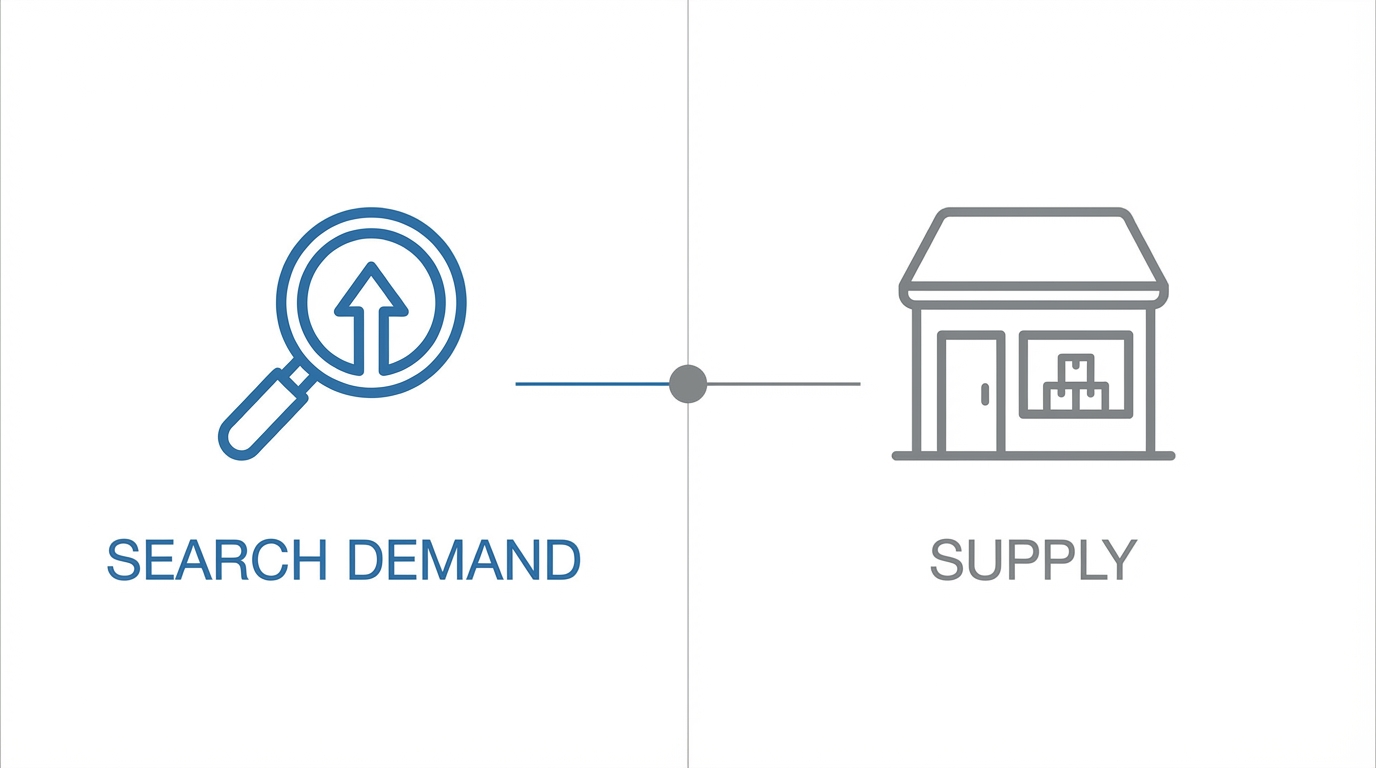
Local SEO is fundamentally about Demand (what people search) and Supply (your landing pages). Most people get paralyzed by keyword research tools, but the "vibe marketing" way is much faster. Open an LLM and ask: "Here is my service business; give me 50 high-intent keywords people use when they need help right now."
You should categorize these keywords into four distinct buckets to rank higher on Google Maps (formerly Google My Business):
- Emergency Keywords: "Truck breakdown on I-77," "AC repair tonight," "Burst pipe emergency." These are the highest intent.
- Service Keywords: General terms like "mobile diesel mechanic" or "residential plumbing."
- Problem Keywords: "Engine blowing white smoke," "Why is my faucet leaking?" These capture users at the research stage.
- Local Keywords: Geographic tags like "Charlotte diesel repair" or "HVAC service in Huntersville."
The secret to automated local SEO is creating a dedicated, high-quality landing page for every single one of these variations. In the past, this would take months. With AI, you can generate 50+ optimized pages in an afternoon.
Step 3: Building Topical Authority with Local Landmarks
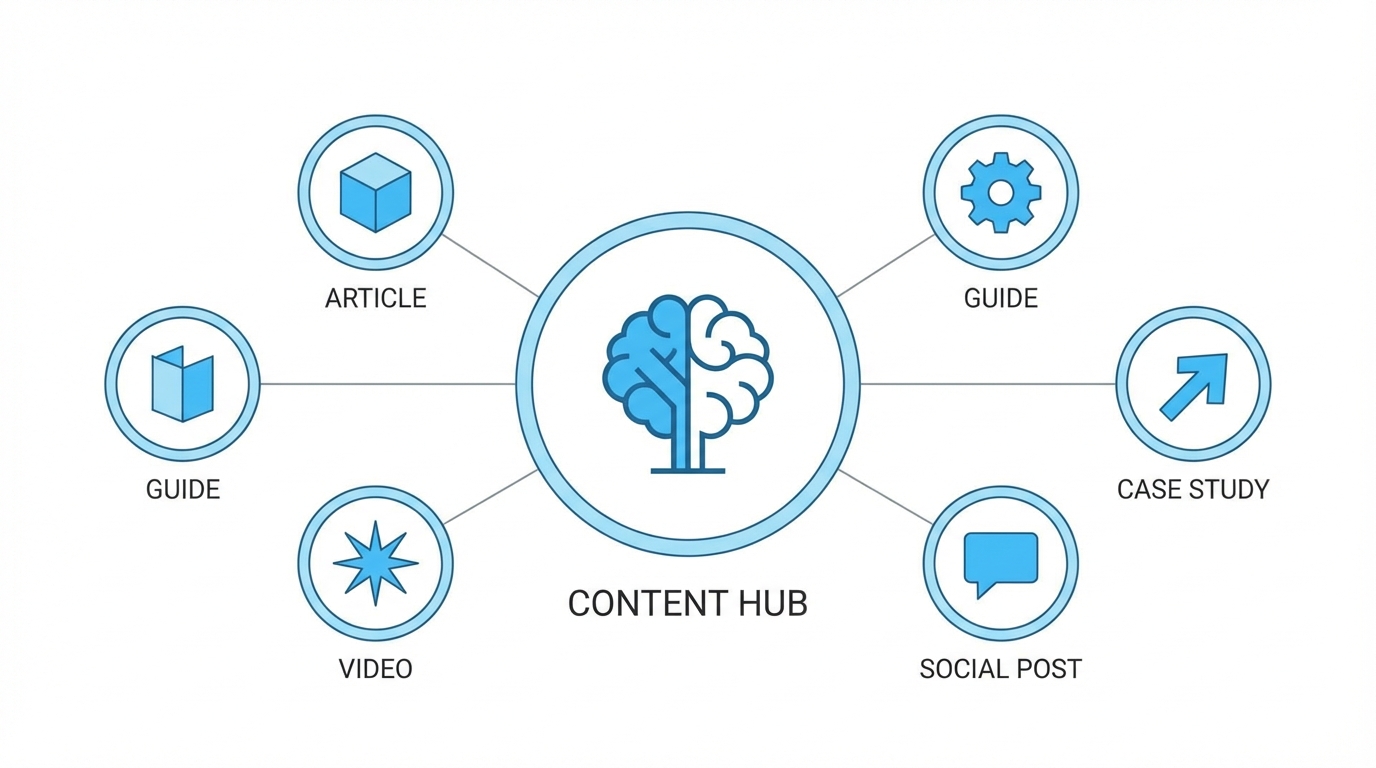
Google and modern LLMs don't just look for keywords; they look for topical authority. A generic page about "plumbing" won't rank as well as a page that proves it knows the area. When generating content, instruct your AI to integrate regional landmarks and local context. For example, if you are targeting Charlotte, your content should mention proximity to the NASCAR Hall of Fame or specific highways like I-85 and I-77.
By including FAQs specific to the local climate or industry (e.g., "How Charlotte’s humidity affects your HVAC system"), you signal to search engines that your site is the most relevant resource for that specific user. This is how a new site for a diesel mechanic can outrank a 20-year-old competitor in just 24 hours.
Step 4: Automated Technical SEO Audits and Fixes
Search engines prioritize speed and clarity. If your site is slow, you lose. Use Google PageSpeed Insights to identify bottlenecks. Instead of trying to fix these manually, copy the error report and paste it into Claude Code. The AI can instantly compress images, convert them to WebP format, and fix render-blocking scripts.
Using AI Sub-Agents for Scale
One of the most powerful features of modern AI agents is the ability to spin up sub-agents. While you are working on the homepage design, you can command Claude to: "Launch three sub-agents: one to audit all meta descriptions, one to find missing alt text for images, and one to identify internal linking opportunities between service pages." This parallel processing is why a single person can now do the work of a 10-person SEO agency.
Scaling Local Trust with Stormy AI
Ranking #1 on Google is only half the battle; the other half is conversion. Local businesses thrive on trust. While your AI is handling the technical SEO, you should be building a library of social proof. This is where modern influencer and UGC (User-Generated Content) strategies come into play.
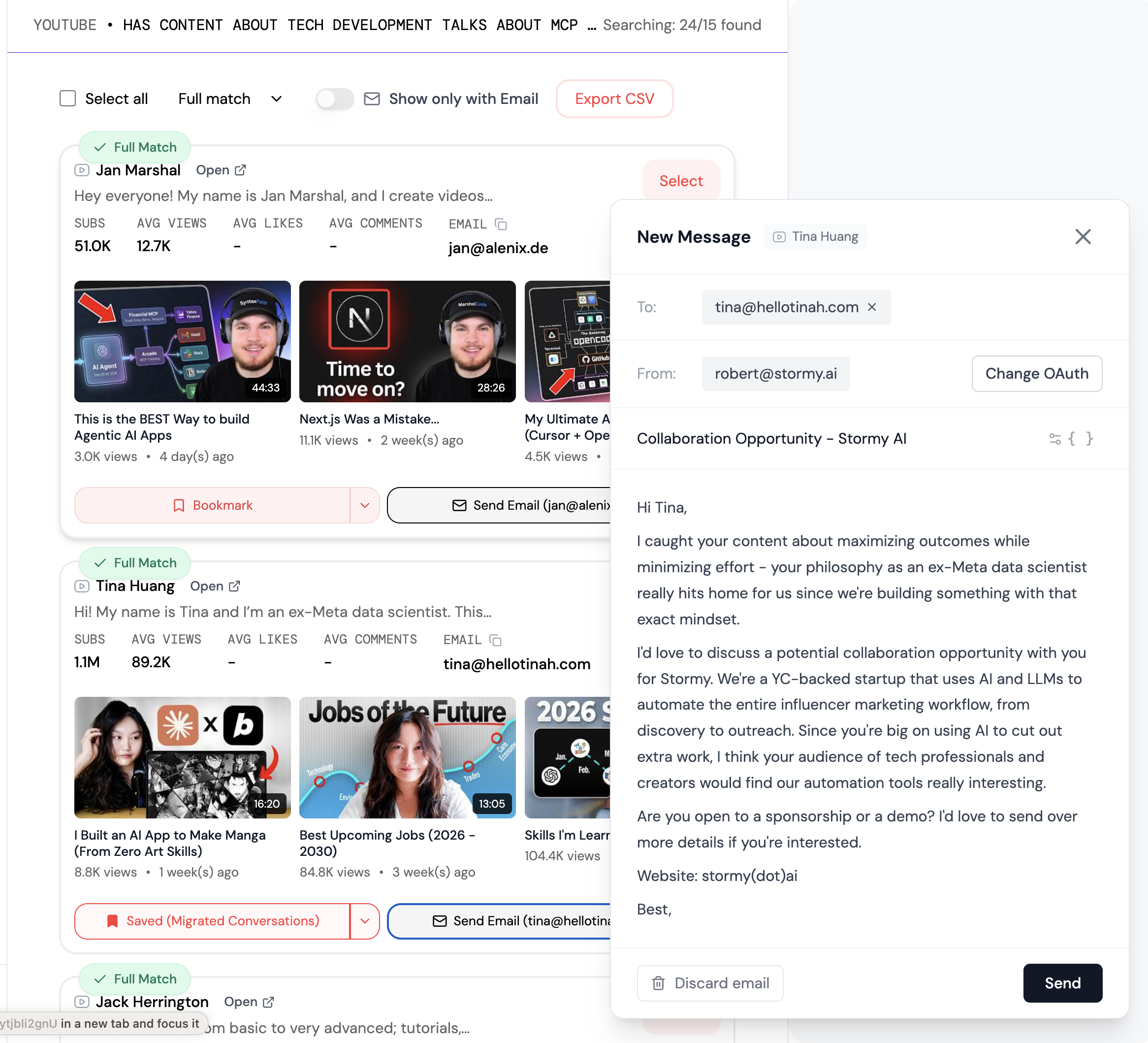
Using tools like Stormy AI can help source and manage UGC creators at scale. You can search for local micro-influencers or content creators in your specific city who can film "day in the life" or testimonial-style videos for your boring business. These videos can be embedded on your landing pages to boost your topical authority and provide the "human touch" that AI-generated text sometimes lacks.

With Stormy's AI search engine, you can find creators who specialize in niche markets—like automotive or home improvement—instantly. By automating the outreach and vetting process, platforms like Stormy AI ensure that your "boring business" has the most modern marketing engine in the local market.
Step 5: The Design-to-Code Pipeline
A common pitfall of ai for small business marketing is that the websites often "look like AI made them." To avoid this, use a design-first approach. Have a designer create a high-fidelity mockup in Figma. Then, use a plugin like Anima to convert those designs into React components.
Once you have the components, feed them to Claude Code and say, "Build the site using these exact designs." This ensures your site has a premium, professional feel that builds instant trust with customers who are used to seeing broken, 15-year-old websites from your competitors. Combine this with automated workflows from n8n to handle lead intake, and you have a fully autonomous revenue machine.
The Future: SEO in the Age of LLMs
Many people fear that SEO is dying because of AI-powered browsers. However, the reality is that LLMs need data to provide answers. The way you show up in ChatGPT or Perplexity is by having a clean technical foundation, strong topical authority, and high-quality backlinks. According to Perplexity AI, citations are key to appearing in AI-generated answers. The "mid-wit" meme applies here: while others are chasing complex "AI optimization" hacks, the winners are just doing foundational SEO better and faster than everyone else.
If you want to stay ahead, join communities like The Vibe Marketer, where entrepreneurs share real-time workflows and boring business ideas that are actually making money today. The tools are available; the only variable left is your willingness to get your hands dirty and start building.
Conclusion: Your 24-Hour Action Plan
Dominating a local market doesn't require a massive budget; it requires the right local seo strategy and the courage to use AI tools where others are still using clipboards. Start by identifying a high-demand, low-tech niche in your city. Set up your Claude Code environment, map your demand-supply keywords, and build your topical authority with local landmarks. By the time your competitors realize the game has changed, you'll already own the first page of Google.