In 2026, the definition of a 'successful' startup has undergone a radical transformation. We have officially exited the era of 'growth at all costs'—a period characterized by bloated headcounts and inefficient scaling—and entered the era of AI-First Growth. For modern founders, the goal is no longer to see how many desks you can fill, but how much revenue you can generate per employee by leveraging Reflexive AI and lean organizational frameworks.
As we navigate this landscape, few companies provide a better blueprint than Shopify. By famously reducing their headcount from 14,000 to 8,000 while simultaneously increasing throughput and innovation, they proved that a smaller, more focused team could outperform a massive, fragmented one. This isn't just about automation; it's about a fundamental shift in how organizations think, hire, and operate.
The 'Hiring Friction' Rule: Proving AI Can't Do the Job
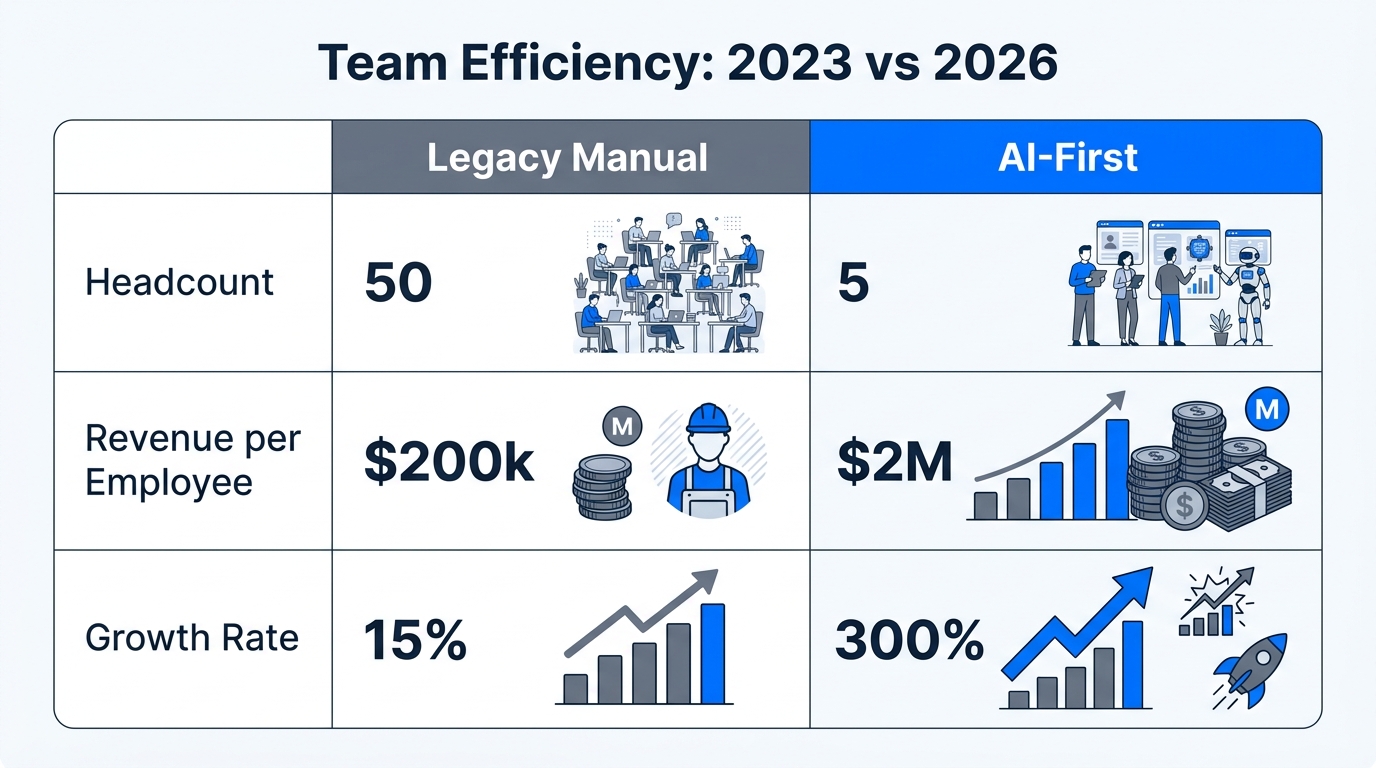
In most traditional organizations, hiring a new employee is the default response to increased workload. In 2026, that response is a liability. Shopify implemented what is now known as the 'Hiring Friction' Rule. This is a mandatory substantiation process where a manager must prove, through data and experimentation, exactly why an AI agent or automated workflow cannot perform the task before a new headcount is approved.
When you force a team to justify why a human is better than an LLM for a specific role, they often realize that 70-80% of the role’s responsibilities are actually data processing, synthesis, or administrative coordination. By automating those components, the existing team can often absorb the remaining 20% of high-level creative work. This keeps the organization lean and agile, preventing the 'communication overhead' that kills speed in large corporations.
"Before you hire a human, you must first substantiate why AI cannot do it better. By the time you've finished the substantiation, you usually realize you didn't need the hire."
Side-Quest Elimination: Focusing on the Main Quest
 18:34
18:34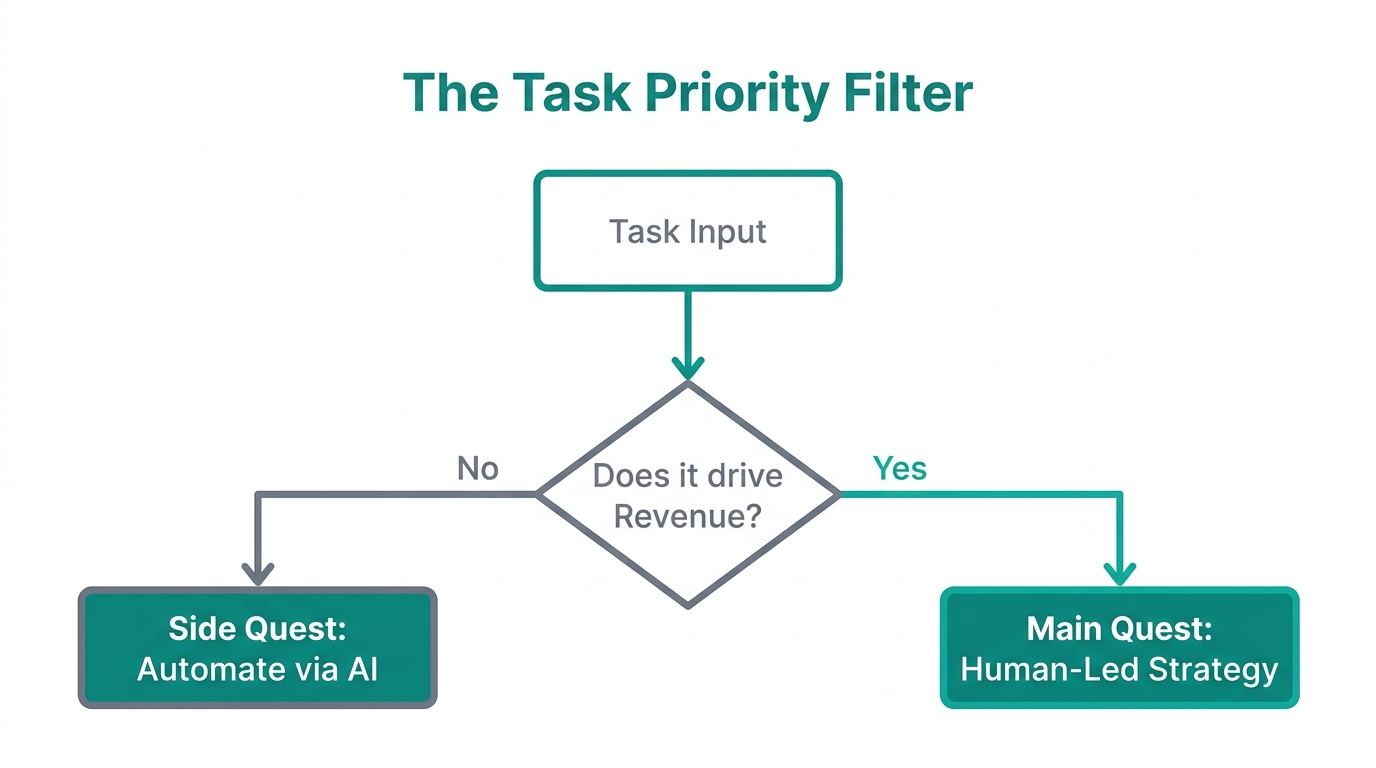
A major reason companies bloat is the accumulation of 'side quests'—projects and business units that are adjacent to the core mission but don't move the needle on the Main Quest. Shopify's massive recalibration involved selling off their logistics and fulfillment arms to Flexport. While logistics was a multi-billion dollar business, it was a side quest that distracted from their core mission: making commerce better for everyone.
For lean e-commerce brands in 2026, identifying these side quests is critical. Are you spending 40 hours a week on influencer outreach when your 'Main Quest' is product R&D? In these scenarios, platforms like Stormy AI allow lean teams to automate discovery and outreach, effectively delegating a massive 'side quest' to an AI agent while the founder stays focused on brand vision.
| Category | Traditional Approach (Bloated) | AI-First Approach (Lean) |
|---|---|---|
| Hiring | Fill roles based on industry benchmarks. | Mandatory AI substantiation for every seat. |
| Operations | Manual data entry and coordination. | Reflexive use of automated workflows. |
| Focus | Pursuing every 'adjacent' opportunity. | Aggressive side-quest elimination. |
| Data | Siloed in departments and spreadsheets. | Full organizational legibility via AI. |
Building a 'Spiky Object' Team: Superpowers Over Roles
19:36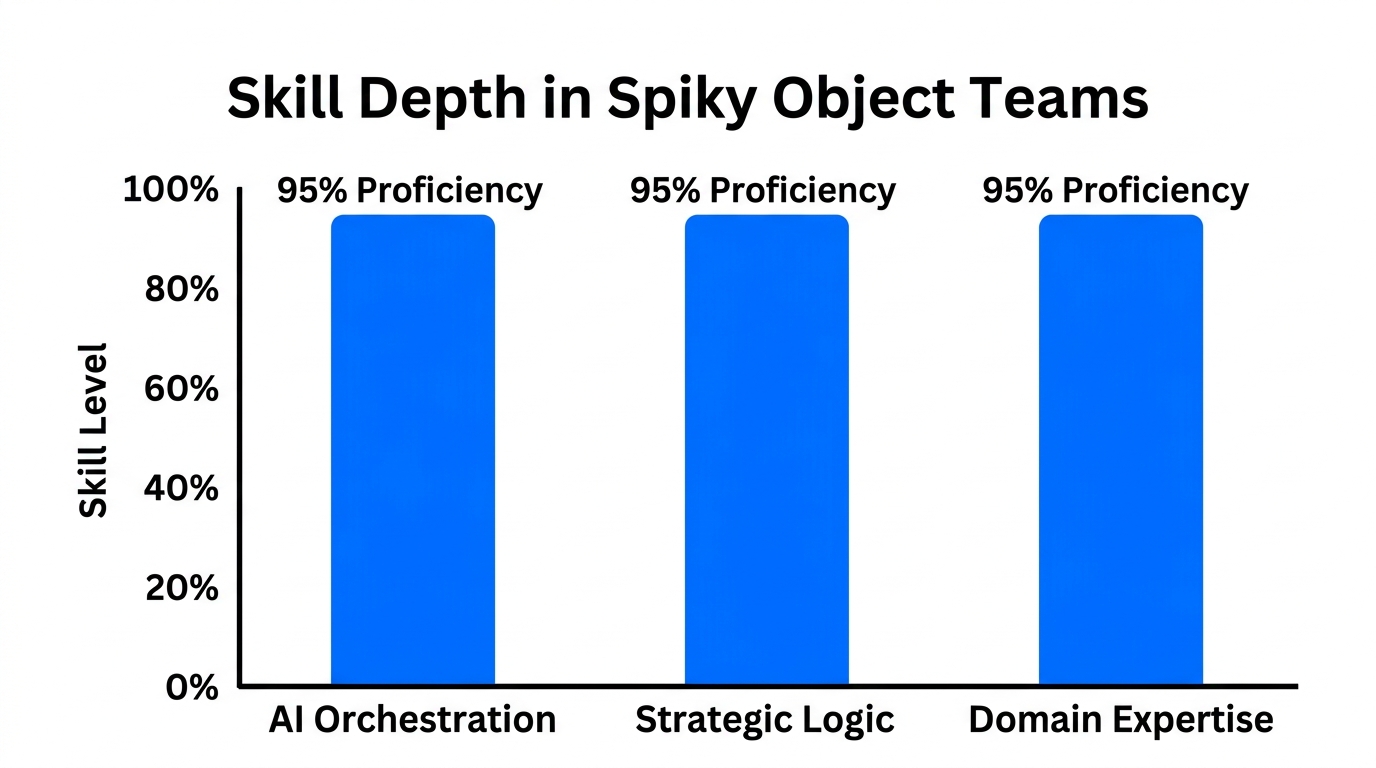
Traditional org charts are built around 'rounded' roles—Marketing Manager, Product Lead, Sales Director. The AI-First framework suggests building Spiky Object Teams. This means arranging your organization around individual 'superpowers' rather than rigid corporate titles.
Consider the leadership at Shopify: Toby Lütke (CEO) and Harley Finkelstein (President). Toby is a technical visionary who deeply understands code and product intuition; Harley is a world-class storyteller and 'lead singer.' Instead of Toby feeling obligated to do earnings calls because 'that's what CEOs do,' the team rearranged so Harley handles the public storytelling while Toby runs product. They both focus on their highest-value 'spikes.'
In a lean startup, you don't need a 'Social Media Manager' who is average at everything. You need a creative spike who can prompt AI to generate 100 assets a day, and a strategic spike who understands the psychology of the customer. By leaning into individual strengths and using AI to fill the 'gaps' in their skill sets, teams of five are now out-earning teams of fifty.
"We rearranged the company not around traditional roles, but based on our individual spiky objects—our unique strengths that provide the highest value."
Legible Organizations: The AI Vault
One of the biggest friction points in scaling is the loss of information. As a company grows, it becomes 'illegible'—the founder no longer knows what the support team is hearing, or how a specific marketing campaign in the UK is performing. Shopify solved this by making the entire organization 'legible' via AI.
By building internal 'Vaults' and using Model Context Protocols (MCPs), leadership can now 'query' their own company. Instead of scheduling a meeting with the Head of Capital to get a status update, an executive can simply ask an internal AI: 'What are the key performance metrics for our UK capital launch this month?'
This instant decision-making capability eliminates the 'meeting culture' that slows down traditional businesses. When your data is searchable and legible, you don't need 'middle managers' whose only job is to relay information from one department to another. The AI becomes the connective tissue of the organization.
The 2026 Productivity Standard: Annual Re-Qualification
In an AI-accelerated market, the skills required to be 'world-class' change every six months. A framework Shopify emphasizes is the requirement for every employee—including the CEO—to re-qualify for their job every single year. This isn't a threat; it's a baseline expectation of growth.
If you are a marketer in 2026 and you aren't using tools like TikTok Ads Manager in conjunction with AI-driven content generators, you are no longer qualified for your role. The productivity standard has shifted. A 'good' employee today is someone who can produce 10x the output of an employee from 2024 by using reflexive AI—tools that are integrated so deeply into their workflow that they don't even think about using them; it's just how work is done.
This culture of constant evolution is what allows companies like Touchland or AG1 to reach hundreds of millions in revenue with incredibly small core teams. They don't just 'use AI'; they are AI-native in their thinking.
"The expectation is that we re-qualify for our jobs every year. The pressure Toby puts on himself is more than he puts on anyone else, and it keeps us sharp."
Leveraging Modern Media: The James Dyson Lesson
45:57Even established giants are adopting this lean, story-driven approach. James Dyson recently proved this by launching the 'Pencil Vac' through a 5-minute YouTube demo that garnered millions of views. He took a 'boring' utility product and used modern media to tell a high-fashion, high-tech story.
In 2026, the Total Addressable Market (TAM) isn't static. It's something you grow by making boring products sexy. Whether it's hand sanitizer from Touchland or high-end vacuums, the winners are those who use AI to handle the 'commodity' parts of business—operations, data, logistics—so they can focus 100% of their human energy on innovation and storytelling.
This extends to new frontiers like the metaverse. Shopify's recent integration with Roblox allows merchants to sell physical goods inside virtual worlds. This is 'Commerce Everywhere.' For a lean team, this could be a daunting expansion, but with AI-first systems, 'turning on' a new channel like Roblox or Pinterest is a matter of configuration, not hiring a new department.
Conclusion: The Founder’s Roadmap for 2026
Building a high-revenue, lean team in 2026 requires more than just buying a few AI subscriptions. It requires a psychological shift from the founder down to the newest intern. To stay competitive, you must:
- Implement Hiring Friction: Make AI the default and humans the exception.
- Build Spiky Objects: Hire for specific superpowers and let AI round out the edges.
- Demand Legibility: Use AI to make your organizational data searchable and actionable.
- Eliminate Side Quests: Brutally cut any project that isn't your 'Main Quest.'
- Practice Reflexive AI: Use tools like Stormy AI to automate complex tasks like creator management so your team can focus on the brand.
The future belongs to the 'solopreneur with an army of agents' and the 'lean team with a billion-dollar footprint.' By following the Shopify framework, you can scale your revenue without scaling your headaches, ensuring your business remains resilient, profitable, and ready for whatever comes next.