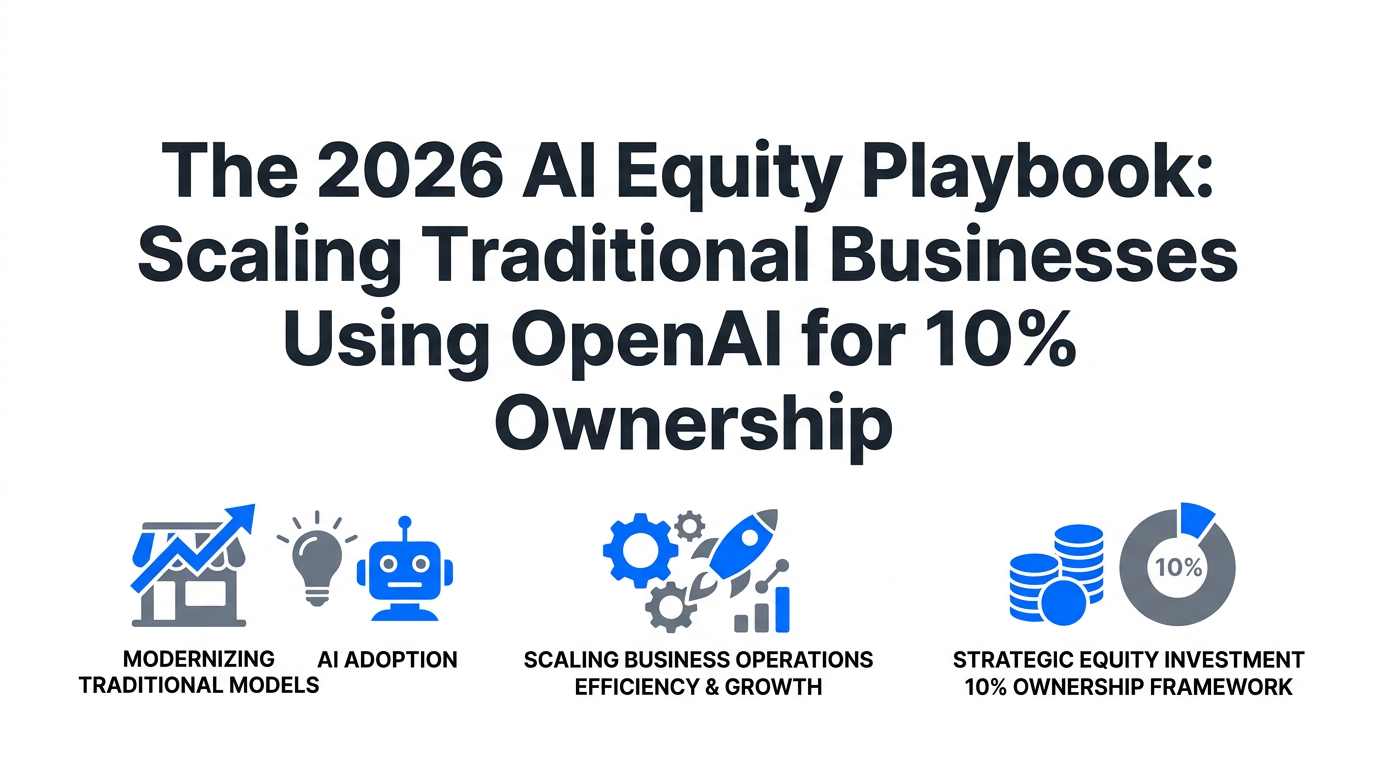
In the economic landscape of 2026, the most lucrative arbitrage isn't found in Silicon Valley's latest social app or a volatile crypto meme coin. Instead, it lies in the dusty filing cabinets of 60-year-old founders running high-margin, "boring" businesses. As we move deeper into this decade, the delta between manual operational costs and OpenAI-driven efficiency has become a chasm. This has birthed the "Young and Broke" AI play: a go-to-market strategy where entrepreneurs trade technical implementation for significant equity stakes. By applying modern operational efficiency AI to established books of business, you aren't just a consultant; you are a venture partner acquiring assets without the need for traditional capital.
The 'Young and Broke' AI Play: Trading Implementation for Equity
Building high-value AI models even when starting with a very limited budget.
The core of this AI business growth strategy is simple: traditional industries like insurance, mortgage brokerage, and logistics are sitting on massive amounts of "solved" problems that are ripe for disruption. As noted in recent industry discussions regarding the aging workforce, many owners of these firms are 60+ years old. They know AI is coming, but they lack the bandwidth or the cultural literacy to implement it. They are tired, they are wealthy, and they are looking for a succession plan that doesn't involve their business becoming obsolete.
"The biggest market in the world is human labor, and the company or individual that can automate that labor captures the value of an entire generation."By approaching these owners with a value proposition centered on OpenAI for business 2026 solutions, you can negotiate a 10% equity stake in exchange for a 12-month transformation. You aren't asking for a salary; you are asking for a "carve-out" based on the Opex savings and EBITDA growth you generate. This model mirrors the entrepreneurship growth hacks used by the world's most aggressive equity hunters. You become a mercenary who drops into a company, installs the "AI nervous system," and walks away with a permanent seat at the table.
Opex Optimization: Identifying Manual Processes for AI Automation
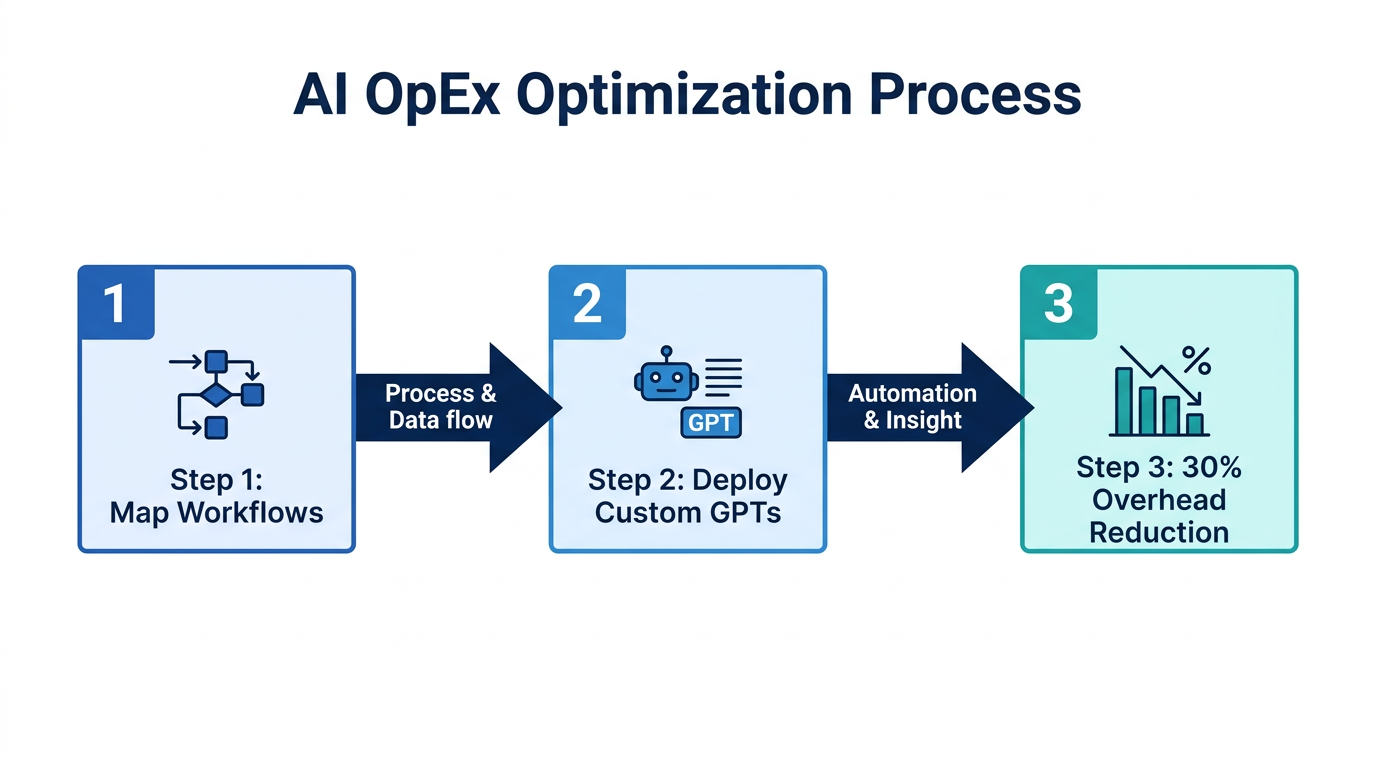
To scale a boring business, you must first identify where the "fat" is. In 2026, operational efficiency AI is no longer about simple chatbots. It is about autonomous agents, such as those powered by Claude or GPT-4o, that handle complex, multi-step workflows. When you enter a firm, your goal is to map every manual touchpoint that can be replaced by a custom OpenAI model. For instance, in a mortgage firm, the processing of documents, verification of income, and credit risk assessment are all manual bottlenecks that increase headcount and decrease margin.
Using tools like Zapier or Make to connect OpenAI's API to existing legacy databases allows you to build a 20-year moat. You are creating generational defensibility by combining a 60-year-old book of business with modern technical assets. This is the same logic that drove the success of 2020s giants like Coinbase and Tesla—owning the infrastructure of a category.
| Industry Sector | Manual Bottleneck | AI Replacement (2026) | Estimated EBITDA Increase |
|---|---|---|---|
| Insurance | Claims Processing | Multi-modal Vision Agents | 25-40% |
| Mortgage | Underwriting / Docs | Fine-tuned LLM Agents | 30-50% |
| B2B Logistics | Route & Freight Matching | Predictive Optimization Models | 15-30% |
The Contingency Model: Structuring Low-Risk, High-Reward Deals
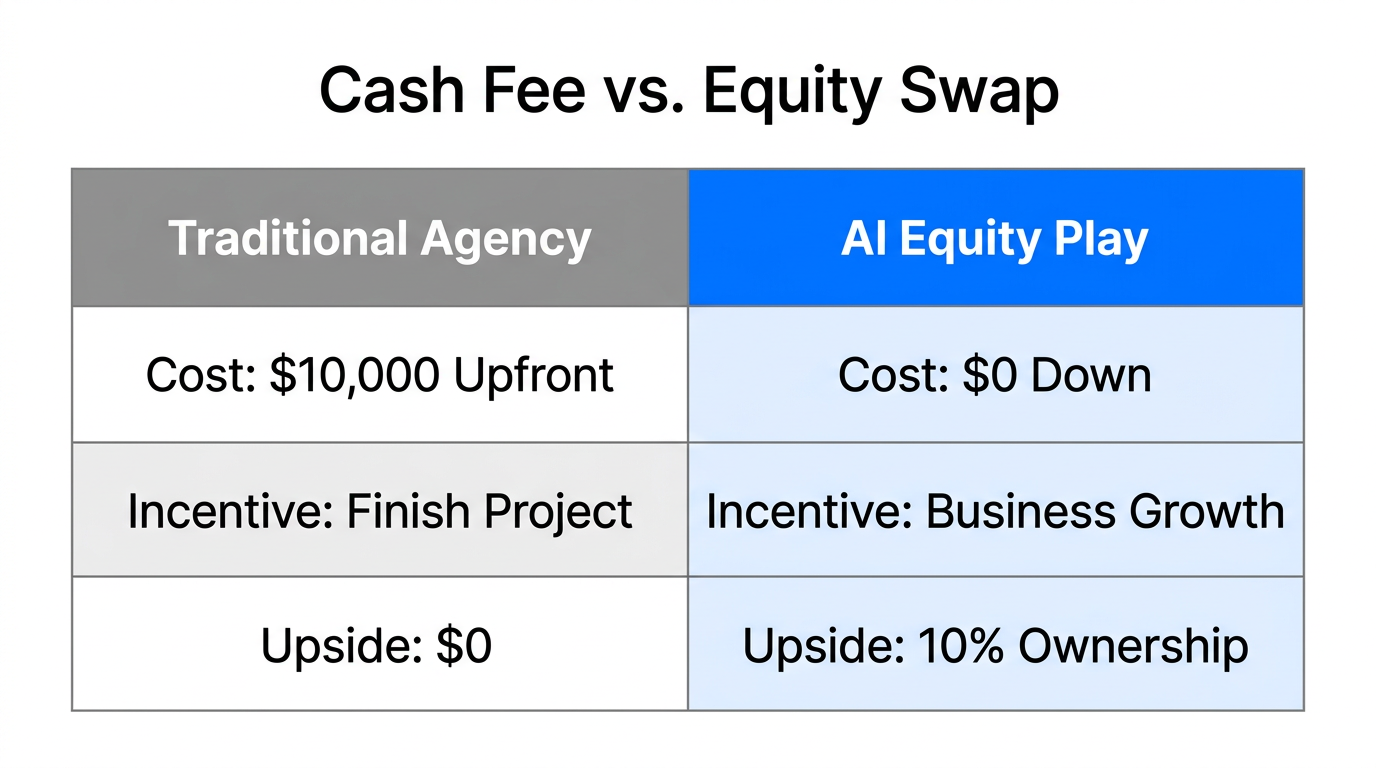
The biggest hurdle to B2B go-to-market 2026 is trust. A 60-year-old founder will not give you 10% of their life's work based on a slide deck. You must use the contingency model. Structure a 12-month deal where your equity only vests if you hit specific operational efficiency AI targets. This might include reducing customer support tickets by 80% using ElevenLabs-powered voice agents or cutting the loan approval cycle from 15 days to 4 hours.
By removing the downside for the owner, you make it an "irrefutable offer." You are essentially providing a free trial of a high-end AI transformation in exchange for a slice of the long-term upside. To find these businesses, use advanced sourcing tools. Just as Stormy AI allows brands to discover and outreach to creators with hyper-personalized AI emails, you can set up similar AI-driven outreach agents to target and contact niche business owners on LinkedIn or through industry-specific newsletters.
"Don't try to be better than the legacy competition; try to be the opposite. While they hire more people, you hire more tokens."The Law of the Opposite: Positioning Against Legacy Firms
How positioning yourself as the alternative choice creates a unique market advantage.In marketing, there is a principle called the Law of the Opposite. If the market leader is human-centric and slow, you win by being AI-centric and instantaneous. When you acquire equity in a boring business, you must rebrand it as the "Antidote" to the slow, manual industry standard. Take the example of David Bar, which scaled to $200M in its second year by leaning into being an "ultra-processed" alternative to natural foods. They didn't hide their difference; they celebrated it.
Apply this to your AI business growth strategy. If you are transforming an insurance firm, your marketing should shout about the fact that you have no human underwriters and therefore no human error. You use AI-driven accuracy to offer lower premiums and faster payouts, a strategy supported by modern positioning frameworks. This is how you steal market share from the Goliaths who are too bloated to pivot. Use platforms like Google Ads and TikTok Ads Manager to target the frustrated customers of your competitors who are tired of waiting on hold.
Boring Business Acquisition: The Lever for Majority Control
Why acquiring boring but stable companies is the ultimate play for long-term wealth.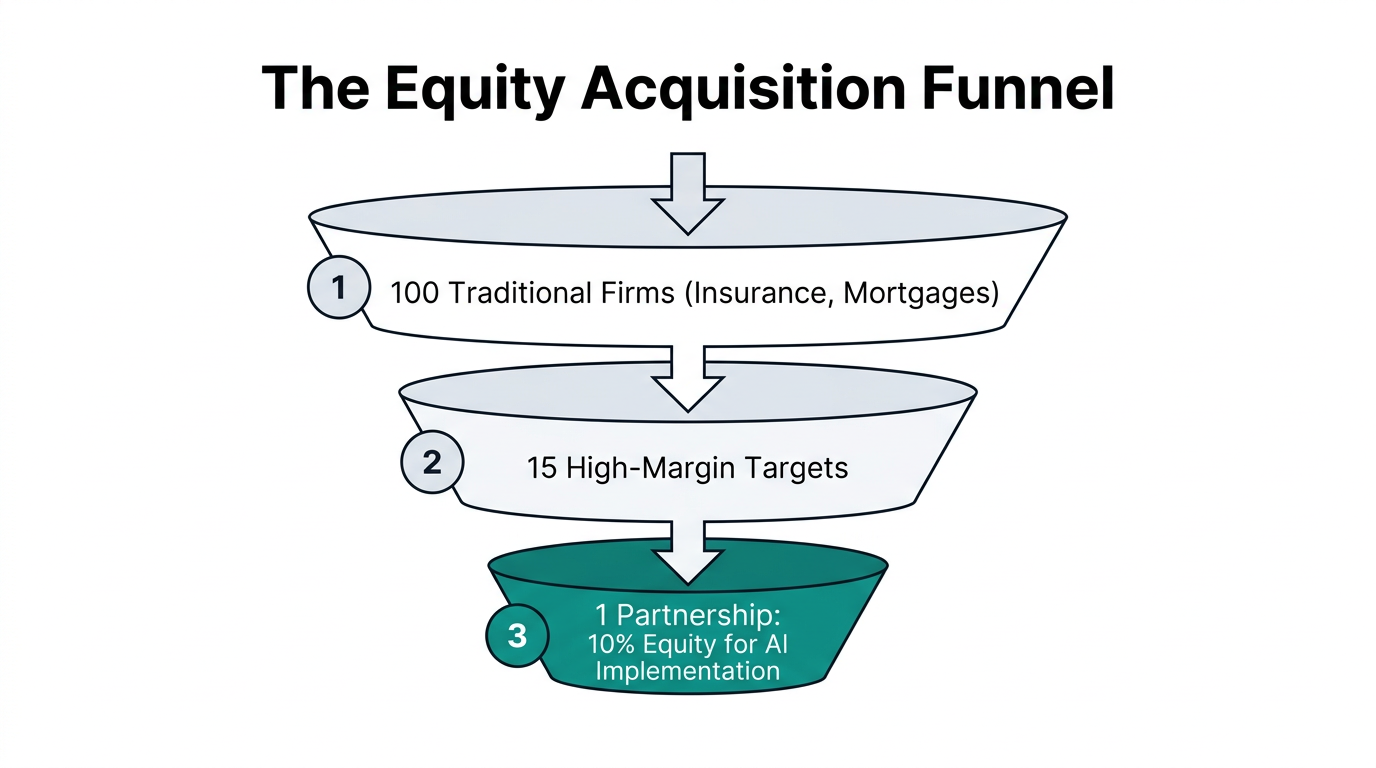
The 10% equity play is just the beginning. The ultimate goal of this B2B go-to-market 2026 playbook is to buy the majority of the business at a fair value once you have proven your worth. Most founders nearing retirement would rather sell to the person who already understands the business and has modernized it than to a faceless private equity firm. Your AI implementation acts as a "Trojan Horse." You are already inside the castle, you own the keys to the technical stack, and you have the data to show how much more the business is worth under your control.
To manage these complex relationships and deal stages, you need a robust Creator CRM or an AI-powered system. Tracking negotiations, technical milestones, and Opex savings in a centralized place is critical when you are running this play across multiple businesses simultaneously. If you are also leveraging creators to drive leads to these boring businesses, Stormy AI can manage those creator relationships, track the resulting campaign performance, and organize your business leads in one dashboard.
Conclusion: Building a 20-Year Moat
The window for the "AI Equity Play" is open now, but it won't stay open forever. By 2030, AI implementation will be the baseline, not the advantage. In 2026, however, the opportunity to trade OpenAI for business expertise for real-world equity is the single best way for a technical entrepreneur to build generational wealth. You don't need to invent the next OpenAI; you just need to be the one who knows how to use it to fix a 60-year-old insurance firm. Focus on high-margin, manual industries, structure contingency-based deals, and lean into the Law of the Opposite to dominate your niche. The boring businesses of yesterday are the AI goldmines of tomorrow.