The human brain is not naturally wired to identify profitable business opportunities. Between ego, cognitive bias, and the tendency to overthink, most entrepreneurs end up chasing vanity projects rather than solving real problems. However, the rise of Large Language Models (LLMs) has changed the landscape of market research. We are moving into an era where ai niche selection is no longer just a luxury, but a requirement for anyone looking to build a million-dollar business. By leveraging the right frameworks, you can outsource the heavy lifting of data synthesis to AI, allowing you to go from a blank page to a validated market concept in under an hour.
The Three Core Markets That Resist AI Volatility
Before diving into ai market analysis, it is vital to understand that not all niches are created equal. To minimize risk, professional marketers focus on the three evergreen sectors: Health, Wealth, and Relationships. These represent fundamental human needs that are unlikely to be displaced by technological shifts. Whether you are using Claude or Gemini to brainstorm, your starting point should always be rooted in these three pillars.

Within these markets, there are infinite layers of sub-categories. For instance, the "Health" market contains stress management, which further breaks down into physical stress relief, breathing techniques, and mindfulness. The goal of using trending markets 2024 strategies is to find a sub-niche that is specific enough to own but broad enough to scale. When you start with a human need, you ensure that your business has long-term viability rather than being a "wrapper" app for a temporary AI feature.
Using LLMs to Expand One Interest into 50+ Sub-Niches

The first step in the Goldmining framework is to take a broad interest and expand it using a specific prompt structure. A common mistake is asking an AI for "business ideas." Instead, you should use a market idea expander prompt. This forces the LLM to generate a tree of categories, sub-categories, and micro-niches. For the best results, use Markdown when communicating with LLMs. Markdown helps maintain structure and ensures the AI understands the hierarchy of information you are requesting.
Once you have a list of potential micro-niches, you need to validate which ones have actual "blood in the water." This is where social proof and creator presence become essential. Using Stormy's AI search to discover influencers across TikTok, YouTube, Instagram, LinkedIn, and TikTok Shop, you can instantly see if there are content creators already talking about these topics. If creators are successfully making content in a sub-niche, it is a leading indicator that there is a hungry audience ready for a solution.
Google Trends for Business: Search Terms vs. Topics

When validating demand, google trends for business is an indispensable tool, but most people use it incorrectly. The critical distinction is between a "Search Term" and a "Topic." A search term only tracks the specific words typed into the bar. A Topic on Google Trends encompasses all related search terms across different languages and variations. If a niche shows up as a Topic, it indicates a significant, established market.
To ensure you are entering high demand niches, look for stable or growing trends. Avoid "spiky" trends that suggest a passing fad. For example, while "AI photo filters" might show a massive spike and then a rapid decline, "co-parenting apps" show a steady, upward trajectory. This represents a human need driven by society changes rather than a technological novelty. Stable trends allow you to build a business that will still be relevant three to five years from now.
Analyzing Search Volume and Market Intensity
Raw data is the antidote to entrepreneurial bias. Use a tool like Keywords Everywhere to look at the monthly search volume for your potential niche. If a specific query like "co-parenting counseling" has 40,000+ searches, it confirms that people are actively looking for help. High search volume for keywords like "best app for X" or "classes for Y" is a strong signal of commercial intent.
However, search volume alone isn't enough. You must also vet the quality of the audience. Are these real people with real problems, or is the niche saturated with bots and low-quality engagement? By using Stormy AI for influencer vetting and fake follower detection, you can paste the URLs of top creators in that niche to detect engagement fraud. This ensures that the "market heat" you are seeing is genuine human interest and not an artificial bubble.
Mining Reddit for Emotional Pain Points

To build a product that people actually want, you must use their own language. Reddit is the world's most valuable database of human frustration. Because of its anonymous nature, users share deep, emotional pain points that they might not reveal elsewhere. To find these conversations, use an advanced Google search query like: site:reddit.com "market name" "I feel" OR "I struggle with" OR "how do I."
Once you have identified 10-20 relevant threads, copy the text and feed it back into your LLM. Ask the AI to extract specific pain points and verbatim quotes. This process uncovers nuances that you would never think of on your own. For instance, in the co-parenting niche, a key pain point isn't just "scheduling"; it's the emotional labor imbalance in blended families or the trauma of "tearful breakdowns during household transitions." This qualitative data is the foundation of a high-converting landing page.
Strategies for Entering 'Saturated' Markets
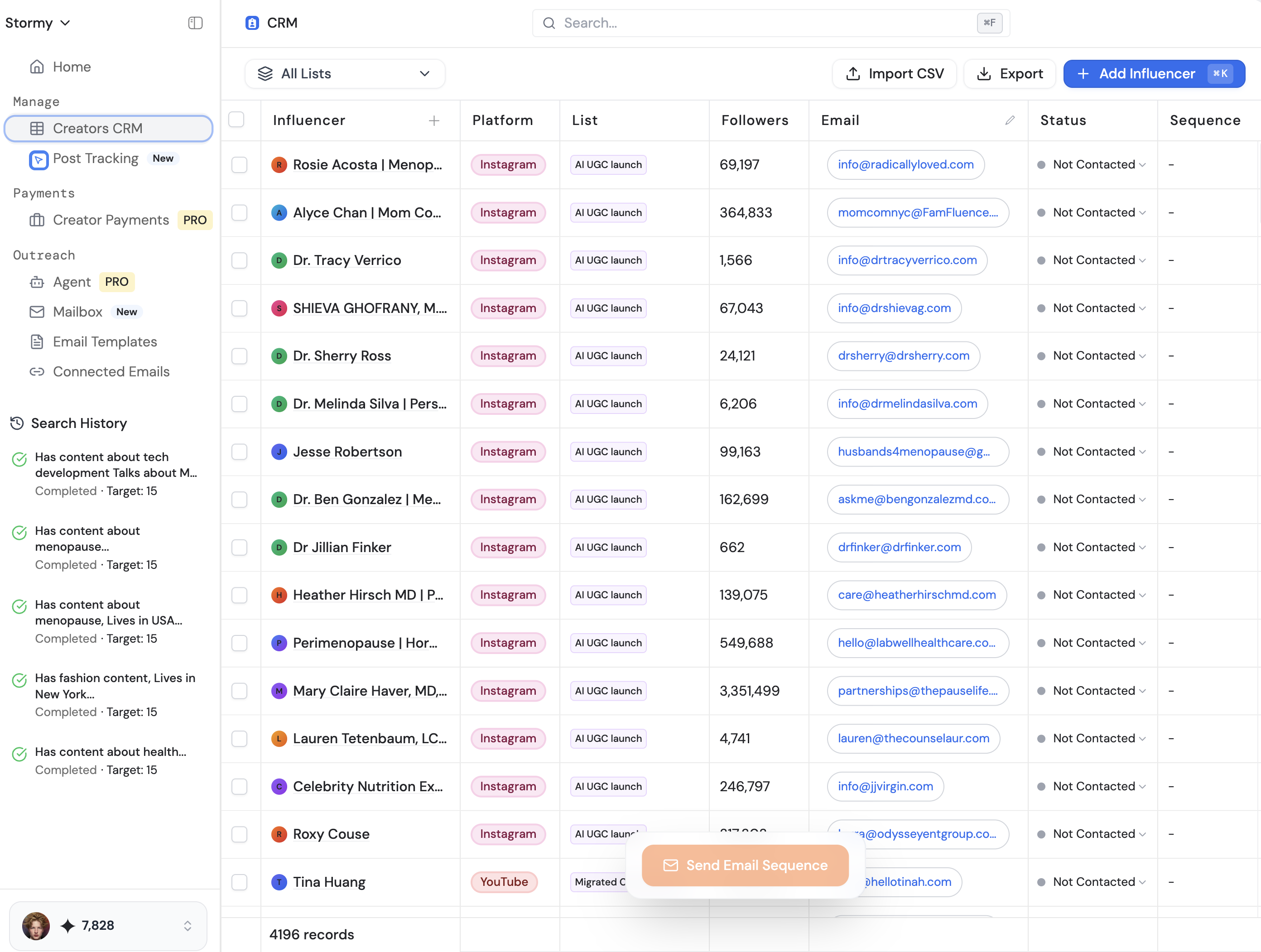
Many founders are afraid of "saturated" markets, but saturation is actually a sign of a healthy economy. The key is to use a Market Gap Generator framework. Instead of competing head-on with established giants, you look for a new paradigm or a specific differentiation. You can use the data gathered from Reddit to identify a segment of the market that is being underserved by existing general-purpose tools. To manage these new relationships, Stormy's creator CRM allows you to track every negotiation and payment in one place as you scale.
For example, if the market is saturated with general co-parenting apps, you might find a gap for a "conflict-focused" platform specifically designed for high-conflict divorces where communication needs to be filtered and documented for legal purposes. By solving a sub-niche pain point, you create a "category of one" where you are the only logical choice for that specific group of users. This is the most effective way to enter any high-competition space in 2024.
Validating with a Landing Page and Outreach

The final step is to turn your research into a live validation experiment. You can use tools like Lovable to generate a functional landing page based on the AI-extracted pain points. The goal is to see if people will actually sign up for a waiting list or a beta version of your solution. A landing page that uses the customer's own language—words like "peaceful goodbyes" instead of "custody transitions"—will always perform better.
To drive traffic to your validation page, don't wait for SEO. Instead, use Stormy's AI email outreach to contact micro-influencers in your chosen sub-niche. You can set up an autonomous AI agent that finds creators, discovers their emails, and sends hyper-personalized messages while you sleep. By asking these creators for feedback or a small shout-out, you can quickly build a waiting list of 100+ potential customers. As highlighted in the Starter Story Playbook, having a pre-validated list is the difference between a successful launch and a quiet failure.
Conclusion: From Data to Dollars
AI niche selection is not about finding a "get rich quick" scheme; it is about using data to find stable human needs that are currently being ignored or poorly served. By following the Goldmining framework—expanding markets with LLMs, validating with Google Trends, and mining emotional data from Reddit—you remove the guesswork from entrepreneurship. Once you find that "blood in the water," use Stormy AI for post tracking and analytics to monitor how your brand is being received across social platforms. The markets are waiting; the data is available. Now, it's time to build.