The dream of the "solopreneur" has never been more attainable than in the current AI gold rush. However, while thousands of developers are flooding the market with "wrapper" apps, only a handful are building sustainable, high-growth businesses. The difference between a failed side project and a $100,000 ARR success story often comes down to one thing: a ruthless SaaS validation strategy. Instead of spending months building in a vacuum, successful founders like Pauline, the creator of AI Crea, focus on solving high-frequency problems and shipping "imperfect" solutions to real users as fast as humanly possible.
Identifying High-Frequency Problems Within Your Network
Most failed startups begin with an "idea" rather than a "problem." When Pauline was working as a data scientist at IBM, she didn't look for the most complex technical challenge to solve. Instead, she looked for high-frequency pain points. The genesis of AI Crea—an AI-powered tool for home renovation and virtual staging—came from observing how people struggled to visualize interior design changes, a market segments currently being disrupted by generative AI in real estate.
To find your own "winning" idea, you must audit your professional and personal network. Don't ask people "What do you want?" Instead, ask "How often do you encounter this specific frustration?" Frequency is the leading indicator of monetization potential. If a user faces a problem once a year, they might look for a free workaround. If they face it every day—like a real estate agent trying to sell an empty, unappealing house—they will pay for a solution.
"I usually find ideas when I encounter some problem either for me or friends. I ask a lot of questions: How frequent is this problem? Am I able to do better? Am I able to monetize it?"
The One-Month MVP Rule: Shipping Over Perfection
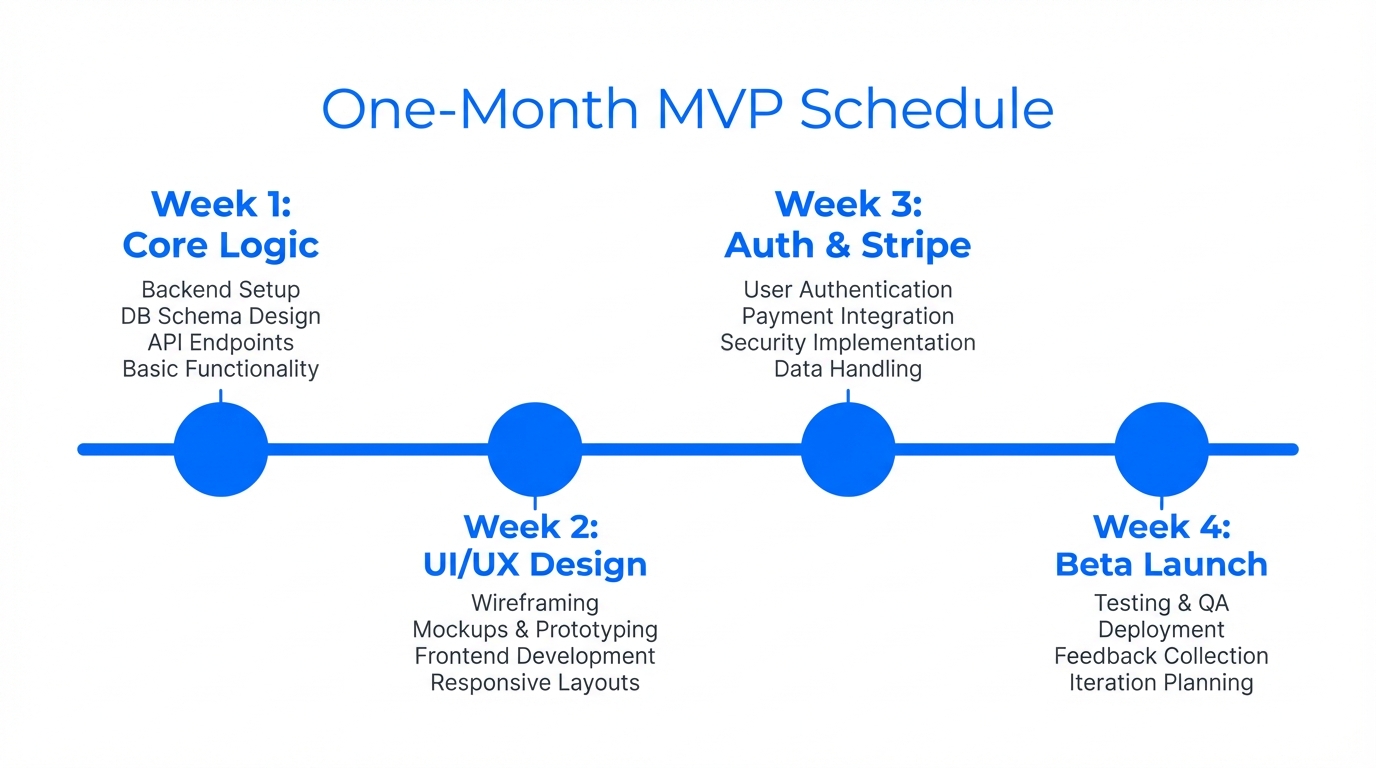
One of the biggest traps for technical founders is the "feature creep" cycle. We tell ourselves the product isn't ready because the UI is slightly off or the AI model isn't 100% accurate. The minimum viable product framework used for AI Crea suggests a different path: the one-month rule. Pauline’s first version of AI Crea was built in roughly 30 days. It had "bad quality" features compared to the current version, but it was functional enough to show the value proposition.
Shipping a "lower-quality" version early is mathematically superior to waiting. Why? Because it provides the only data that matters: user behavior. When you launch quickly, you discover that what you thought users wanted (Feature A) is often ignored in favor of something you considered secondary (Feature B). By launching AI Crea early, the team was able to spend the following year refining the AI models and UI based on actual feedback rather than guesswork.
Tactical Validation: Securing Pre-payments From Niche Pros
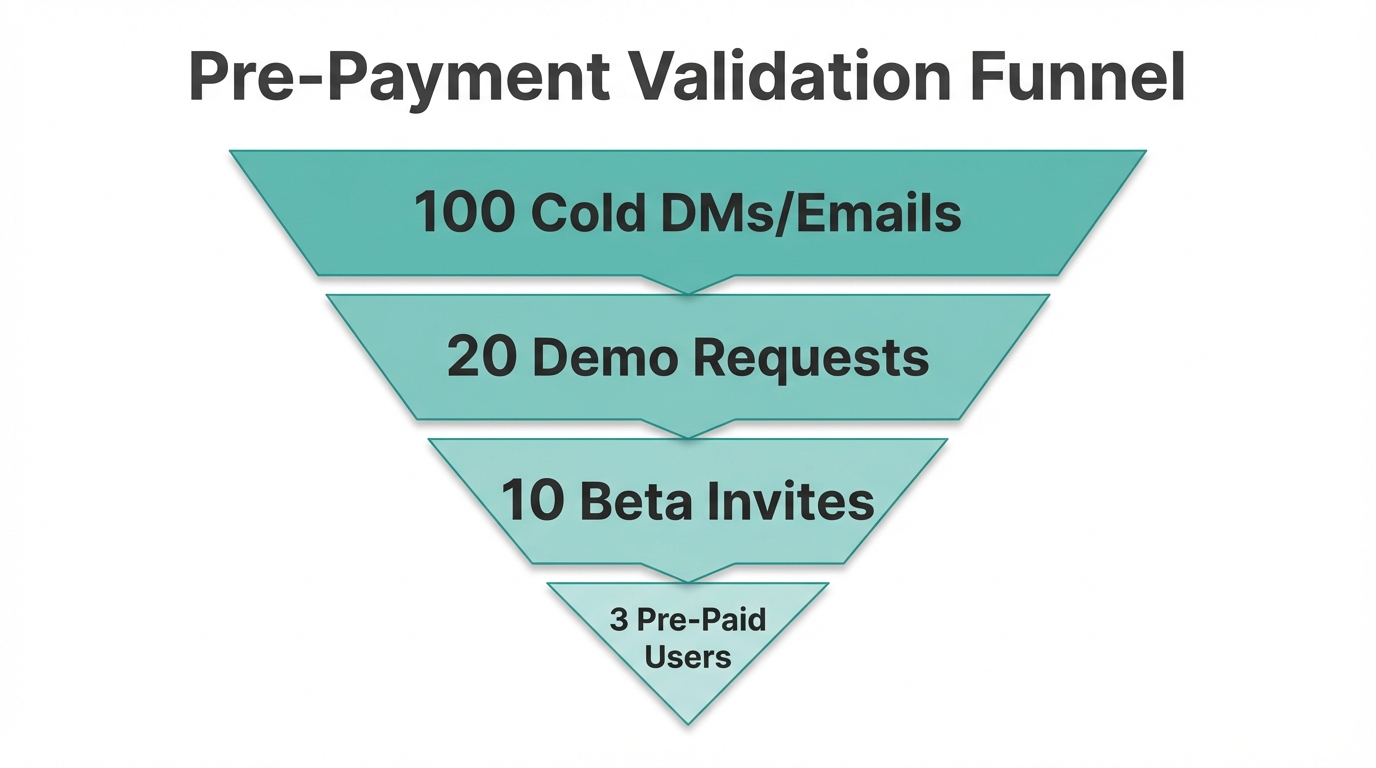
How do you know if an AI startup GTM (Go-To-Market) strategy is working? The answer isn't "likes" or "waitlist signups"—it's revenue. To validate AI Crea, Pauline didn't just post on a general forum; she went directly to where the money was: real estate agents. By reaching out to niche professionals through her personal network and online communities, she could demo the MVP and ask for a sale immediately.
When someone says "That's awesome!" it means nothing. When someone enters their credit card details to buy a one-time credit pack for an imperfect tool, you have validated your product. This direct outreach approach allows you to iterate on your pricing and pitch in real-time. If you find your target audience on Facebook or LinkedIn, don't just lurk. Join the conversation, identify the power users, and offer them early access in exchange for honest feedback and a small payment via Stripe.
| Strategy Phase | Traditional Approach | AI Crea Framework |
|---|---|---|
| Development | 3-6 months of "stealth" coding | 1-month MVP (Function over Form) |
| Validation | Surveys and "interest" forms | Direct niche outreach & Pre-payments |
| Marketing | Wide-net social media ads | Platform-specific (e.g., Facebook for Real Estate) |
| Iteration | Based on founder's vision | Based on actual usage data |
Marketing: Where Do Your Customers Actually Hang Out?
A common mistake in how to launch an AI app is assuming that "everyone" is your customer. In reality, your marketing channels should be dictated by your niche. For AI Crea, the most successful channel was Facebook and physical industry events, because that is where real estate agents and home renovation enthusiasts spend their time. Conversely, for Pauline's other project, Nextory, the best channel was Twitter (X) because it targeted developers and the indie hackers community.
When you are ready to scale your outreach and find the right people to talk to, platforms like Stormy AI streamline creator sourcing and outreach. Instead of manual searching, you can use AI-powered discovery to find the exact creators who can demonstrate your product to their followers, drastically reducing your customer acquisition cost (CAC).
"To find customers online, you have to think about where your clients are... for AI Crea, my best marketing channel is probably Facebook and physical events."
Monetization Strategy: Balancing Subscriptions and One-Time Payments
Pricing is one of the most powerful levers for growth. AI Crea utilizes a hybrid model: one-time payments for specific photo packs and monthly subscriptions for power users. This approach lowers the barrier to entry for casual users while providing recurring revenue from professionals. However, with subscriptions comes the challenge of churn.
To reduce churn, the team implemented three specific tactics:
- Yearly Plans: Encouraging users to commit for 12 months in exchange for a discount increases the lifetime value (LTV) and gives users more time to integrate the tool into their workflow.
- Free Trials: Allowing users to see the result before they pay builds the necessary trust for an AI-generated product.
- Quality Improvements: Continuously refining the output quality—moving from "AI-looking" images to results that look like real photos using tools like CapCut for video marketing.
The Modern AI Growth Stack
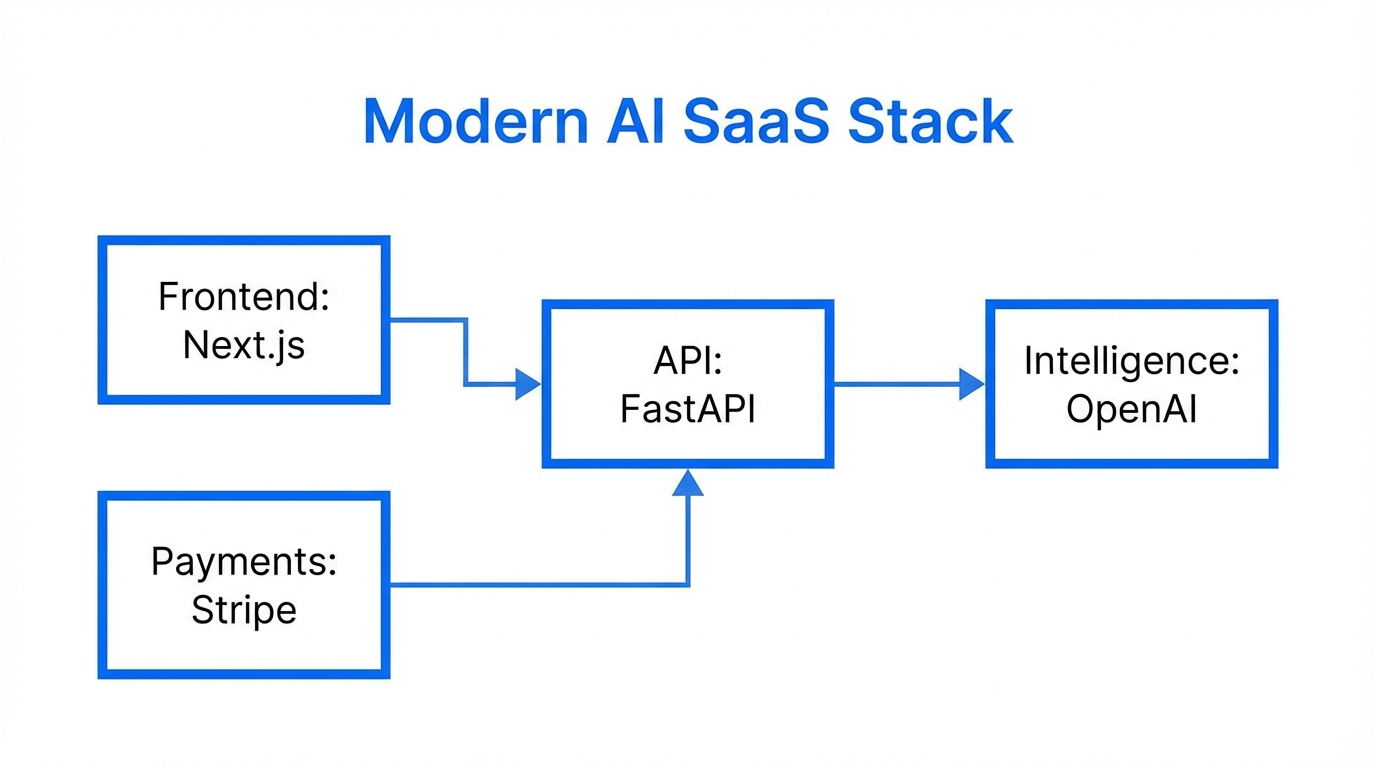
Building an $8,000 MRR business as a solo founder requires a lean and efficient tech stack. You cannot afford to spend hours on manual tasks. Pauline’s stack focuses on automation and high-speed development:
- Framework: Next.js for the frontend and Python for the AI models.
- Database & Auth: Supabase for rapid backend deployment.
- Communication: Crisp for real-time customer support.
- Marketing Automation: Buffer for social scheduling and Beehiiv for newsletters.
- Outreach: Utilizing Stormy AI to discover and manage creator relationships at scale while the AI handles follow-ups automatically.
Transitioning From a 9-to-5 to Full-Time Founder
The transition from employee to entrepreneur doesn't have to be a blind leap. Pauline built AI Crea to $8,000 MRR while still working at IBM, using only nights and weekends. The "safe" way to quit your job is to hit a specific revenue milestone that covers your living expenses and business costs. Pauline finally made the jump in June, after the business proved its sustainability.
The 9-to-5 environment actually provides a unique advantage: financial stability. This stability allows you to reinvest your early profits back into the business—hiring freelancers, running ads on Meta Ads Manager, or attending industry events—without worrying about your personal rent.
"If you want to start indie hacking, please don't wait for the perfect product. Just start. Your first product will likely fail, but you will learn a lot during the journey."
Conclusion: Launch Fast and Iterate
The journey of AI Crea shows that success in the AI space isn't about having the most original idea; it's about execution and validation. By identifying a high-frequency problem, shipping an imperfect MVP within a month, and aggressively seeking direct feedback from a niche audience, you can build a six-figure business while maintaining a full-time job. Stop waiting for the "perfect" moment to launch on Product Hunt. Put your product in front of one real customer today, ask for a payment, and let their feedback guide your next 12 months of development. Take action, validate, and scale.