For years, the promise of social media was to bring us closer together, but for many, it has resulted in a digital landscape that feels more like a series of empty rooms. Every video call feels like a high-pressure conference room, and every group chat eventually loses its spark, drifting into the graveyard of silenced notifications. However, a new wave of consumer AI trends is emerging that suggests the problem isn't the social interaction itself, but the lack of context. The future of social apps isn't about AI replacing your friends; it’s about AI acting as the 'hype man' that facilitates more frequent, lower-friction human-to-human interaction.
The Death of the Digital Conference Room
The central problem facing social product developers today is spontaneity. In the physical world, social interaction is often a byproduct of shared environments—the college dorm lobby, the coffee shop, or the office breakroom. In these spaces, conversations are low-pressure and spontaneous. You aren't 'scheduling' a hangout; you are simply existing in a space where interaction is possible.
Roger Chen, a founder who has hit the top of the Apple App Store with two different social apps, identified this early on. His first app, Lobby, reached 500,000 daily active users by rebuilding the college dorm experience. The insight was simple: people don't want to stare at each other in awkward silence on a video call. They need background activities—YouTube, SoundCloud, or games—to lower the social burden. When the interaction is centered around context (content you consume together) rather than just direct conversation, the social friction evaporates.
AI as the 'Yappy Friend'


As we move into the era of the ai social companion, the most successful products are shifting away from the 'black box' model where you talk to an AI in isolation. Instead, AI is becoming a tool to offload the emotional labor of keeping a group conversation alive. According to research on the AI companion market, the most engaging bots act as a 'yappy friend' who is always willing to start a topic or crack a joke when things go quiet.
By acting as a 'third guy' in the conversation, AI can provide the spontaneity and chaos needed to bridge the gaps in human interaction. Instead of the AI being the destination, it becomes the connective tissue. For mobile app developers, this represents a massive shift in Stormy AI's product strategy. The platform acts as an AI search engine across TikTok, YouTube, and Instagram, helping brands find the right voices to demonstrate these social use cases.
Augmentation vs. Displacement
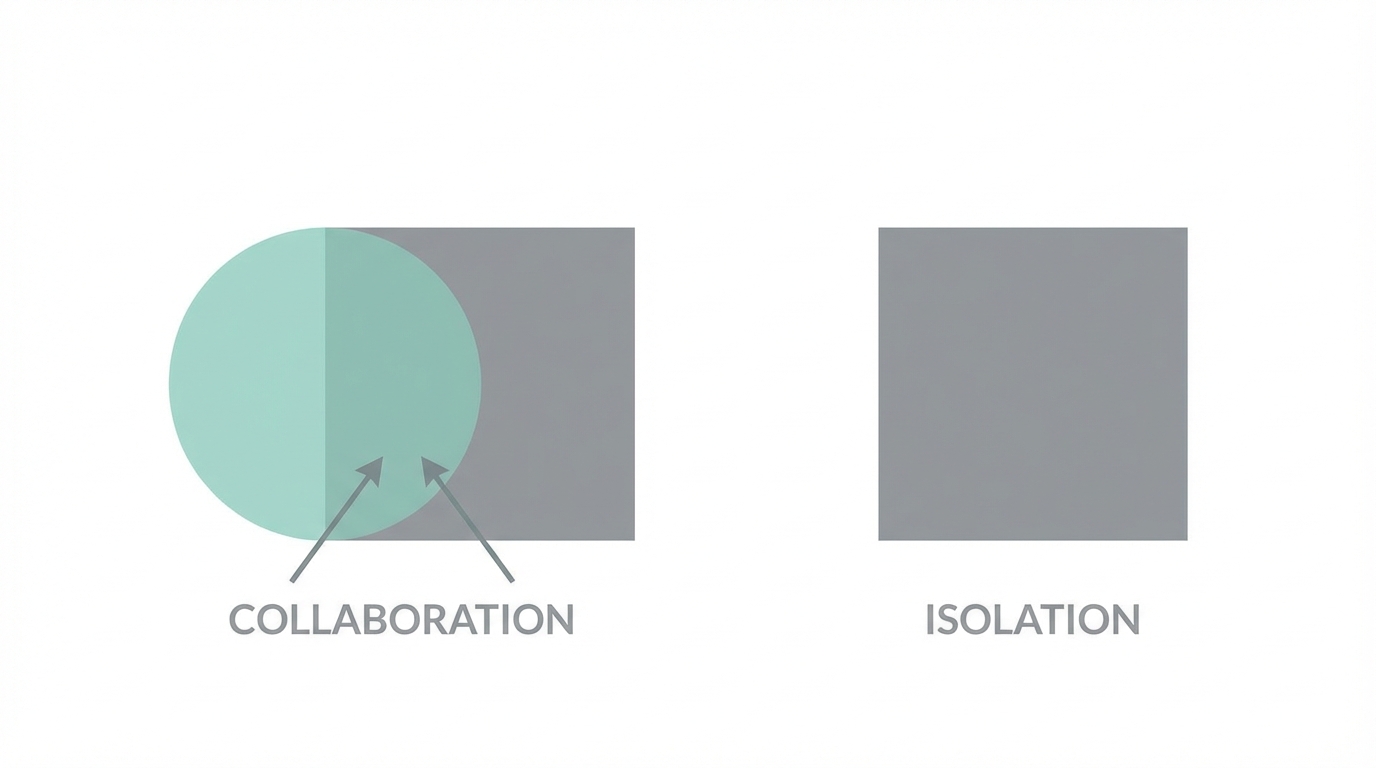
There is a growing dystopian fear that AI companions will eventually replace real-world relationships. However, the data suggests that augmentation is a much more viable path than displacement. Talking incessantly to a black-box AI is inherently depressing for most users. In contrast, having an AI that helps you 'risk' a crush or handle a difficult text message thread is empowering. It makes real-world social interaction more accessible, much like DoorDash makes restaurant food more accessible without replacing the restaurant experience itself.
Platforms like Stormy AI emphasize the value of vetting creators for authentic UGC (user-generated content) to show these 'augmentation' use cases. When you use Stormy to detect fake followers and analyze audience demographics, you ensure that real human stories resonate far more than a technical demo. The next wave of successful apps will be those that bring people together rather than those that offer a substitute for human connection.
The 'Picture-in-Picture' UI Hack

One of the most innovative breakthroughs in recent social app design is the use of Picture-in-Picture (PiP) as a primary interface. Roger Chen's app, Bro, utilized a floating window that lived over other apps like iMessage or dating platforms. This 'FaceTime-style' floating window keeps the ai social companion present throughout the user's entire digital life, rather than confining it to a single app container.
This UI choice is critical because it solves the 'intent' problem. Most apps require you to open them with a specific goal. By living in a floating window, the AI is proactive. It can provide morning affirmations or help you reply to a text in real-time. To market these features, savvy developers are using Stormy AI to find creators who can film 'hook and demo' style videos that showcase the app's utility in real-world environments like TikTok.
The Playbook: Validating Before You Build
Consumer social is notoriously difficult because growth depends on network density. Roger Chen's strategy for hitting #1 on the App Store involves a rigorous validation process that happens before a single line of production code is written. This prevents founders from falling into 'pivot hell.'
Step 1: Low-Fidelity Prototyping
Forget Figma for a moment. Use a tool like Protopie to create a mockup that actually feels like an app. Carry it around on your phone, play with it on the bus, and see if the core flow feels good to use. There is a massive gap between how a design looks and how a tap-able interface feels.
Step 2: The TikTok Ad Feedback Loop
Instead of using ads only for scaling, use TikTok Ads for instant validation. Create a 'fake' demo video using your Protopie mockup and run it as an ad. This allows you to gain two things instantly: a creative format that works and quantitative data on whether people actually want the product concept.
Step 3: Seeding Network Density
Once the concept is validated, you need relationship density and temporal density. Relationship density means your users have at least 5 friends on the app. Temporal density means they are online at the same time. Features like watermarked group pictures (Boomerangs) that are shared to Instagram stories can trigger 'FOMO' and drive viral invites.
Founder-Market Fit: Obsession Over Trends

In the world of future of social media, many developers chase trends like anime chatbots or AI utility tools. However, Roger Chen argues that founder market fit is the ultimate predictor of success. You must be the right person for the niche. If you aren't obsessed with fictional world-building, you won't build a great AI story app. If you aren't obsessed with human connection, you won't build a great social app.
Building a social product means being 'slapped in the face' by failed experiments every month. Only a deep-seated passion for the problem—like the desire to recreate a never-ending music festival vibe—will keep a team iterating long enough to find a breakout feature. It is about using less of the brain and more of the heart to design experiences that genuinely bring joy.
Product-Led Viral Growth Strategies

Lobby’s success in markets like Israel and the UK wasn't due to heavy marketing spend. It was product-led viral growth. One specific feature—the 'Group Picture'—changed everything. During a video hangout, a button would light up every few minutes, prompting a 3-2-1 countdown for a group boomerang. This created a shared experience rather than a 'creepy' screenshot.
Because these pictures were watermarked and shared to other platforms, they acted as a recurring growth engine. They brought friends back into the app and showed those who weren't there what they were missing. For developers looking to optimize their own growth, tools like Superwall help A/B test the paywalls that fund these viral loops. You can even browse Paywall Experiments to see what’s working for other top-grossing apps.
Conclusion: The Future is Contextual
The future of social media is not a lonely one. While AI-generated content is flooding the web, the demand for authentic human interaction is reaching an all-time high. The winners in the consumer AI space will be those who use AI to lower the barriers to entry for social connection, creating a world where every app feels less like a quiet room and more like a vibrant, spontaneous lobby.
Whether you are building the next big social network or a niche ai social companion, remember that context over content is the winning formula. Test your ideas early with Meta Ads Manager or TikTok, find your founder-market fit, and focus on augmenting the relationships that matter most. If you need help finding the right creators to bring your vision to life, use Stormy AI to set up an autonomous AI agent that discovers, outreaches, and follows up with creators on a daily schedule and start building the future of social today.