Disrupting Rivals with AI Competitor Analysis for E-commerce: A Playbook for Review Clustering
Learn how to use AI review clustering to find competitor product flaws and market gaps. This 2026 playbook covers strategy, tools, and predictive trend modeling.
In 2026, the e-commerce landscape is no longer a battle of who has the biggest ad budget; it is a battle of who has the smartest data processing. With the global AI-enabled e-commerce market reaching a staggering $8.65 billion last year and projected to hit $22.6 billion by 2032, the window for manual competitive research has officially closed. Brands that still rely on human interns to browse Amazon listings are being outpaced by those using Agentic Intelligence—autonomous systems that don't just track price drops, but predict a rival's next move before they even make it.
The Era of Agentic Intelligence in E-commerce
We have moved past simple automation. Today, Euromonitor reports that referral traffic from AI platforms like ChatGPT, Gemini, and Perplexity to e-commerce sites has surged by 109%. This shift means your competitors aren't just other brands; they are the AI recommendation engines that decide whether to show your product or a rival’s. To win, you must understand the "structural flaws" in your competitors' offerings that these AI agents are beginning to notice.
The "What" vs. "Why" Rule: Strategic Judgment in 2026
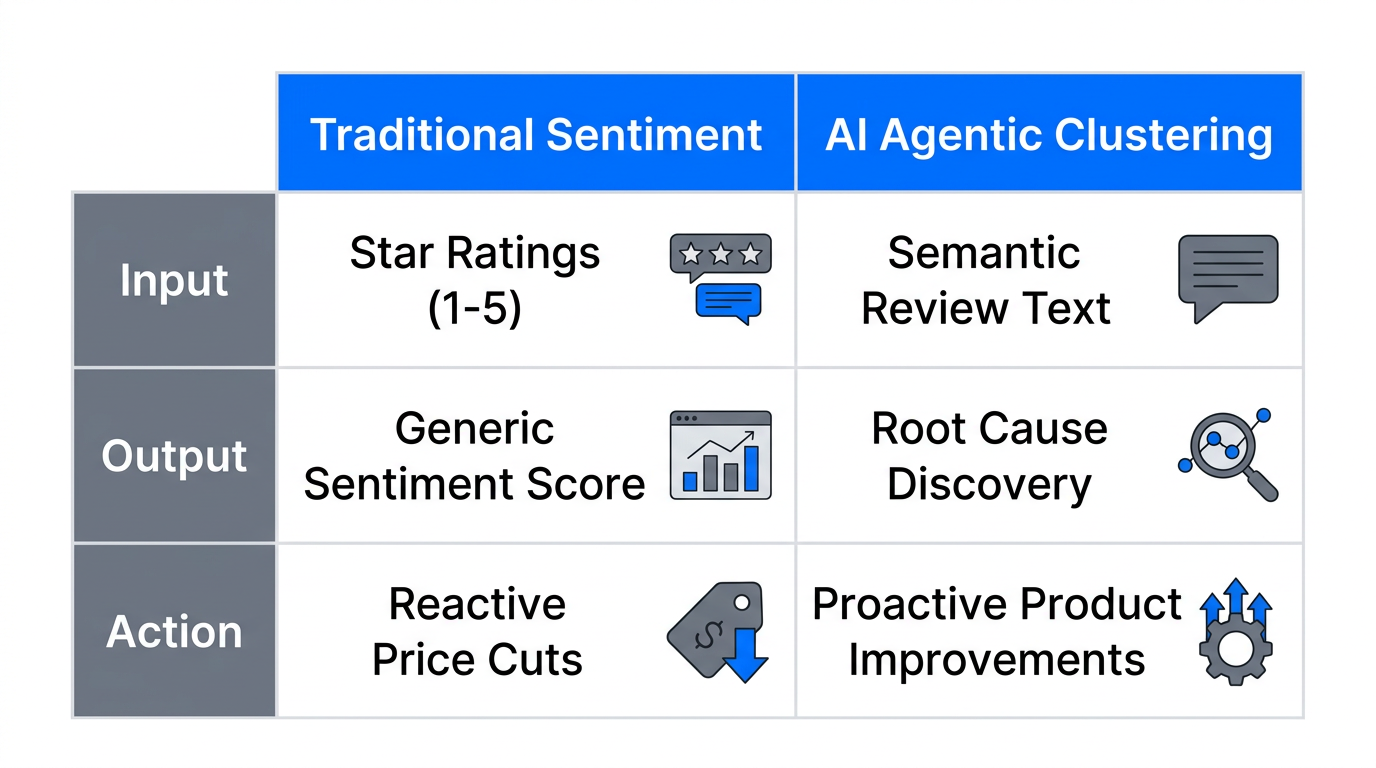
While AI is unparalleled at identifying what is happening in the market—such as a sudden drop in a competitor's pricing or a shift in their keyword density—it often lacks the nuance to explain why. As noted by industry experts on Medium, human judgment is still the final filter. Is a rival dropping prices because they are winning, or because they are desperately clearing failing inventory? Strategic disruption requires pairing AI data with human-centric empathy.
"The most dangerous competitor isn't the one with the lowest price, but the one who uses AI to find the one thing you’re doing wrong that you haven’t noticed yet."
By leveraging Semrush for keyword gap analysis and matching it with sentiment data, brands can move beyond reactive tactics. The goal is to identify consistent pain points that are structural, not seasonal. This is where AI-driven market research truly shines, allowing you to see the forest and the trees simultaneously.
The Review Clustering Playbook: Mining for 1-Star Gold
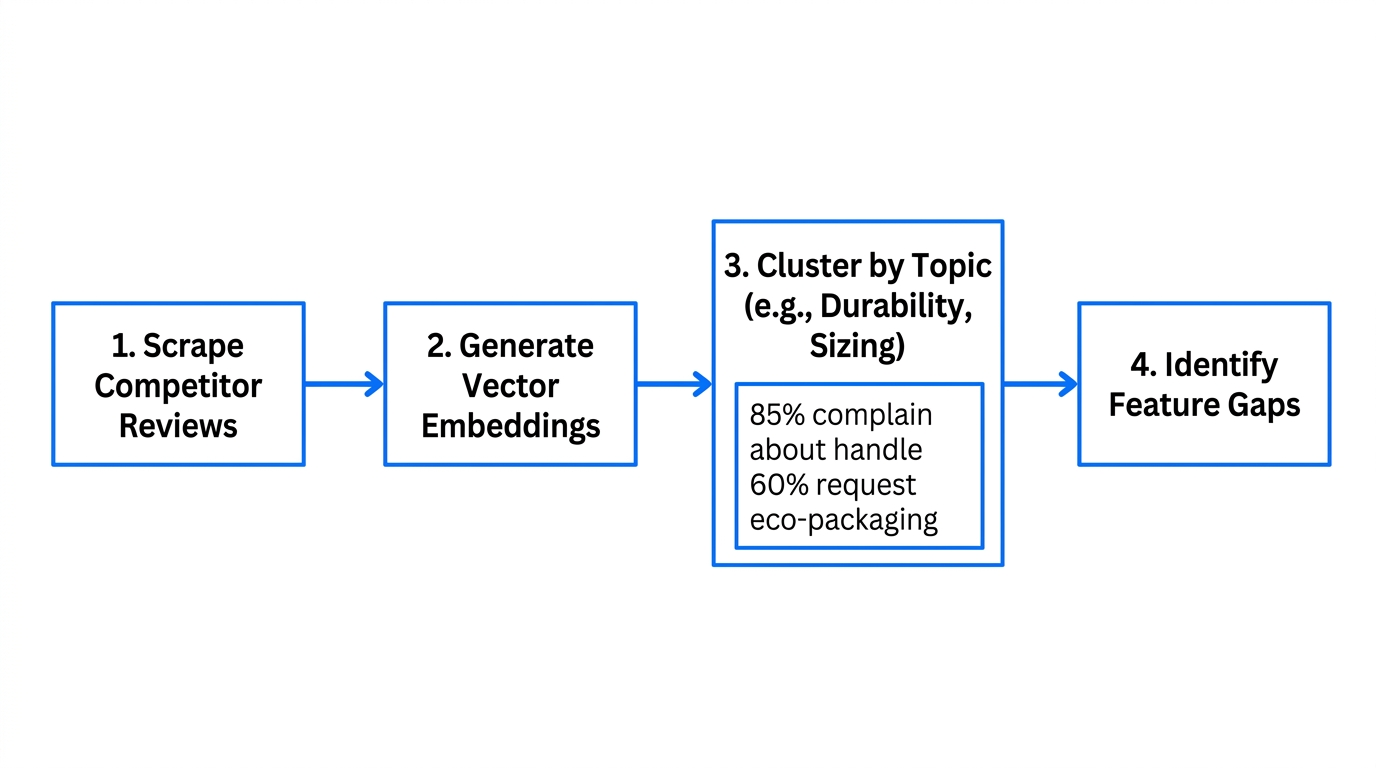
Review mining used to involve reading hundreds of comments. In 2026, we use AI Review Clustering. This process involves scraping thousands of competitor reviews across Amazon, Walmart, and TikTok Shop, then using LLMs to categorize them into "Sentiment Clusters." For example, if you are in the electronics niche, an AI might find that 40% of a competitor’s 1-star reviews mention "short battery life" or "flimsy charging port."
Step 1: Data Acquisition
Use tools like Competely.ai or custom scrapers to gather every review from your top three rivals. Don't just look at the rating; look at the Digital Footprint. Crayon can help track these strategy signals across the web, ensuring you aren't missing shifts in their messaging that correlate with poor product performance.
Step 2: Clustering and Pattern Recognition
Feed this data into a model to identify "Structural Flaws." These are not one-off complaints; they are systemic failures in the competitor's supply chain or design. If the AI detects a recurring theme of "sizing runs small," you have just found your market entry point.
| Analysis Metric | Traditional Research | AI-Driven Clustering (2026) |
|---|---|---|
| Speed | Weeks of manual reading | Seconds via API processing |
| Accuracy | Subjective & biased | Objective pattern recognition |
| Outcome | General feeling of brand health | Specific product engineering tasks |
Launching 'Counter-Products' as a Marketing Hook
Once the AI identifies a flaw, your next move is to launch a Counter-Product. This doesn't necessarily mean a brand-new invention; it means re-positioning your existing product or tweaking a feature to directly address the competitor’s weakness. If the rival's battery dies in 2 months, your primary marketing hook becomes "The 12-Month Battery Promise."
To scale this message, modern brands are turning to user-generated content (UGC). Platforms like Stormy AI streamline the process of finding creators who specialize in your specific niche. By identifying influencers who have previously critiqued competitor products, you can arm them with your "solution" to create highly authentic, high-converting content. This creates a narrative of superiority through problem-solving rather than just price-matching.
"E-commerce disruption in 2026 is about finding the gap between a competitor's marketing promise and their customer's reality."
Predictive Trend Modeling: The Zalando Case Study
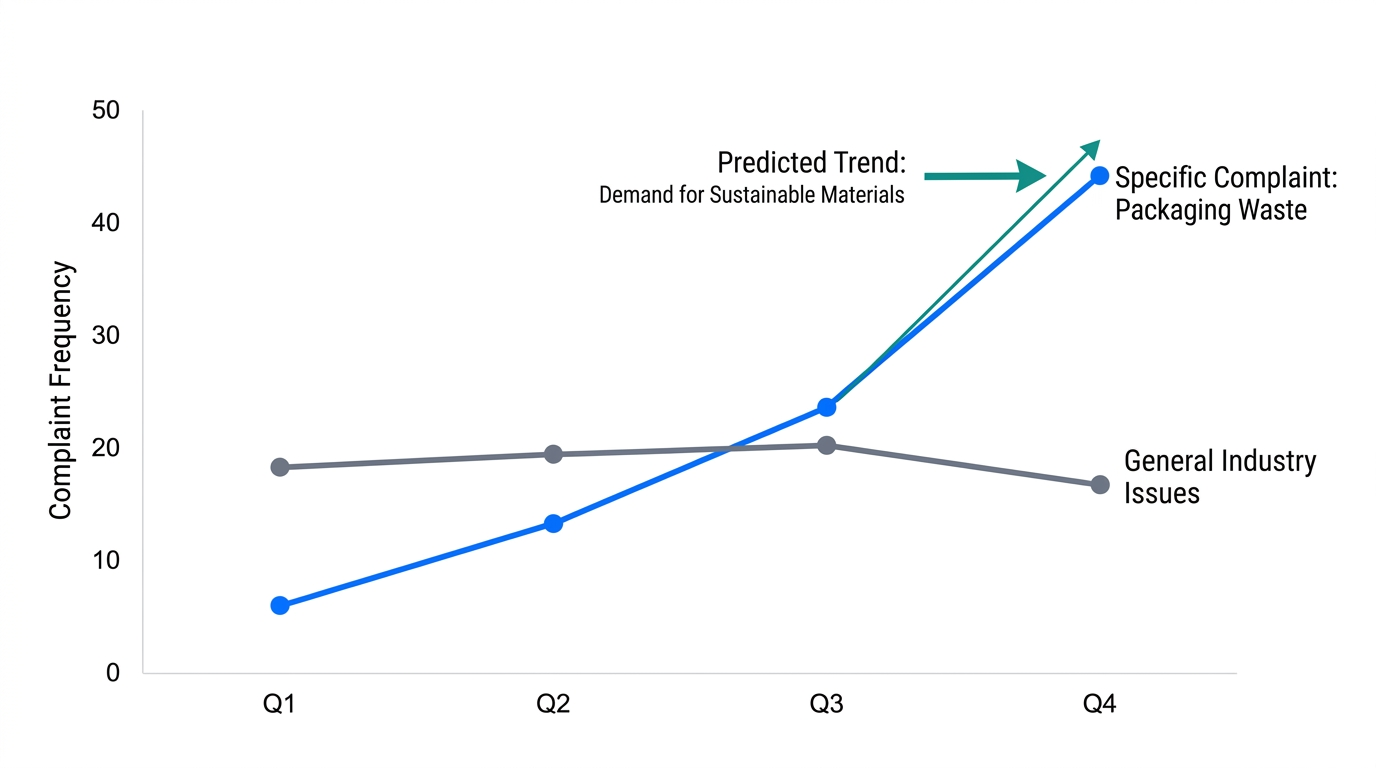
The most advanced players aren't just looking at the past; they are predicting the future. Zalando has set the gold standard by using machine learning to predict fashion trends before they hit the mainstream. By analyzing global search patterns, social media sentiment, and even weather data, they can pivot their inventory months before their rivals realize a trend has shifted.
This "Searchless Discovery" model is becoming the norm. As shoppers move toward AI assistants like Amazon’s Rufus, your BrandRank—how often an LLM recommends you—becomes more important than your Google ranking. Using TrackMyBusiness allows you to monitor how these AI agents portray your reputation versus your competitors.
Avoiding the Price-Only Trap
A common mistake in 2026 is focusing solely on undercutting rivals. While AtTheRate.ai can help with dynamic pricing, Veridion data suggests that 70% of consumers will switch brands for quality or service, not just a lower price tag. If you compete only on price, you are in a race to the bottom that erodes your margins and kills your brand equity.
Instead, use AI to identify indirect competitors. In the age of AI agents, your competitor might not even be a brand—it could be a new software solution or a different way of fulfilling the same customer need. Monitoring product schema updates is critical here; if your structured data is stale while a competitor's is fresh, AI shopping bots will bypass your listing entirely using protocols like Schema.org.
Conclusion: Building Your 2026 Growth Stack
Disrupting your rivals requires a move from defensive tracking to offensive AI strategy. By using review clustering to find structural flaws, you can build a brand that doesn't just exist in the market but actively exploits the weaknesses of established players. The winner of the e-commerce wars will be the brand that listens to the data the competitor is too busy to read.
Start by auditing your rival's worst reviews today. Once you find the gap, use Stormy AI to discover the creators who can tell your story of superiority. In a world of automated commerce, authenticity powered by AI insights is the only sustainable competitive advantage.