Welcome to the era of "searchless discovery." As we move through 2026, the traditional e-commerce landscape has undergone its most radical transformation since the invention of the smartphone. The days of fighting for the #1 spot on a static Google search results page are fading. Today, the real battle for market share happens within the neural networks of AI shopping assistants like Amazon’s Rufus and Google’s Gemini. For brands to survive, they must transition from traditional SEO tracking to a new, more sophisticated framework: monitoring AI Share of Voice and optimizing for BrandRank.
Data from the past year confirms this seismic shift. In 2025, referral traffic from AI platforms such as ChatGPT, Gemini, and Perplexity to e-commerce sites surged by 109%, while traditional referral sources grew by a mere 7%. With 97% of retailers increasing their AI spending this year, the competition is no longer just between you and a rival brand—it is a race to see which brand the AI trusts most to recommend to a high-intent buyer.
The Death of the Search Bar: Why AI Share of Voice is the New SEO
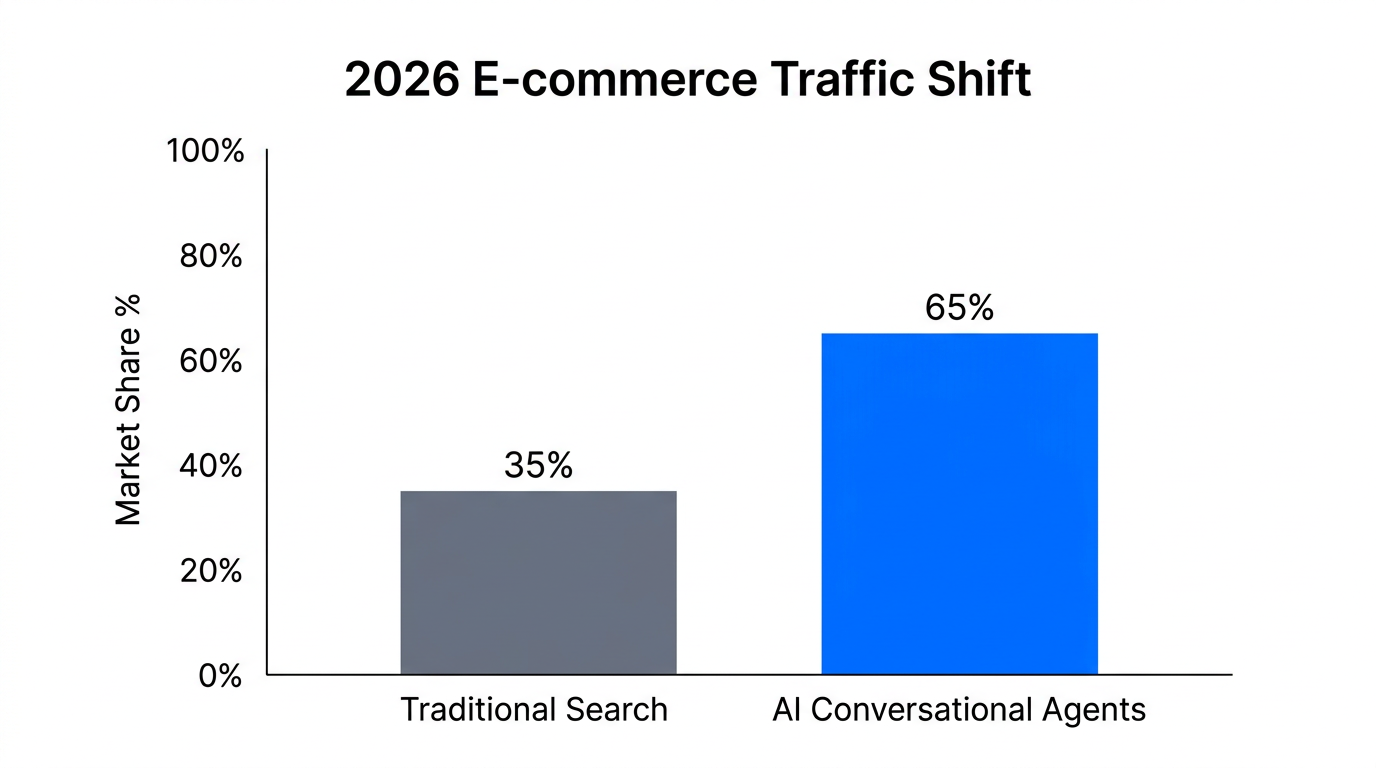
In 2026, the primary interface for shopping is no longer a list of links; it’s a conversation. When a user asks an AI assistant, "Find me the most durable running shoes for wide feet under $150," the assistant doesn’t show ten ads—it recommends three specific products based on ingested sentiment, technical specs, and historical reliability. This is the essence of AI Share of Voice.
Traditional SEO was about keywords; AI assistant optimization is about context and authority. If a competitor is mentioned more frequently as a "reliable" or "innovative" choice by an LLM, they are winning the share of voice. Monitoring this requires specialized tools like BrightEdge Generative Parser, which simulates thousands of AI conversations to map out where your brand stands in the recommendation engine. Companies failing to track this are essentially flying blind in a market valued at over $8.6 billion as of last year.
"In 2026, the 'Buy' button isn't found at the end of a search—it's suggested at the end of a conversation."
Decoding BrandRank: The Metric for LLM Reputation
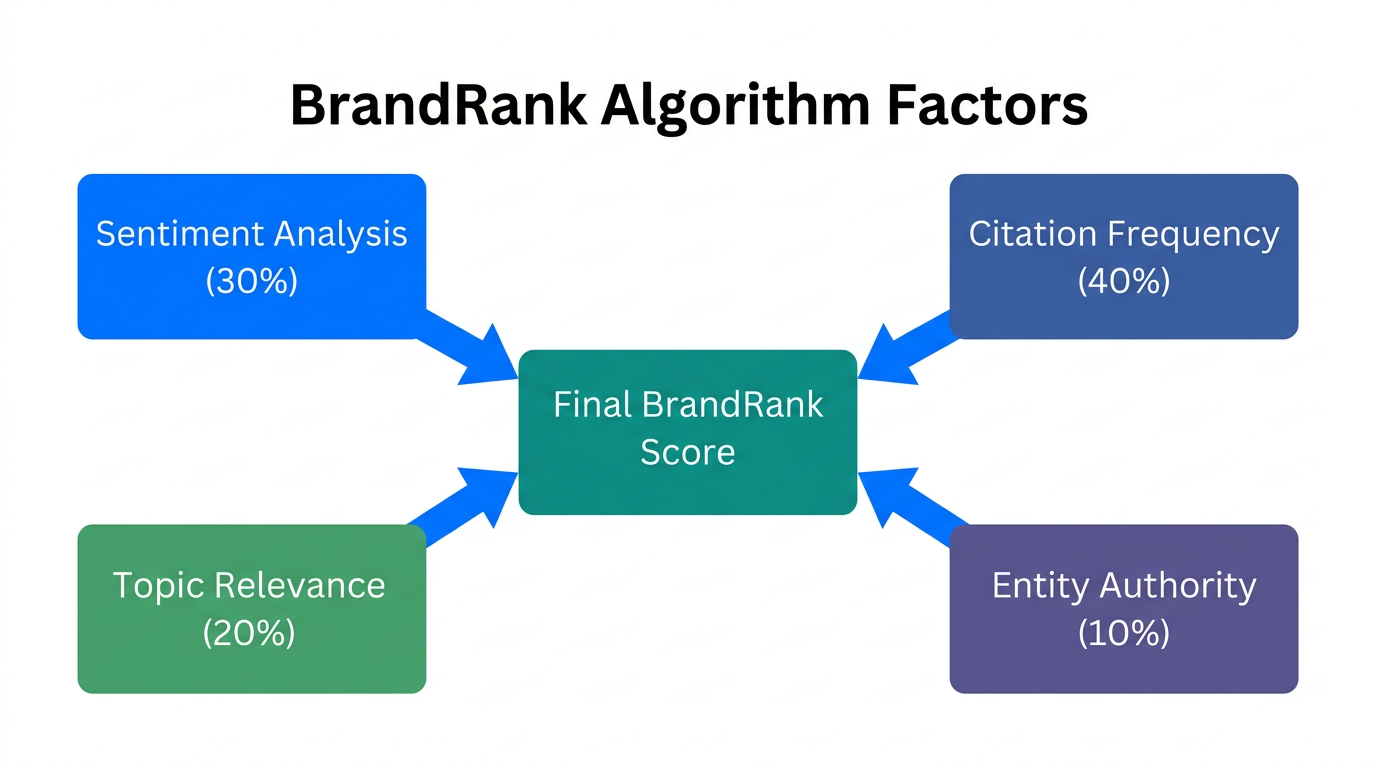
If PageRank was the backbone of the old web, BrandRank is the nervous system of the AI-driven economy. BrandRank is a metric that measures how Large Language Models (LLMs) perceive and portray your business reputation compared to rivals, similar to data provided by Reputation.com.
LLMs don't just look at your website; they "read" everything. They ingest Reddit threads, YouTube transcripts, TikTok comments, and professional reviews. To improve your BrandRank, you must ensure that the sentiment footprint of your brand across the web is overwhelmingly positive and technically accurate. LLM brand reputation tracking involves identifying "reputation gaps"—areas where the AI incorrectly associates your brand with negative traits or fails to recognize your key unique selling points (USPs).
| Metric | Traditional SEO | BrandRank (2026) |
|---|---|---|
| Primary Goal | Keywords & Backlinks | Sentiment & Contextual Authority |
| Discovery Method | Search Engines | AI Shopping Assistants (Rufus, Gemini) |
| User Input | Short Phrases (3-5 words) | Natural Language Prompts (Long-form) |
| Success Indicator | SERP Position #1-3 | AI Share of Voice > 30% |
One effective way to boost BrandRank is by leveraging high-authority social proof. By using platforms like Stormy AI, brands can discover and partner with creators whose content feeds the LLM datasets with positive, authentic reviews, directly influencing how the AI perceives the brand's quality.
The Technical Edge: Schema Freshness and Real-Time Crawling
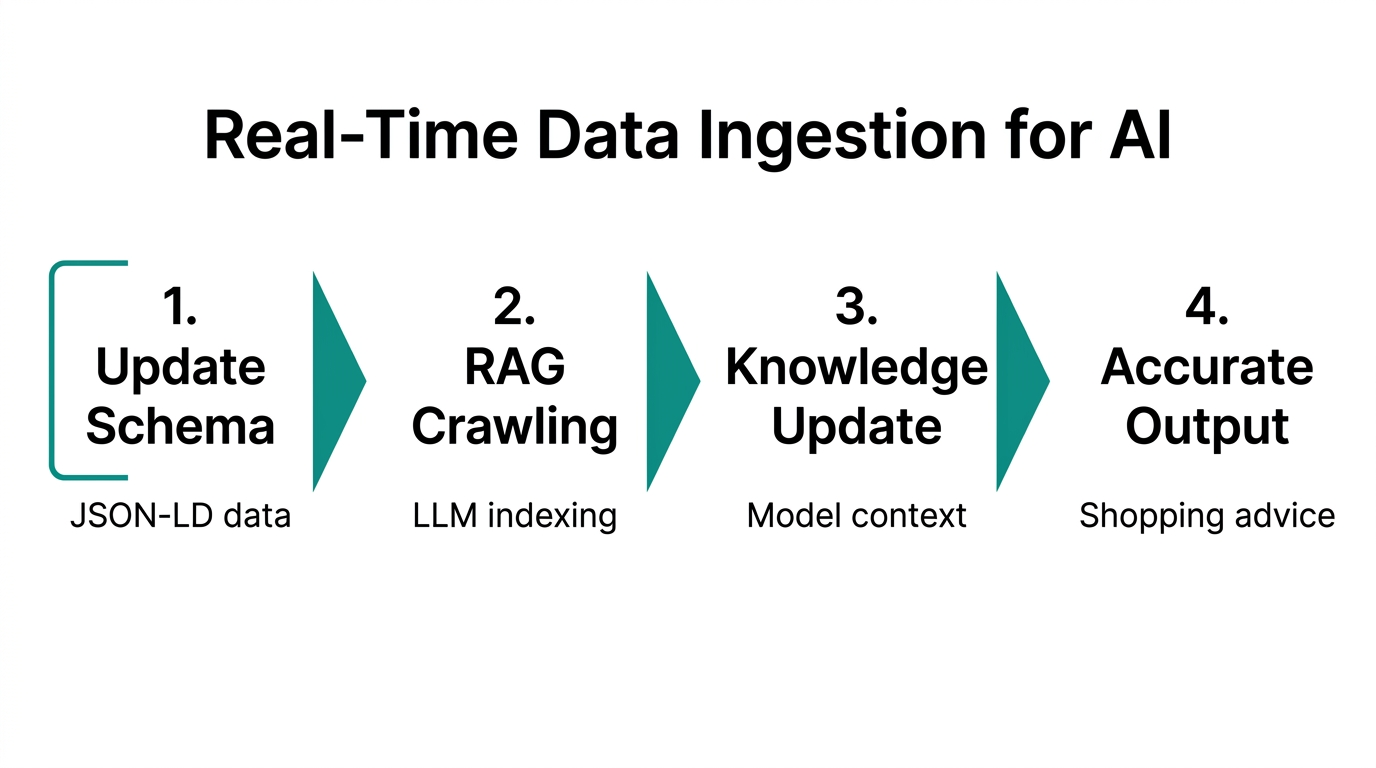
A common mistake in 2026 is "Schema Stagnation." Many e-commerce managers implement product schema once and assume the work is done. However, AI systems check pricing, stock availability, and shipping times in near real-time. According to technical documentation from Schema.org, if your structured data is stale while a competitor’s is "fresh," the AI agent will skip your listing to avoid recommending an out-of-stock or incorrectly priced item.
To stay competitive, your technical stack must prioritize Agentic Commerce readiness. This means using advanced product feed management tools like Feedonomics to ensure your schema is updated every few minutes. AI agents are increasingly making purchases on behalf of users; they require perfectly structured data to execute these "bot-to-bot" transactions.
"Stale schema is the 404 error of the AI era. If the agent can't verify it, the customer will never see it."
Agentic Commerce in Action: How Giants Drive Discovery
Leading e-commerce platforms are already setting the standard for how AI-driven discovery works in 2026. Amazon uses its Rufus assistant to perform sub-second dynamic pricing adjustments, ensuring its private labels always have a high AI share of voice for price-sensitive queries.
- Shopify: Their "Sidekick" AI enables small merchants to perform "Big Box" level competitive analysis. By predicting inventory needs based on market trends, Shopify users can stay ahead of demand surges that AI assistants are likely to trigger.
- Sephora: Through their Color IQ and AI-driven virtual trials, Sephora monitors competitor AR accuracy. If a rival's virtual try-on is glitchy, Sephora's AI marketing highlights their own superior lifelike experience to capture the agent's recommendation.
- Zalando: This fashion giant uses machine learning to predict trends before they hit the market. By seeding content and schema for upcoming trends early, they dominate the AI Share of Voice before competitors even start their campaigns.
These brands understand that AI Competitor Analysis is no longer just about undercutting prices. It’s about Review Clustering—using AI to scrape a rival's 1-star reviews to find structural flaws. For instance, if market intelligence tools like Similarweb identify that a competitor's product consistently fails after two months, you can launch a campaign with "Guaranteed 1-Year Durability" to be the AI's preferred alternative.
The 2026 AI Competitor Analysis Toolkit
To win the BrandRank for ecommerce battle, you need a stack that moves faster than a human analyst ever could. Here are the essential tools for 2026:
- Strategy Signals: Use Crayon to set alerts for competitor hiring patterns or patent filings. A spike in "Enterprise Sales" hires at a rival company signals they are moving up-market.
- Keyword & Backlink Gaps: Even in an AI world, search data matters. Semrush remains the gold standard for identifying which topics your competitors are winning on.
- Dynamic Pricing: Tools like Prisync balance competitor prices with your own real-time inventory levels to protect margins while staying attractive to AI shoppers.
- Market Intelligence: Use Veridion to identify indirect competitors—those new business models that might disrupt your category entirely.
The Playbook: Auditing Your Brand’s Presence in AI Shopping
If you want to ensure your brand is the first name an AI assistant mentions, follow this step-by-step checklist to audit and improve your AI visibility.
Step 1: Conduct an AI Sentiment Audit
Use an LLM or a tool like G2’s Reputation Management stack to ask specific questions about your brand and your top three competitors. Note where the AI hallucinates, where it lacks data, and where it favors a rival. This is your baseline BrandRank.
Step 2: Implement Real-Time Schema Updates
Ensure your product feeds are synced with your inventory management system. Use ProductGroup and Offer schema types to give AI agents the granular data they need. Never let a price change happen on your site without an immediate schema update.
Step 3: Cluster Competitor Flaws
Analyze thousands of competitor reviews using AI. Look for recurring complaints. Is their packaging hard to open? Is their sizing inconsistent? Feed these "flaws" into your own product descriptions and ad copy to position your brand as the logical solution to these known issues.
Step 4: Scale UGC to Feed the Dataset
LLMs crave fresh, authentic data. Use Stormy AI to find and manage UGC creators who can produce high-quality video and text reviews across TikTok and YouTube. This creates a "data moat" that AI crawlers will prioritize when determining your BrandRank.
Step 5: Monitor "Strategy Signals"
Don't just watch prices. Watch their ad copy iterations on Meta Ads Manager or TikTok Ads. If a competitor changes their headline every three days, they are struggling to find a hook. Use that weakness to double down on your most successful messaging.
"The ultimate competitive advantage in 2026 is being the brand the AI trusts when the customer stops looking."
Conclusion: Future-Proofing Your Brand
Transitioning to AI Share of Voice and BrandRank for ecommerce isn't just a technical update—it's a mindset shift. You are no longer just selling to humans; you are marketing to the algorithms that humans trust. By focusing on schema freshness, sentiment monitoring, and the use of modern tools like Stormy AI for creator management, you can ensure that your brand doesn't just appear in the search results—it dominates the conversation.