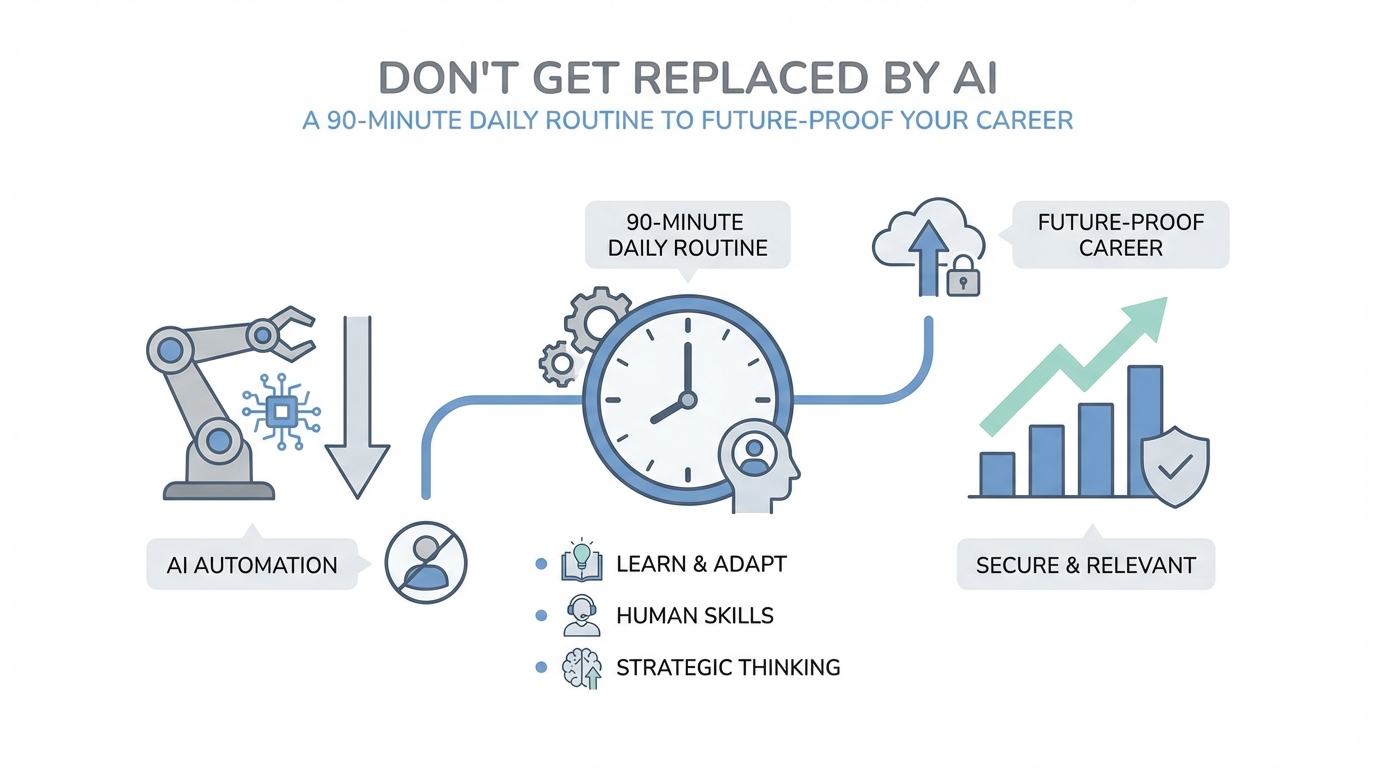
The narrative surrounding artificial intelligence has shifted from science fiction to an immediate economic reality. We are currently living through what many call an AI Gold Rush, a paradigm shift that Greg Isenberg, CEO of Late Checkout, describes as the greatest technology humanity has ever developed. According to Goldman Sachs, AI investment is forecast to approach $200 billion globally by 2025. However, with this innovation comes a pervasive fear: the fear of being replaced. The reality is more nuanced. As Isenberg famously posits, you aren't going to lose your job to an AI, but you are going to lose your job to a human who knows how to use AI. To remain competitive, professionals must move beyond being casual observers and become active practitioners.
The '90-Minute Rule': Scheduling Your AI Experimentation

Staying in the top 1% of your field in an AI-saturated market requires more than just reading headlines; it requires deep, tactile experimentation. Isenberg suggests a fundamental shift in how we view our daily schedules: Treat learning AI as a job. This is the '90-Minute Rule.' By dedicating an hour and a half every single day to 'fussing around' with new tools, you build a level of intuition that cannot be replicated by those who only use AI superficially.
During these 90 minutes, your goal isn't necessarily to produce a finished product, but to understand the capabilities and limitations of the current landscape. Whether you are exploring the latest updates on Reddit's AI communities or testing new workflows, this daily habit creates a compounding effect. Research from McKinsey suggests that generative AI could automate tasks that absorb up to 60-70% of employees' time today. If you aren't spending time closing that gap by learning to direct these Large Language Models (LLMs), you are effectively falling behind by 1% every day.
The Essential AI Stack: Brains, Memory, and Tools
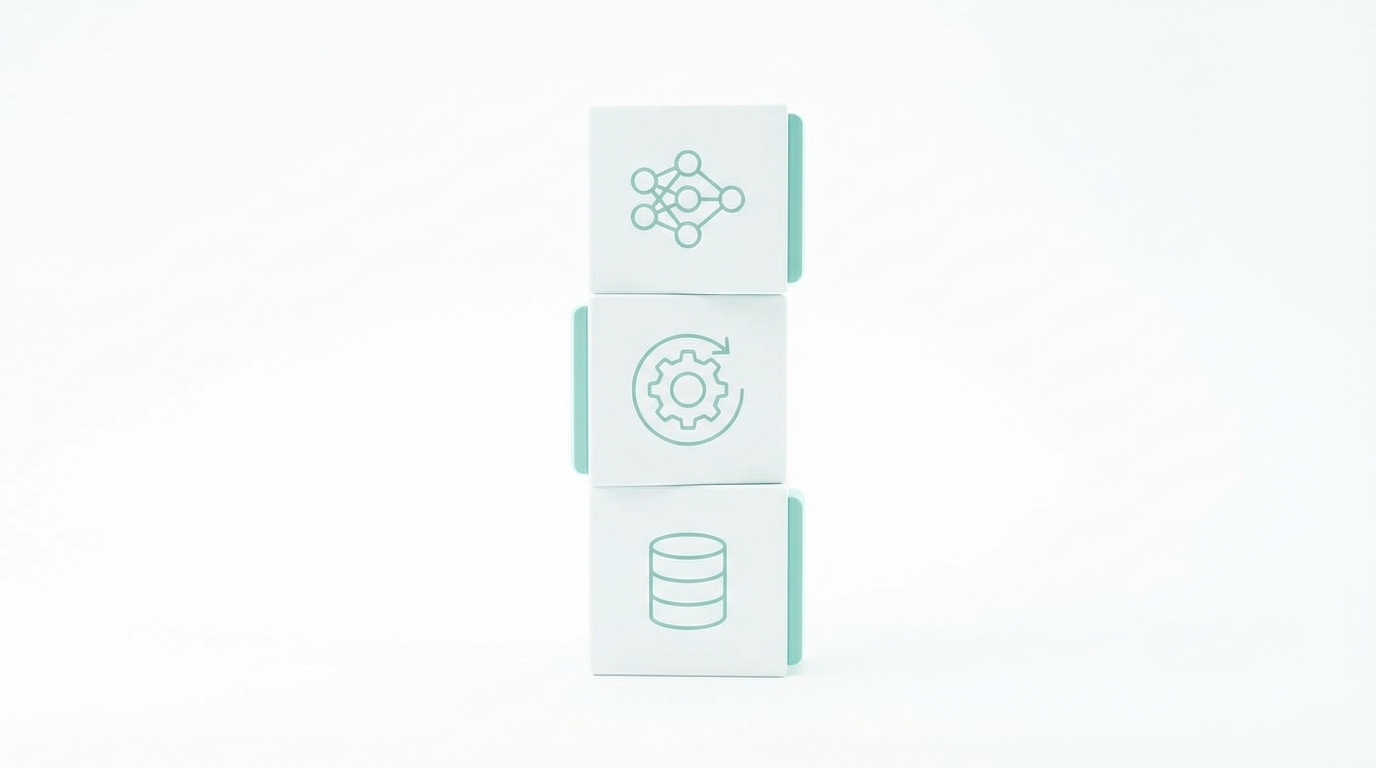

To effectively learn AI skills, you must understand the architecture of how these systems function. Isenberg breaks down the AI agent framework into three core components: The Brain, The Memory, and The Tools. Understanding this stack allows you to move from being a 'prompter' to being an architect of automated systems.
- The Brain (LLMs): This is the reasoning engine. When you use tools like Anthropic's Claude or OpenAI's ChatGPT, you are tapping into a digital brain. The quality of your output is directly tied to the intelligence of the model you choose for the specific task.
- The Memory (Context): AI is only as good as the information it has access to. Providing the 'brain' with context—your brand voice, past project data, or specific industry constraints—turns a generic response into a personalized asset.
- The Tools (Agents): These are the extensions that allow the AI to actually do things. Whether it's browsing the web, writing code via Bolt, or managing a calendar, tools turn intelligence into action.
Spinning Up Your Digital Team of AI Agents
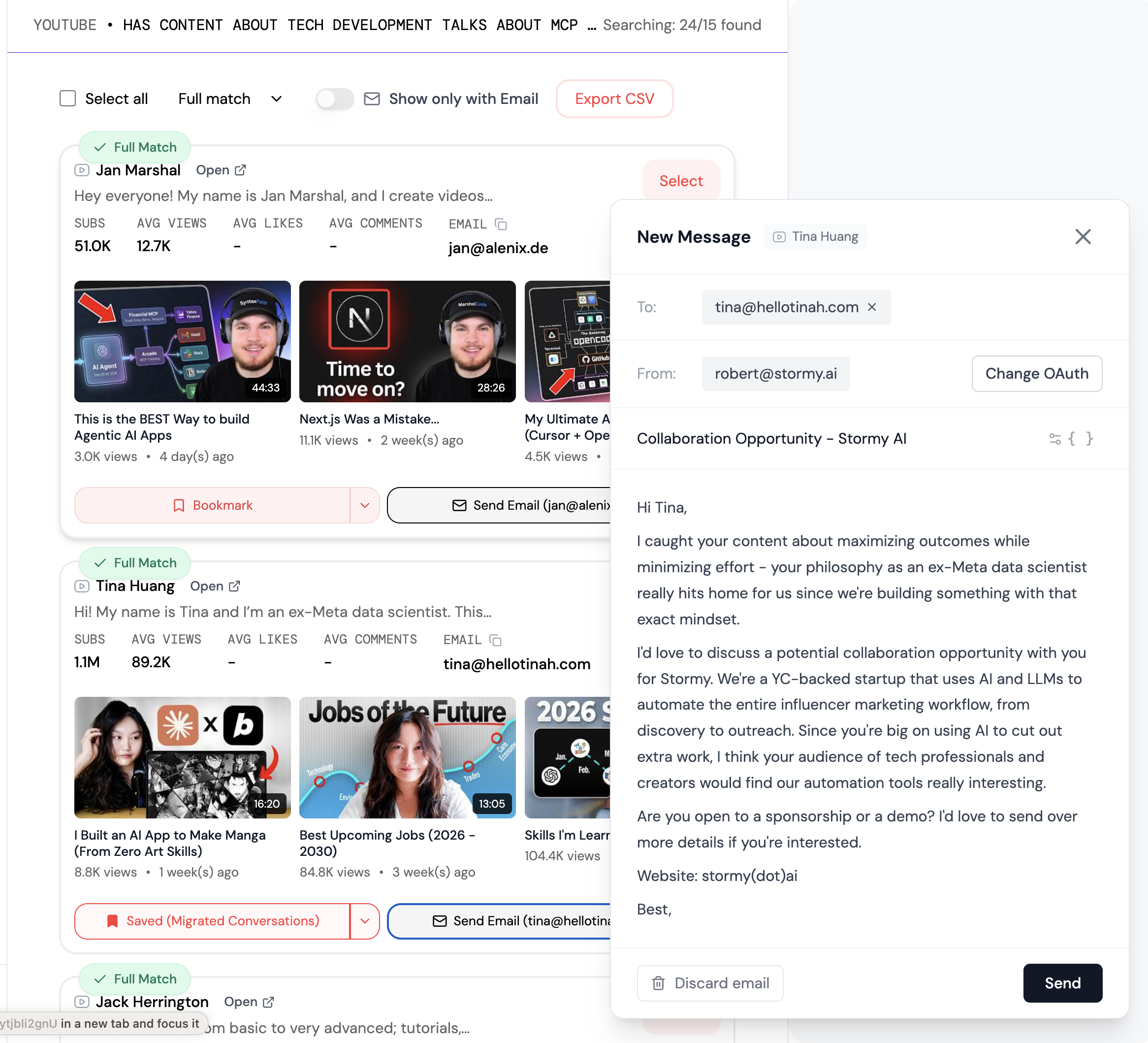
The concept of the 'solo founder' or the 'solopreneur' is being redefined. In the past, scaling a business required hiring designers, engineers, and marketers. Today, you can 'spin up' a digital team of AI agents to augment your personal productivity. This means 'birthing' digital employees that operate with specific objectives and autonomy. For example, instead of manually researching creators for a marketing campaign, modern professionals use Stormy AI to discover, vet, and outreach to influencers automatically, effectively replacing what used to be a full-time intern's workload with a single AI agent.
Using AI agents for business, as highlighted in reports by Harvard Business Review, allows you to operate at an order of magnitude faster than traditional teams. When you can take a website idea and throw it into a platform like Bolt, what used to take a month of engineering time can now take five minutes. This speed is the new currency of the labor market. Professionals who can manage a fleet of these agents will become 'godlike' in their ability to ship products and services.
Case Studies: Sunsetting Clients for an AI-First Future
Many successful professionals are making the radical choice to sunset traditional clients to focus entirely on AI-leveraged models. Isenberg himself discusses how he shifted his focus to building apps with AI, recognizing that the service-based model is being refactored. If your job involves a repeatable process that an LLM can handle 98% of the way, your value proposition must change. Platforms like Shopify and Stripe are already integrating these automated flows to reduce friction for builders.
Consider the shift in artificial intelligence careers: we are moving from specialized roles (the 'coder' or the 'writer') to generalist 'conductors.' One builder reported reaching 1.6 thousand registered users for their software just 20 hours after launch by using AI to handle the heavy lifting of development. These pivots aren't just about using AI tools for productivity; they are about changing the fundamental business model from selling hours to selling outcomes powered by autonomous systems.
Identifying Your 'Unfair Advantage' in an AI World

As competition increases—because the barrier to entry has dropped to near zero—you might wonder how to stand out. If anyone can use AI to build an app or write a blog, what makes you valuable? The answer lies in your unfair advantage, a concept often discussed by Y Combinator. AI can generate content, but it cannot (yet) build a community or provide the human-to-human connection that platforms like TikTok thrive on.
To succeed, you must still be in the top 1% of 'having something to say.' Your advantage is your taste, your network, and your unique perspective. AI is a tool, not a replacement for strategy. For instance, while an AI can find creators, it takes a human to understand the cultural nuances that make a partnership authentic. This is where tools like Stormy AI become powerful; they handle the 'grunt work' of influencer discovery and CRM management, leaving the human professional free to focus on the high-level creative strategy that AI cannot replicate.
Playbook: How to Use AI at Work (Step-by-Step)
Step 1: Audit Your Daily Tasks
Identify every task you do that takes more than 15 minutes. Categorize them by 'Reasoning,' 'Data Entry,' or 'Creative.' Target the Reasoning and Data Entry tasks for AI automation first. Tools like Zapier can help bridge the gap between your apps.
Step 2: Build Your Toolset
Don't just stick to one tool. Download every imaginable app—from LLMs like Claude to specialized agents for your industry. Use your 90-minute daily window to find the 'Gold' in these tools. Keep an eye on technical documentation on GitHub for the latest open-source agent frameworks.
Step 3: Create Your First Agent
Give an AI a specific objective (e.g., 'Analyze these 10 competitor websites and find three gaps in their content strategy'). Watch how it performs, refine your prompt, and provide it with the necessary 'Memory' (context) to improve.
Conclusion: The Dawn of a Permissionless Future
The AI Gold Rush is permissionless. You no longer need to wait for a Silicon Valley VC or a corporate gatekeeper to give you the green light. Whether you are using Google Ads to scale a new AI-built product or using autonomous agents to manage your workflow, the tools are available to everyone. The window of opportunity is now. By committing to the 90-minute daily routine, mastering the AI stack, and identifying your human unfair advantage, you won't just survive the transition to an AI-driven economy—you will lead it. Don't wait for the technology to reach 100% perfection; get your hands dirty while it's still at 96%, and build the future you want to see.