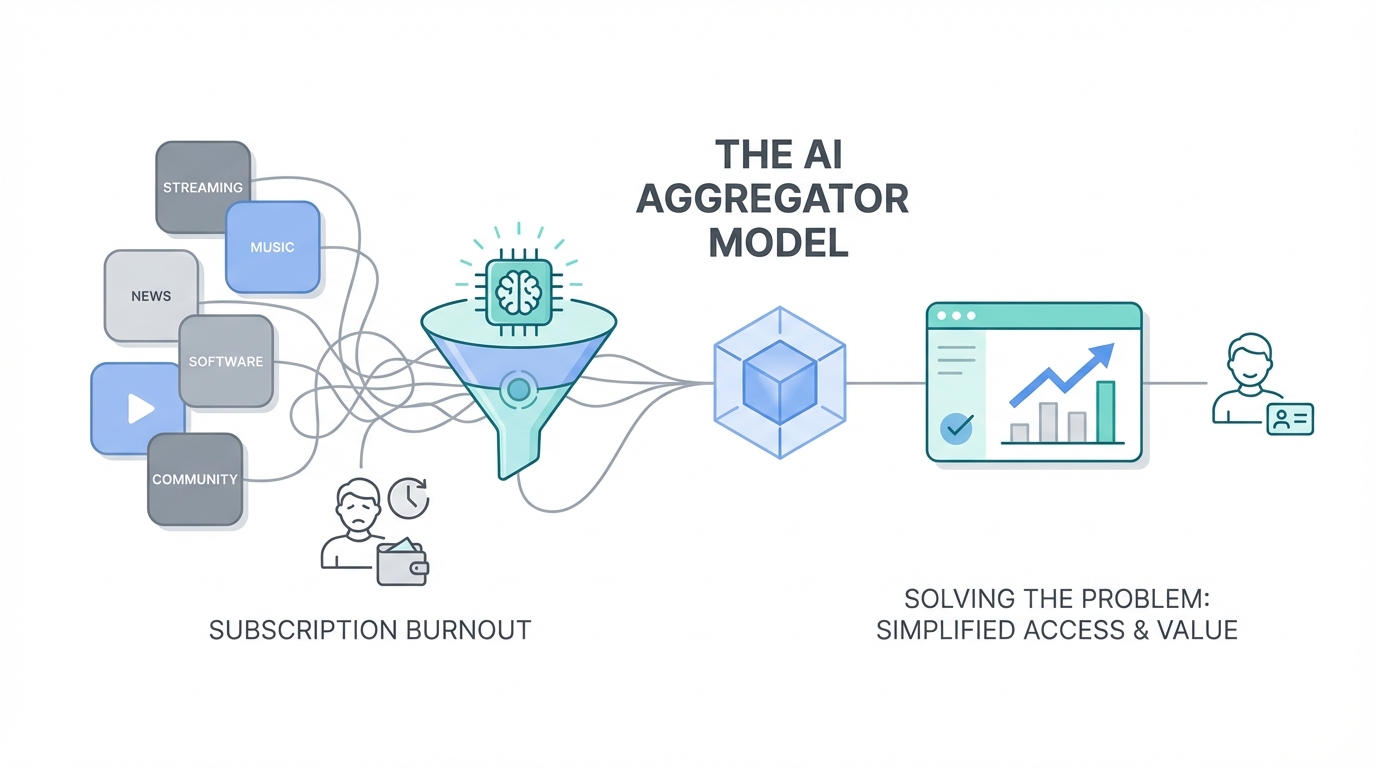
In the early days of the generative AI boom, the path to productivity was clear: you picked a side. You were either a ChatGPT power user, a Claude enthusiast for creative writing, or a Midjourney wizard for visuals. But as we move deeper into the ai market trends 2024, the ecosystem has fractured. Users now find themselves juggling five different $20-per-month subscriptions just to access the best-in-class tools for text, code, and image generation. This friction has birthed a massive business opportunity: the AI aggregator model. By providing access to GPT-5, Claude 3.5, and Flux under a single, unified interface, savvy entrepreneurs are solving the growing problem of subscription burnout while building highly profitable ai niche businesses.
The Rise of Subscription Burnout and the Aggregator Solution
Subscription fatigue is real. For the average professional or developer, maintaining separate accounts for OpenAI, Anthropic, and various image generation platforms isn't just expensive—it's a workflow nightmare. Every time you want to cross-reference a prompt between models, you are forced to copy-paste across browser tabs, manage multiple billing cycles, and navigate vastly different user interfaces. This is the exact problem that Dustin, a solo founder featured on Starter Story, identified when he built his platform, Magi.
Dustin realized that the "not so obvious problem" wasn't just the cost, but the quality of life features that primary model providers often ignore. At the start of the AI revolution, basic features like chat search, folder organization, and model-switching within a single thread were non-existent. By building a best ai model dashboard that focused on the user experience first, Dustin was able to reach $3,000 in revenue in his first month, eventually scaling to over $100,000 per month in just two years. The ai subscription model is evolving from "access to intelligence" to "access to convenience."
Why Users Prefer Unified Dashboards Over Individual Apps

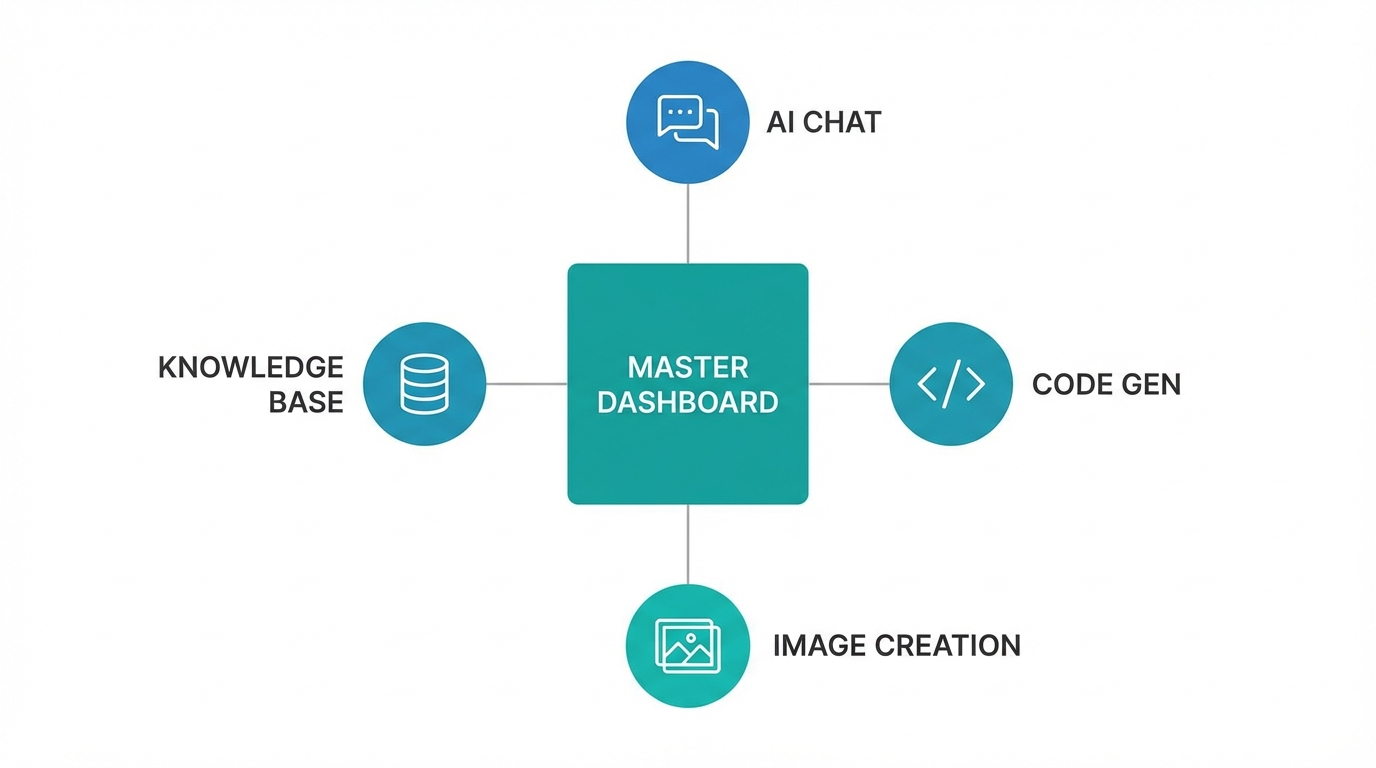
The primary driver for the success of an ai aggregator business is the ability to offer a "Swiss Army Knife" experience. Modern AI users don't want to be locked into one ecosystem. They might prefer GPT for logic and reasoning, Claude for its natural-sounding prose, and Flux or Fal.ai for high-fidelity image generation. When a platform like Magi allows a user to start a conversation with Claude and then "bring in" GPT-5 to verify the code in the same thread, the productivity gains are enormous.
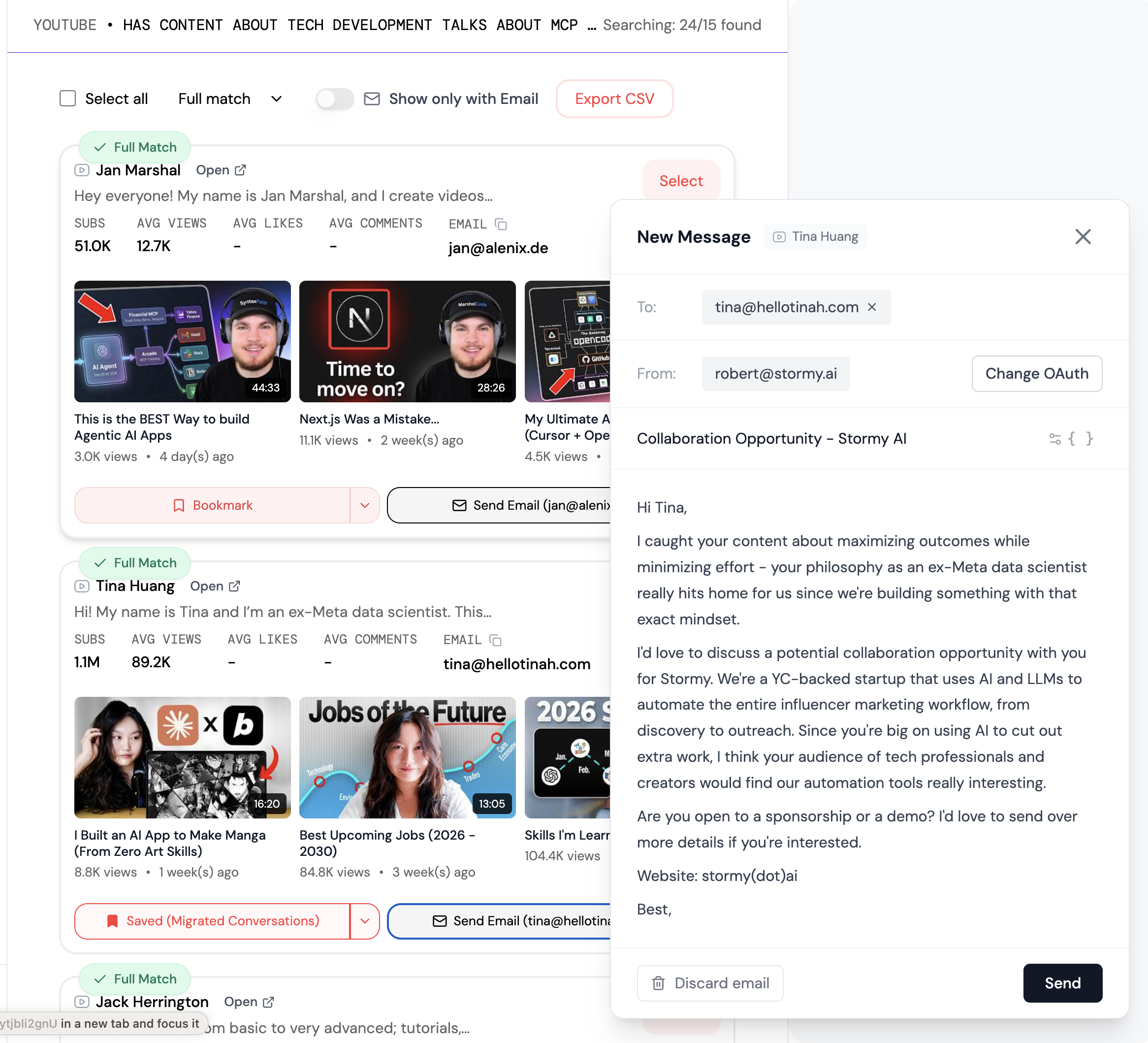
Furthermore, these aggregators serve as a safety net against model degradation. If one provider experiences downtime or a "lazy" model update, the user can instantly switch to a competitor without needing to sign up for a new service or update their billing info on Stripe. For mobile app developers and marketing teams, this consistency is vital. Many growth teams use these dashboards to iterate on UGC (user-generated content) scripts for mobile app ads. While they might find creators through platforms like Stormy AI, an AI-powered platform for creator discovery especially for mobile app marketing and UGC campaigns, the actual ideation and scripting process happens faster when they can compare model outputs side-by-side.
The Technical Hurdles: Managing API Costs and Token Limits
Building an aggregator sounds simple in theory, but the technical execution requires a deep understanding of API management. You aren't just building a wrapper; you are building an abstraction layer. To succeed, you need to manage different token costs, rate limits, and latency issues across multiple providers. Most successful aggregators utilize unified technology platforms like OpenRouter, which allows developers to access hundreds of LLMs through a single API format. This significantly reduces the complexity of the backend.
Interestingly, you don't need a massive engineering team to enter this space. Dustin built his MVP in just 8 weeks using Bubble and a handful of custom code. Today, tools like Rocket.new allow founders to go from a text description to a full-stack app in minutes, even allowing for the export of production-ready code. This democratization of development means the real competitive advantage lies in UI/UX and niche targeting, rather than the underlying technology.
Managing the Bottom Line
One of the biggest challenges in the ai aggregator business is maintaining healthy margins. Since you are essentially reselling API tokens, your costs are variable. Most aggregators solve this by implementing usage-based add-ons. For example, a standard $20/month plan might include a generous allotment of tokens for standard models, but require users to purchase "credits" for heavy use of premium models like GPT-4o or high-resolution image generation via Fal.ai. Building in public and being transparent about these costs helps build trust with a sophisticated user base that understands the value of the convenience you are providing.
Monetization Strategies: Subscription Tiers and Team Plans
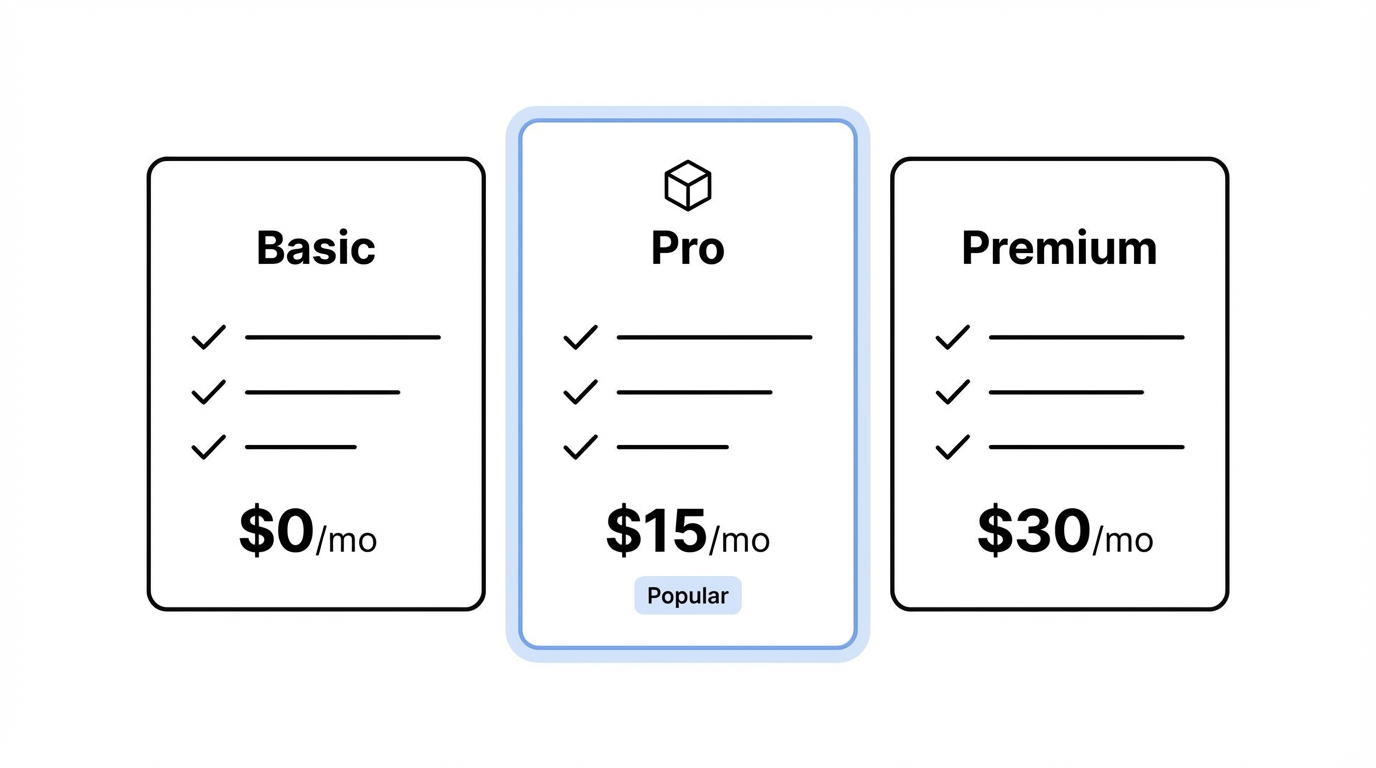
The monetization of an AI aggregator usually follows a predictable but effective pattern. Most platforms avoid a free tier (freemium) because the API costs are too high to support non-paying users. Instead, they focus on high-value paid tiers:
- The Solo Plan ($20/mo): Aimed at individuals, this tier usually provides access to all top-tier models with a reasonable usage cap. It mirrors the price of a single ChatGPT Plus subscription but offers 10x the variety.
- The Team Plan ($40/mo+): This is where the real scale happens. Team plans often include shared workspaces, folder permissions, and up to 3x the usage limits. This is ideal for small agencies or app developers who need to coordinate on marketing collateral.
- Usage Add-ons: Providing the ability to "top up" credits allows heavy users to stay on your platform rather than churning when they hit a limit.
Marketing these tiers often involves a combination of SEO and personal branding. Dustin's success was largely driven by his 10 years of building an audience and using an email marketing system to nurture over 100,000 subscribers. Additionally, implementing a recurring revenue affiliate program can turn your most active users into a secondary sales force. When you are looking to Stormy AI to discover creators and promote your AI tool, having a solid affiliate structure makes the outreach significantly more effective.
The Playbook: How to Launch Your Own AI Aggregator
If you are looking to enter this profitable ai niche, follow this step-by-step playbook to go from idea to a revenue-generating product.
Step 1: Identify a Specific User Friction
Don't just build a "ChatGPT clone." Find a specific workflow that is currently broken. Are mobile app marketers struggling to turn AI scripts into high-performing ads? Focus your dashboard on features that help them manage UGC creator briefs. Use platforms like Stormy AI to see what kind of content is trending and use its AI search engine to find creators who fit your niche.
Step 2: Build Your MVP Fast
Avoid the trap of 6-month development cycles. Use no-code tools like Bubble or rapid prototyping tools like Rocket.new. Your goal is to get a functional model-switcher in front of users as fast as possible. Integrate Stripe for payments on day one. As Dustin noted, he had his first customers on the very first day of release.
Step 3: Leverage Unified APIs
Instead of writing custom code for every new model that comes out, use a central access point like OpenRouter. This ensures that when GPT-6 or the next version of Claude drops, you can add it to your dashboard with a single click, keeping your users on the cutting edge without manual backend updates.
Step 4: Build a Feedback Loop
Use Google Analytics to track which models are most popular and where users are dropping off. Monitor your keyword rankings with Ahrefs to ensure you are capturing traffic for terms like "best ai model dashboard" or "unified AI access."
The Future of AI SaaS: UX as the Ultimate Competitive Advantage
As we look toward 2025, the "moat" for AI companies is shifting. Raw intelligence is becoming a commodity; everyone has access to the same APIs. The companies that will thrive are those that focus on the wrapper. This doesn't mean a thin, useless layer, but rather a robust environment where users can work better. For example, integrating image and video models like Flux and Dall-E alongside text models allows users to create complete marketing campaigns in one place.
For app developers, the combination of an AI aggregator and App Store Optimization (ASO) strategies is a powerful one. You can use your dashboard to generate dozens of variations for app descriptions, test them using different models, and then use Stormy AI for finding UGC creators and influencers to bring those scripts to life. This holistic approach to app marketing is far more effective than just using a single chat interface.
Conclusion: Solving Burnout to Create Value
The AI aggregator model is a testament to the fact that in a gold rush, the people selling the shovels (and the ones organizing the tool shed) often make the most consistent profit. By solving the ai subscription model burnout, you are providing a service that users are more than happy to pay for. Whether you are a solo founder like Dustin building a $100k/month business or a marketing team looking to streamline your UGC strategies, the shift toward unified, multi-model dashboards is the most significant trend in the current AI landscape. Stop trying to build the next model; start building the best way for people to use the ones that already exist.