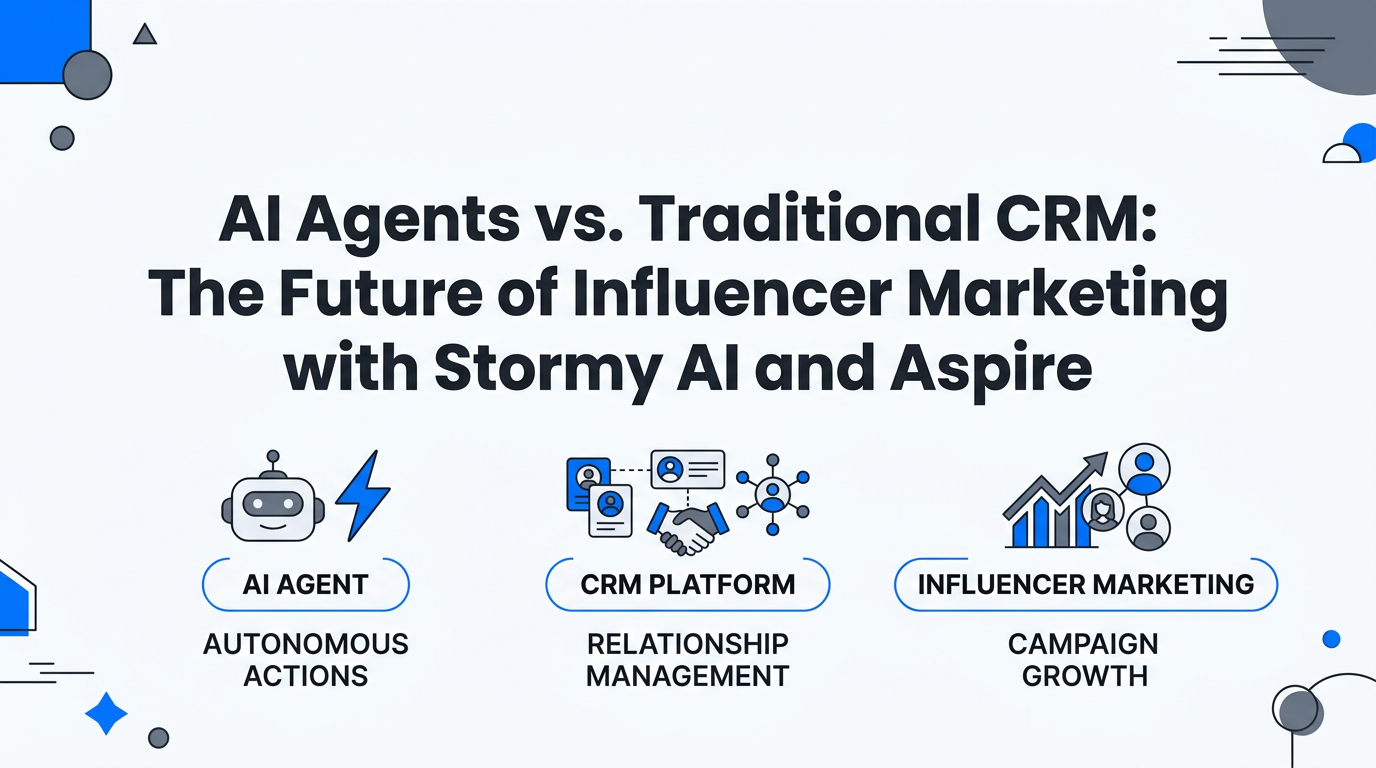
AI Agents vs. Traditional CRM: The Future of Influencer Marketing
The influencer marketing landscape is currently undergoing a seismic shift, moving away from manual spreadsheets and rigid databases toward a more fluid, autonomous future. As we approach 2025, the industry is splitting into two distinct technological philosophies: the legacy CRM model and the era of autonomous AI agents.
For years, brands relied on traditional influencer platforms to manage their campaigns. These tools served as basic databases, requiring marketing teams to manually filter through thousands of profiles, send individual emails, and track every interaction by hand. While these systems were an improvement over simple Excel spreadsheets, they often became "data graveyards" where creator information quickly went out of date.
The rise of short-form video on TikTok and the expansion of Instagram Shopping have created a high-velocity environment that traditional CRMs struggle to keep up with. Brands now need to vet hundreds of creators a week to maintain a competitive presence in the feed. This is where AI-native technology changes the game.
Unlike old-school platforms that function as passive directories, modern AI agents act as proactive members of your marketing team. For instance, platforms like Stormy AI streamline creator sourcing and outreach by using natural language processing to find the perfect brand fits across YouTube, LinkedIn, and TikTok Shop instantly.
One of the biggest pain points in influencer marketing is the "outreach mountain." Manually emailing 50 creators might take a full day. By leveraging advanced LLMs, AI agents can now generate hyper-personalized outreach for every single influencer, increasing reply rates by referencing specific details from their recent content. These agents don't just send the first email; they handle the follow-ups and manage the inbox while you sleep.
Vetting is another area where AI agents outperform legacy systems. Instead of looking at a static "engagement rate" number that might be weeks old, AI can perform a deep-dive analysis of audience quality and detect bot patterns in real-time. This level of security is essential for brands scaling their performance marketing spend on TikTok Ads or Meta Ads.
As e-commerce continues to integrate with social media through platforms like Shopify, the need for automated coordination becomes even more critical. Managing creator relationships, payments via Stripe, and post-tracking shouldn't require a five-person team. By using an autonomous agent like Stormy AI, a single growth marketer can run a campaign that previously required an entire agency.
The transition from a manual CRM to an AI agent is more than just a software upgrade—it's a shift toward a more scalable, data-driven way of building brand community. In a world where creator content is the primary driver of consumer trust, the brands that automate the busywork will be the ones that have the time to build real relationships.