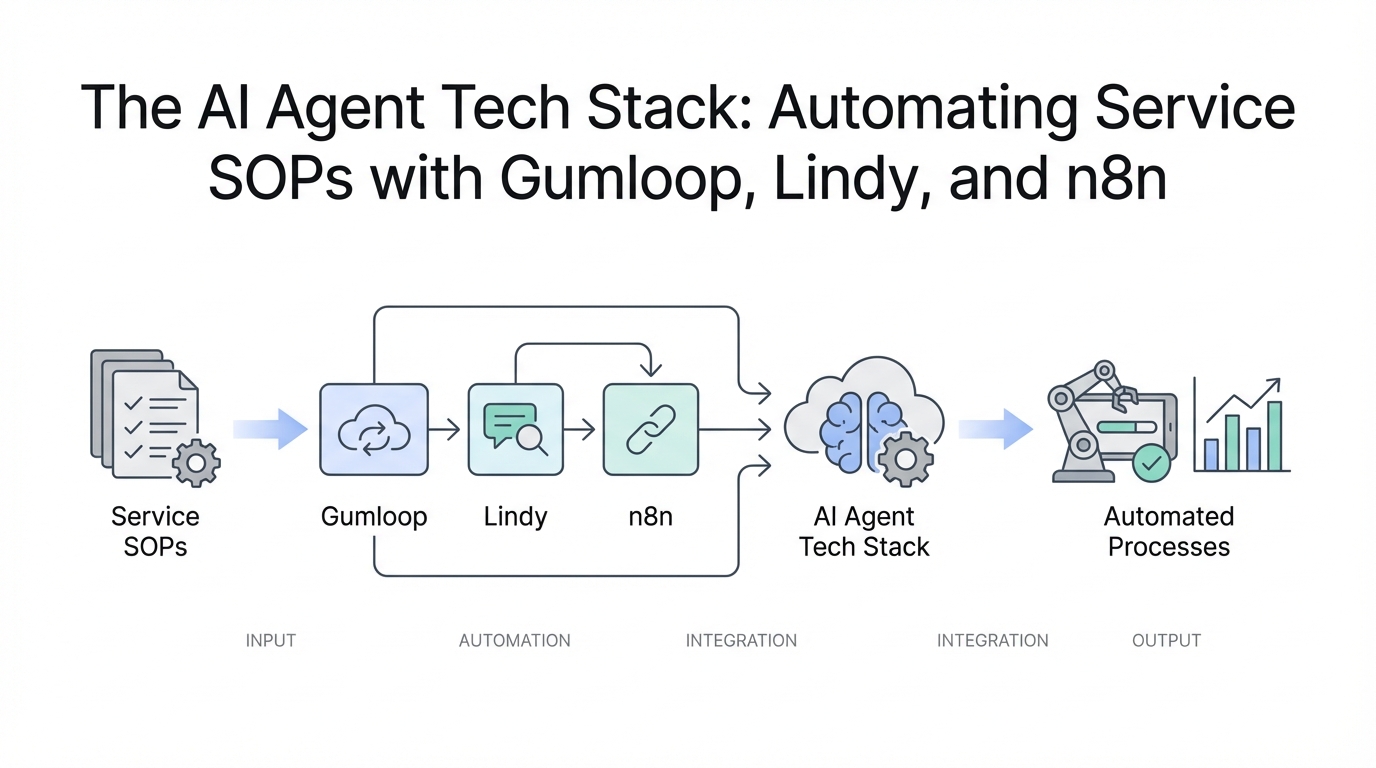
We are entering a transformative era where the traditional service agency is being reinvented. The dream of scaling a service-based business to $5 million in Annual Recurring Revenue (ARR) without a massive headcount is no longer science fiction; it is a tactical reality. By shifting from a human-centric model to a leveraged agency, entrepreneurs can maintain high-quality outputs while achieving 80% profit margins. The secret lies in a sophisticated AI agent tech stack that mirrors manual Standard Operating Procedures (SOPs) with autonomous precision. As OpenAI co-founder Sam Altman recently noted in a discussion on the future of work, we are in the "era of the idea guy," where execution is increasingly handled by intelligent agents.
The Leveraged Agency Model: From Manual Labor to AI Orchestration
The journey to a successful AI startup often begins in the most unexpected place: manual, soul-crushing labor. Before you can automate a process, you must understand every nuance, edge case, and failure point. This involves running a "boring" agency for three to six months, performing tasks like invoice processing, insurance form management, or PDF-to-Salesforce data entry. During this phase, your goal is to achieve $1,000 to $5,000 in monthly revenue while documenting every step of the workflow.
By starting with manual fulfillment, you build real-world product-market fit and a deep understanding of niche pain points. You aren't just building software; you are solving a verified business problem. Once the SOP is perfected, you move to phase two: wiring the AI agents to replace the manual steps. This transition is where the enterprise value of your business skyrockets. You are no longer selling human hours; you are selling an automated outcome. To identify these high-potential "boring" problems, tools like IdeaBrowser can help you scan community signals on Reddit and Facebook to see where people are literally screaming for automation.
The AI Agent Tech Stack: Comparing Gumloop, Lindy, and n8n

Building an autonomous system requires more than just a single LLM wrapper. You need an orchestration layer that can handle data, logic, and external tool execution. Three primary platforms have emerged as the leaders in automate agency workflows: Gumloop, Lindy AI, and n8n.
Gumloop: The Workflow Powerhouse
Gumloop (formerly known as Induced AI) is designed for complex, data-heavy workflows. It excels at browser-based automation and "uncreative" data tasks. If your SOP requires logging into a legacy portal, extracting a PDF, and formatting it into a clean spreadsheet, Gumloop is the tool of choice. It uses AI nodes that can think through steps, making it far more robust than traditional scraping tools.
Lindy AI: The Autonomous Employee
Lindy AI focuses on creating agents that behave like virtual employees. Lindies can manage your email inbox, schedule meetings, and interact with over 3,000 apps via Zapier. Lindy is particularly effective for front-of-house tasks, such as responding to customer reviews or handling initial sales inquiries, where a conversational interface is required.
n8n: The Technical Orchestrator
For agencies that need complete control over their data and logic, n8n is the gold standard. It is an open-source workflow automation tool that allows for complex branching logic, custom JavaScript snippets, and self-hosting. While it has a steeper learning curve than Gumloop, it provides the most flexibility for building a proprietary back-end system. It is often used as the "brain" that connects specialized agents to the rest of the business stack.
Step-by-Step Playbook: Wiring AI Agents to Mirror SOPs
Once you have selected your tools, the next step is to translate your manual workflow into an automated system. This process requires a mirroring strategy, where every human decision point is replaced by an LLM prompt or a logic gate.
Step 1: Deconstruct the SOP into Atomic Steps
Take your manual documentation and break it down. For example, if you are building a service like Bank Statement Converter, your steps might be: 1. Receive PDF via email, 2. Validate the bank type, 3. Extract transaction rows, 4. Map columns to an Excel template, 5. Email the result back to the client.
Step 2: Define the Intelligence Layer
Use Claude or GPT-4o to handle the extraction and validation steps. In Gumloop, you would create a node that says, "Look at this bank statement and extract all dates, descriptions, and amounts into a JSON format." By using modern LLMs, you can handle edge cases like handwritten notes or unusual layouts that traditional OCR would miss.
Step 3: Build the Glue with Zapier or n8n
Connect your input (e.g., a Typeform or Gmail) to your AI agent. Zapier is excellent for simple triggers, while n8n can handle more complex conditional paths, such as routing a client to a different workflow if their data is incomplete.
Step 4: The Human-in-the-Loop Safety Net
In the early stages, never fully automate without a review step. Set up a Slack notification that sends the agent's output to you for a final "thumbs up" before it is sent to the client. This ensures quality while you are still training your system to handle 100% of the variance.
Handling Edge Cases: Why LLMs are Ready for Enterprise Data
A common objection to AI agents is that they cannot handle the messy reality of enterprise data. However, the latest generation of models is uniquely suited for these "uncreative" tasks precisely because they can interpret context. Whether it is customs paperwork, insurance claims, or complex legal documents, LLMs can now follow nuanced instructions like "if the date is before 2022, use the secondary tax table."
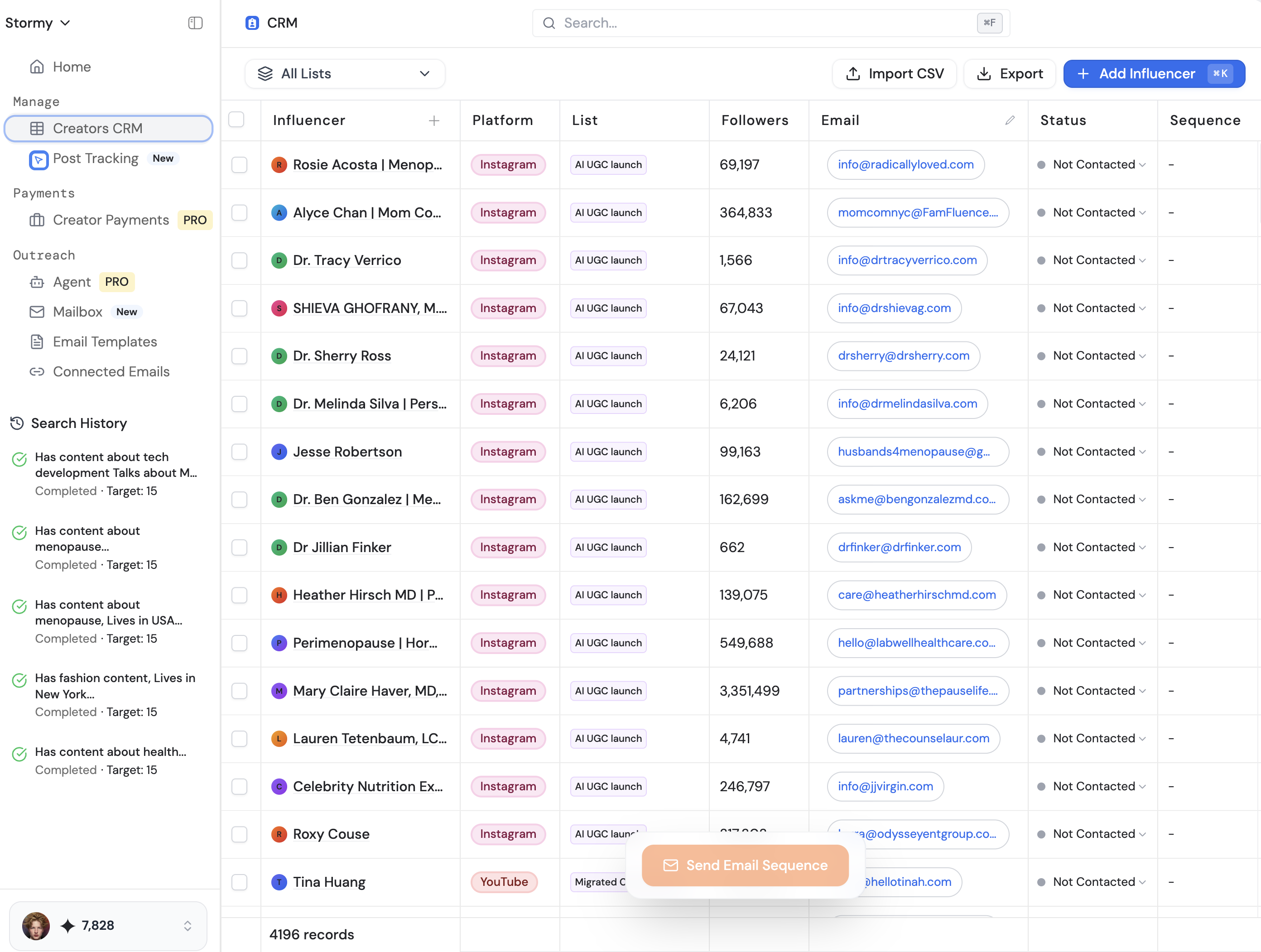
In marketing services, this intelligence is particularly useful for creator management. Sourcing the right influencers for a campaign used to require hours of manual vetting. Today, tools like Stormy AI can automate the discovery of creators across TikTok and Instagram, using AI to analyze audience quality and engagement rates instantly. This allows a leveraged agency to manage hundreds of creator relationships with the same overhead previously required for ten. By delegating the vetting and outreach to an AI agent, the "idea guy" can focus on the creative strategy rather than the administrative slog.
Building a Back-End System for Multi-Tier Scaling
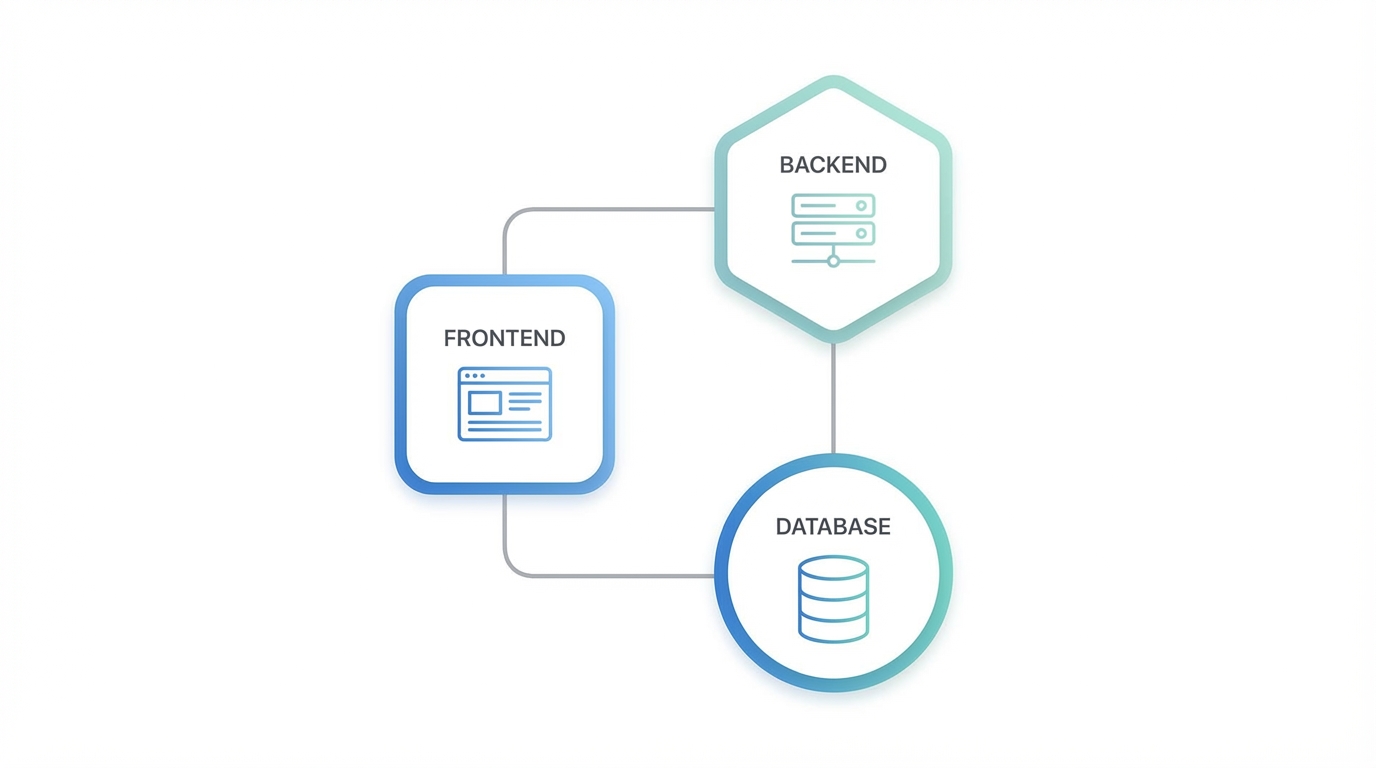
As your leveraged agency grows from 5 clients to 50 and eventually hundreds, you need a multi-tier architecture to capture the full market value. This structure allows you to serve everything from small startups to Fortune 500 companies.
- Self-Serve Tier: A low-cost, log-in-and-go dashboard where users can run their own tasks. This is your high-volume, scalable SaaS revenue.
- API Tier: Giving other developers access to your data or processing engine. If you have built the best PDF-to-Salesforce agent, other companies will pay to integrate it into their own software.
- White-Glove Enterprise Tier: A high-ticket service where your team (supported by agents) handles everything. This is where you maintain the premium agency pricing while enjoying the efficiency of your AI stack.
Managing these tiers effectively requires a robust Creator CRM or internal management system. Platforms like Stormy AI offer built-in tools for tracking interactions and managing deal stages, which is essential when your "employees" are actually a fleet of AI agents working around the clock.
Distribution: Scaling Your AI Startup with Content
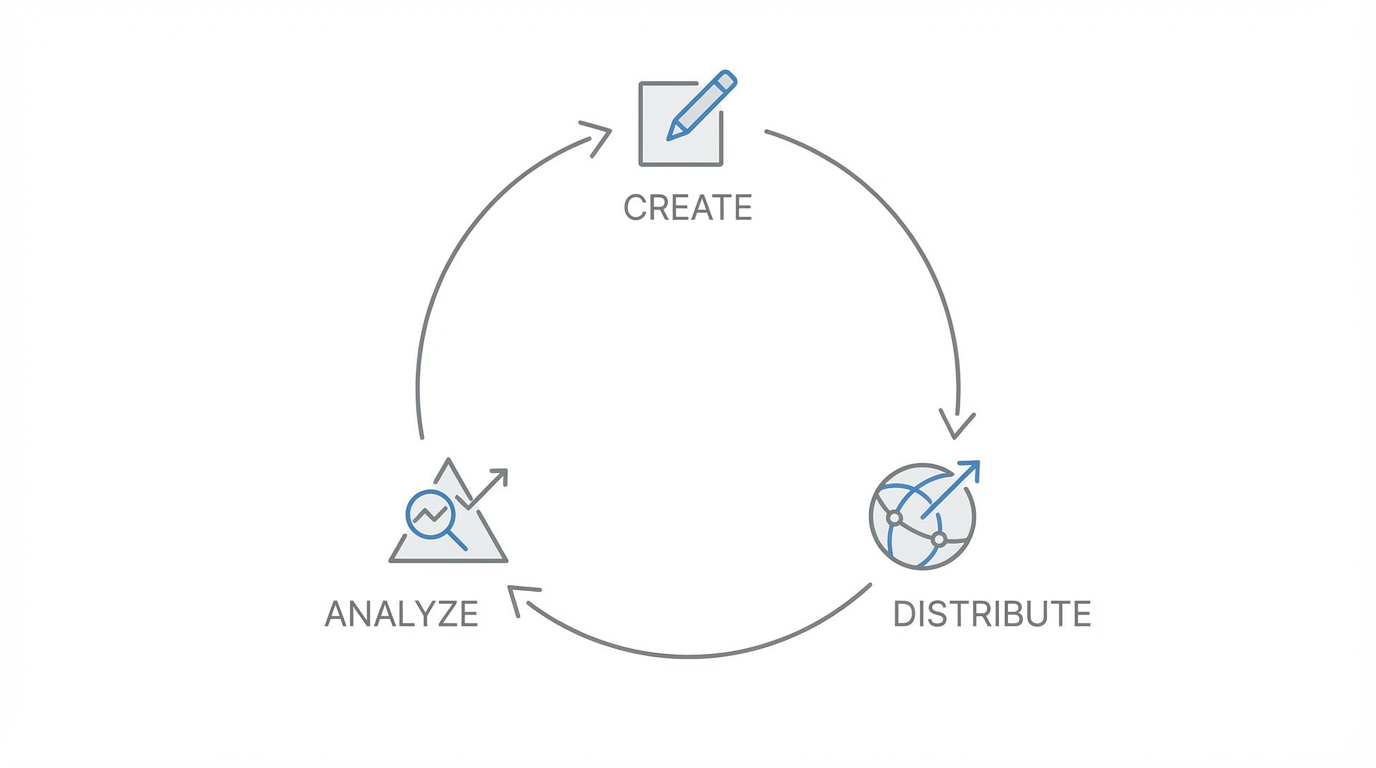
Building the tech stack is only half the battle; the other half is distribution. To reach a $5 million ARR, you must build an audience and a brand. This is where the "Build in Public" strategy becomes a competitive advantage. By sharing your automation workflows on platforms like X or LinkedIn, you attract both customers and talent.
The content strategy for a leveraged agency should be a barbell approach. On one side, create high-quality, cinematic content that establishes your brand's authority. On the other, produce high-volume, low-fi content that shows the raw reality of your agents at work. If you solve one problem publicly—such as showing exactly how you automated a 10-hour data entry task into a 2-minute Gumloop workflow—you create a flywheel where content drives customers, and customer feedback drives better AI agents.
Conclusion: The Era of the Multipreneur
The ultimate goal of building an AI agent tech stack is leverage. It allows you to become a "multipreneur," owning and operating multiple highly profitable businesses with minimal human overhead. By starting with a boring task, documenting the SOP, and wiring it into a system using tools like n8n, Lindy, and Gumloop, you create a cash-flowing asset that can scale indefinitely. Whether you are converting bank statements or managing global influencer campaigns, the blueprint remains the same: automate the boring to unlock the extraordinary. Start today by identifying one painful task in your workflow and asking yourself: how would an AI agent do this?