The landscape of digital advertising is undergoing a seismic shift, moving rapidly from manual execution to what industry leaders call "agentic advertising." While traditional automation followed rigid "if-this-then-that" rules, modern AI agents for media buying use large language models (LLMs) and reasoning engines to make real-time decisions, negotiate deals, and optimize budgets across fragmented channels. As Scott Brinker, a prominent martech leader, recently noted via Dojo AI, the modern marketing stack is becoming more like a "rainforest than a Ferrari"—an ecosystem of independent but interconnected AI agents rather than a single, controlled machine.
However, with great autonomy comes the need for robust AI marketing governance. For marketing directors, the challenge is no longer about how to execute a campaign, but how to maintain strategic oversight and ensure brand integrity in an era of autonomous tools. The global AI agent market is projected to grow from $5.4 billion in 2024 to $7.6 billion in 2025, with a staggering CAGR of 45.8% through 2030, according to data from Warmly.ai. To harness this growth without sacrificing your brand, you must navigate several digital advertising pitfalls. This guide outlines the five most critical areas where governance must check execution.
1. Avoiding the 'Set and Forget' Trap: Monitoring Creative Fatigue
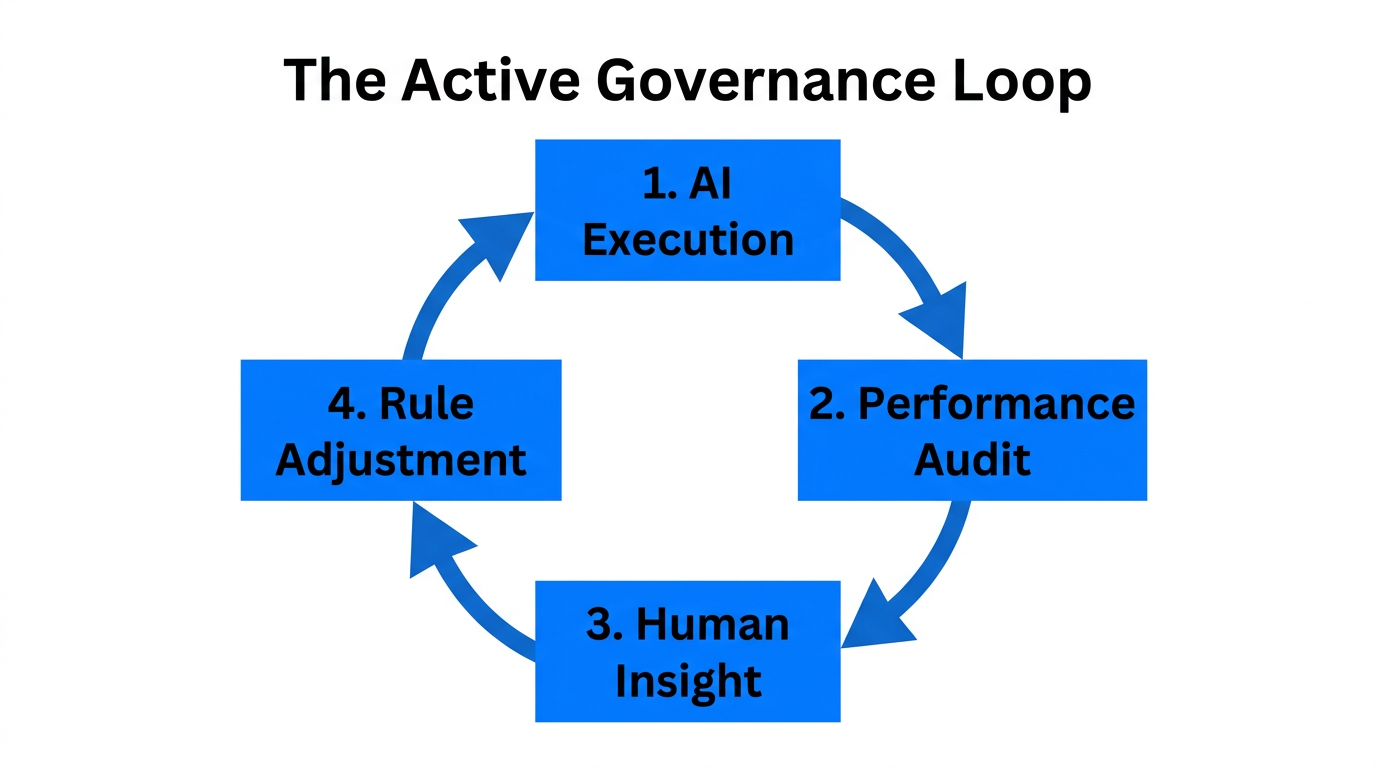
One of the most dangerous digital advertising pitfalls is the belief that an AI agent, once deployed, requires no further supervision. While agents are excellent at pacing and budget reallocation, they are not yet fully sentient regarding the aesthetic "wear-out" of a creative asset. Without human-led creative fatigue management, an agent might continue to bid aggressively on a video or image that the audience has already tuned out, leading to a sharp decline in engagement and a rise in frequency-related brand negative sentiment.
Furthermore, agents can inadvertently continue driving traffic to broken landing pages or out-of-stock products if the feedback loop between the website and the buying tool isn't perfectly synchronized. According to insights from Adsbot, constant monitoring of the post-click experience is essential. Governance involves setting up secondary alerts that trigger if conversion rates drop below a specific threshold, regardless of what the agent's internal logic suggests. Brands must implement regular creative audits to ensure that the "autonomous" logic isn't simply cycling through sub-optimal assets because they are the only ones available.
"The move to autonomous media buying shifts the human role from execution to governance and strategy, requiring a new set of oversight skills." — Ben Hovaness, Chief Media Officer at OMD, via TAU Marketing.
2. Preventing Short-Termism: Balancing Clicks and Brand Equity
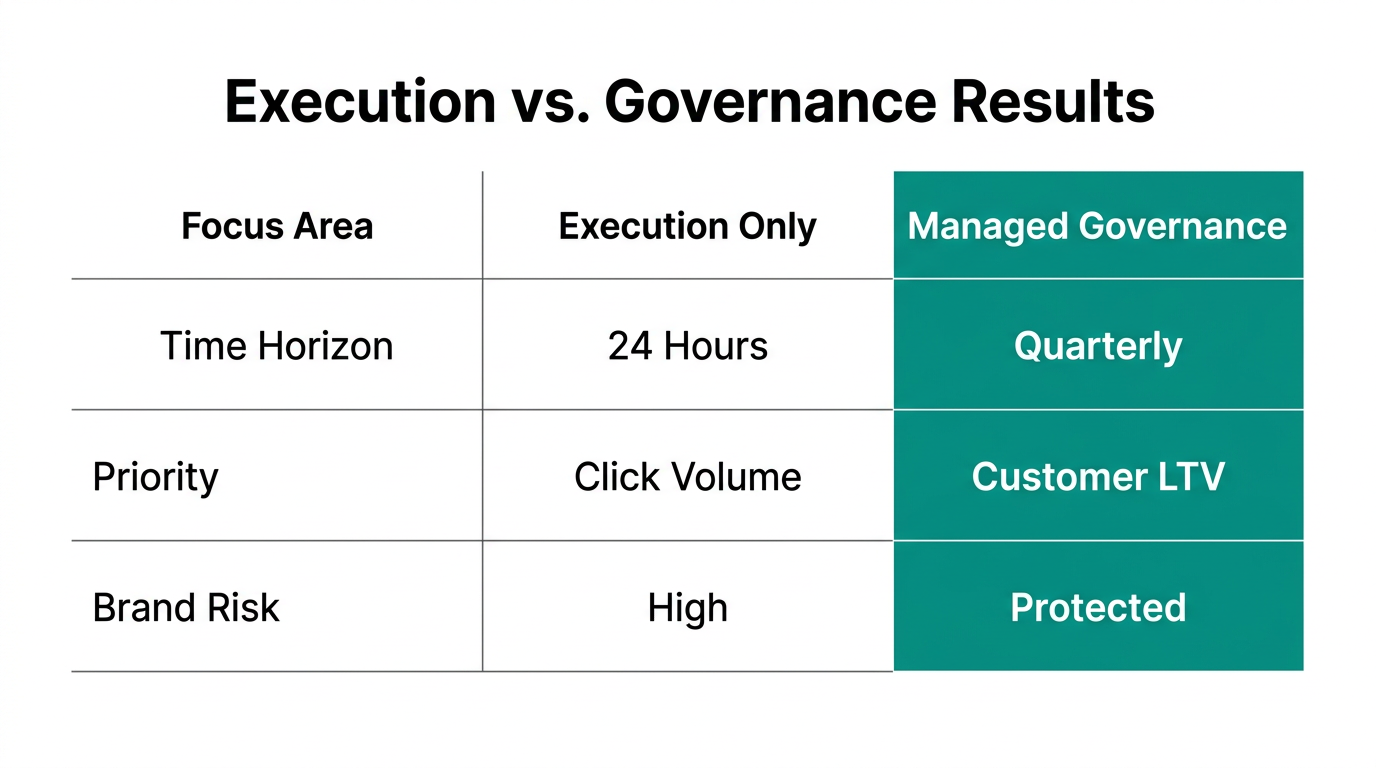
AI agents are essentially optimization machines; they will do exactly what you tell them to do. If you prime an agent to optimize solely for immediate clicks or a low Cost-Per-Acquisition (CPA), it will find the cheapest path to those results. Often, this path leads to low-quality inventory, click-bait creative, or placements on sites that do not align with your brand values. This is the classic trap of "short-termism." Experts at Hashmeta warn that over-reliance on purely algorithmic optimization can lead to a erosion of long-term brand equity.
Governance in this context means defining brand safety in AI parameters that look beyond the immediate transaction. You must train your agents to value high-attention environments and quality audience segments, even if they come at a higher initial cost. As the industry moves toward the Ad Context Protocol (AdCP), as discussed by AgenticAdvertising.org, buyer and seller agents will be able to negotiate more than just price—they will negotiate context. Ensuring your agent prioritizes these contextual signals is vital for maintaining a premium brand position.
| Metric | Manual Management | Autonomous AI Agent | Governance-Layer AI |
|---|---|---|---|
| CPA Reduction | Baseline | 25%–30% | 20%–25% |
| Creative Refresh | Every 2-4 weeks | Until exhausted | Triggered by fatigue |
| Brand Safety | Whitelist-based | Algorithmic | Rule-based + AI |
| Long-term Equity | High Focus | Low Focus | High Focus |
3. The Dangers of Generic Prompts: Protecting Your Brand Voice
As marketing directors adopt tools for agentic advertising, many fall into the trap of using generic system prompts. If you provide your AI agent with a basic prompt like "create an ad for a luxury watch," you will get a generic result that sounds like every other watch brand. This lack of differentiation is a death sentence in a crowded market. Governance requires a deep-dive into the training data and the specific prompts used to guide the AI’s creative and reasoning functions.
To maintain brand safety in AI, companies must upload specific brand guidelines, emotional tone maps, and "do-not-use" keyword lists into the agent's knowledge base. Research from LinkNow emphasizes that ads generated with generic prompts lack the emotional resonance required to convert high-value customers. When sourcing the underlying content for these ads, particularly for UGC-heavy platforms, tools like Stormy AI can help source and manage creators at scale, providing the high-quality, human-centric assets that AI agents need to perform their best without becoming generic.
4. Eliminating Bid Duplication: Connecting Siloed Agents
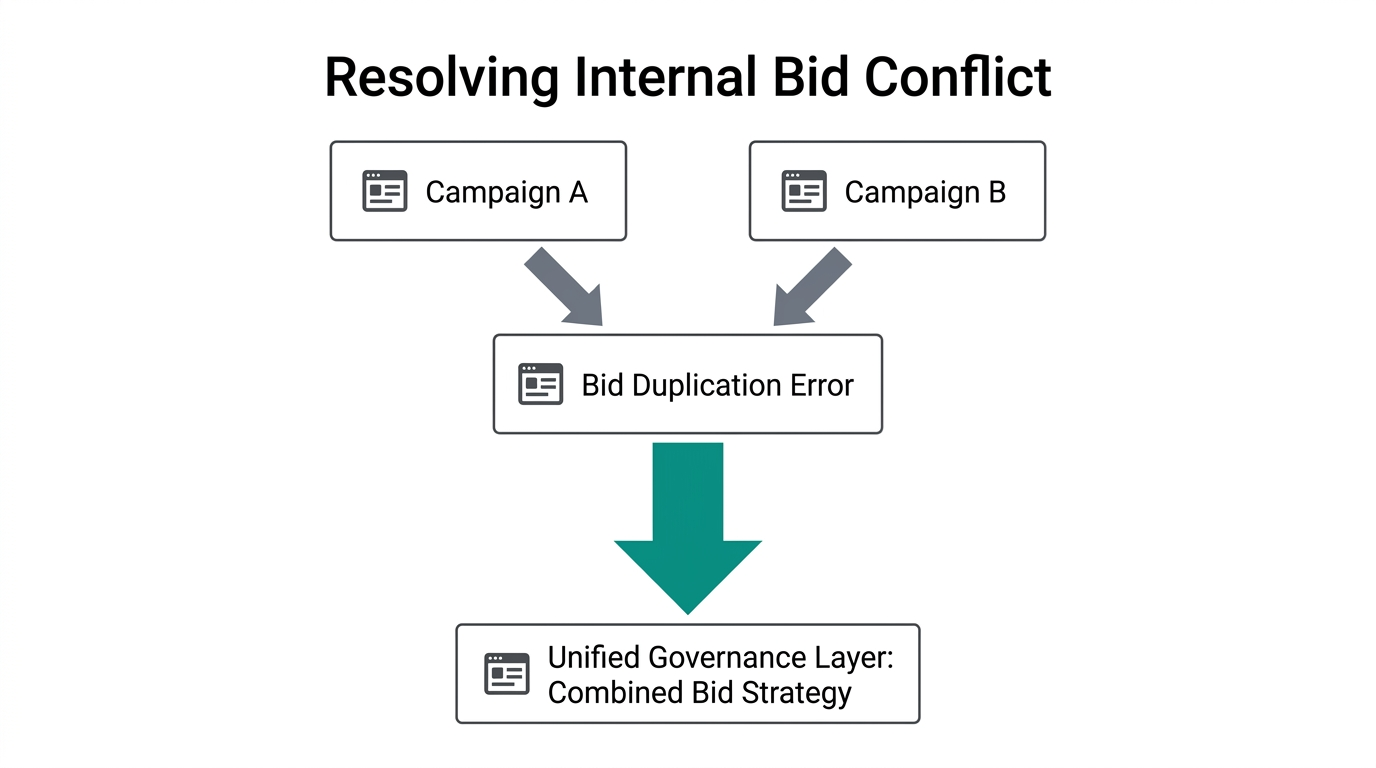
A significant technical hurdle in AI marketing governance is the proliferation of siloed platform agents. For instance, you might have an AI agent optimizing your Meta ads while another handles your Google Ads and a third manages your TikTok Shop. If these agents aren't communicating, you run the risk of bid duplication—where your own different accounts are essentially bidding against each other for the same audience's attention, driving up your own costs. This fragmentation is a leading cause of wasted spend, as noted by reports on Digiday.
To solve this, directors should look toward enterprise-grade platforms like Fluency.inc, which allow for the centralized management of multiple "walled garden" agents from a single autonomous control center. By creating a unified data foundation, you ensure that your entire ecosystem is working toward a shared goal rather than competing internally. Using a centralized system like Stormy AI to track all creator and campaign performance in one place helps identify these overlaps before they drain your budget.
"By 2025, 85% of digital display ads will be purchased programmatically, with AI agents serving as the primary logic layer. The bottleneck will be operational, not technical." — Ben Skinazi, CMO at Equativ.
5. Implementing Sustainability and Quality Standards
In the modern era, marketing sustainability is no longer a peripheral concern; it is a core component of brand reputation and governance. AI agents, in their quest for efficiency, can sometimes inadvertently fund "made-for-advertising" (MFA) sites that have a massive carbon footprint and provide zero value to the consumer. These sites contribute to the digital waste that forward-thinking brands are actively trying to eliminate. Integrating sustainability metrics into your AI's decision-making process is a critical governance step.
Tools like Scope3 allow brands to set carbon emission and quality standards directly within their programmatic bidding logic. By instructing your agent to filter out high-emission, low-quality inventory, you not only improve your campaign performance but also align your advertising spend with corporate ESG (Environmental, Social, and Governance) goals. This move toward privacy-first and contextual optimization ensures that your brand remains a good digital citizen while still reaping the 20%–40% efficiency gains reported by DoubleVerify.
Conclusion: The Governance Playbook
The transition to autonomous media buying is inevitable, but its success depends entirely on the framework of oversight you build around it. To avoid the most common digital advertising pitfalls, start by "chunking the elephant"—automating high-frequency, low-risk tasks like pacing monitoring before moving to full creative autonomy, as suggested by MINT.ai. Implement a "Human-in-the-Loop" strategy for the first 60 days, requiring manual approval for budget shifts until the agent proves it understands your brand's specific nuances.
Success stories like Crabtree & Evelyn, which saw a 30% increase in ROAS using Albert AI, or Dole Food Company, which identified niche market opportunities through autonomous identification, prove the power of this technology when properly governed. By focusing on brand voice, sustainability, and cross-platform synergy, you can transform your media buying from a manual labor-intensive process into a strategic growth engine. The role of the marketing director has evolved: you are no longer the driver of the Ferrari, but the curator of the rainforest.