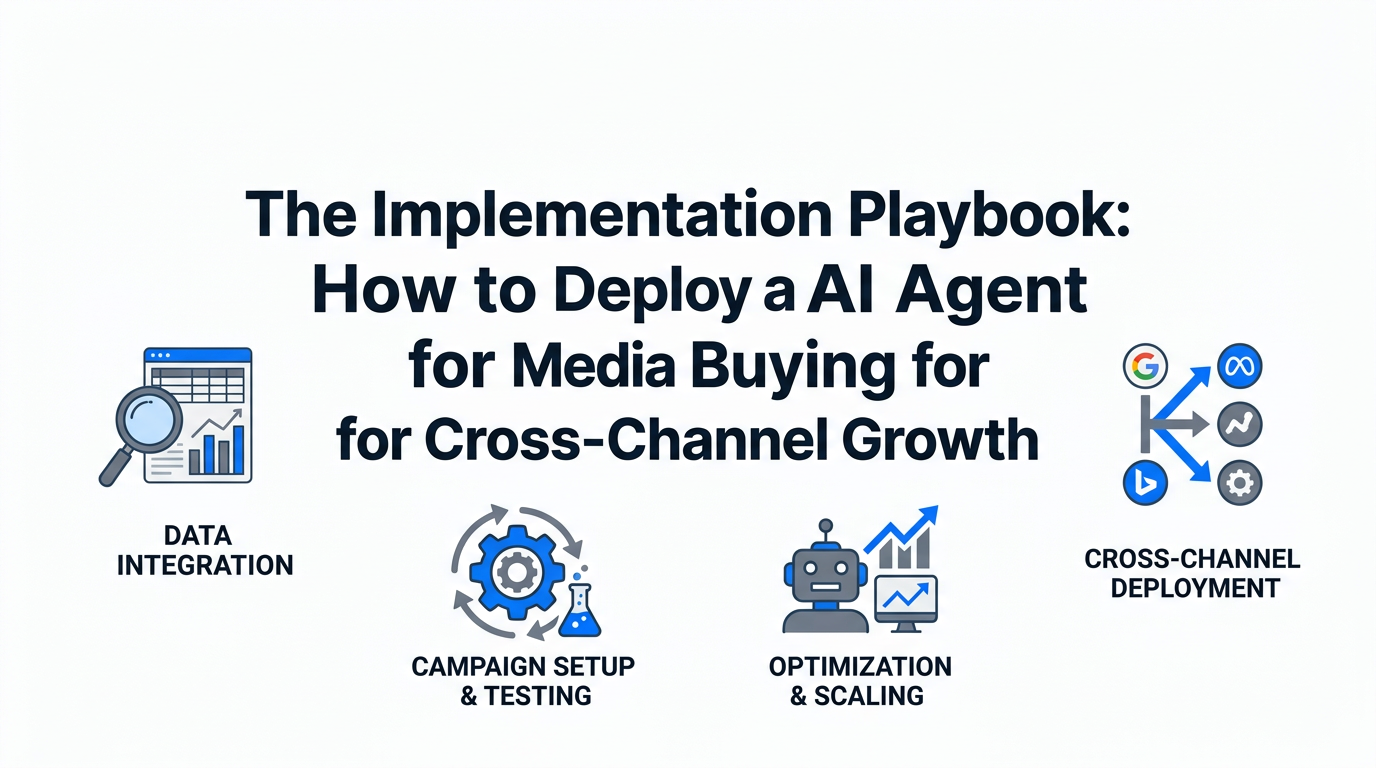
The era of manual toggle-flipping and spreadsheet-heavy campaign management is drawing to a close. As we move toward 2025, the industry is witnessing a fundamental shift from simple automation to full autonomy. The global AI agent market is already on a rocket ship trajectory, projected to grow from $5.4 billion in 2024 to $7.6 billion in 2025, according to data from Warmly.ai. For growth leads and performance marketers, the question is no longer if you should deploy an AI agent for media buying, but how to do so without breaking your existing ad tech stack integration.
Integrating an autonomous agent isn't just about plugging in a new tool; it’s about redesigning your marketing automation workflow to support a reasoning engine that makes real-time decisions. When done correctly, the results are transformative. Companies implementing autonomous media buying have reported 20%–40% improvements in campaign efficiency through platforms like DoubleVerify (Scibids). This playbook provides a step-by-step roadmap to transitioning your media buying from manual execution to strategic governance.
The 'Chunk the Elephant' Method: Starting with Low-Risk Tasks
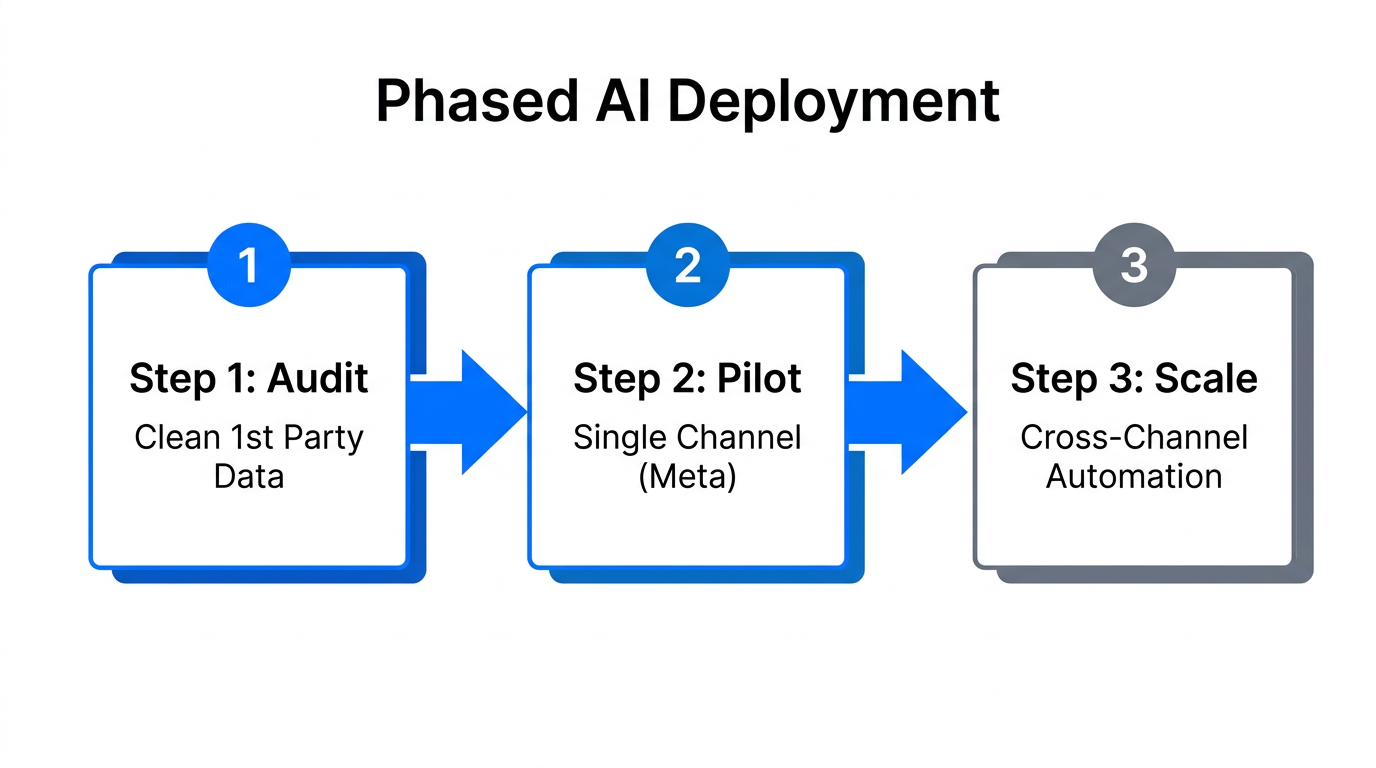
One of the biggest mistakes performance marketers make is attempting a "big bang" implementation—switching all channels to autonomous control overnight. Instead, the most successful deployments follow the 'Chunk the Elephant' method. This involves isolating high-frequency, low-risk tasks that consume disproportionate amounts of human time but require minimal strategic oversight.
Start by delegating pacing monitoring and creative A/B testing. These are tasks where AI excels because it can process thousands of data points faster than any human media buyer. According to MINT.ai, starting with these granular tasks allows the team to build trust in the agent's logic before handing over the keys to the entire budget. By automating the mechanical aspects of cross-channel ad management, your team can pivot to high-level strategy and creative development.
Building a High-Quality Data Foundation
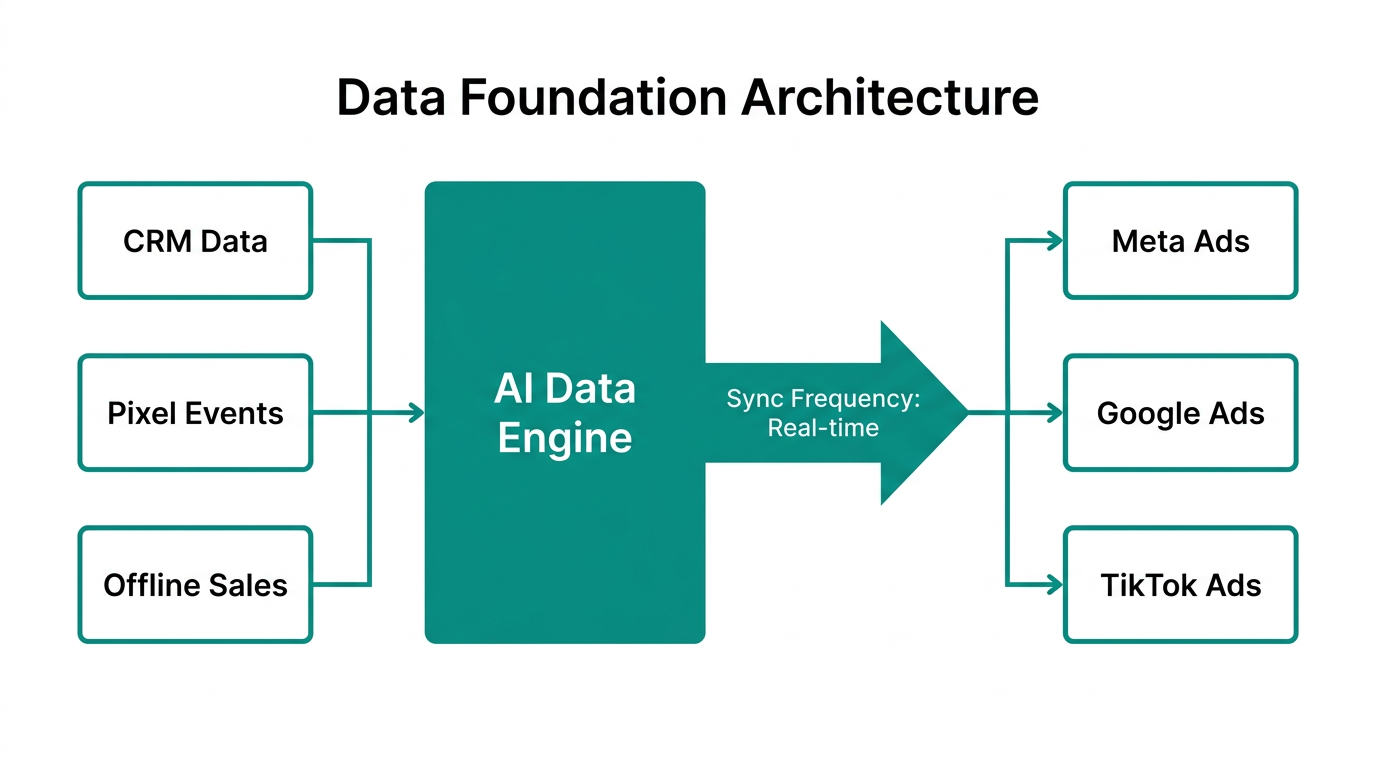
An AI agent is only as intelligent as the data it consumes. To move toward autonomous advertising, you must move away from fragmented data silos. A robust first-party data strategy is the prerequisite for any successful AI deployment. This means centralizing your CRM data, website signals, and offline conversion events into a single source of truth using platforms like Segment or Google Analytics.
Before connecting an agent, you must clean and normalize your data. As noted by Hashmeta, agents that ingest "dirty" data—such as duplicate leads or misattributed conversions—will quickly optimize toward the wrong goals. This centralization allows the agent to see the full customer journey, rather than just the last click on Meta Ads Manager or Google Ads.
"The modern martech stack is becoming more like a rainforest than a Ferrari—an ecosystem of independent but interconnected AI agents working in harmony." — Scott Brinker
Breaking Down Silos: The Unified Autonomous Control Center
Historically, Meta, Google, and TikTok were managed in isolation, leading to bid duplication and wasted spend. Modern AI agents are breaking these walls down. By using a single autonomous control center, agents can manage budgets fluidly across platforms based on real-time performance signals. This is often powered by the Ad Context Protocol (AdCP), which allows different AI agents to communicate and negotiate in a standardized way.
When you manage your cross-channel ad management through a unified logic layer, you eliminate the "walled garden" problem. For example, if TikTok CPMs spike but TikTok Ads Manager shows a dip in conversion quality, the agent can instantly reallocate that budget to Apple Search Ads where the intent might be higher. This level of agility is impossible to achieve manually across multiple time zones and platforms.
Setting Up 'Human-in-the-Loop' Guardrails
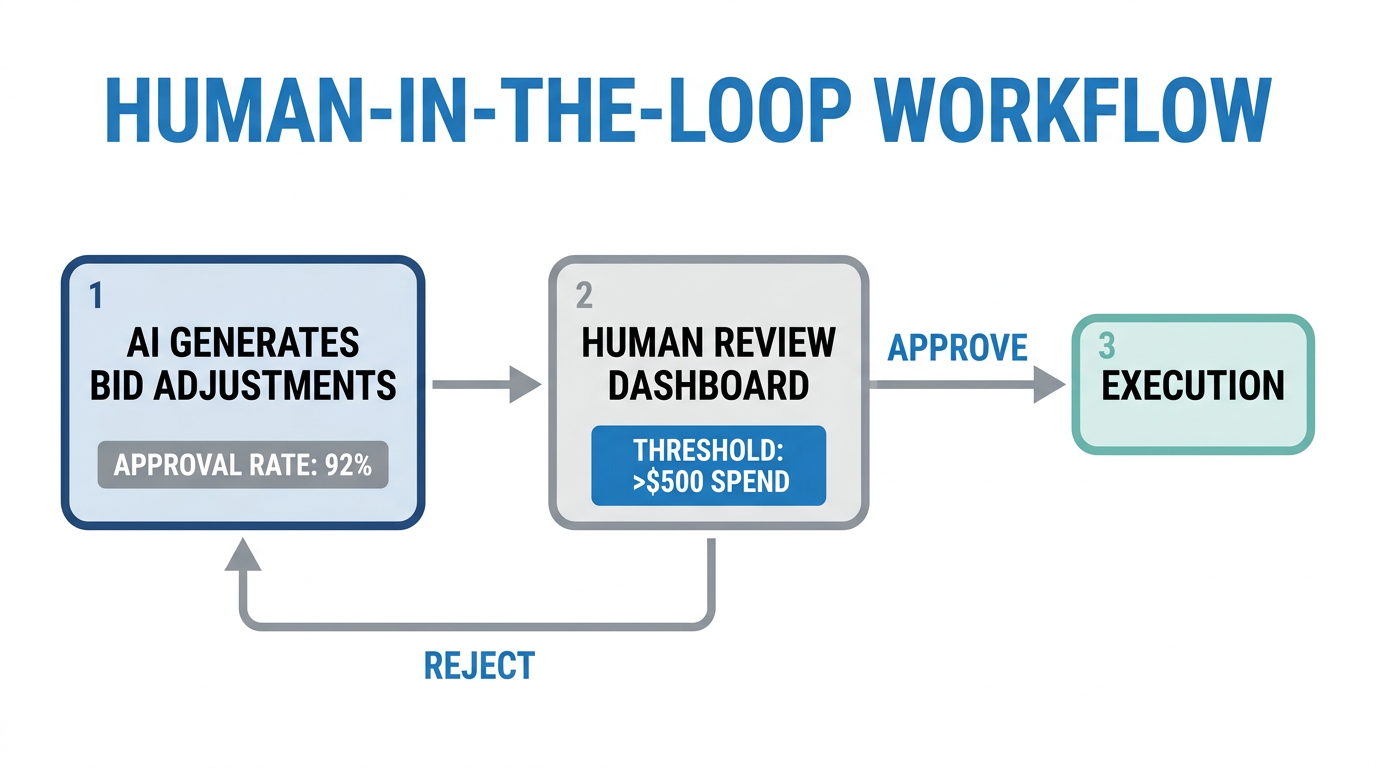
For the first 60 days of deployment, you should implement a 'Human-in-the-Loop' (HITL) framework. This means the AI agent functions as a high-powered recommendation engine rather than a fully autonomous buyer. The agent suggests bid changes, audience pivots, or creative swaps, but a human must click "approve" before they go live.
During this phase, you should establish strict brand safety and budget guardrails. Use tools like Revealbot (Birch) to set hard caps that the AI cannot exceed. This prevents the agent from "hallucinating" a performance trend and overspending. Performance marketing playbooks often fail because they skip this trust-building phase, leading to executive skepticism when an agent makes an aggressive (though perhaps mathematically sound) move.
| Implementation Phase | AI Responsibility | Human Responsibility | Primary Goal |
|---|---|---|---|
| Days 1-30 | Data ingestion & Pacing | Full approval of all changes | Data validation |
| Days 31-60 | Bid & Budget Recommendations | Approval of major shifts (>20%) | Trust building |
| Days 61+ | Full Autonomy | Strategic Governance & Audit | Scale & Efficiency |
Selecting the Right Tool Based on Business Size
Not all AI agents are created equal. The tool you choose should align with your annual media spend and the complexity of your ad tech stack integration. Smaller businesses need speed and ease of use, while enterprises require deep customizability and interoperability with existing legacy systems.
- SMEs & Growth Startups: Look for platforms like Adzy that offer simplified social ad automation. These tools are designed to get you up and running quickly with minimal technical overhead.
- Mid-Market & E-commerce: Platforms like Perpetua are excellent for Amazon and retail media, while Optmyzr provides deep PPC optimization for search-heavy accounts.
- Enterprise: For massive scale, Fluency.inc or Albert AI offer full-funnel autonomous management that can handle millions in monthly spend across dozens of channels.
Regardless of the tool, ensure it supports privacy-first optimization. With the decline of third-party cookies, agents must rely on contextual and attention-based signals, a specialty of platforms like Scope3, to predict performance without invasive tracking.
The Creative Engine: Sourcing Assets for the Agent
An AI agent can optimize a campaign into the ground, but it cannot fix a bad creative. In fact, generic AI prompts often lead to generic ads, which can trigger "creative fatigue" faster than manual campaigns. To feed the autonomous engine, you need a steady stream of high-quality, authentic content—particularly User-Generated Content (UGC).
This is where sourcing becomes the bottleneck. While agents manage the bidding, platforms like Stormy AI streamline the discovery and management of UGC creators. By using AI to source and vet creators who align with your brand's specific demographics, you ensure the media buying agent always has "fresh fuel" to test. Integrating a creator CRM into your workflow allows you to scale the creative side of the house at the same pace the AI agent scales your media spend.
"AI agents are expected to serve as the primary logic layer for 85% of digital display ads by 2025, moving the human role from execution to strategic governance."
Avoiding Common Pitfalls in AI Deployment
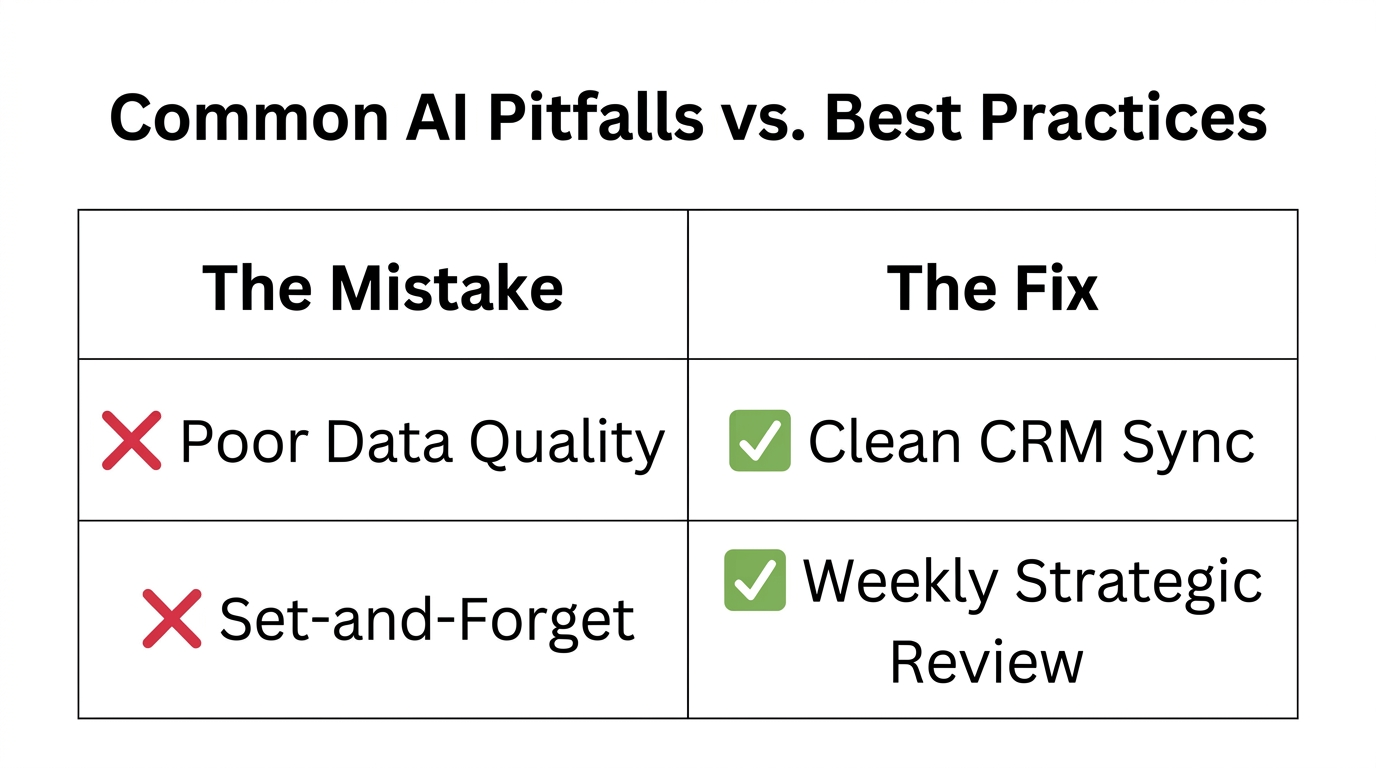
Despite the high ROI potential—typically a 25%–30% reduction in Cost-Per-Acquisition (CPA) according to Matic Digital—many implementations fail due to a "set and forget" mentality. AI lacks strategic foresight; it optimizes for the metrics you give it. If you only optimize for clicks, the agent might find cheap traffic that never converts into long-term brand equity.
Another risk is ignoring brand voice. Always train your agents (and your creative teams) on specific brand guidelines using tools like Canva and emotional tones. As highlighted by LinkNow, the most successful AI-driven campaigns are those that maintain a human-centric emotional connection while leveraging machine-speed execution. Regularly audit the agent's creative placements to ensure they align with your brand safety standards and don't end up on low-quality sites.
Conclusion: The Shift to Strategic Governance
Deploying an AI agent for media buying is not a replacement for a marketing team; it is an upgrade for one. By following the performance marketing playbook of starting small, centralizing your first-party data strategy, and maintaining human oversight, you can achieve the kind of 30% increase in ROAS seen by brands like Crabtree & Evelyn.
The future of growth belongs to those who can manage "swarms" of agents—one for audience discovery, one for creative sourcing via Stormy AI, and one for cross-channel execution. As Ben Hovaness of OMD predicts, the human role is shifting toward strategy and governance. Start building your autonomous foundation today, and let the machines handle the milliseconds while you handle the vision.