The era of the "Copilot" is over. In 2026, growth marketers have moved beyond using AI as a simple writing assistant and have embraced the Agentic SEO revolution. We are no longer just prompting a model; we are architecting autonomous ecosystems. The transition from human-led workflows to agent-led swarms has catalyzed a massive shift in how organic traffic is captured. As of Q1 2026, the global Agentic AI market has surged to $10.86 billion, with enterprises reporting a 32.3% reduction in token costs by switching from massive, single-prompt models to specialized Claude AI agent mesh networking architectures.
Why Agentic SEO is the Fastest-Growing Marketing Sub-Sector
Static SEO strategies are failing in a world where search engines prioritize real-time relevance and deep topical authority. Agentic SEO refers to the use of autonomous AI agents that don't just write content, but actively manage the entire keyword-to-publish lifecycle. According to Gartner, 40% of all enterprise applications now feature embedded task-specific agents, a staggering jump from less than 5% only two years ago.
Marketers are seeing an average ROI of 171% when deploying these systems. The magic lies in the move away from "long-context single-agent" prompts toward a "mesh" of specialized workers. By delegating tasks—one agent for keyword clustering, one for competitor analysis, and another for technical refactoring—brands are achieving 4x to 7x improvements in conversion rates. This isn't just about efficiency; it's about autonomous dominance in search results that update faster than a human could ever track.
"In 2026, the question isn't how smart the model is, but how effectively it can delegate. We are seeing models sustain 7-hour autonomous sessions by acting as a 'technical lead' over a mesh of specialized sub-agents." — Dario Amodei, CEO of Anthropic.
The Model Context Protocol (MCP): The Universal Adapter for SEO
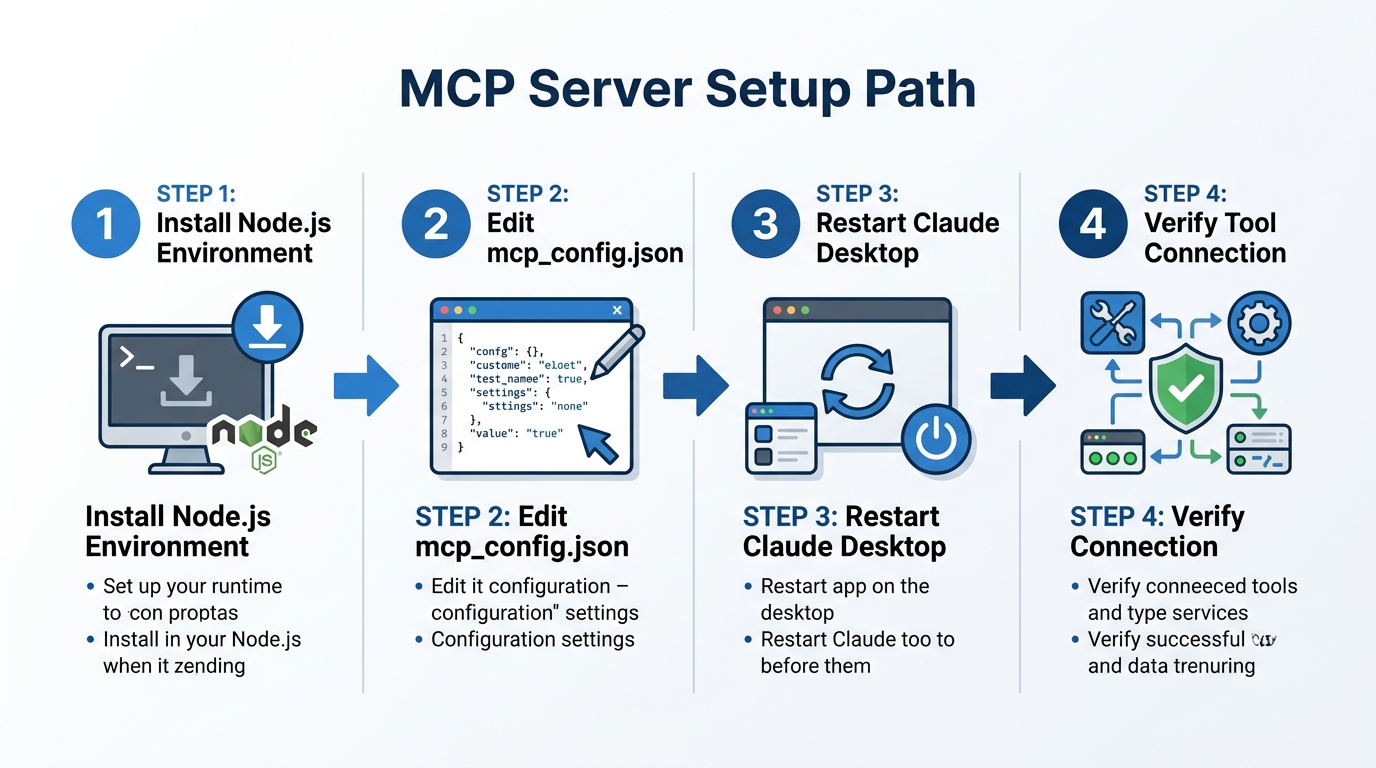
One of the biggest technical breakthroughs for SEOs this year is the Model Context Protocol (MCP). Standardized by Anthropic and recently donated to the Linux Foundation, MCP serves as the "Universal Bluetooth" for AI agents. In the past, connecting an AI to your CMS or a live search data API required complex, custom-coded integrations. Now, agents "discover" tools via MCP server configuration.
For an SEO professional, this means your autonomous SEO agents can natively "talk" to tools like Apple Search Ads for intent data, or TikTok Ads Manager to identify trending UGC themes. They can monitor your Shopify store's inventory and automatically generate or update product descriptions in real-time based on search demand. Organizations like Landbase have leveraged this protocol to sync real-time inventory and billing data directly into their GTM agent meshes, proving that the "Agent-as-an-OS" model is now the industry standard.
How to Configure Your First MCP Server for SEO
- Choose your Host: Use a high-reasoning model like Claude 4.6 Opus as your primary orchestrator.
- Initialize Connectors: Load the MCP server for your specific CMS (e.g., Webflow or WordPress).
- Define the Skill Folders: Instead of massive system prompts, use modular "Skill Folders" containing Python scripts for tasks like XML sitemap auditing or schema markup generation.
Deploying the SPARC Methodology for Content Distribution
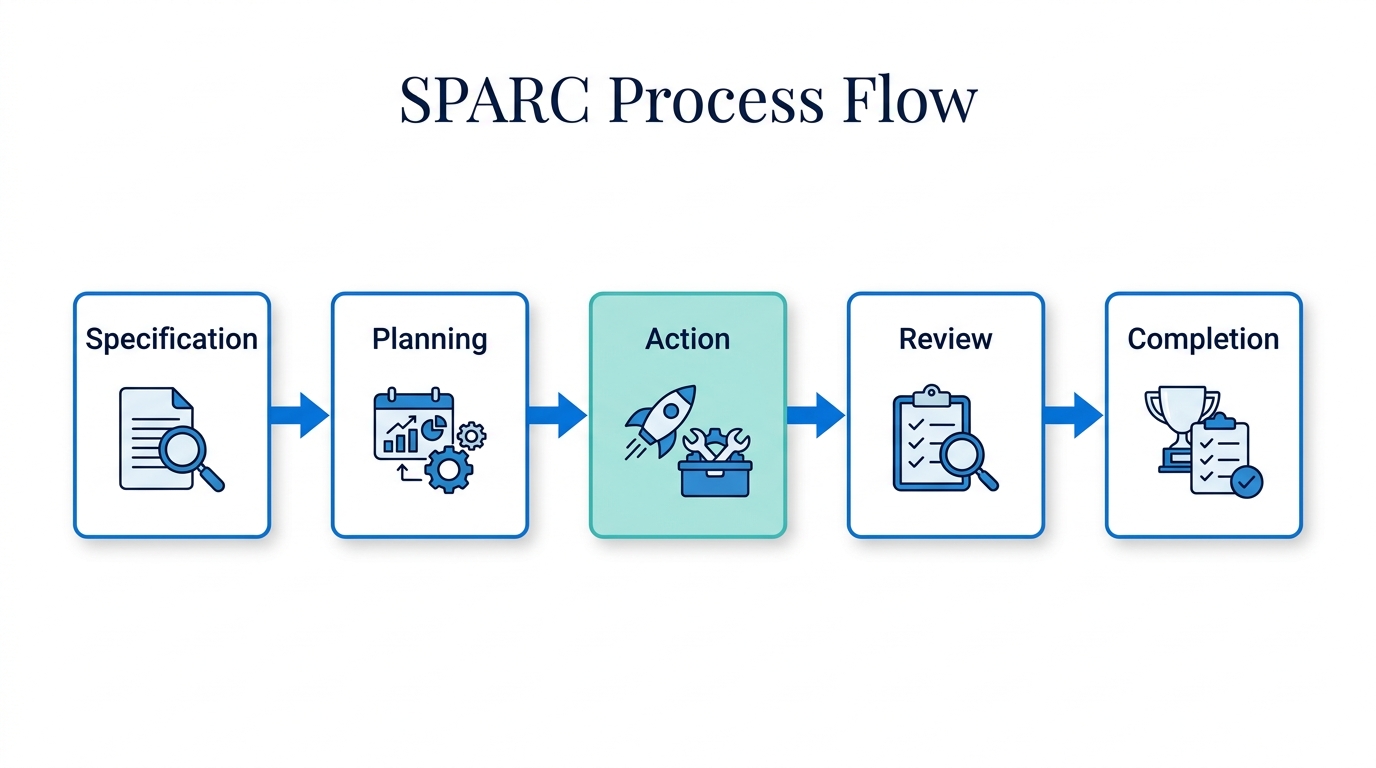
To manage a Claude AI agent mesh networking setup effectively, you need a framework. The SPARC (Systematic Planning, Acting, & Reviewing Cycle) methodology is the gold standard for practitioners in 2026. This cycle ensures that your autonomous agents don't run in infinite, token-wasting loops.
Step 1: Systematic Planning
Initialize your "Architect Agent" (typically Claude 4.6). Its only job is to analyze your niche and create a comprehensive MULTI_AGENT_PLAN.md. It looks at search trends on YouTube and TikTok to find content gaps. For example, if you are looking to discover creators on Stormy for an app install campaign, the Architect identifies which creator niches are currently driving the most organic search interest.
Step 2: Acting
The Architect delegates tasks to "Worker Agents." Use smaller, faster models like Claude 4 Haiku for specific actions. One agent might handle technical site refactoring using Claude Code, while another generates 10 variations of a blog post based on different search intents. This parallel processing reduces project timelines from months to weeks.
Step 3: Reviewing Cycle
This is where the "mesh" becomes powerful. Before anything goes live, a Validator Agent reviews the output. This agent has a "No-Op" restriction—it cannot write code or content; it can only critique. This layer is critical for eliminating the 40-50% failure rate typically seen in unmonitored multi-agent systems.
"The next phase of SEO isn't an AI tool; it's an AI Workforce. We are hiring Agent Architects to define KPIs for our digital co-workers." — Neeraj Abhyankar, VP Data & AI at R Systems.
| Feature | Claude Agent Mesh | Legacy SEO Tools |
|---|---|---|
| Workflow | Autonomous Swarms | Manual/Human-led |
| Data Access | Real-time via MCP | Static/Delayed Database |
| Refactoring | Integrated Claude Code | Manual code edits |
| Error Rate | Low (with Validator Agent) | Variable/Human error |
Eliminating the 40% Hallucination Failure Rate
A major pain point in early autonomous SEO was "cascading errors." If one agent hallucinations a keyword's search volume, and the next agent writes a 2,000-word guide based on that fake data, the entire campaign fails. Research from Gartner shows that 40% of agentic AI pilots fail within six months due to these loops.
To solve this, 2026's top marketers use Heterogeneous Meshes. Instead of using the same model for everything, they use a Claude Supervisor to manage workers running on different models like Llama 3 or Gemini. By diversifying the "brains" in the mesh, you eliminate shared blind spots. Furthermore, the Validator Agent uses "Thinking Traces"—a feature of Claude 4.6 and 5—to monitor the internal reasoning of worker agents before they execute. This ensures every SEO recommendation is grounded in verifiable search data.
Claude Code vs. Traditional SEO Tools for Technical Refactoring
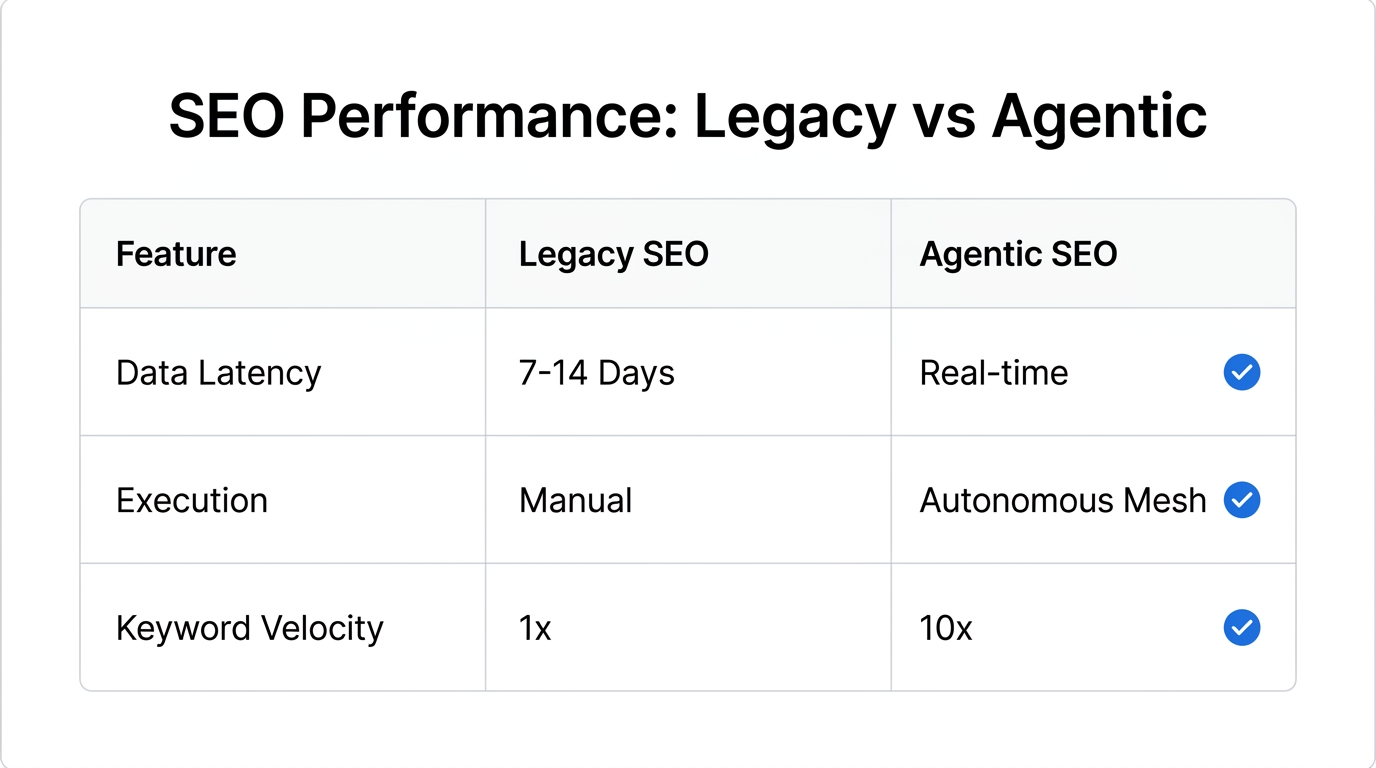
In 2026, technical SEO is no longer about just running a crawl and handing a PDF to a developer. Tools like Claude Code have reached $1 billion in ARR by allowing agents to perform autonomous refactoring directly in the terminal. When your agent mesh detects a drop in Core Web Vitals, it doesn't just alert you—it writes the fix, tests it in a staging environment, and pushes the code to GitHub.
Comparing this to legacy SEO tools is like comparing a self-driving car to a paper map. While traditional tools might highlight a "slow page speed" issue, an agent mesh using Claude Code identifies the specific bloated JavaScript library, finds a lighter alternative, and rewrites the implementation. This speed of execution is why 80% of Fortune 500 companies have integrated multi-agent systems into their production environments.
"An agent mesh provides a real-time data platform that connects AI to the nervous system of the enterprise. It moves us away from standalone experiments to first-class IT citizens." — Edward Funnekotter, Chief AI Officer at Solace.
The Bottom Line: Automate or Be Outpaced
The competitive landscape of 2026 belongs to the "Agent Architects." By mastering Claude AI agent mesh networking and the SPARC methodology, you can build an SEO machine that operates with more precision and lower costs than any human team. Whether you are using Stormy AI to source UGC creators for a high-converting landing page or deploying autonomous SEO agents via MCP to dominate long-tail keywords, the goal is the same: total search dominance through automation.
Don't let "zombie agents" drain your budget. Implement a Validator Agent today, configure your MCP servers, and start treating your AI agents like the digital workforce they were meant to be. The future of search isn't just about being found—it's about building a system that ensures you stay found.