Protecting your influencer marketing budget is no longer just about choosing the right creator; it is about defending against a $1.3 billion global fraud epidemic. For years, growth teams have operated in a reactive mode, manually checking spreadsheets and scrolling through profiles to verify authenticity. However, as we head into 2025, the industry is witnessing a tectonic shift from 'Chat AI'—the use of LLMs like ChatGPT for brainstorming and copy generation—to 'Action AI': the autonomous execution of complex marketing workflows. This new era of agentic marketing is moving the dashboard from the browser to the terminal, where speed and precision redefine how brands scale.
The Fraud Epidemic: Defending Your 2025 Budget
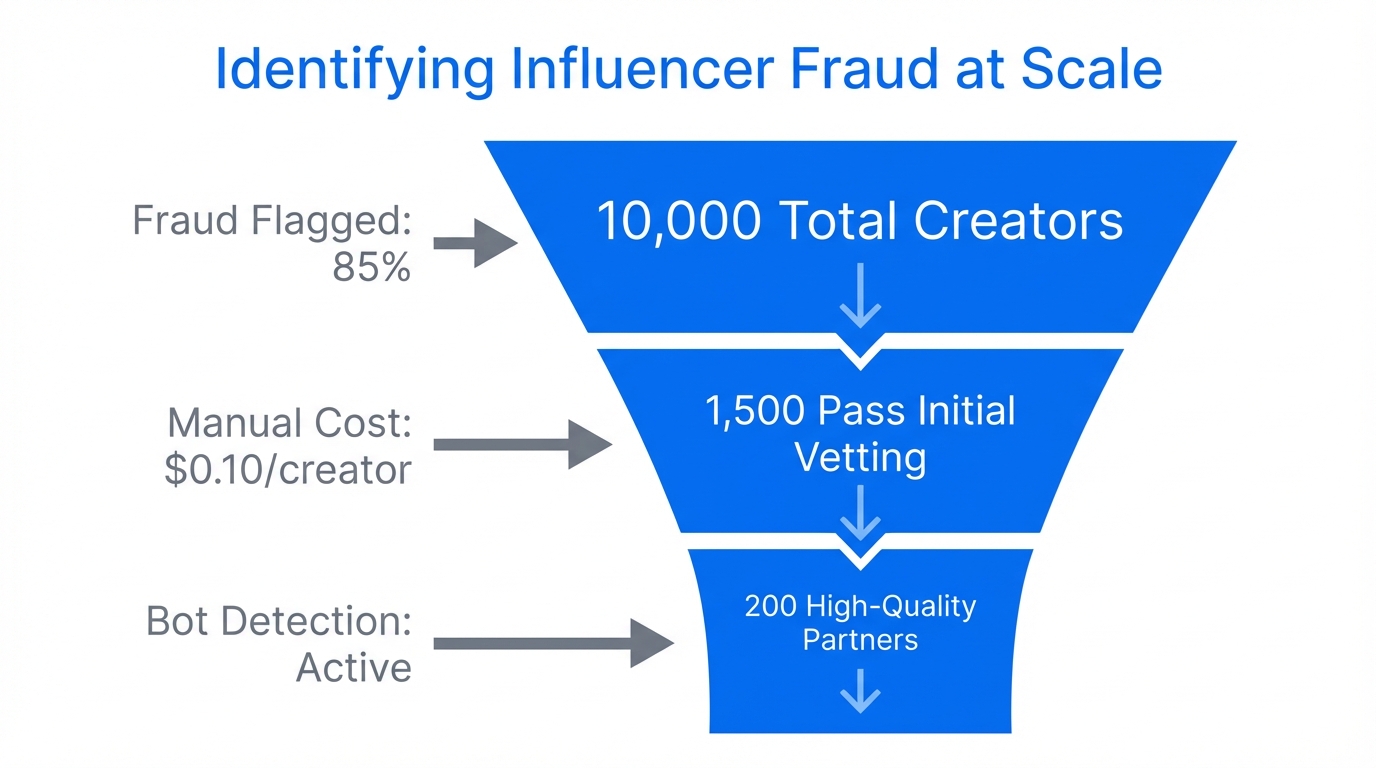
Influencer marketing spend is projected to reach $32.55 billion by 2025, a significant jump from $24 billion in 2024. According to data from Statista, this rapid growth has unfortunately invited sophisticated bot farms and fraudulent engagement loops that threaten to drain marketing efficiency. Brands are projected to lose over $2 billion to influencer fraud in 2025 alone, making automated vetting not just a convenience, but a financial necessity.
The exposure is widespread. Research from Shift Happens Marketing indicates that 59.8% of brands reported experiencing influencer fraud in 2024, a sharp increase from the 31% reported only two years prior. The trap often lies in high-level metrics. While nano-influencers with fewer than 10,000 followers maintain an average of 6.7% engagement, mega-influencers often see those numbers plummet to 1.6%, as noted by research in Social Media Today. Distinguishing between a healthy, niche-engaged audience and a 'zombie' follower base requires more than a casual glance; it requires deep data auditing.
"The shift from Chat AI to Action AI represents the death of the manual spreadsheet. In 2025, the terminal is the new marketing dashboard."Agentic Operations: Why the Terminal is the New Dashboard
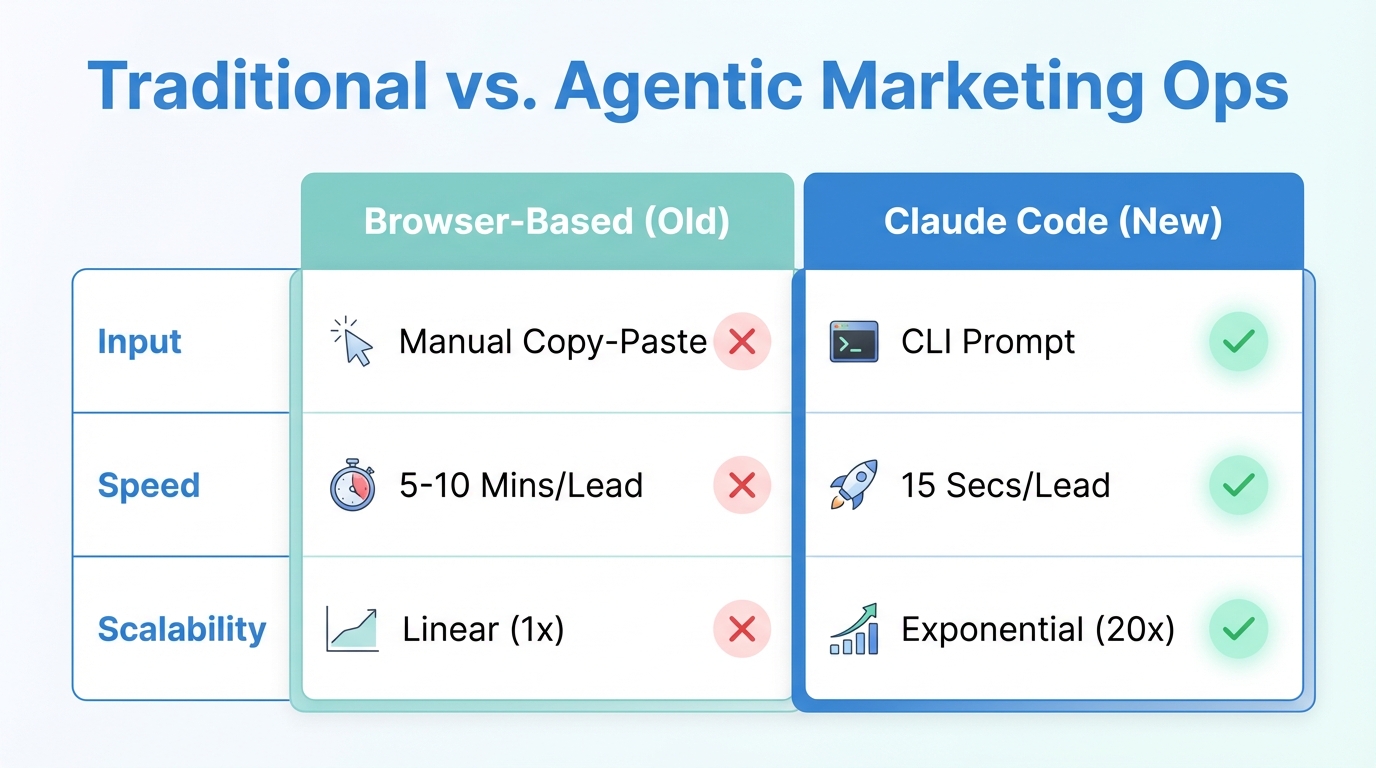
The defining trend of the coming year is Agentic Marketing Operations. Instead of clicking through static charts in five different browser tabs, marketers are moving into the command-line interface (CLI) to run 'Vibe Marketing' at scale. Tools like Claude Code, Anthropic’s agentic CLI, allow marketers to build their own fraud-detection sub-agents that audit thousands of creators in minutes—a task that previously took agencies weeks to complete.
This shift allows for Long-Context Auditing. While a human might look at the last five posts, an AI agent can ingest years of historical data to identify 'growth spikes' that signal purchased followers. Furthermore, by utilizing the Constitutional AI framework developed by Anthropic, brands can ensure that influencer scripts and audience comments align with strict ethical guidelines automatically.
| Feature | Traditional Manual Vetting | Agentic Marketing Ops |
|---|---|---|
| Speed | Hours per creator | Seconds per creator |
| Data Depth | Recent 5-10 posts | Full historical audit (8+ years) |
| Scalability | Limited by headcount | Unlimited via sub-agents |
| Fraud Detection | Visual 'vibe check' | Pattern-based anomaly detection |
Connecting the Dots: The Model Context Protocol (MCP)
The true power of Claude Code lies in its ability to interact with the real world through the Model Context Protocol (MCP). This open standard allows the AI to have 'hands'—connecting directly to live social media data, ad managers, and scraping tools. By integrating the Model Context Protocol, marketers can bypass the limitations of closed ecosystems.
For example, using the Puppeteer MCP, a growth lead can instruct an agent to scrape real-time comments from a viral TikTok video. These comments are then passed to a sentiment analysis agent to determine if the engagement is coming from real fans asking questions or bot accounts posting generic emojis like '🔥' or 'Nice pic!'. You can discover a wide range of pre-built skills for these agents on the MCP Market, which acts as a directory for extending your agent's capabilities.
"Autonomous agents don't just find creators; they audit the soul of the engagement, separating true influence from digital noise."The Agentic Playbook: Deploying Your Vetting Sub-Agents
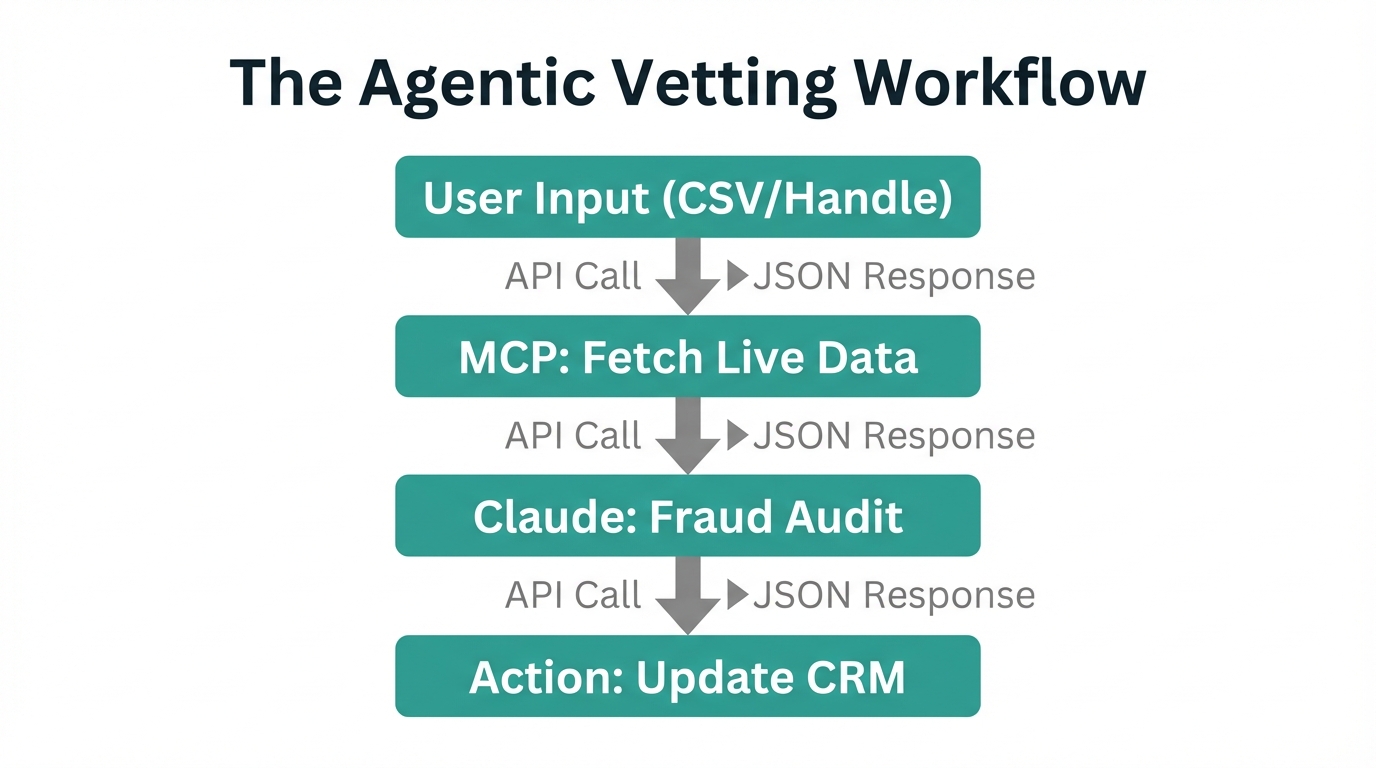
To move your operations into an agentic workflow, follow this three-step playbook for creator auditing at scale.
Step 1: Initialize Your Marketing Source of Truth
Create a CLAUDE.md file in your project directory. This acts as the 'Agent Skill' layer that guides the AI's vetting process. Within this file, you must define your 'Red Flag Rubric.' This rubric tells the agent exactly what to look for, such as follower spikes greater than 20% in a 24-hour period or engagement primarily from private accounts with zero posts.
Step 2: Orchestrate Sub-Agents
Instead of using one general prompt, use Claude Code to orchestrate specialized sub-agents. Sub-Agent 1 (The Scraper) uses tools like Apify to extract the last 500 comments. Sub-Agent 2 (The Auditor) analyzes the Natural Language Processing (NLP) quality of those comments. Finally, Sub-Agent 3 (The Analyst) compares the creator's media kit rates against the actual authentic engagement found by the previous agents.
Step 3: Unify Your Tech Stack
Fragmentation is the enemy of scale. Modern growth teams are using agentic interfaces to bridge the gap between their CRM and their discovery tools. Platforms like Stormy AI streamline this by providing the deep historical data and creator discovery engine that these agents can then query and manage. By connecting your agent to a centralized CRM, you ensure that every negotiation, payment, and audit is recorded in one place.
Real-World Results: Saving Thousands of Staff Hours
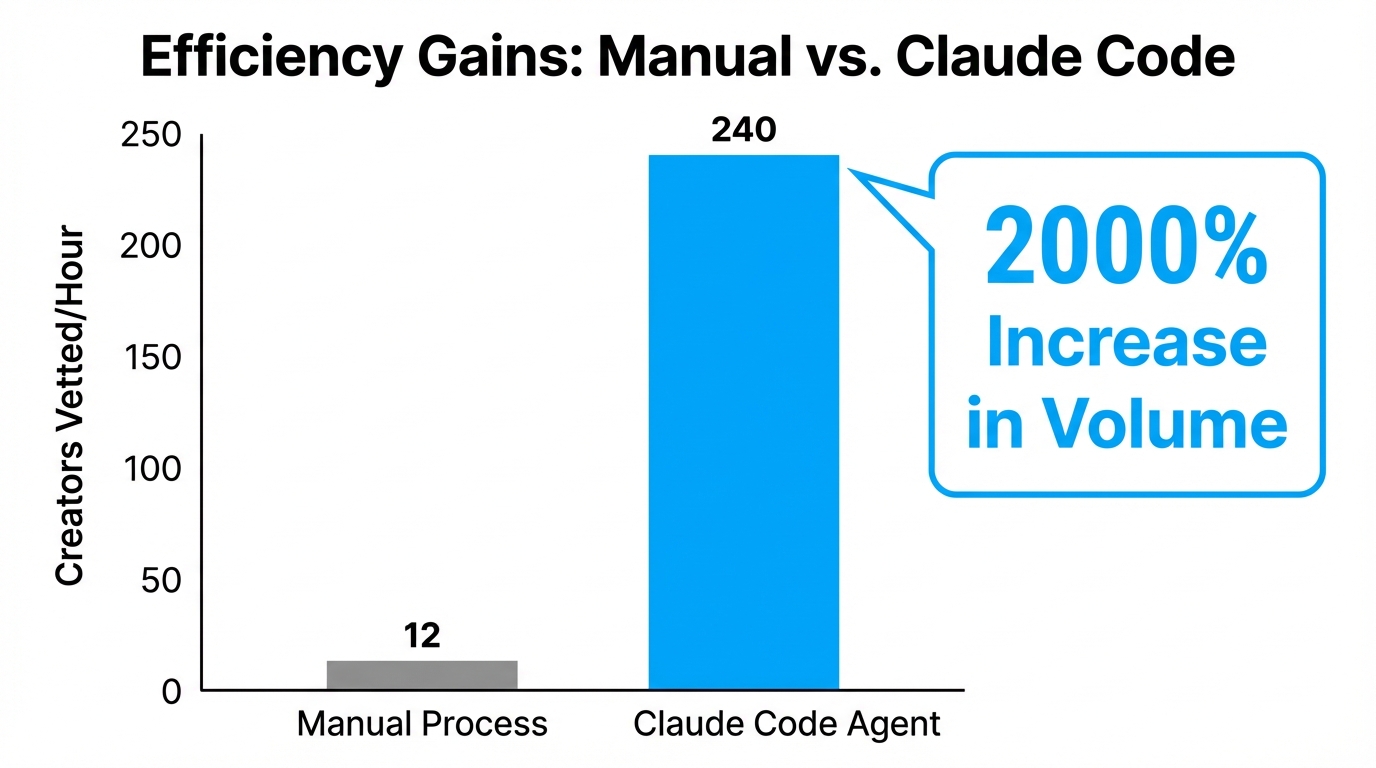
The transition to agentic operations isn't theoretical—it is already delivering massive ROI for global enterprises and agile growth teams alike. The growth team at Anthropic, led by marketer Austin Lau, utilized Claude Code to build internal tools that reduced ad creative tasks from 30 minutes to just 30 seconds. According to the Claude.ai Blog, this allowed them to iterate on content 60x faster than traditional manual workflows.
Even more impressive is the case of TELUS. By integrating Claude into their complex data workflows, they successfully automated repetitive tasks, saving over 500,000 staff hours annually. This level of efficiency allows marketing teams to stop acting as data entry clerks and start acting as strategic auditors, focusing only on the high-value creators that Stormy AI and their agentic stack have already pre-vetted.
"Efficiency isn't just about doing things faster; it's about eliminating the 90% of manual work that shouldn't exist in the first place."Common Mistakes in the Agentic Era
As you move toward agentic marketing, avoid the common pitfalls that still plague 49% of marketers, according to Afluencer. The most frequent error is hiring for reach over relevance. An agentic stack should be programmed to prioritize niche alignment and 'vibe checks' over raw follower counts.
Additionally, don't let your tech stack remain fragmented. Using five different browser-based tools that don't communicate creates data silos. Use a unified interface—leveraging the discovery and CRM capabilities of modern platforms—to ensure your autonomous agents have a single, clean source of truth to work from. Finally, always maintain 'human-in-the-loop' oversight for final creative decisions; while AI is perfect for auditing and discovery, the final brand 'feel' still benefits from a human touch.
Conclusion: The Future is Autonomous
The shift to Action AI is inevitable for any brand looking to scale in the creator economy. By moving from manual spreadsheets to agentic workflows powered by Claude Code and the Model Context Protocol, you can defend your budget against fraud while increasing your team's output by orders of magnitude. Start by identifying your most time-consuming vetting task, build a sub-agent to handle it, and begin the journey toward fully autonomous marketing operations.