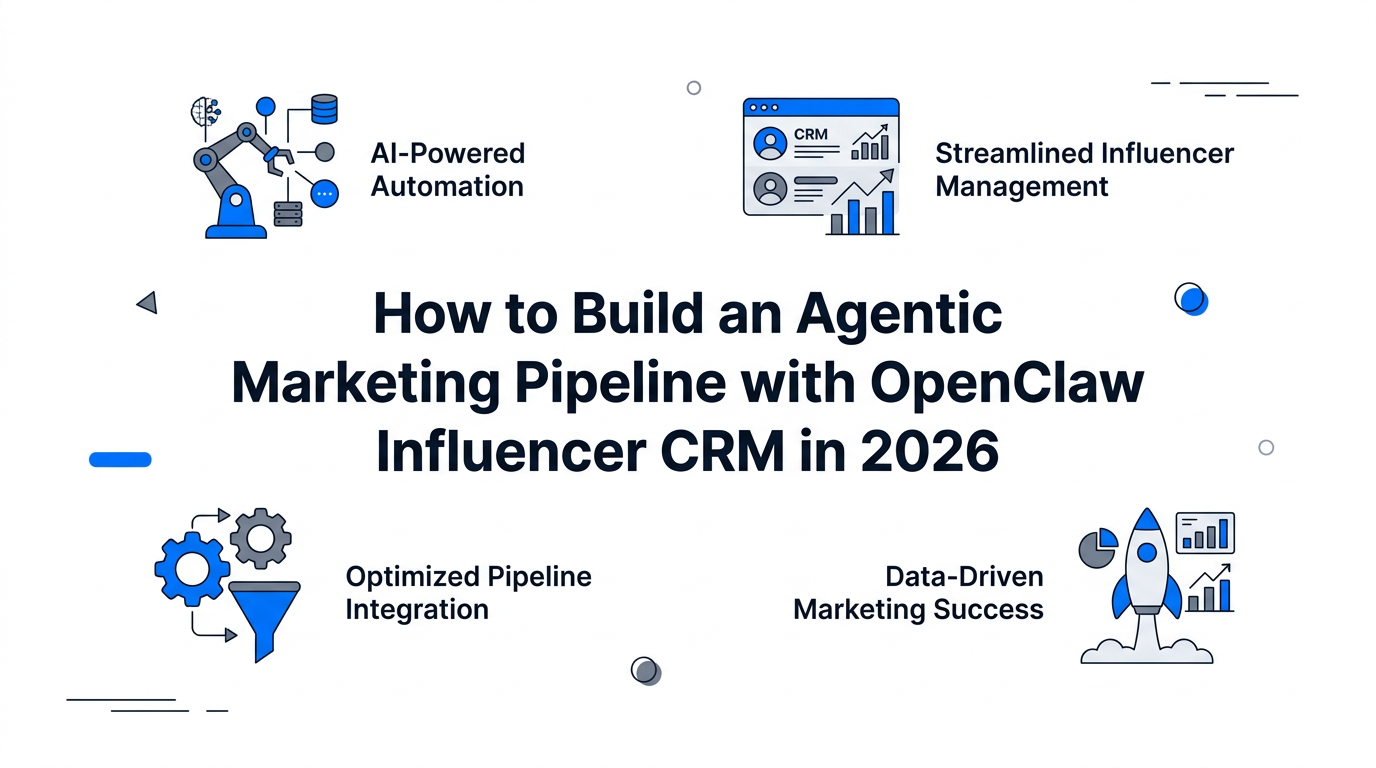
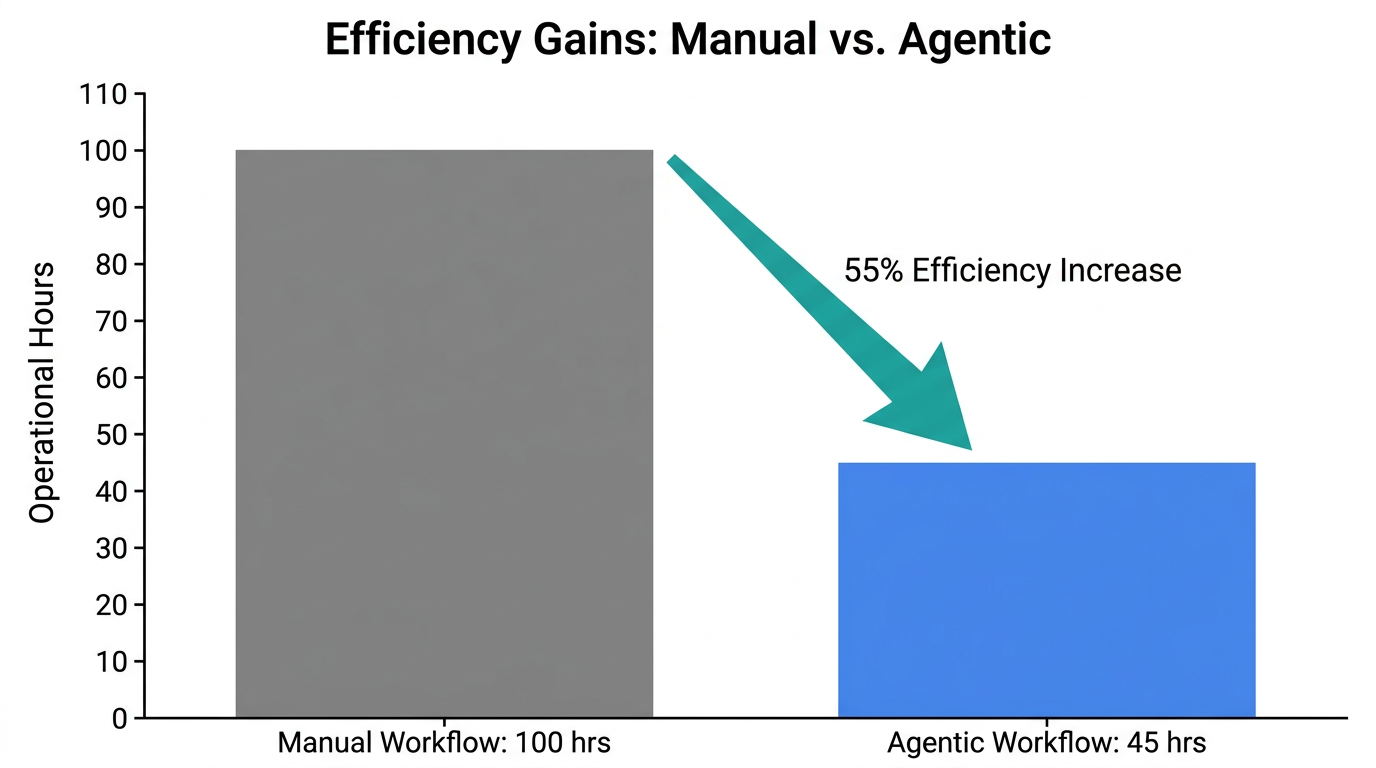
The marketing landscape of 2026 has moved far beyond the simple automation of the early 2020s. We have entered the era of agentic marketing, where the shift from "AI as a tool" to "AI as a workforce" is redefining how brands scale. It is no longer enough to use generative AI to write an email; modern growth teams are deploying autonomous digital employees that discover, vet, and manage thousands of creator relationships simultaneously. By adopting these agentic pipelines, companies are seeing a 55% increase in operational efficiency and a 35% reduction in overall marketing costs, according to data from Stormy AI and recent reports on the state of AI in enterprise.
Defining Agentic Marketing: The AI Workforce of 2026
In previous years, influencer marketing relied on manual databases and rigid automation. Today, the standard is the autonomous agent. Unlike traditional software that requires a human to click every button, an AI marketing agent is capable of reasoning, planning, and executing complex multi-step workflows. This transition is essential as the global influencer marketing industry is projected to reach $34.1 billion by the end of 2026, up from $24 billion just two years ago, according to research by Influencer Marketing Hub and Charle Agency.
Agentic systems like OpenClaw (formerly known as Clawdbot) represent the gold standard for this shift. OpenClaw isn't just a database; it is a self-hosted framework that controls browsers and APIs directly to "act" like a human account manager. It reached a staggering 214,000 GitHub stars in early 2026 because it allows brands to keep their sensitive data and creator relationships on their own hardware, ensuring a privacy-first approach in an increasingly regulated digital economy, much like the infrastructure offered by Shopify for commerce.
"Manual influencer outreach is now mathematically impossible at the scale required for 2026 commerce. If you aren't using agentic pipelines, you aren't competing; you're just managing a hobby." — Robert Lukoszko, CEO of Stormy AI
The Mathematical Necessity of Agentic Pipelines
Why is this shift happening now? The answer lies in the sheer volume of the creator economy. With Instagram remaining a $22 billion ecosystem according to Business of Apps, and TikTok dominating creator commerce, the sheer number of nano-influencers (1k–10k followers) has exploded. These creators offer an incredible 10.3% average engagement rate on TikTok, according to industry benchmarks from Social Media Today and other leading analytics firms. However, managing 500 nano-influencers manually requires a massive headcount that most startups cannot afford.
| Feature | Manual/Legacy CRM | Agentic Marketing (OpenClaw) |
|---|---|---|
| Outreach | Manual emails & DMs | Autonomous multi-channel agents | Vetting | Subjective human review | AI-powered fraud & quality scoring | Negotiation | Back-and-forth for days | Real-time price vetting via SOUL.md | Efficiency | 1 manager for 20 creators | 1 manager for 500+ creators |
By leveraging an agentic pipeline, brands move toward a Human-in-the-Loop (HITL) model. Peter Steinberger, the creator of OpenClaw, argues that the future of CRM involves AI handling 90% of the tedious outreach, follow-ups, and vetting, leaving human managers to focus solely on creative strategy and final approvals.
OpenClaw: The Digital Employee for Multi-Channel Communication
One of the standout features of OpenClaw Influencer CRM is its ability to integrate directly with the platforms where creators actually live: Telegram, Discord, and Slack. In 2026, relying solely on email is the "Email Graveyard" mistake—influencers often ignore cold emails but respond to personalized messages in their preferred messaging apps within minutes.
OpenClaw allows growth managers to "text" their CRM. You can send a message in Slack saying, "Find 50 fitness creators in London and send them our latest seeding offer," and the agent executes the task across the web. This eliminates "communication decay," which remains the top reason influencer campaigns fail according to Harvard Business Review analyses.
Playbook: Building Your Agentic Pipeline in 2026
Building a successful autonomous pipeline requires a combination of high-intent discovery and low-friction management. Here is the 2026 growth stack playbook:
Step 1: AI-Powered Discovery
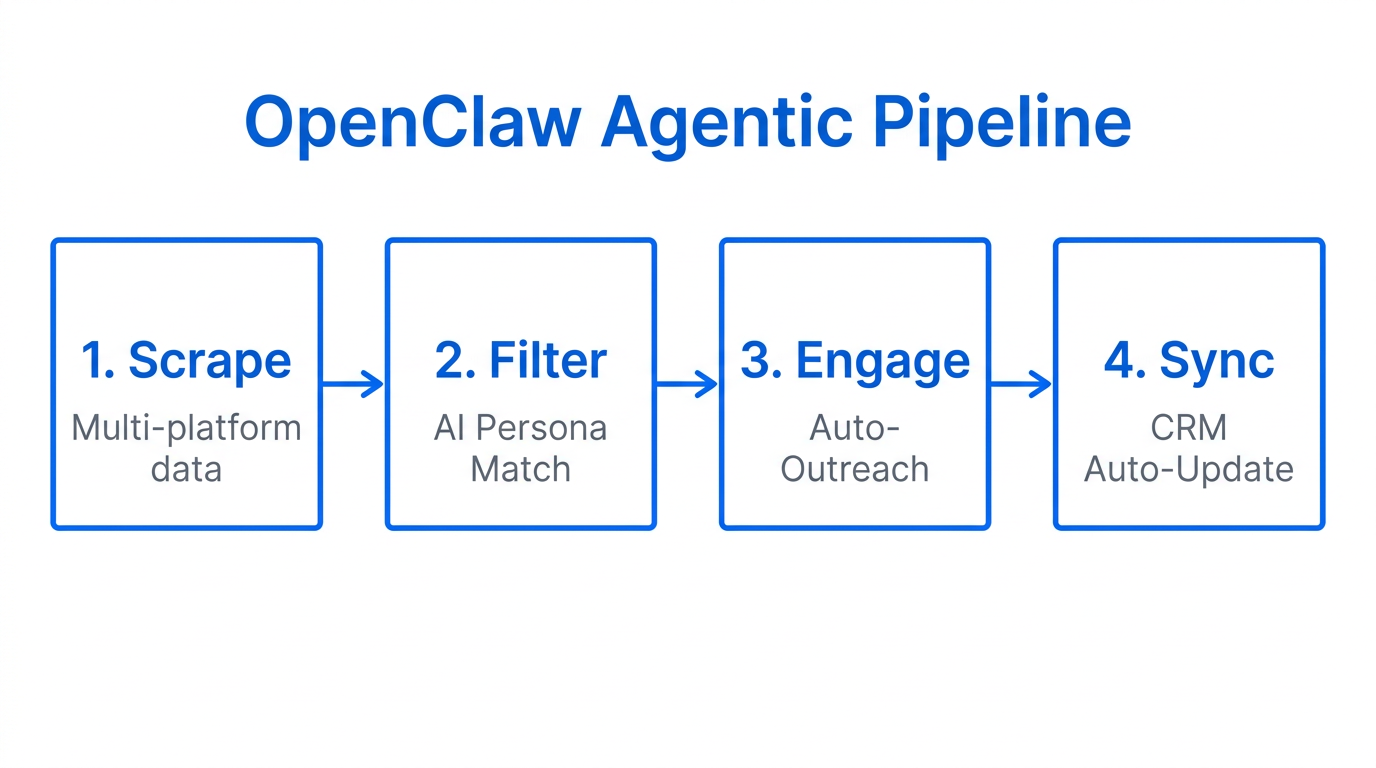
The pipeline begins with discovery. Using platforms like Stormy AI, you can use natural language prompts to find creators that perfectly match your brand persona. Instead of scrolling through endless lists, the AI identifies rising stars and micro-influencers who are already trending in your niche.
Step 2: Automated Vetting and Fraud Detection
Once you have a list, your agent must vet them. In 2026, engagement fraud is more sophisticated than ever, as noted in recent AdAge reports. Use an AI-driven vetting platform to analyze audience quality and detect fake followers automatically. If a creator doesn't meet your minimum 3% engagement threshold, the agent automatically filters them out of the pipeline.
Step 3: Deploying OpenClaw for Outreach
Feed your vetted list into OpenClaw. The agent will then initiate contact across multiple channels. It uses the SOUL.md protocol (an agentic framework often deployed via Notion or GitHub) to handle initial price vetting based on your brand's budget guardrails. For example, if a creator's rates are too high, the agent can autonomously negotiate within a 15% margin before involving a human.
"The key to scaling in 2026 is treating your influencers as a long-term community, not a transactional line item. AI agents allow you to maintain that 'human' touch at 100x the scale."
Step 4: Continuous Seeding and Tracking
The final step is continuous seeding. Instead of one-off campaigns, your agent runs an "always-on" pipeline. It identifies new creators daily, coordinates product gifting, and tracks mentions in real-time. This strategy helped eco-friendly brand Blueland boost its Amazon seller rank by 6.3x, adding $129k in revenue over just three months, as reported by Stack Influence.
Case Study: Scaling 10x Without Adding Headcount
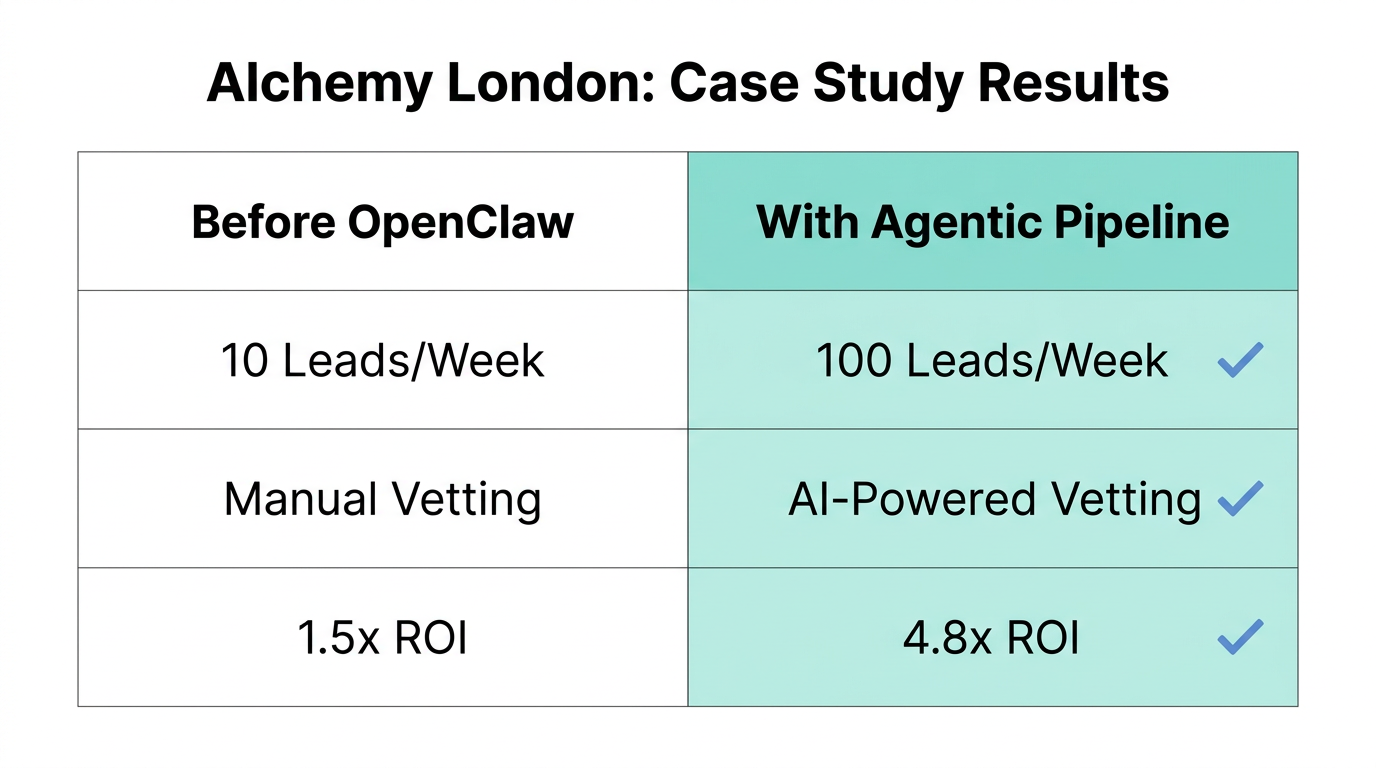
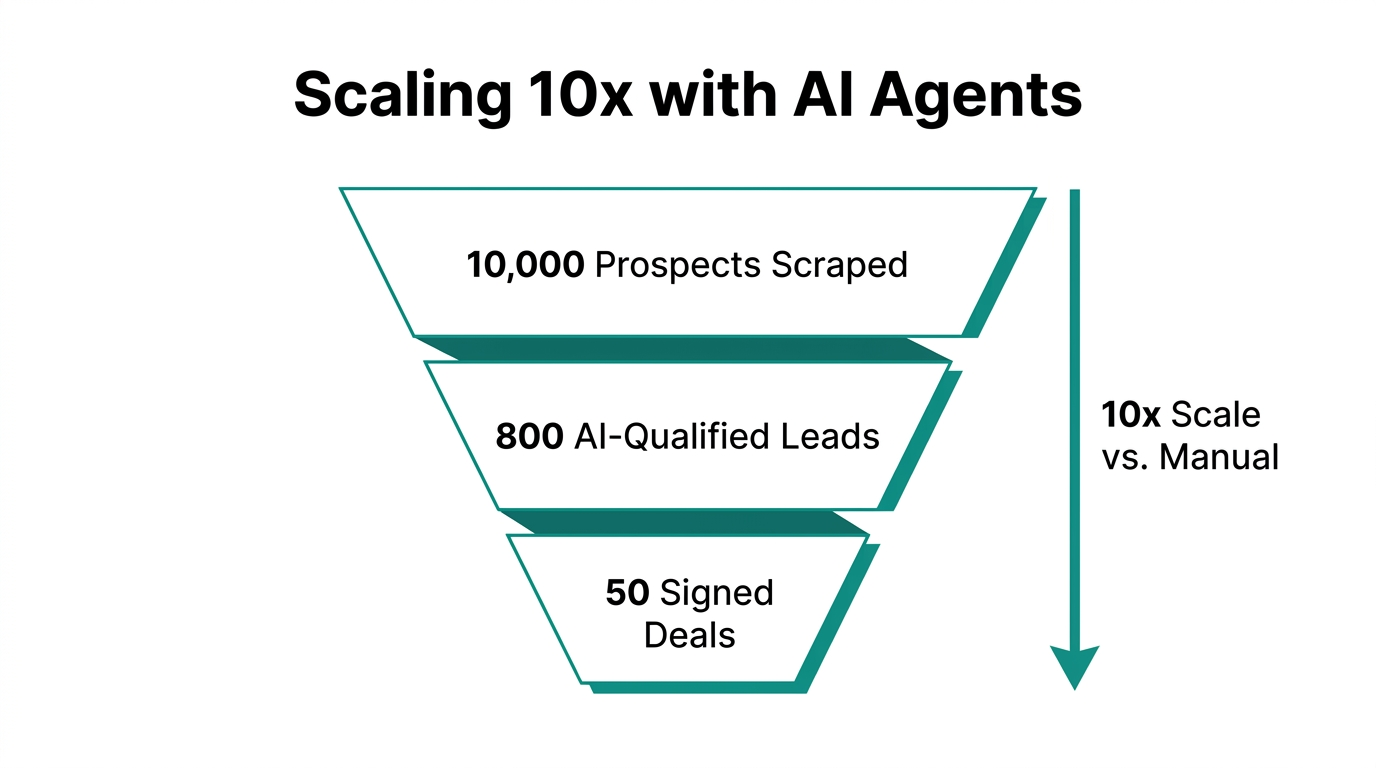
One of the most impressive examples of agentic marketing in action is Alchemy London. By pairing the creator discovery power of Stormy AI with OpenClaw's micro-decision management, they successfully scaled their creator network by 10x. Remarkably, they achieved this without hiring a single additional influencer manager. The result was 4x revenue growth in one quarter, proving that efficiency is the ultimate competitive advantage in the 2026 creator economy.
Similarly, small e-commerce sellers are using OpenClaw hosted on Tencent Cloud to reduce creator response times from 45 minutes to just 8 seconds. This speed increased inquiry conversion rates from 22% to 41%, showing that in the world of creators, responsiveness is revenue.
The Future is Agentic
As we navigate through 2026, the brands that win will be those that view their marketing stack as a living, breathing AI workforce. By integrating OpenClaw Influencer CRM with powerful discovery tools like Stormy AI, you can build an agentic marketing pipeline that works while you sleep. You'll move from chasing one-off posts to building a sustainable, automated engine of growth that delivers consistent influencer marketing ROI.
Ready to automate your creator workflow? Start by building your first automated agentic pipeline today and reclaim 55% of your team's time for high-level strategy and creative vision by leveraging tools like Zapier and Stormy AI to connect your entire funnel.