The era of the 'AI copywriter' is officially coming to a close. For the past two years, growth teams have treated LLMs like Claude as sophisticated Mad Men—tools to churn out headlines, generate social captions, and brainstorm creative angles. But as we move into the 2025-2026 marketing cycle, the focus has shifted from generative output to autonomous execution. We are entering the age of agentic marketing, where the goal isn't just to produce content, but to build ai marketing agents capable of auditing, optimizing, and pivoting campaigns in real-time without human intervention. At the center of this revolution is Claude Code, a command-line interface that transitions AI from a passive assistant to an active growth engineer.
The Financial Reality: Why Budgets Bleed in the Gap
Before we dive into the technicalities of Claude Code automation, we must address the 'silent' waste that plagues modern digital advertising. For many CMOs, the biggest threat to ROI isn't a bad creative; it's the operational gaps where human management can't keep up with the speed of the auction. Research shows that approximately 5.1% of all ad clicks in 2024 were fraudulent, leading to a staggering $38 billion in annual global losses. These losses occur 24/7, often while your team is asleep.
Beyond fraud, the 'set-and-forget' nature of legacy Google Ads management creates a massive efficiency vacuum. Studies indicate that over 25% of the spend in the average account is lost to poor targeting and slow bidding adjustments. Furthermore, many brands are still paying for clicks they would have won naturally; 20-30% of branded search ads run in auctions with zero competition, meaning brands are essentially taxing their own organic traffic.
"The industry has shifted from manual prompt engineering to autonomous 'action AI' where the model doesn't just suggest a change—it executes it."The Shift to 'Action AI': From Copywriter to Auditor
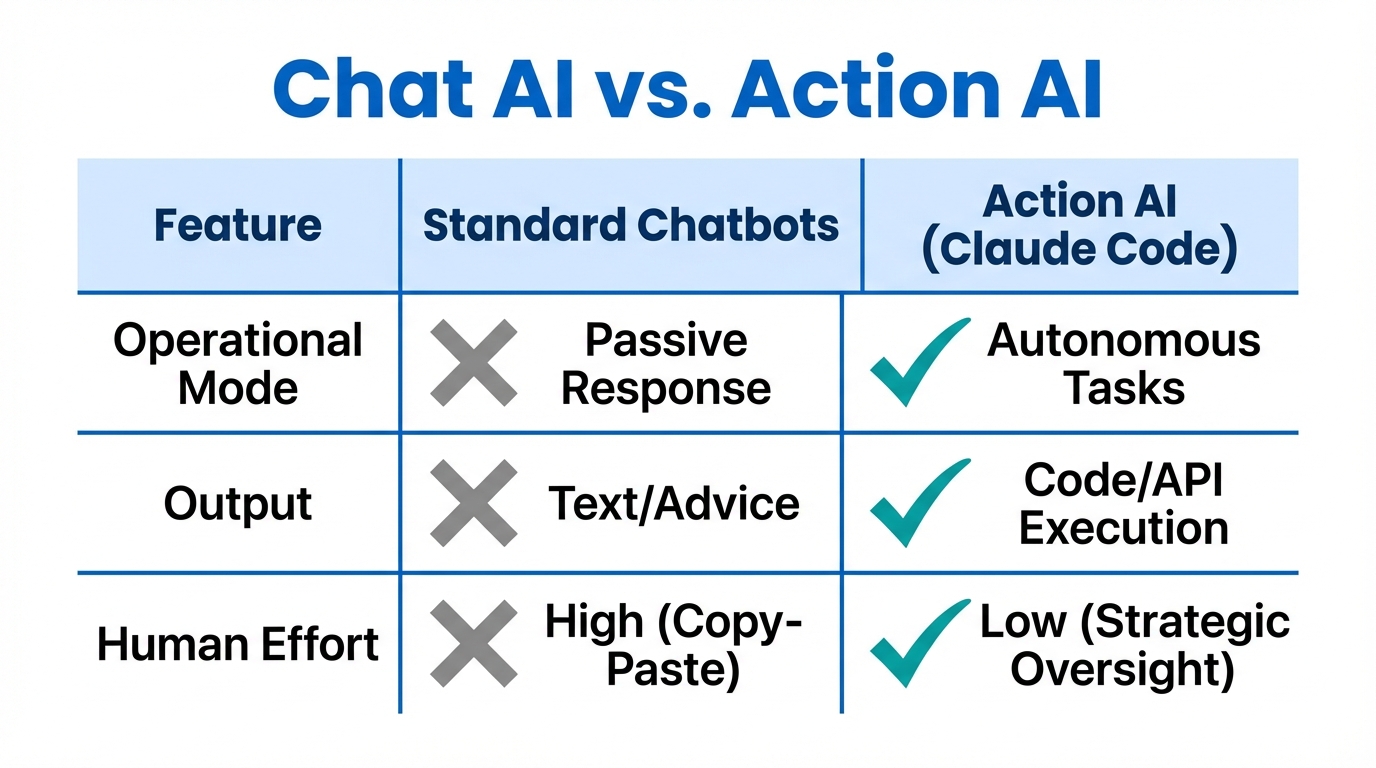
In the previous generation of marketing technology, AI was used as an accelerator. You would prompt an LLM to 'write 10 headlines,' then manually copy those into your Meta Ads Manager. Today, the gold standard is Action AI. This involves using tools like Claude Code to act as an autonomous watchdog that monitors Cost Per Acquisition (CPA) 24/7 and pivots budgets across channels based on live performance data. This shift from manual intervention to agentic orchestration has been shown to reduce campaign launch times by as much as 65%.
| Feature | Legacy AI (2023-2024) | Agentic Marketing (2025+) |
|---|---|---|
| Primary Function | Content Generation | Autonomous Auditing & Action |
| Data Input | Manual CSV Exports | Live API via MCP |
| Human Role | Prompt Engineering | Strategic Orchestration |
| Speed | Hours to Days | Seconds to Minutes |
A core component of this transition is the Model Context Protocol (MCP). This protocol allows Claude to connect directly to live marketing data without the friction of manual downloads. By using MCP servers, like the ones offered by Adzviser, Claude can 'talk' to your Google Ads API, analyze the current state of your bidding, and suggest—or even implement—fixes via a command-line interface.
Leveraging Claude Code: The Growth Lead's New Toolkit
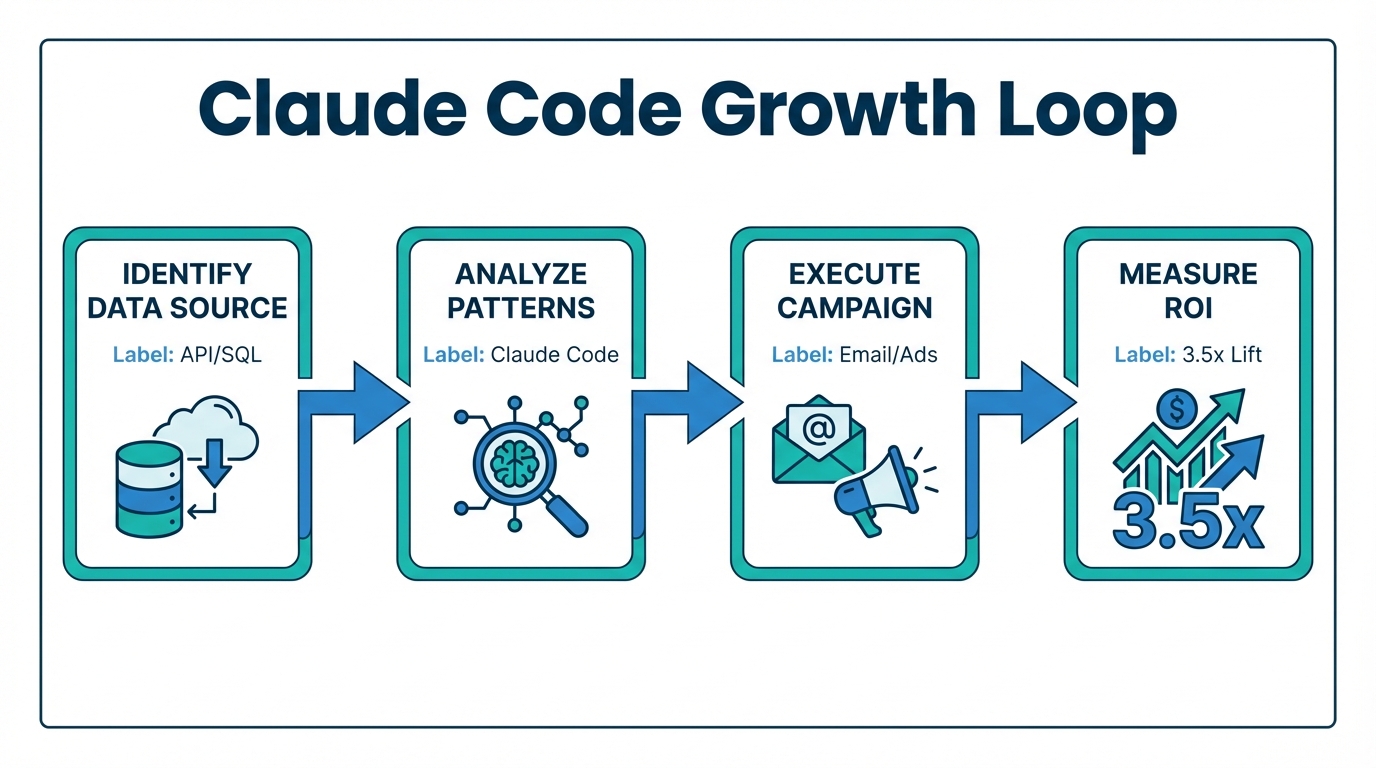
For a growth lead, Claude Code automation functions like having a senior technical marketer available 24/7. It isn't just marketing automation software; it is a developer environment for your growth strategy. By installing the Claude Code CLI via Node.js, teams can run complex audits that previously took days in just a few seconds.
One of the most effective strategies is the 'Ralph Wiggum' optimization technique. In this workflow, a marketer sets up a bash loop where Claude Code is given a specific success criterion, such as 'Reduce CPA below $50 across all non-branded campaigns.' Claude then autonomously performs the following steps:
- Identifies high-cost keywords with zero conversions over the last 30 days.
- Checks for 'keyword cannibalization' where multiple ads are triggering for the same search term.
- Generates and commits new negative keyword lists directly to the campaign repository via specialized audit plugins.
"Anthropic's internal growth team reduced ad creation time from 30 minutes to 30 seconds using Claude Code to automate copy generation and character count validation."This level of speed isn't theoretical. Anthropic's own internal growth marketing team utilizes these workflows to brainstorm copy and validate technical constraints instantly. By removing the manual 'copy-paste' cycle, they've turned a half-hour task into a near-instantaneous process.
Generative Engine Optimization (GEO): The Next Frontier
As the search landscape shifts from traditional lists to AI-generated answers, your growth marketing strategy must evolve. We are moving toward Generative Engine Optimization (GEO). Currently, 62% of CMOs are reallocating budget toward AI discovery. This means your Google Ads are no longer just being read by humans; they are being indexed and synthesized by LLM-driven search patterns.
Auditing your ads for GEO alignment ensures that your brand remains the 'preferred source' for AI agents. This involves structuring your ad copy and landing pages to be easily parsable by models like Claude and GPT-4. While your technical stack handles these optimizations, managing the human element of your creative remains vital. Tools like Stormy AI can complement this by helping you source the UGC and creator-led content that resonates in an AI-saturated world, ensuring your ai marketing agents have high-quality assets to work with.
Avoiding the 'Silent Killers': Common Audit Pitfalls
When deploying Claude Code automation, it's crucial to point your agent at the most common 'silent killers' of ROI. Even the most sophisticated marketing automation software can fail if the underlying data is flawed. Here are three critical areas Claude can audit for you:
- Double-Counting Conversions: Often caused by legacy tracking tags firing alongside new ones, this can inflate performance data by 2x, leading you to scale campaigns that aren't actually profitable.
- The 'Maximize Clicks' Trap: Many lead-gen accounts mistakenly use this strategy, which prioritizes low-cost, low-intent mobile traffic that rarely converts.
- Audience Segmentation Gaps: Using AI to segment audiences can lead to a 40% increase in CTR. Claude can identify which segments are being ignored by your current targeting.
The Agentic Marketing Playbook: Your 3-Step Setup
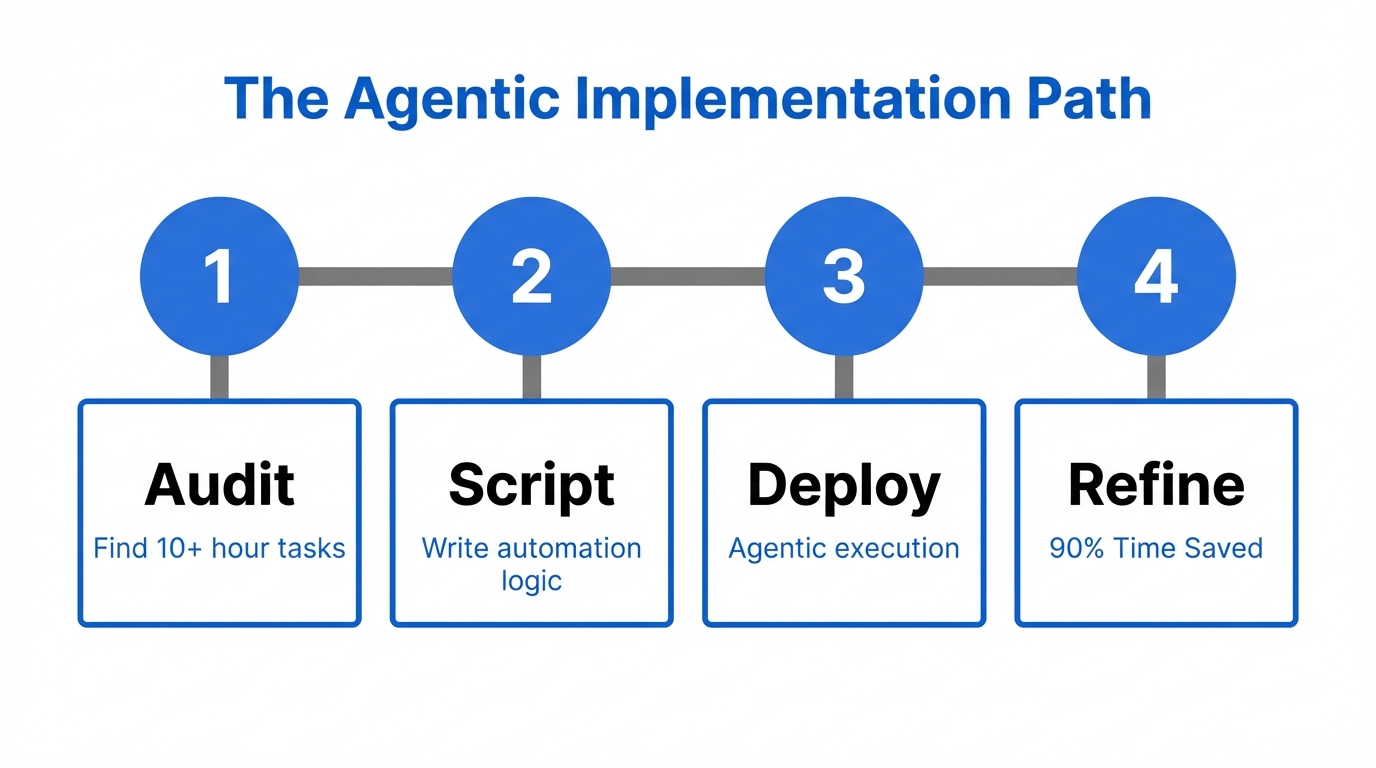
Transitioning to an agentic model doesn't happen overnight. Follow this sequence to begin your implementation:
Step 1: The Technical Infrastructure
Install the necessary CLI tools. Start with Claude Code and connect it to your development environment. Use Node.js and the command npm install -g @anthropic-ai/claude-code to get started.
Step 2: Connect Live Data via MCP
Don't rely on static exports. Connect Claude to your ad platforms using the Model Context Protocol. This allows for real-time auditing and ensures your ai marketing agents are making decisions based on today's data, not last week's CSV.
Step 3: Deploy Autonomous Watchdogs
Define your 'guardrails.' Tell Claude exactly what a 'failure' looks like (e.g., a CPA spike or a conversion drop). Set up a monitoring loop that alerts your team—or takes action—the moment those guardrails are hit. For brands scaling creative-heavy campaigns, integrating a tool like Stormy AI into this workflow allows you to instantly source new creator content when an ad's performance begins to fatigue.
The Path Forward for Growth Leads
The transition to agentic marketing is a shift from managing tools to managing outcomes. By leveraging Claude Code automation and the Model Context Protocol, growth teams can move past the manual drudgery of the past and focus on high-level growth marketing strategy. The goal is simple: build a system that works while you sleep, identifies waste before it becomes a crisis, and pivots with the speed of an algorithm. In the 2025 landscape, the brands that win won't just be the ones with the biggest budgets—they'll be the ones with the most efficient agents.