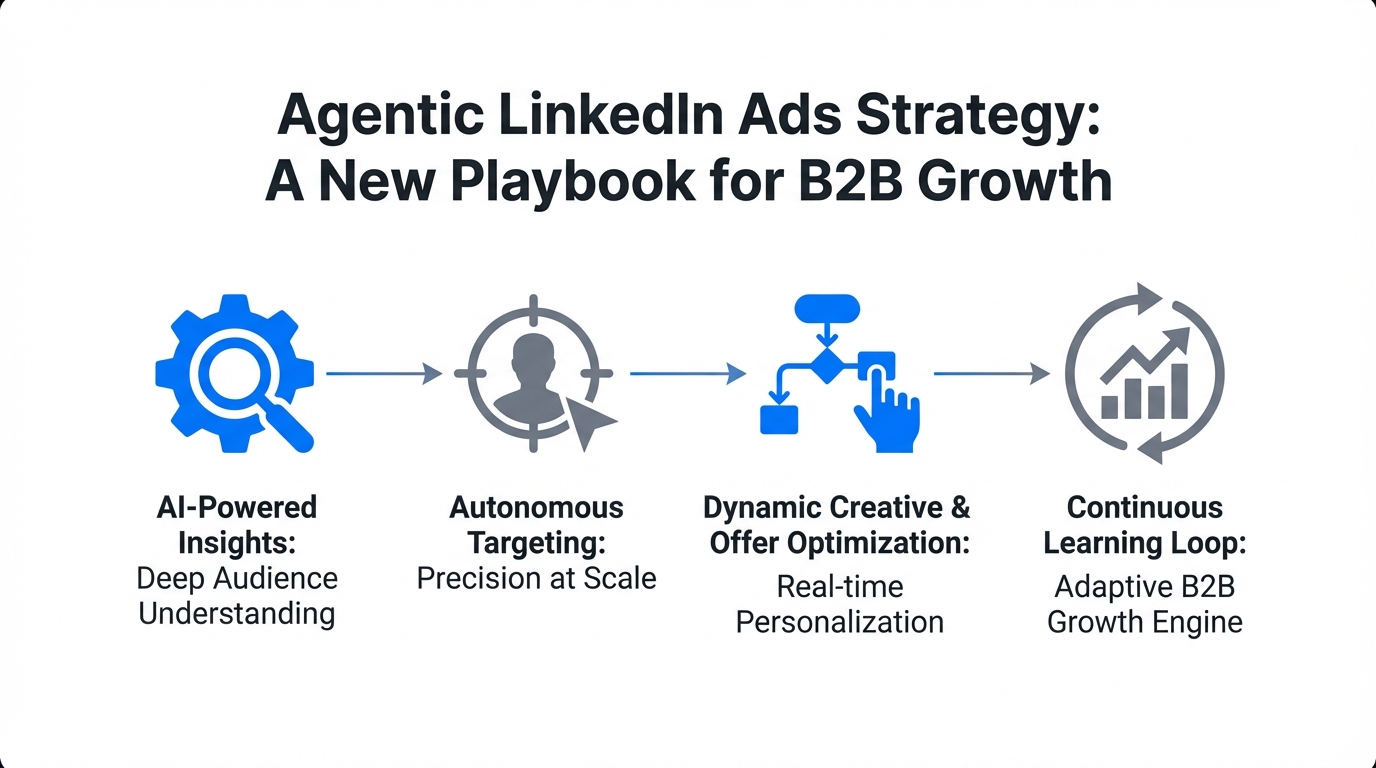
For years, B2B growth leaders have been trapped in the “click-ops” cycle: manually adjusting bids, refreshing creative every two weeks, and staring at CSV exports to find a shred of signal in the noise. But the landscape has shifted. We are moving from manual management and basic rule-based automation toward a new era of agentic marketing orchestration. This isn't just about using AI to write a headline; it's about deploying autonomous systems that audit, optimize, and scale your LinkedIn ads strategy with the precision of an engineer and the speed of a machine.
The B2B Dominance of LinkedIn: Why It’s Your Primary Battlefield
If you are in B2B SaaS or professional services, LinkedIn isn't just a social network—it's the bedrock of your lead generation. Recent data shows that LinkedIn currently generates 80% of all B2B social media leads, with an overwhelming 97% of B2B marketers utilizing the platform for content distribution. However, the cost of entry is rising, making efficiency paramount.
Traditional manual setups are becoming a liability. Brands that have embraced LinkedIn’s native AI tools, like LinkedIn Accelerate, are already seeing a 42% reduction in cost-per-action (CPA). But for the high-growth enterprise, native tools are only the starting point. To truly win, you need a system that handles multi-step campaign scaling across hundreds of variables simultaneously.
From Automation to Orchestration: The Agentic Shift
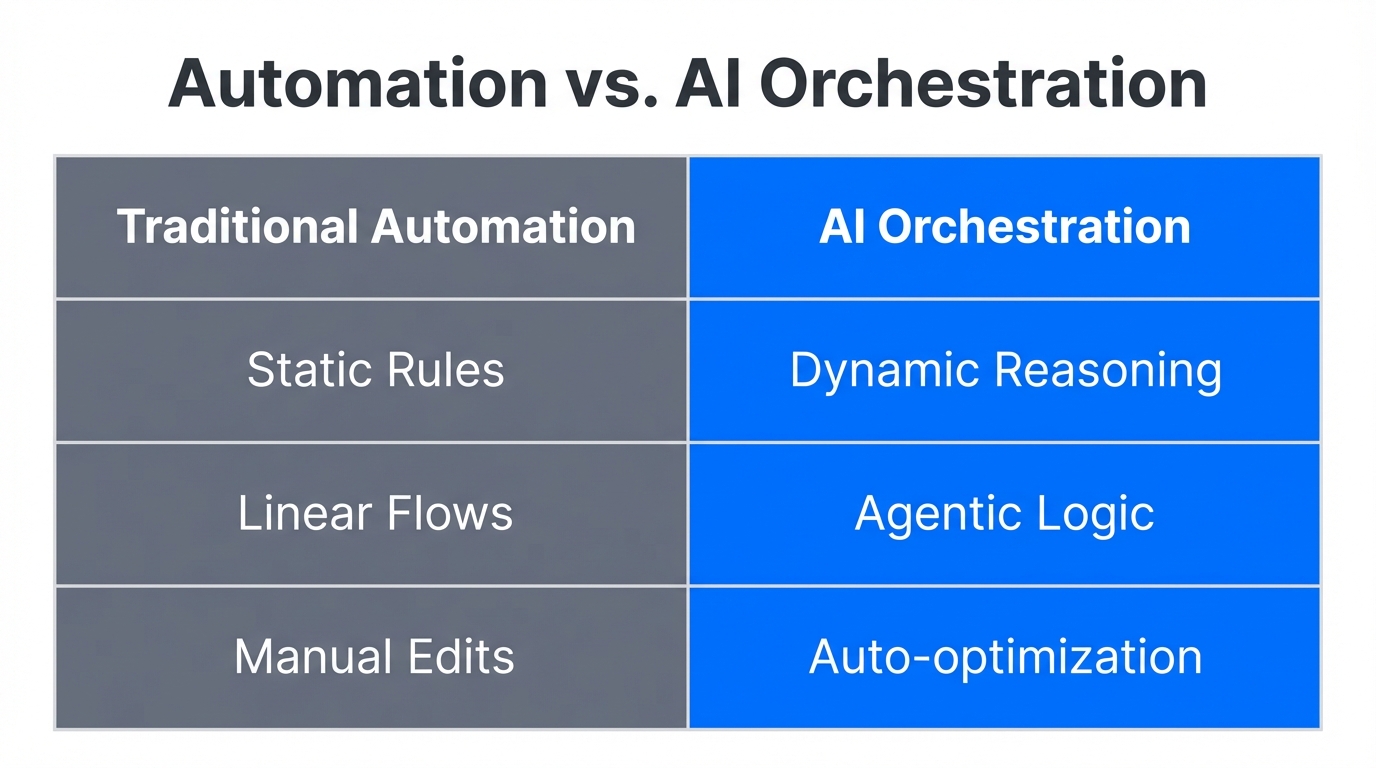
We are entering the age of the "Agentic Marketer." Gartner predicts that 40% of enterprise applications will embed AI agents by 2026. In the context of a LinkedIn ads strategy, this means moving from "AI-assisted" (using a chatbot to brainstorm) to "AI-orchestrated" (using CLI tools to manage the entire workflow).
The difference is profound. Rule-based automation says: "If CPA > $50, pause campaign." Agentic orchestration says: "Analyze the last six months of CRM data, find the job titles that have the highest 'Closed-Won' rate, cross-reference them with current LinkedIn campaign performance, and reallocate $5,000 to the winning segments while drafting three new ad variations based on our top-performing webinar transcripts."
"The shift from no-code SaaS dashboards to low-code agentic tools like Claude Code allows marketers to conduct 'Long-Context Reasoning'—analyzing years of performance data in seconds."
The Playbook: Building Your AI Marketing Command Center
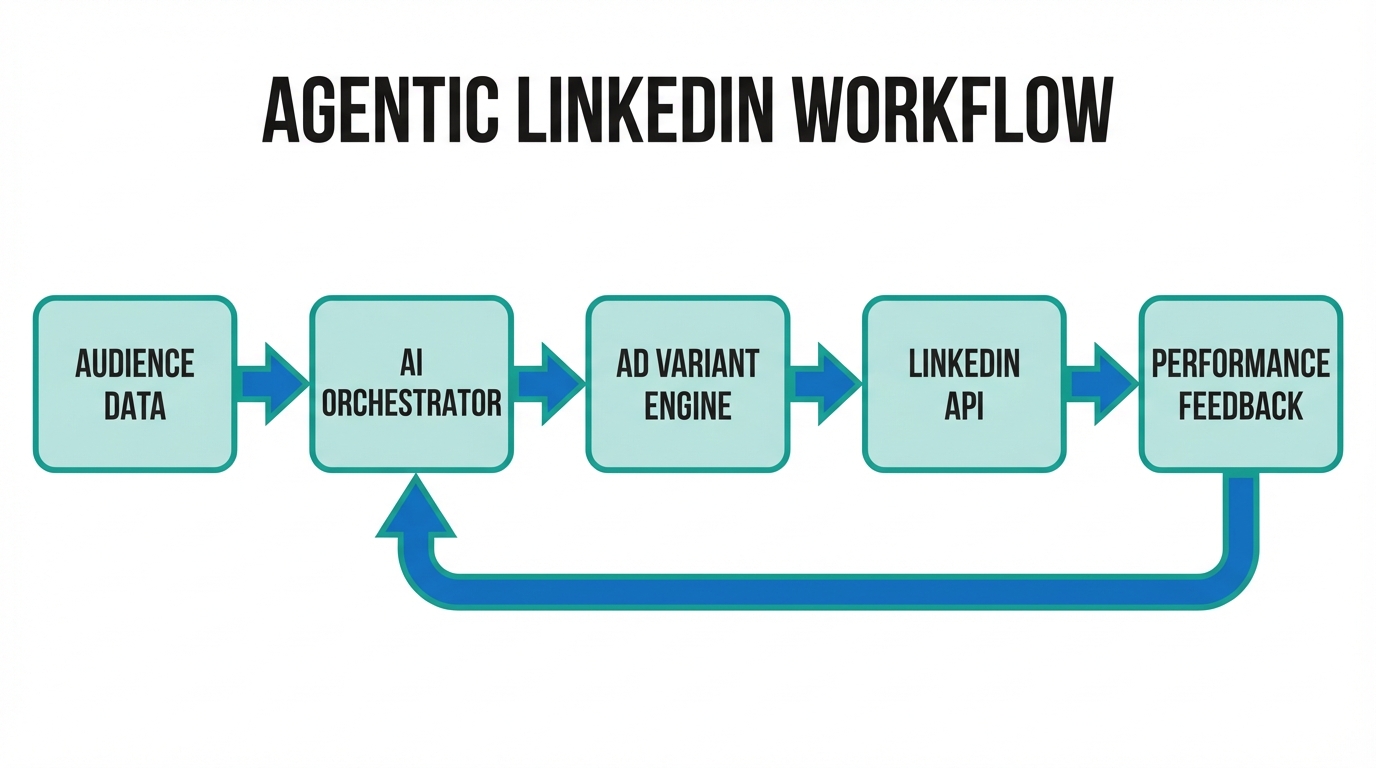
Building an 'AI Marketing Command Center' allows you to bypass the limitations of the LinkedIn Ads Manager UI. By using command-line interface (CLI) tools like Claude Code, you can manage your B2B growth marketing directly from your terminal.
Step 1: Environment Setup
Start by installing Claude Code. This allows you to interact with your marketing data and external APIs using natural language commands. Unlike a standard browser-based AI, a CLI tool can access local files, run scripts, and integrate with your development environment.
Step 2: Connecting the Data Bridge
Use a Model Context Protocol (MCP) server to connect Claude directly to your LinkedIn Ads account. Tools like the LinkedIn Ads MCP Server by Insightful Pipe allow the AI to "see" your live data. You can then issue complex commands like: "Analyze my campaign performance by job title and suggest where to reallocate $5k."
Step 3: Implementing Voice DNA
A common failure in LinkedIn lead generation is generic AI-generated copy that gets flagged by algorithms or ignored by humans. To combat this, use Claude Code to scrape your historical high-performing posts. This creates a "Voice DNA" profile that ensures all new ad copy matches your brand’s specific style and tone, avoiding the 30% reach penalty often associated with generic AI content.
Advanced Agentic Strategies for B2B Scaling
Once your command center is live, you can deploy specific "skills" or agents to handle heavy-duty tasks that would take a human team weeks to complete.
The AI-Powered Ad Audit
Instead of a manual monthly review, run a parallel audit across 190+ checkpoints. Using open-source skills like Cloudy Ads, you can trigger an agent to scrape your landing pages, analyze competitor benchmarks, and generate a budget-aware recommendation report in minutes.
The Content Repurposing Engine
B2B marketing relies on high-value assets like webinars and whitepapers. An agentic workflow can fetch a transcript via the Tella API, run it through a custom LinkedIn Post Skill, and format it into the PAS (Problem-Agitation-Solution) framework for ad creative. This ensures your LinkedIn ads strategy is always fueled by your best-performing organic insights.
When you need to amplify these ads with third-party credibility, platforms like Stormy AI can help you discover and vet B2B creators who can turn your technical insights into high-performing UGC ads, providing the human touch that automation scales.
"Automation helps scale the journey, but personalized touchpoints turn clients into partners."
Case Study: Scaling B2B SaaS from 5 to 50 Campaigns
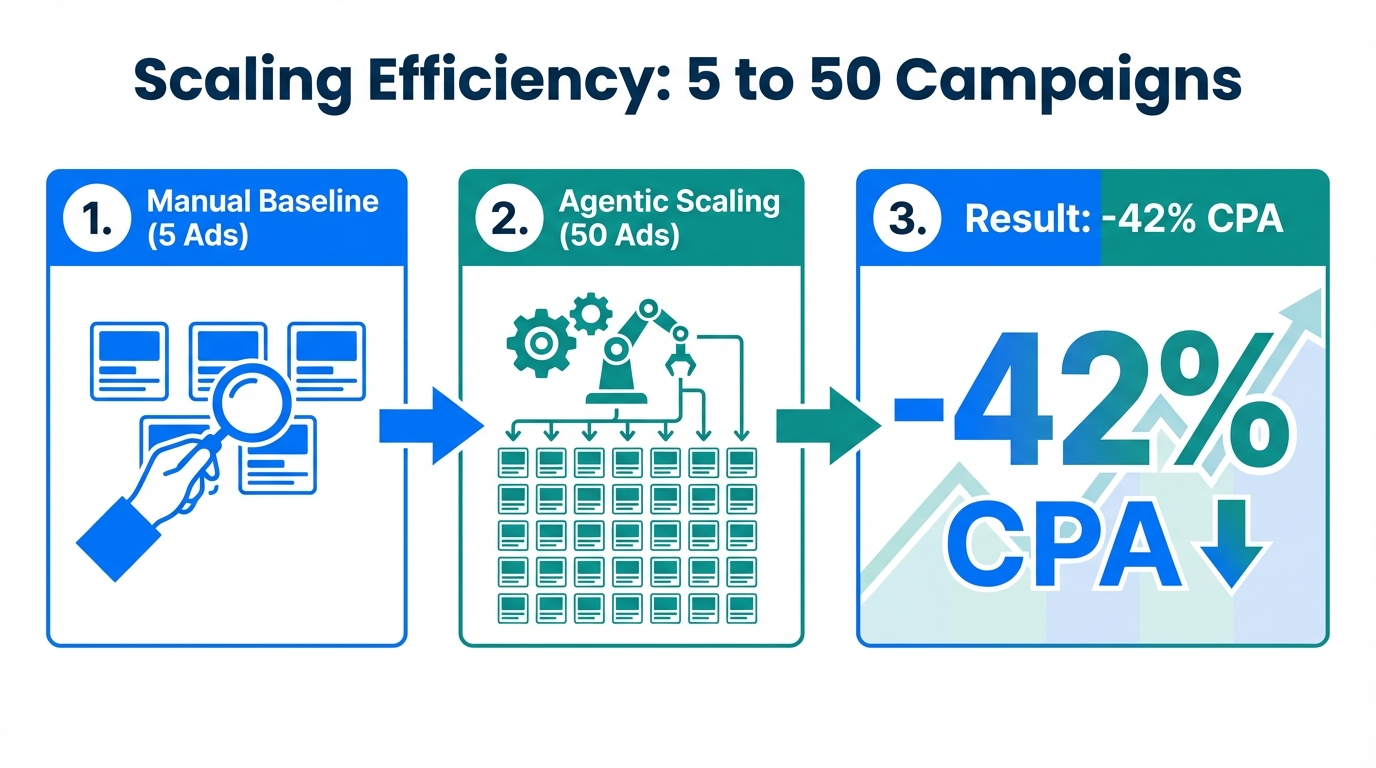
A mid-market B2B SaaS company recently demonstrated the power of this approach. Historically, they were limited to managing 5 concurrent campaigns because their growth lead was bogged down in manual creative testing and daily budget shifts. By implementing an agentic workflow to handle autonomous creative testing and data enrichment, they scaled to 50 campaigns per month without increasing their marketing headcount.
Similarly, enterprise giants like Snowflake and Smartsheet are moving toward "Action-First" AI tasks. They use Claude for complex lead data analysis, achieving over 90% accuracy in identifying high-intent accounts before a single ad dollar is spent.
| Feature | Traditional LinkedIn Ads | Agentic LinkedIn Ads |
|---|---|---|
| Management | Manual UI / Rule-based | Autonomous CLI Orchestration |
| Creative | Human-written / Generic AI | Voice DNA-aligned Repurposing |
| Data Analysis | Static Dashboards | Long-Context Reasoning (MCP) |
| CPA Optimization | Reactive Adjustments | Predictive Budget Reallocation |
Risks and How to Avoid Them: Navigating the Technical Guardrails
While AI for B2B marketing offers immense leverage, it is not without risks. LinkedIn is notoriously protective of its ecosystem, and aggressive automation can lead to account restrictions.
- Rate Limiting: To avoid shadow-banning, stay under 20 connection requests and 100 messages per day.
- The "AI Vibe" Penalty: Algorithms can detect generic output. Always ground your AI prompts in local CRM data to ensure the LinkedIn lead generation feels authentic to your ICP.
- Handling Integration Crashes: When building CLI tools, ensure you implement Exponential Backoff logic to handle 429 error responses from the LinkedIn Developer API.
The 2026 B2B Growth Tech Stack
To implement an effective marketing orchestration strategy, you need a stack that favors connectivity over closed ecosystems. Integrating discovery tools like Stormy AI for creator sourcing with your core ad tech ensures a steady stream of authentic content.
- Orchestration: Claude Code CLI for command-based management.
- Data Bridge: n8n for trigger-based automation between your CRM and ads.
- Engagement & Scraping: PhantomBuster for safe, compliant data gathering.
- CRM: Salesforce with AI Agent integration for closed-loop reporting.
Conclusion: The Future of B2B Lead Generation
The transition to an agentic LinkedIn ads strategy is no longer a luxury for the tech-savvy; it is a necessity for the survival of B2B growth teams. By shifting from manual dashboards to an AI Marketing Command Center, you can unlock efficiency levels that were previously impossible. Start by connecting your data via MCP, defining your Voice DNA, and automating the high-volume tasks of creative testing and auditing. The brands that win in 2026 won't just have the biggest budgets—they will have the most sophisticated orchestration.