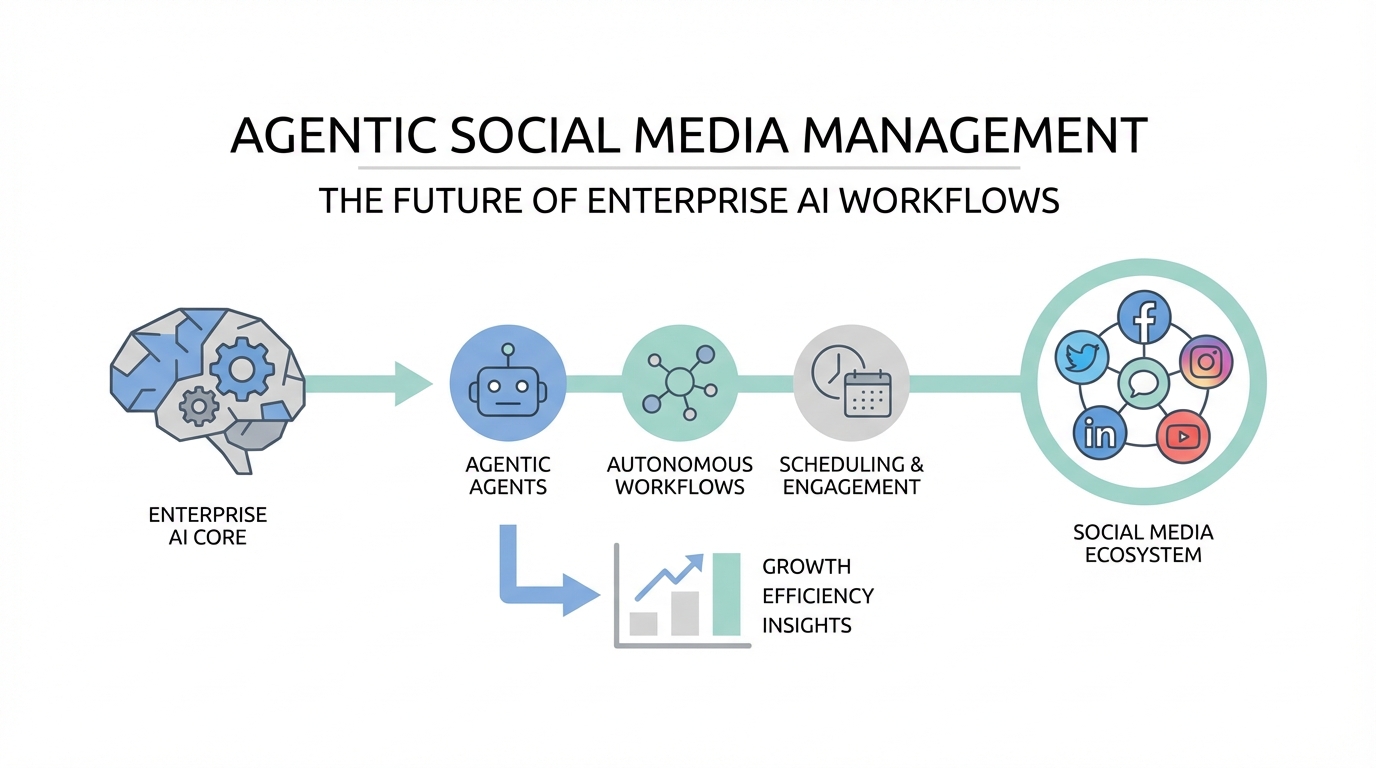
The era of the simple AI chatbot is coming to a swift end. In its place, a more sophisticated architecture is emerging: agentic workflows. While 2024 was defined by marketers learning how to write better prompts, 2025 and 2026 are defined by marketing leaders building autonomous systems that think, iterate, and execute without constant human supervision. The shift is massive: 70% of Fortune 100 companies have already integrated Anthropic’s Claude into their enterprise AI solutions, moving away from reactive chatting toward proactive, agentic social media management.
As of early 2025, Claude reached 18.9 million monthly active users, with web traffic exploding by 10.3x in a single year, according to Similarweb data. More importantly, data shows that 39% of these interactions are no longer simple questions—they are direct automation tasks. For CMOs and agency owners, this transition from "AI as an assistant" to "AI as an agent" represents the single greatest opportunity for AI marketing workflow optimization in the current landscape.
Understanding Agentic AI: Moving Beyond the Prompt
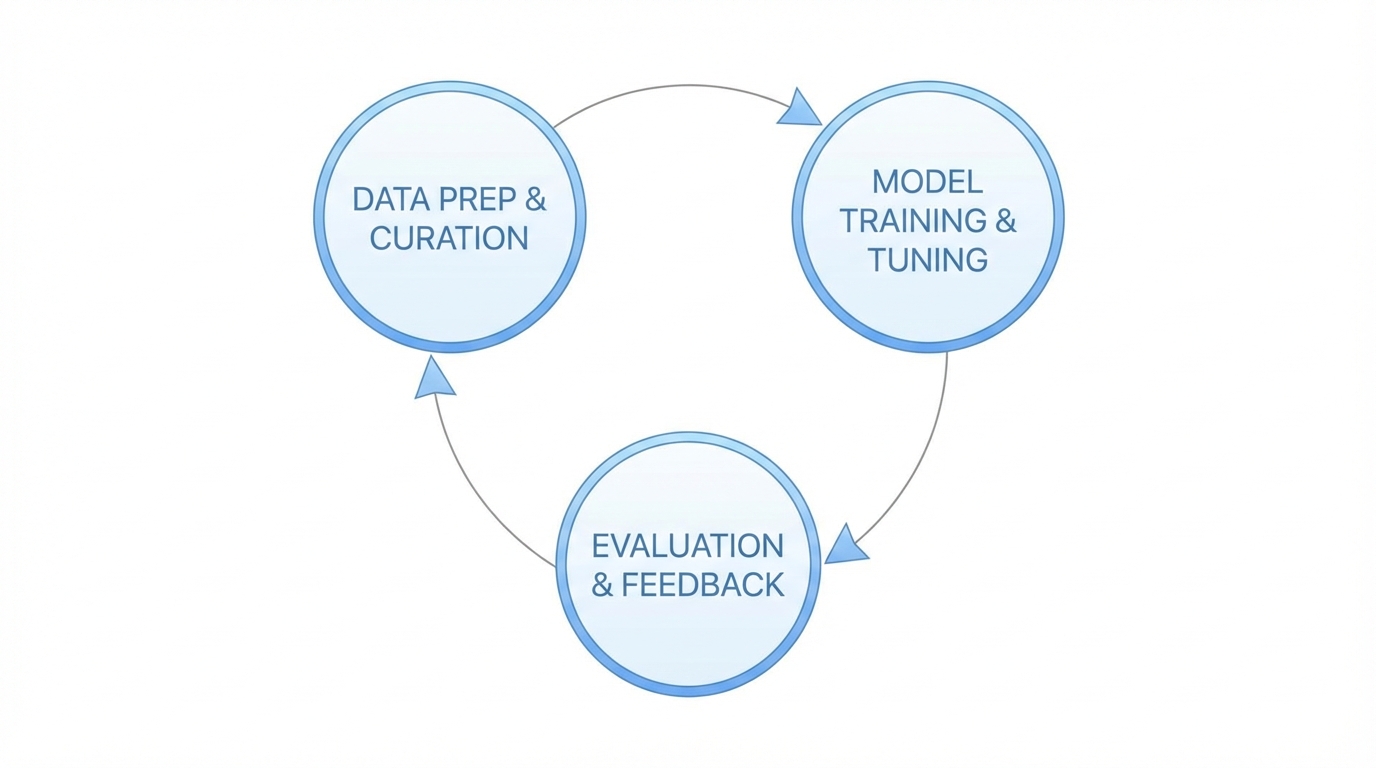
In a traditional AI workflow, a human provides a prompt, the AI provides an output, and the human edits that output. This is a linear, high-friction process. Agentic AI for marketing flips this model by utilizing "sub-agents"—specialized AI instances that handle specific stages of a project, such as research, drafting, fact-checking, and formatting, all under the coordination of a lead agent.
For example, instead of asking Claude to "write a tweet about our new product," an agentic workflow might look like this:
- Sub-agent A: Scrapes current trending topics on Apify to find relevant hooks.
- Sub-agent B: Cross-references the hook with 500+ pages of brand guidelines stored in Claude Projects.
- Sub-agent C: Drafts three variations and runs a "clip-worthiness" scoring algorithm to predict engagement.
- Sub-agent D: Auto-generates platform-specific metadata and schedules the post via Buffer or Hootsuite.
"The key shift in 2026 is moving from 'chatting with an AI' to 'managing an AI workforce' that executes complex social strategies autonomously."Constitutional AI: The Enterprise Standard for Brand Compliance
One of the primary reasons Claude enterprise AI solutions have captured nearly 29% of the corporate market segment is Constitutional AI. Unlike other models that rely solely on human feedback to determine what is "good" or "safe," Claude is guided by a specific set of principles (a "constitution") that governs its behavior.
For enterprise social media automation, this is critical. A brand managing 100+ channels cannot afford a single hallucination or off-brand remark. Constitutional AI for brands ensures that every piece of content generated adheres to predefined safety and stylistic standards without requiring a manual review of every single draft. This grounded, analytical approach is why industry experts often suggest a "Split System" strategy: using other tools for broad brainstorming and Claude for the final, brand-safe execution.
Data-Driven Planning: Integrating TikTok Trends with Agentic AI
Modern social media moves too fast for monthly content calendars. High-performing agencies are now using AI marketing workflow optimization to bridge the gap between real-time data and creative production. By integrating Apify for trend scraping with TikTok Creative Center data and Claude’s analytical capabilities, brands can identify viral hooks before they peak.
An agentic system can be programmed to analyze thousands of TikTok transcripts daily, extract the three most emotional pain points from viral videos, and generate 10 "scroll-stop" hooks for a brand's specific niche. This removes the guesswork from content creation and ensures that every video script is backed by quantitative data. When working with User Generated Content (UGC), tools like Stormy AI can help brands source the right creators to film these data-backed scripts, creating a seamless loop from trend discovery to content delivery.

"Data without execution is just noise. Agentic AI turns real-time social signals into production-ready scripts in seconds, not days."Building a Marketing Knowledge Base: The Power of Claude Projects
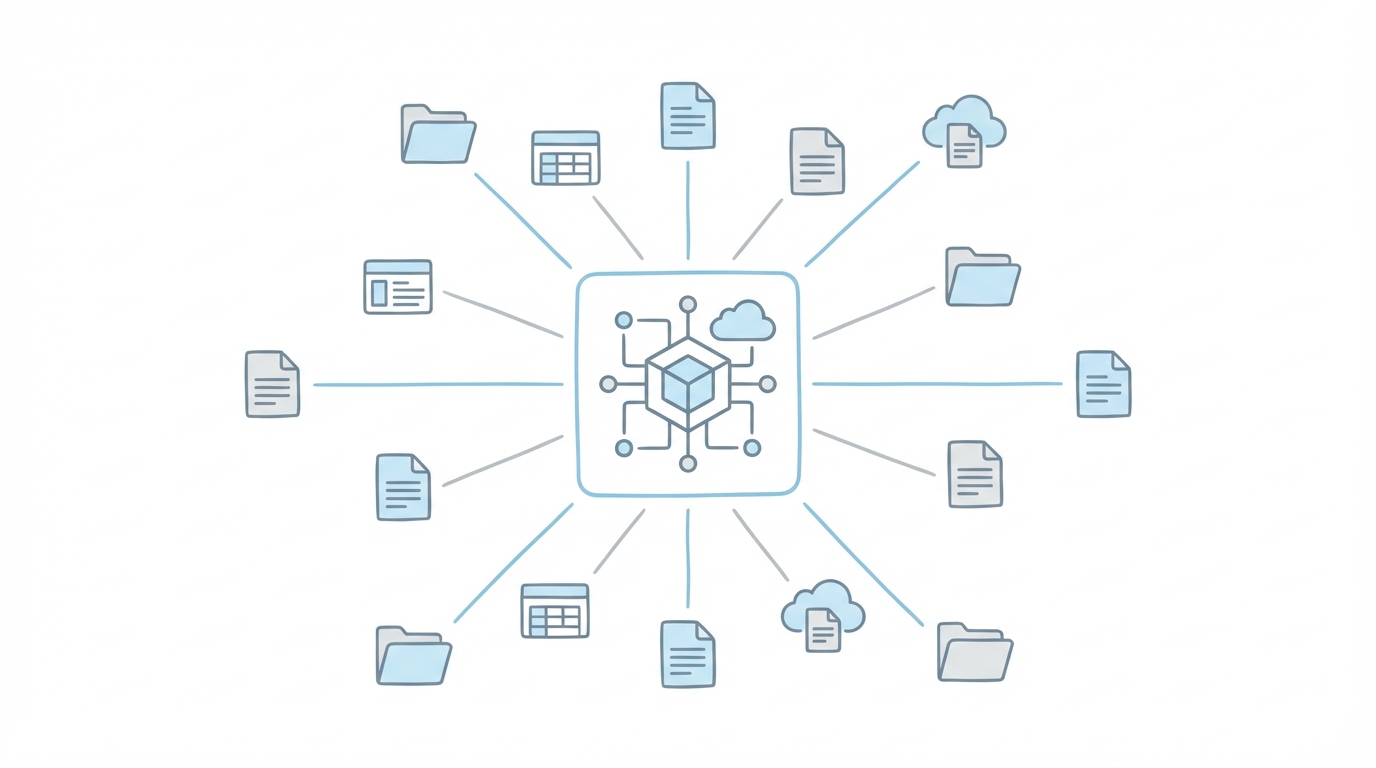
A common mistake in enterprise social media is using "Zero-Shot" prompts—asking the AI for content without providing context. To achieve enterprise social media automation that actually sounds human, brands are leveraging Claude Projects. This feature allows teams to upload a Knowledge Base of up to 500 pages, including:
- Detailed brand voice guidelines and "never-use" word lists.
- Transcripts of past successful podcast episodes or webinars.
- Historical performance data for LinkedIn, Instagram, and X.
- SEO guidelines and specific call-to-action (CTA) frameworks.
By housing this information within a Project, Claude maintains a consistent persona across all sub-agents. This eliminates the "flowery" AI fingerprints often found in generic models and allows the AI to act as a Senior Industry Leader rather than a generic copywriter. For LinkedIn specifically, this "Authority Without Ego" approach is essential for maintaining credibility in professional circles, as highlighted by industry strategy reports.
Case Study: AdVolve Media’s 62% Efficiency Gain
AdVolve Media faced a common agency bottleneck: the time required to research, script, and optimize social ads for multiple clients. By moving to an agentic workflow powered by Claude, they automated the initial research phase and the iterative drafting process. Instead of human writers spending hours on first drafts, the AI sub-agents produced three data-backed variations based on client historical data. This allowed their creative team to focus solely on the final 10% of polish, leading to a massive 62% reduction in total production time without sacrificing performance.
The Agentic Implementation Playbook: 5 Steps to Automation
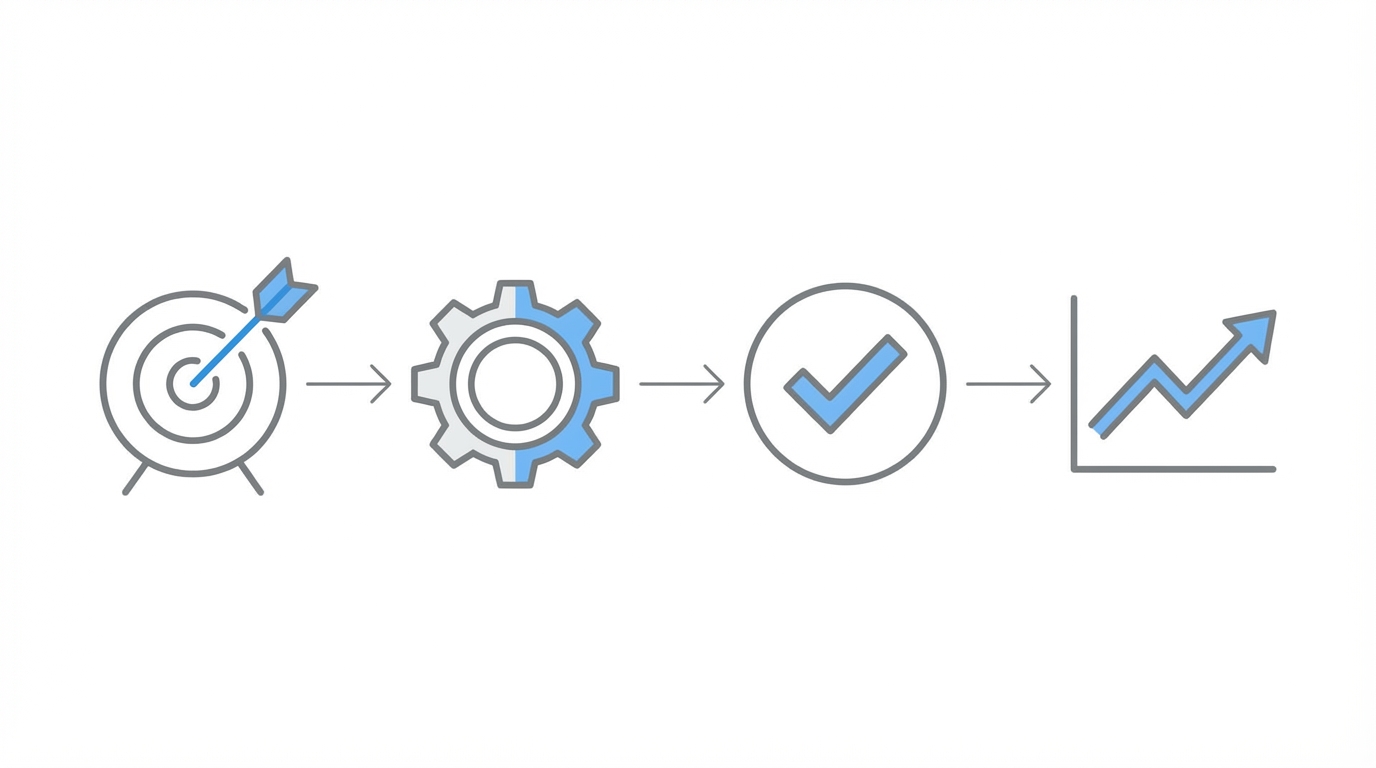
For CMOs looking to transition to agentic AI for marketing, the process must be structured and iterative. Follow this playbook to build your own autonomous social media engine:
- Step 1: Audit Your Assets. Gather 10-20 examples of your best-performing content. This forms the foundation of your Few-Shot Learning strategy.
- Step 2: Build the Knowledge Base. Upload your brand guidelines, past successes, and audience personas into a Claude Project.
- Step 3: Define the Sub-Agents. Use tools like n8n or Zapier to create a multi-step workflow where different AI prompts handle research, drafting, and vetting.
- Step 4: Integrate Real-Time Data. Connect your workflow to Apify or other scrapers to ensure your content is always reacting to current trends.
- Step 5: Human-in-the-Loop Refinement. Always include a final human review stage to add personal anecdotes or current slang that AI might miss, ensuring the "naturalism" that modern audiences crave.
"Automation is not about replacing the marketer; it's about removing the repetitive tasks that prevent marketers from being creative."Conclusion: The Future is Agentic
The transition to agentic AI for marketing is no longer optional for enterprises looking to remain competitive. By moving from simple prompts to autonomous sub-agents, brands can achieve a level of scale and precision that was previously impossible. Whether it is reducing planning time from 20 hours to 3 hours for a restaurant chain or helping a sustainable fashion brand gain 10,000 followers in 30 days, the results are clear: AI is no longer just a tool for writing—it is a tool for execution.
As you build your agentic workflows, remember that the quality of your output is entirely dependent on the quality of your Knowledge Base. Leverage Stormy AI for the creator discovery and management side of your campaigns, and use Claude enterprise AI solutions to handle the complex reasoning and content production. The future of social media management belongs to those who can orchestrate these AI agents to work while they sleep.