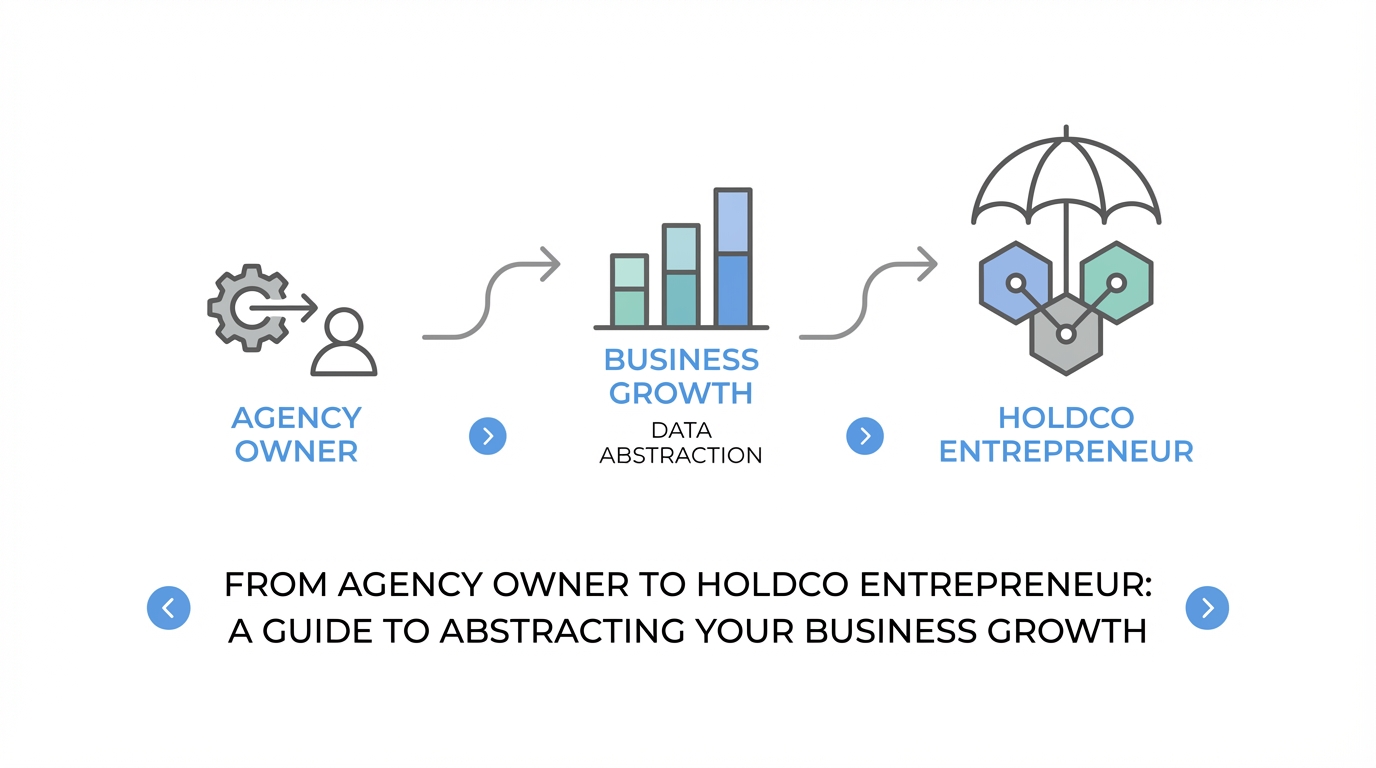
Entrepreneurship often feels like a high-stakes slot machine. You wake up, check Product Hunt, and pray that an 800-pound gorilla like Figma hasn't launched a feature that renders your entire business model obsolete overnight. This uncertainty is the most painful part of the journey. For many, the response is to grind harder, staying late in the digital trenches. But there is a different path: the transition from a stressed operator to a Holdco Entrepreneur. This shift isn't just about making more money; it's about building a robust entrepreneurial wealth strategy that prioritizes peace, diversification, and long-term stability.
The Stressed Operator vs. The Holdco Entrepreneur
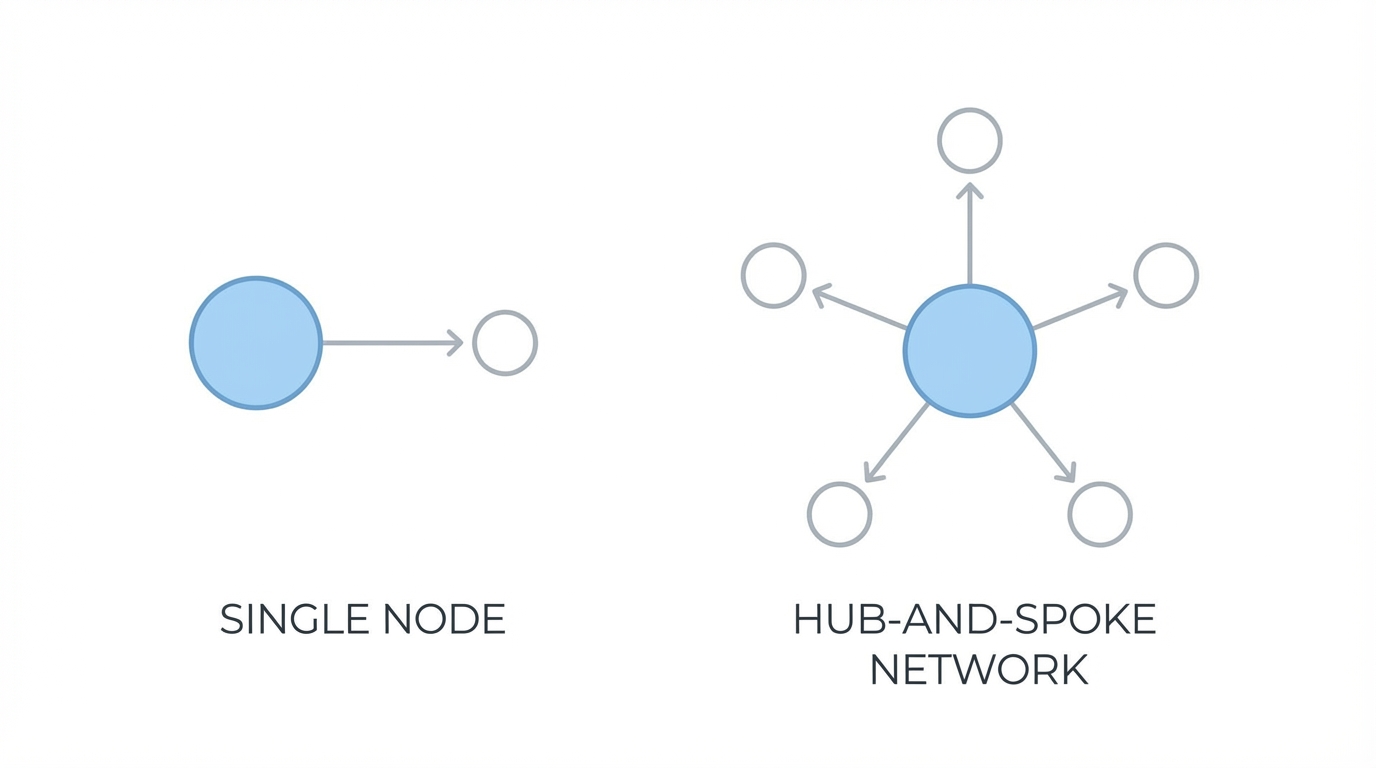
Most agency owners and solopreneurs fall into the 'operator trap.' In this stage, the business is a living, breathing extension of the founder. If you take your eye off the ball for a week, revenue stagnates. If you don't personally jump into a sales call, the deal doesn't close. This is the holdco vs solopreneur divide. A solopreneur is a high-paid employee of their own creation, while a Holdco Entrepreneur manages a portfolio of brands through boards, CEOs, and automated systems. Moving toward a holding company for entrepreneurs means viewing your businesses as assets rather than jobs.
The goal is to move from being the 'firefighter' to being the person who builds the fire department. While a solo operator is constantly putting out fires in Slack, the portfolio manager focuses on business portfolio management, ensuring each entity has the leadership and resources it needs to thrive independently. This requires a fundamental shift in how you view your time, moving away from 40-hour workweeks toward 'high-leverage' moments that move the needle across multiple revenue lines.
Identifying Stagnation: When is it Time to Replace Yourself?
How do you know when a business is ready for a CEO? Many founders wait until they are completely burnt out to look for a replacement, but the best time to hire is when the business is robust enough to survive your absence but stagnating because you are the bottleneck. If you find yourself having 'racing thoughts' about selling the company at least once a quarter, that is a clear signal. Life is too short to run a business you've grown to resent.
Hiring a CEO to replace yourself is a process of trial and error, much like dating. You have to be okay with the fact that the first hire might not work out, or that they might be slightly less effective than you initially. However, the trade-off is freedom. To scale a small business beyond your own capacity, you must be willing to let go of the 'baby.' A robust business is one where the systems—from lead generation via Google Ads to fulfillment—continue to run without your daily input.
Building a 'Moat' Through Multi-Revenue Strategy

The danger of a single-business model is the 'Black Swan' event. A sudden change in a platform's API, a global pandemic, or a new competitor can wipe out a decade of work in a weekend. By building a holding company for entrepreneurs, you create a moat of diversified revenue lines. If one brand suffers, the others sustain the portfolio. This is why business portfolio management is the ultimate survival tactic in the modern creator economy.
Diversification allows you to experiment with different markets. You might have a steady consulting arm, a high-growth SaaS product, and a content-driven education platform. When you leverage tools like Shopify for e-commerce or Notion for internal documentation, you create a standardized stack that can be replicated across new ventures. This 'plug-and-play' approach is how you turn a single agency into a multi-million dollar portfolio.
The Abstraction Audit: A 3-Step Playbook

To move toward the holdco model, you must master the art of abstraction—the process of offloading operational, legal, and logistical tasks to others. This isn't just delegating; it's removing yourself from the loop entirely. Here is a playbook for your first Abstraction Audit:
Step 1: The Task Inventory
For one week, track every single thing you do. From signing a $450,000 contract to replying to a comment on LinkedIn. Mark each task as 'High Leverage' (only you can do it) or 'Systematizable' (anyone with a manual could do it). Be brutally honest—most of what you think requires your 'genius' is actually just a habit.
Step 2: Define the Financial Goal
You cannot manage what you do not measure. Set an arbitrary but ambitious goal for each business unit. Whether it's $10M in revenue or a specific rate of return on your Stripe dashboard, having a target allows you to judge whether your abstraction is working. If revenue drops 30% after you step back, you haven't abstracted; you've just neglected.
Step 3: Appoint Your Firefighters
Instead of being the one to jump into every crisis, hire people who enjoy the 'firefighter' role. As a holdco owner, your job is to build the reflexes within the organization so that they solve problems before they ever reach your desk. Trust your team to sign the deals and manage the Meta Ads Manager accounts while you focus on the vision.
Monitoring Brand Health with AI-Powered Tools

One of the hardest parts of managing a portfolio is staying informed without getting 'dragged back into the weeds.' You need a way to monitor the health of your various brands, specifically how they are perceived on social media and how they are reaching new audiences through creators. This is where modern analytics become essential. For example, using an AI-powered platform like Stormy AI allows holdco owners to discover creators and monitor brand sentiment across TikTok, YouTube, and Instagram without needing to manually audit every account.
Instead of spending hours in the 'discovery' phase, you can use natural language prompts to find the right UGC creators for each of your portfolio brands. If one of your companies needs a boost in app installs, tools like Stormy AI help you vet influencers for fake followers and engagement fraud in seconds. This high-level oversight allows you to ensure your CEOs are maintaining quality standards and hitting growth targets across TikTok and Instagram, all while you maintain your 'chill' and focus on the next big acquisition.
Conclusion: The Path to Entrepreneurial Freedom
Transitioning from an agency owner to a Holdco Entrepreneur is not about escaping work; it's about choosing the right type of work. By abstracting the paperwork, the fires, and the day-to-day logistics, you free yourself to be creative and strategic. The entrepreneurial wealth strategy of the future isn't about owning one massive, stressful company—it's about owning a portfolio of robust, independent brands that generate profit while you sleep. Start your abstraction audit today, hire your first 'firefighter,' and move one step closer to the peace and simplicity that true business ownership provides.