In early 2026, the traditional SEO playbook is facing its most significant disruption since the invention of the backlink. We have officially moved beyond the era of "blue links." Today, your most valuable customer isn't a human scrolling through a Search Engine Results Page (SERP); it's an AI agent browsing on their behalf. This shift is known as Answer Engine Optimization (AEO), and for Shopify store owners, it is no longer a futuristic concept—it is the baseline for survival. With Gartner predicting that AEO will replace 30% of traditional SEO by the end of 2026, the race to dominate ChatGPT search and Perplexity is on.
Why AEO is Replacing Traditional SEO in 2026
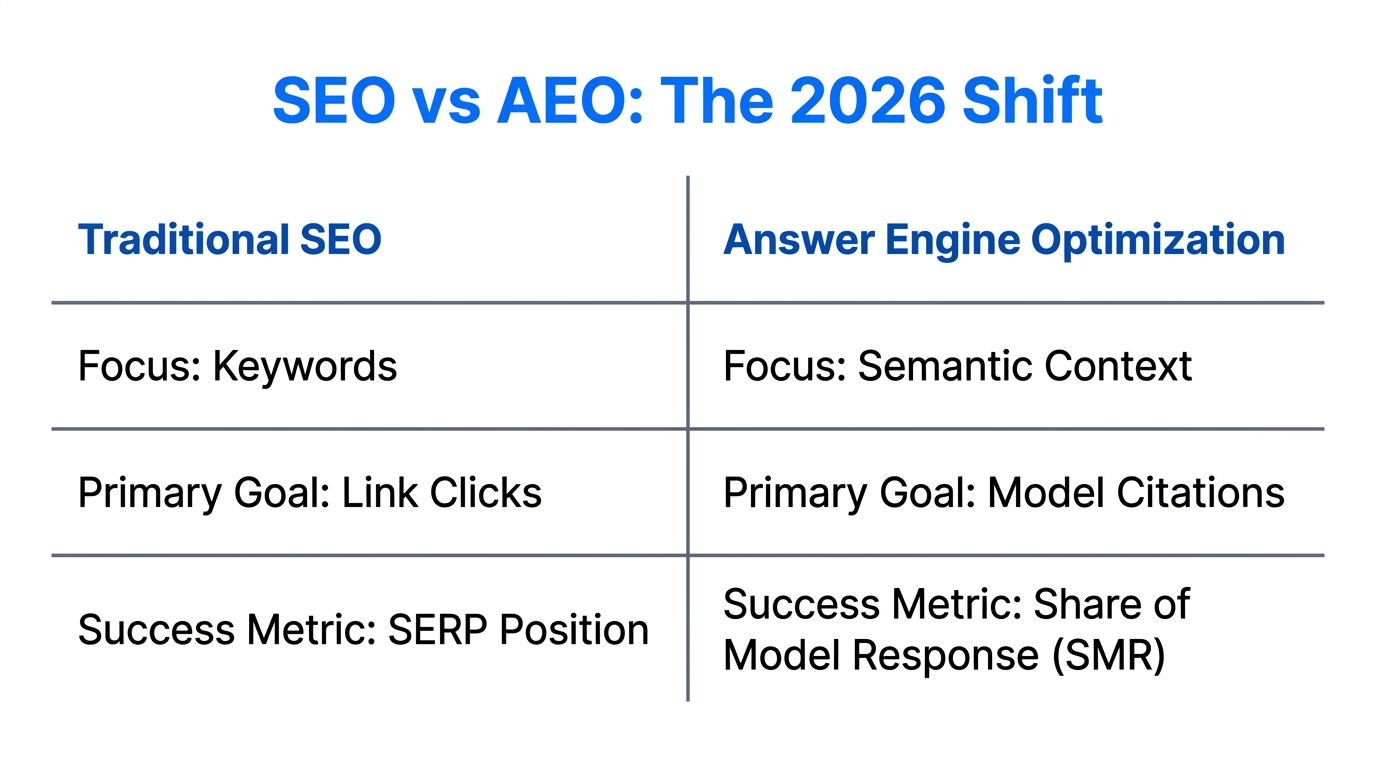
Traditional SEO was built on the premise of driving traffic to a website. In 2026, however, discovery is increasingly happening within chat interfaces. Consumers no longer type "best coffee maker for small apartments" into a search bar; they ask their AI agent to "find and buy the best high-pressure espresso machine that fits a 10-inch counter space and has a 2-year warranty." This is Zero-Click Commerce in action.
According to Triple Whale, brands that have pivoted to an agentic commerce strategy have seen conversion lifts of up to 4x compared to those relying on unassisted shopping. This is because AI agents don't just find products; they validate them against user preferences and technical specs. To stay relevant, you must move from "writing for humans" to "structuring for machines."
"By the end of 2026, 20% of all commerce will be agent-to-machine transactions, where an AI discovers, negotiates, and buys without a human ever visiting a storefront." [Source: Forrester Research]
Implementing JSON-LD and Shopify MCP for Machine-Readable Inventory
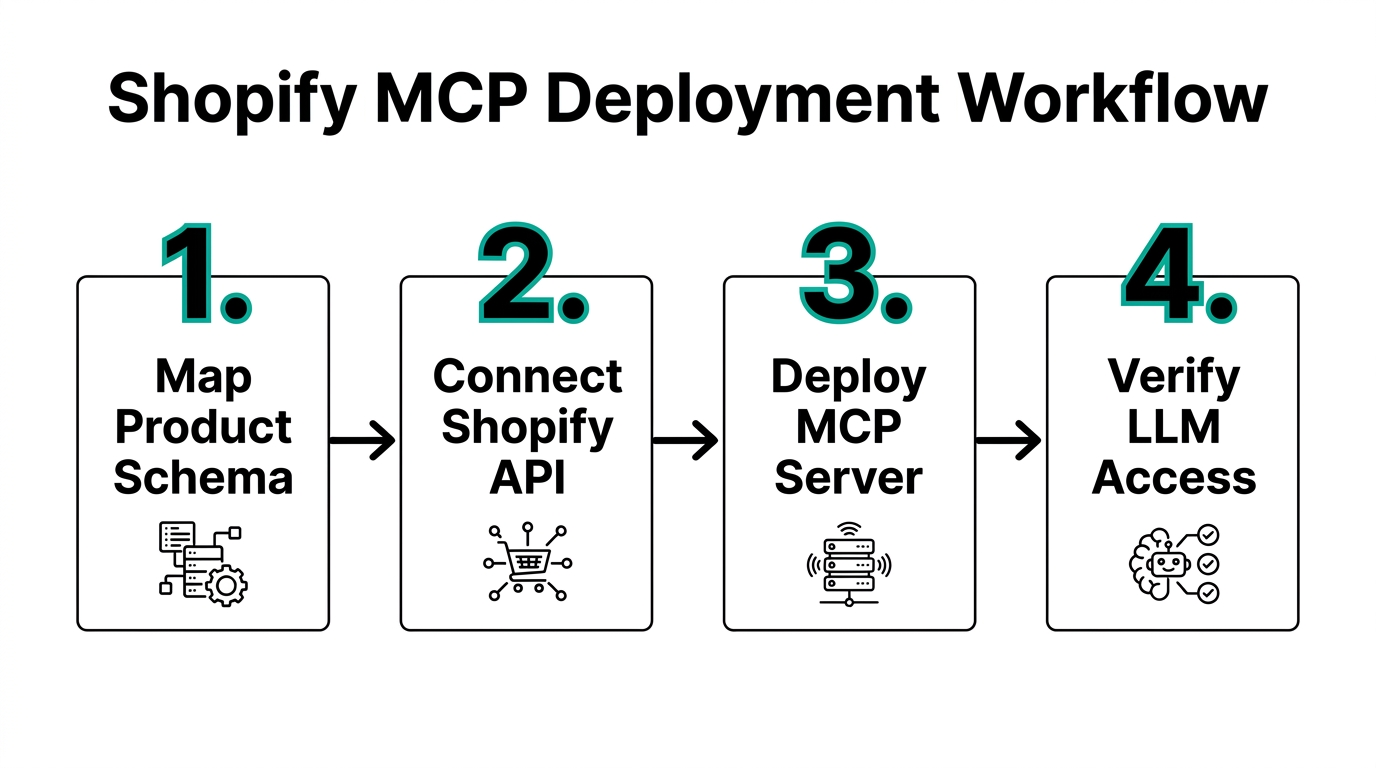
The biggest technical shift this year is the release of the Model Context Protocol (MCP) for ecommerce. Shopify recently launched its Shopify AI Toolkit, which includes native MCP server support. Think of MCP as the modern API for AI agents—it allows models like ChatGPT or Claude to read your live data, including inventory levels, technical specs, and shipping speeds, without hallucinating.
The Step-by-Step Technical Setup
- Enable the Shopify MCP Server: Navigate to your Shopify Admin > Settings > AI & Automation. Enable "Agent Access via MCP." This generates a secure handshake that allows approved AI agents to query your store's live status.
- Optimize your JSON-LD Schema: Traditional schema tags like "Price" and "Availability" are now table stakes. To rank in AEO, you need deep metadata. Include attributes like
material_composition,energy_efficiency_rating, andwarranty_detailswithin your structured data blocks. - Live Inventory Feeds: AI agents hate uncertainty. Use tools like Shopify Magic to ensure your product descriptions are updated in real-time with technical specifications that an LLM can parse.
While you focus on the high-level strategy, an AI ecommerce employee like Stormy AI can handle the messy back-office work of monitoring these feeds. Stormy can watch for listing errors—like suppressed listings or broken variants—and fix them before they cost you a recommendation in a Perplexity search.
Optimizing for "Share of Model Response" (SMR)
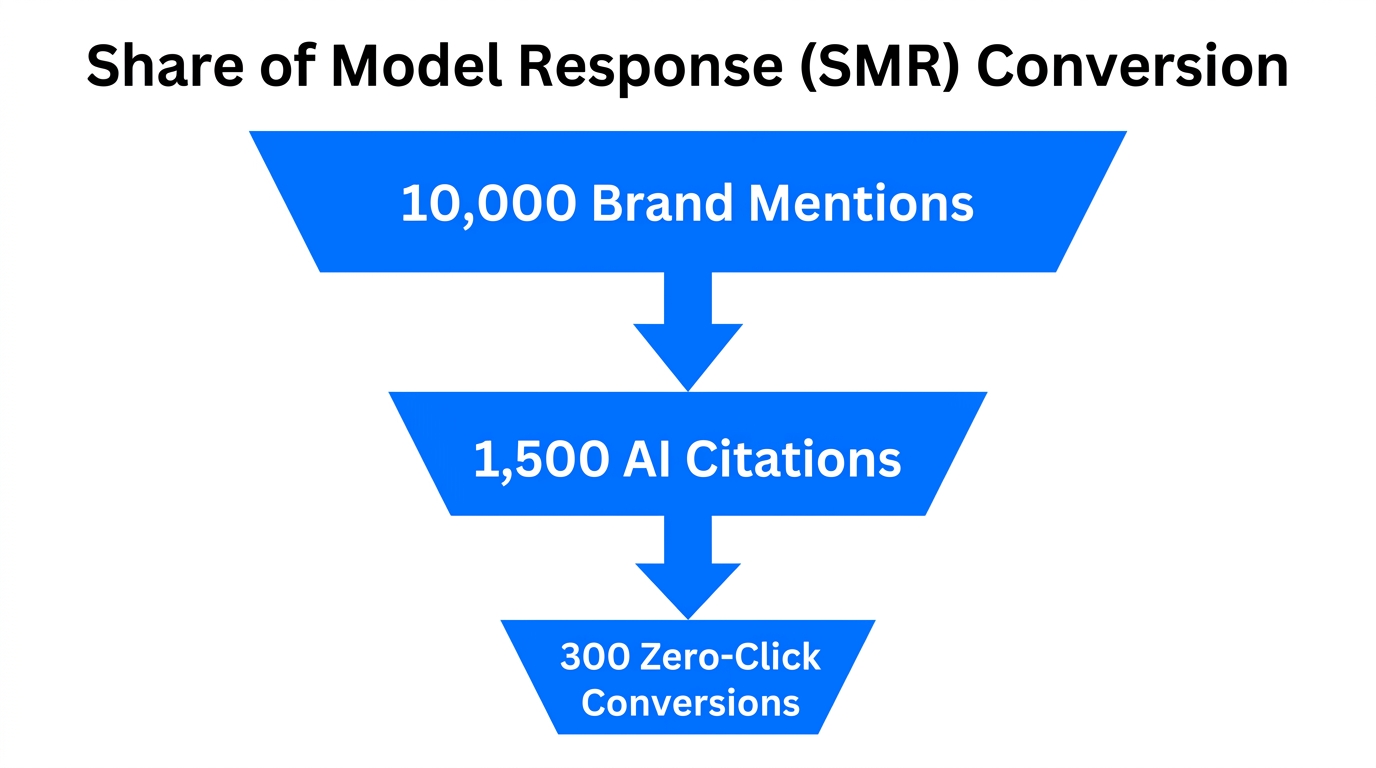
In the AEO era, the metric that matters most is Share of Model Response (SMR). If a user asks, "What is the most durable organic cotton bedsheet?", SMR measures how often the AI mentions your brand vs. your competitors. Achieving high SMR requires a combination of Information Gain and EEAT for AI.
| Metric | Traditional SEO Focus | AEO Focus (2026) |
|---|---|---|
| Discovery | Keywords & Backlinks | Technical Metadata & Semantic Relevance |
| User Intent | Click-through Rate (CTR) | Solution Accuracy & Fulfillment Speed |
| Trust Signal | Domain Authority | Verified Reviews & Third-Party Citations |
| Conversion | Landing Page Design | Machine-Readable Checkout (MCP) |
AI models prioritize products with high "Technical Density." Instead of using vague marketing fluff like "great for all-day wear," your product pages should state "moisture-wicking fabric with a 250 GSM density, tested for 50+ wash cycles without pilling." This technical precision helps the AI categorize your product as the "correct" answer for specific, high-intent queries.
"The first billion-dollar solopreneur will exist by 2026, powered not by massive teams, but by autonomous agents that manage these technical discovery layers 24/7."
Seeding "Truth Data" on Reddit and YouTube
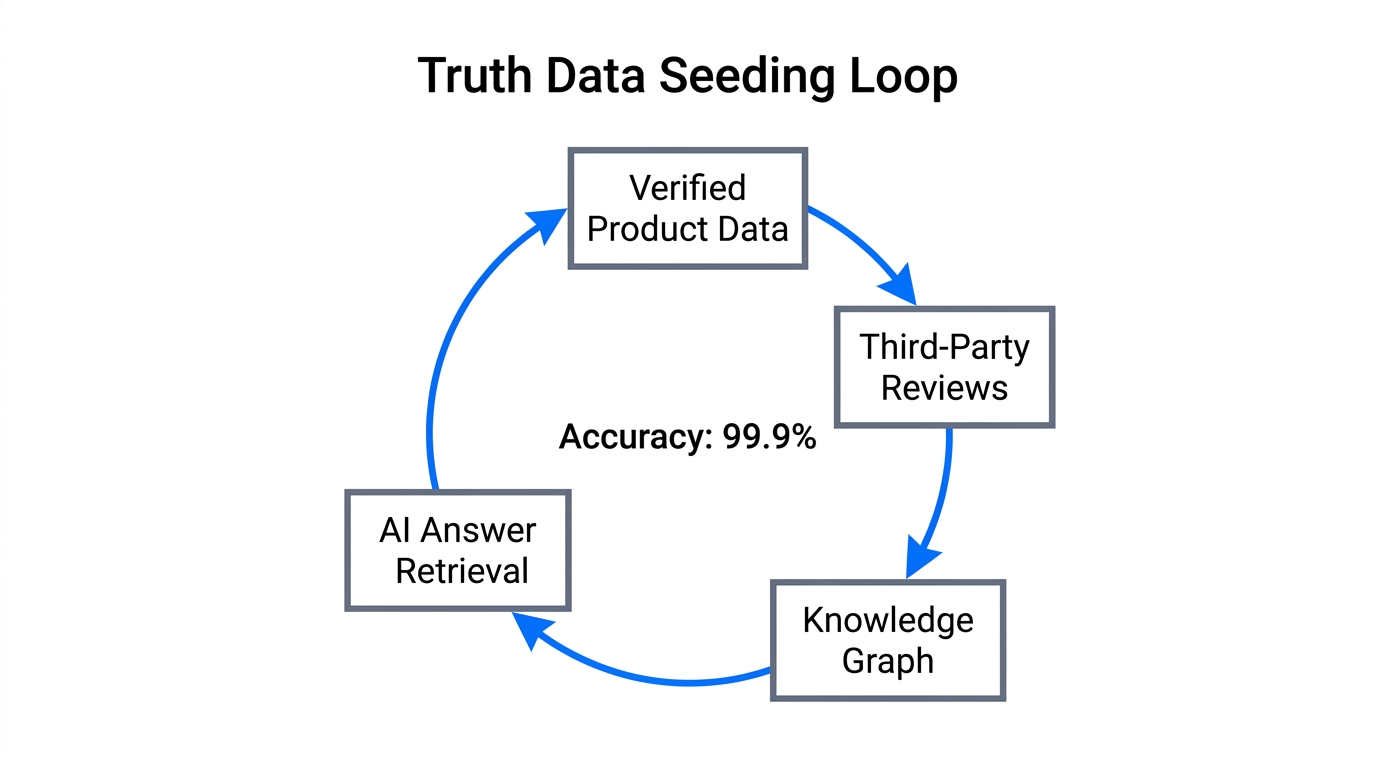
Large Language Models (LLMs) are trained on the open web, and in 2026, they weigh community sentiment heavily. AI models treat platforms like Reddit and YouTube as "Truth Data" because they are harder to game with traditional SEO tactics. To rank on ChatGPT, you must ensure your brand is being discussed positively in these organic ecosystems.
Solo founders are now using AI SEO strategies to seed genuine reviews and mentions. This isn't about spamming; it's about active community participation. When an AI model scrapes a Reddit thread where three different users recommend your Shopify store for its "no-hassle returns," that data point becomes a permanent part of your brand's AI profile.
To scale this, you can ask Stormy AI to discover creators across TikTok and YouTube who align with your niche. Stormy can then draft personalized outreach to these creators to get your product featured in "Top 10" or review videos, providing the rich audio-visual data that models like GPT-5 and Claude 4 use to verify product quality.
The AEO Technical Audit: Preventing AI Hallucinations
One of the biggest risks in 2026 is AI Hallucination. This happens when an agent incorrectly tells a customer your product is in stock when it isn't, or promises a discount that doesn't exist. These errors can lead to legal liability and massive trust erosion. According to SG Solutions, 20% of consumers report mistrust of AI-generated info due to "uncanny" or incorrect product details.
To prevent this, conduct a weekly Technical AEO Audit:
- Check SKU Consistency: Ensure your Shopify SKU data matches what is being fed to your Google Ads and Meta feeds. Discrepancies cause AI agents to flag your store as unreliable.
- Audit Support Agents: If you use an autonomous support tool like Zipchat, ensure its training data (PDF manuals, return policies) is updated monthly.
- Monitor Competitor Pricing: Use Prisync to ensure your pricing is competitive. AI agents are programmed to find the "best value," and even a $1 difference can drop your SMR.
Optimizing for Zero-Click Commerce & AI-to-Merchant Transactions
The ultimate goal of AEO is to enable Agentic Commerce. We are seeing the rise of "Buy for me" buttons within AI interfaces. To facilitate this, your Shopify store must support new payment frameworks like Visa’s Intelligent Commerce Connect, which allows AI agents to securely spend money on behalf of humans.
This requires your checkout flow to be entirely "headless" and machine-friendly. If your store has intrusive pop-ups, complex captchas, or multi-step redirects that aren't readable by an AI browser, the agent will simply move to a competitor like Amazon where the checkout is frictionless. As noted by Extuitive, the brands winning in 2026 are those that have optimized their checkout metadata as much as their product descriptions.
How Stormy AI Automates the AEO Playbook
Managing AEO is a full-time job that didn't exist two years ago. This is where Stormy AI acts as your dedicated ecommerce employee. Stormy doesn't just give you a dashboard; it does the work:
- Data Hygiene: Stormy monitors your Shopify store for "messy data"—missing tags, vague descriptions, or broken JSON-LD—and fixes them automatically to ensure AI agents can read your inventory.
- Performance Tracking: Stormy pulls campaign performance from Meta Ads and TikTok Ads, comparing your spend against your Share of Model Response to see if your marketing is actually influencing AI recommendations.
- Supplier Follow-ups: To prevent the dreaded "Out of Stock" hallucination, Stormy AI tracks lead times and reminds suppliers about shipments before your inventory hits zero.
By delegating the technical monitoring to Stormy AI, you can focus on brand building while your AI teammate ensures your store is optimized for the millions of AI agents searching the web every second.
Conclusion: The Future is Agentic
The transition from SEO to AEO is the most significant opportunity for Shopify sellers since the launch of the App Store. By implementing MCP, focusing on Technical Density, and seeding Truth Data across the web, you can ensure your products are the first choice for the AI agents of 2026. Don't wait for your traffic to drop—start optimizing for the answer engine today. The era of the "one-person billion-dollar company" is here, and it starts with a store that speaks the language of machines.