In 2026, the standard "We miss you" email is no longer a marketing strategy—it is a liability. For modern Shopify merchants, the shift from "blunt-force marketing" to "precision retention" is the only way to combat rising customer acquisition costs. While traditional flows send generic messages after a set number of days, AI-powered systems now analyze individual purchase cycles, predictive churn risk, and behavioral cues to intervene at the exact moment a customer is likely to leave forever.
According to recent data from Shopify.com, automated win-back emails achieve 2,361% higher conversion rates compared to manual, scheduled campaigns. The secret to this success isn't just better copywriting; it is the technical orchestration of data between your email engine and your customer service platform. By syncing Klaviyo Shopify AI flows with your Gorgias Shopify integration, you can create a win-back machine that is both automated and deeply human.
The Precision Retention Framework: Why Klaviyo and Gorgias Must Sync
The most common mistake in retention is sending a discount code to a customer who just had a terrible support experience. If a customer is waiting on a lost package or a refund, a "Come back and buy more!" email feels tone-deaf and often triggers a permanent unsubscribe. This is where the Gorgias Shopify integration becomes critical for your Klaviyo setup.
By piping Gorgias ticket data into Klaviyo, you can build conditional splits that filter out customers with open support tickets or past shipping issues. For example, if a customer has a ticket tagged "Damaged Item" in Gorgias, the AI flow should automatically pause the win-back sequence and instead trigger a personalized outreach from a support agent. This "Human-in-the-Loop" model ensures that you aren't marketing to a fire that hasn't been put out yet.
"The key to 2026 retention is realizing that a support ticket is just a marketing opportunity in disguise—if your data stack is synced correctly."Furthermore, Klaviyo.com reports that AI-driven campaigns see a 52% higher open rate than non-AI emails due to optimized send-time and subject line prediction. When you combine this with the customer sentiment data found in Gorgias, you aren't just sending an email; you are starting a relevant conversation.
Calculating the AI Trigger: Moving Beyond the 90-Day Rule
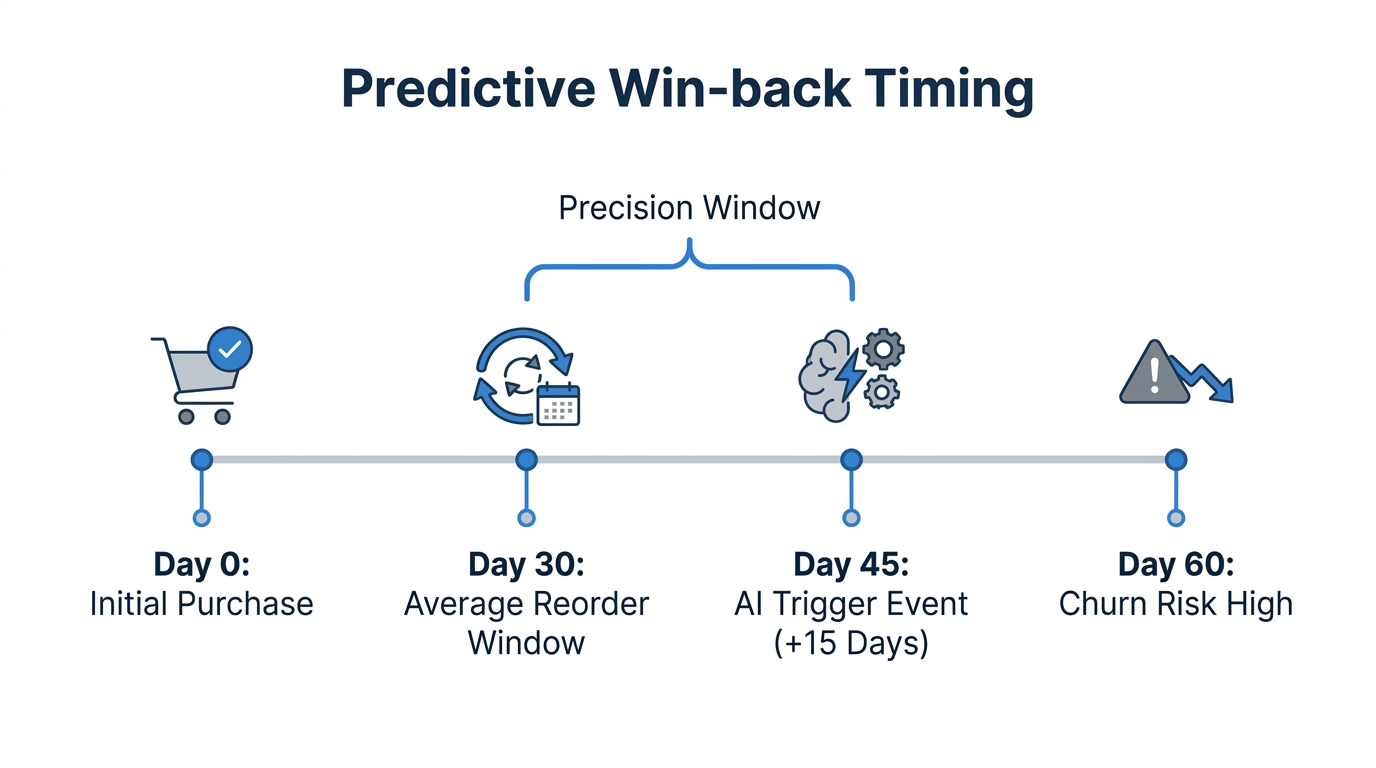
Stop using the 90-day industry standard for your win-back triggers. Every brand has a different Average Order Frequency (AOF). A supplement brand might have an AOF of 30 days, while a high-end furniture brand might have an AOF of 200 days. Sending a win-back email at 90 days for a supplement brand means you've already lost the customer to a competitor two months ago.
The modern omnichannel win-back strategy dictates that you should set your AI trigger to 1.5x your AOF. If your average customer buys every 30 days, your AI win-back should fire at 45 days. This provides a 15-day "buffer" where the customer is technically late but still within the consideration window. Tools like Klaviyo use "Segments AI" to build lists of customers specifically predicted to never purchase again, allowing you to get even more granular than basic AOF math.
Step 1: Calculate Your AOF
Look at your Shopify analytics for the past 12 months. Divide the total number of orders by the number of unique customers. Once you have your frequency, multiply by 1.5 to find your first AI touchpoint.
Step 2: Predictive Churn Monitoring
Instead of waiting for the lapse to happen, use AI tools to monitor "exit signals." These include a declining email engagement rate or a reduction in session frequency on your site. If the AI detects a 70% probability of churn, trigger Phase 1 of your flow immediately.
The Multi-Step AI Flow Logic: A 3-Phase Playbook
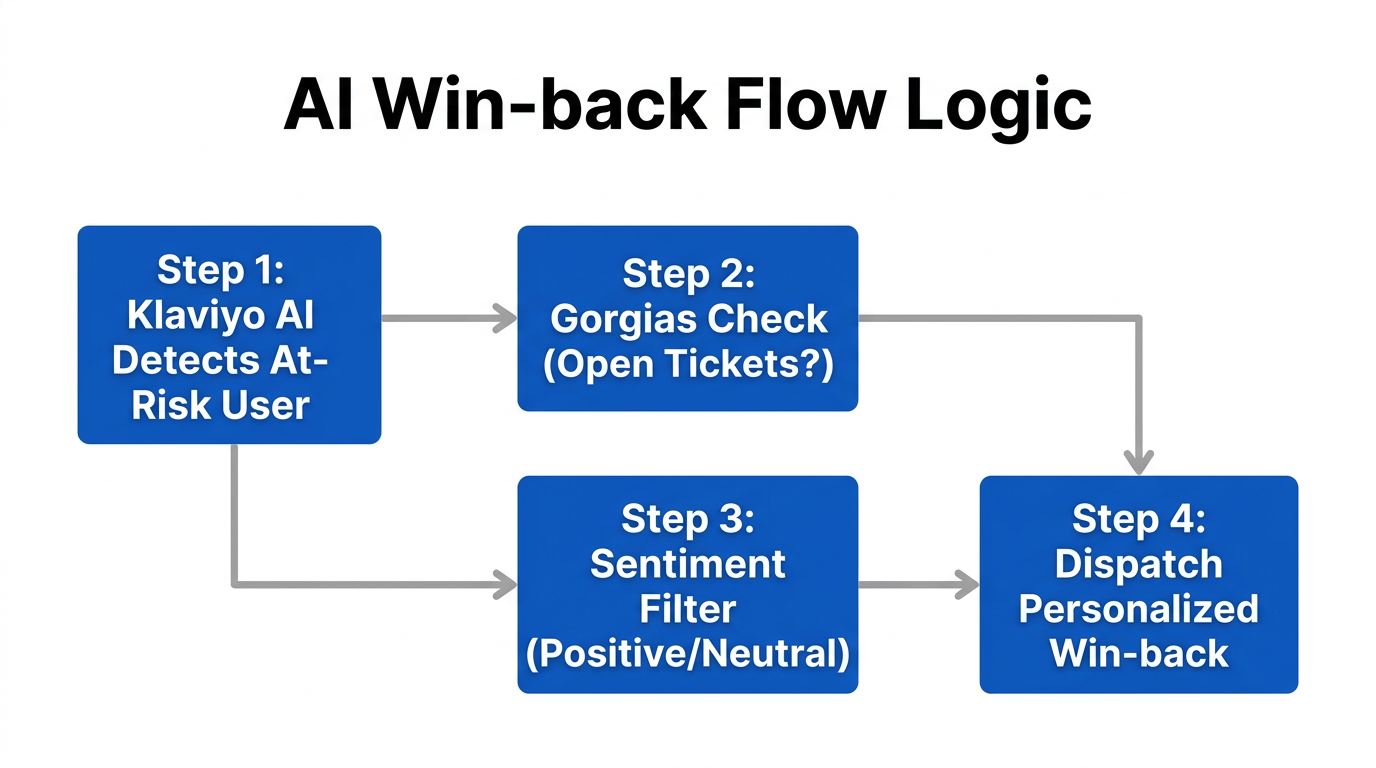
A high-performing Shopify AI flow shouldn't lead with a discount. It should follow a strategic progression that protects your margins while re-engaging the user. For content inspiration, brands often use Stormy AI to discover UGC creators who can provide fresh, authentic video content for these flows, making them feel less like corporate mailers and more like social updates.
- Phase 1: The "Soft" Check-In (Day 1.5x AOF) – Focus on new arrivals or a "Did you know?" educational story about the brand. Do not offer a discount yet. Use AI product recommendations based on their specific purchase history.
- Phase 2: The Personalized Offer (7–14 Days Later) – The AI generates a dynamic unique discount code based on the customer's Lifetime Value (LTV). According to SuperAGI.com, high-value VIPs should receive deeper discounts (e.g., $20 off) while lower-value customers get free shipping to protect profitability.
- Phase 3: The Feedback Loop (Final Attempt) – If no purchase occurs, the AI sends a survey asking why they left. This data is fed back into the Gorgias dashboard so support teams can identify systemic issues, such as product quality or shipping speeds.
| Feature | Klaviyo (Marketing AI) | Gorgias (Service AI) | The Win-Back Synergy |
|---|---|---|---|
| Primary Data | Purchase History & Browsing | Support Tickets & Sentiment | Full 360-degree customer view |
| AI Strength | Predictive Send Times | Intent Classification | Timing + Contextual Relevance |
| Retention Role | Automated Re-engagement | Conflict Resolution | Preventing churn from bad experiences |
When comparing Klaviyo vs Gorgias for retention, it isn't a matter of which is better, but how they complement each other. Klaviyo handles the proactive outreach, while Gorgias provides the protective shield and reactive support that prevents the outreach from backfiring.
Omnichannel Coordination: SMS and Loyalty Integration
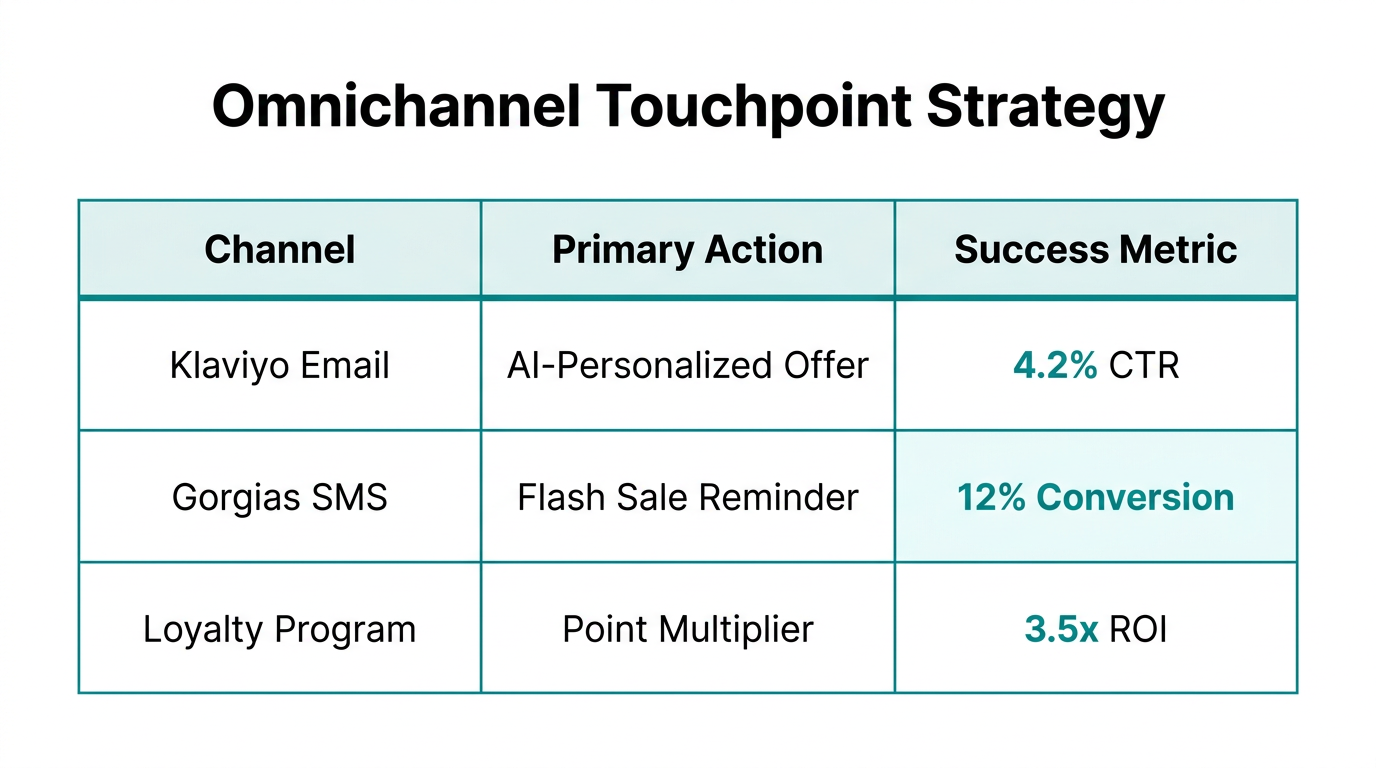
Email is only one piece of the puzzle. In 2026, a true omnichannel win-back strategy requires switching channels when email fails. If a customer doesn't open a win-back email within 24 hours, your system should automatically switch to a personalized SMS via tools like TxtCart.
SMS has a near-100% open rate, making it the perfect "hail mary" for customers who have tuned out your email marketing. However, the SMS must be personalized. AI can draft these messages to include the customer's name and the specific item they last viewed. To add even more incentive, leverage AiTrillion to integrate loyalty points into your win-back headers. Phrases like "You have 500 points expiring!" are significantly more effective than "We miss you."
"Loyalty points are a form of currency. Reminding a customer they are 'losing money' by not shopping is the most powerful psychological trigger in retention marketing."Using AiTrillion as an AI email personalization tool allows you to dynamically insert these point balances into both Klaviyo emails and TxtCart SMS messages, creating a seamless experience across all touchpoints.
Common Mistakes to Avoid in Your Win-Back Stack
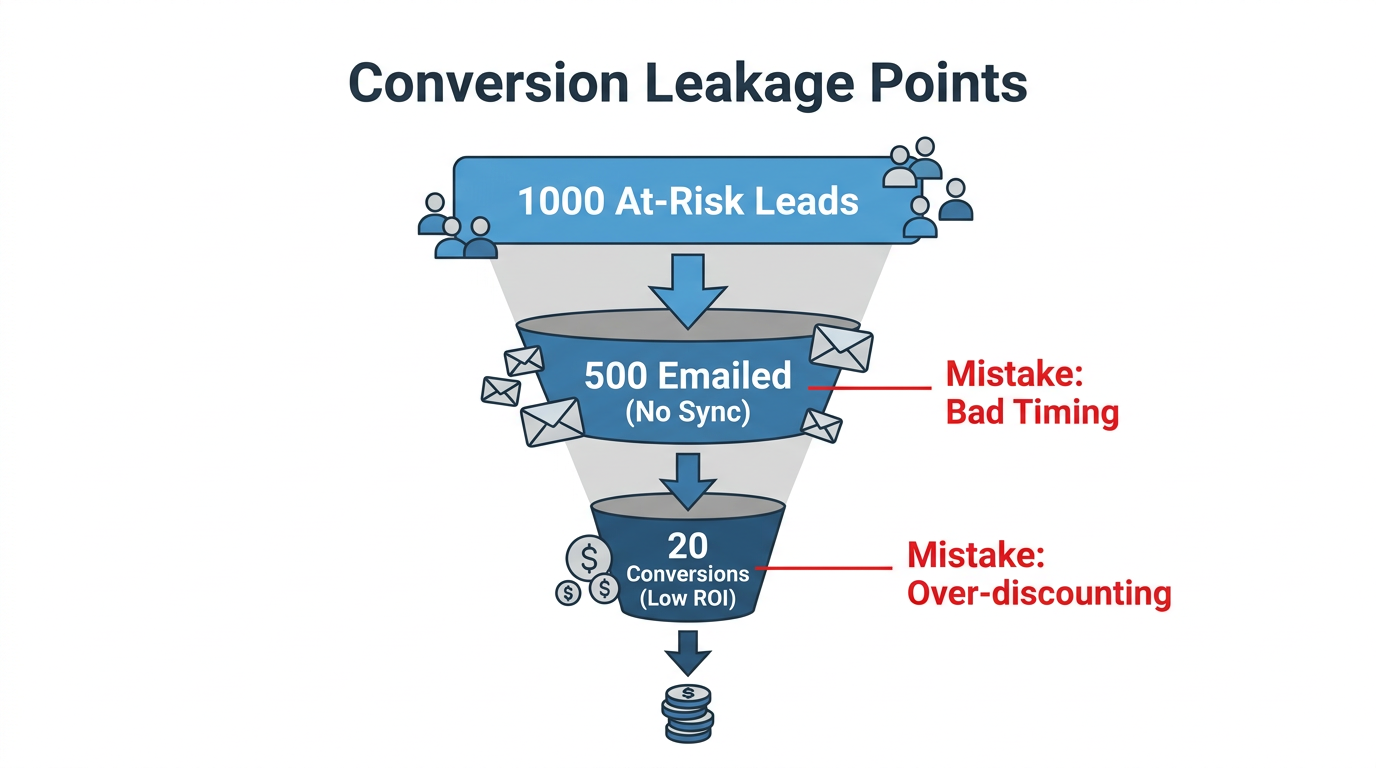
Even with the best tools, logic errors can tank your results. Be mindful of these common pitfalls when setting up your Klaviyo Shopify AI flows:
- The "Discount-First" Trap: Training your customers to wait for a sale. Always lead with value-based content or UGC (easily sourced via Stormy AI) before dropping a coupon.
- Ignoring Deliverability: Sending win-back emails to "dead" accounts (bounced or 1-year inactive) ruins your sender reputation. Use AI to sunset (auto-suppress) unengaged contacts after 4–5 failed win-back attempts, following email deliverability best practices.
- No Branching: Sending the same win-back email to a customer who had a shipping issue as to a customer who simply forgot. Use your Gorgias Shopify integration to branch these users into a "Support Recovery" flow instead.
Conclusion: Building Your 2026 Retention Engine
The integration of Klaviyo and Gorgias represents the pinnacle of modern e-commerce retention. By using AI to predict when a customer is about to leave, and then using support data to ensure the message is appropriate, brands can recapture lost revenue with surgical precision.
Start by calculating your true AOF, setting up your Gorgias conditional splits in Klaviyo, and augmenting your content with UGC. For those looking to scale their influencer and UGC efforts to feed these flows, platforms like Stormy AI streamline creator discovery and outreach, ensuring your win-back emails always have fresh, high-converting visuals. In the competitive landscape of 2026, the brand that knows its customer best—and acts on that data fastest—is the one that wins.