In 2026, the standard ecommerce playbook has been rewritten. It is no longer enough to simply have a store on Shopify and a handful of off-the-shelf apps. As customer acquisition costs fluctuate across Meta Ads and Google Ads, the brands winning the margin war are those that can engineer their own profitability through custom logic. We are moving away from the era of "there's an app for that" and entering the era of "there's a Function for that."
The Shift from Middleware to Native Logic
 8:42
8:42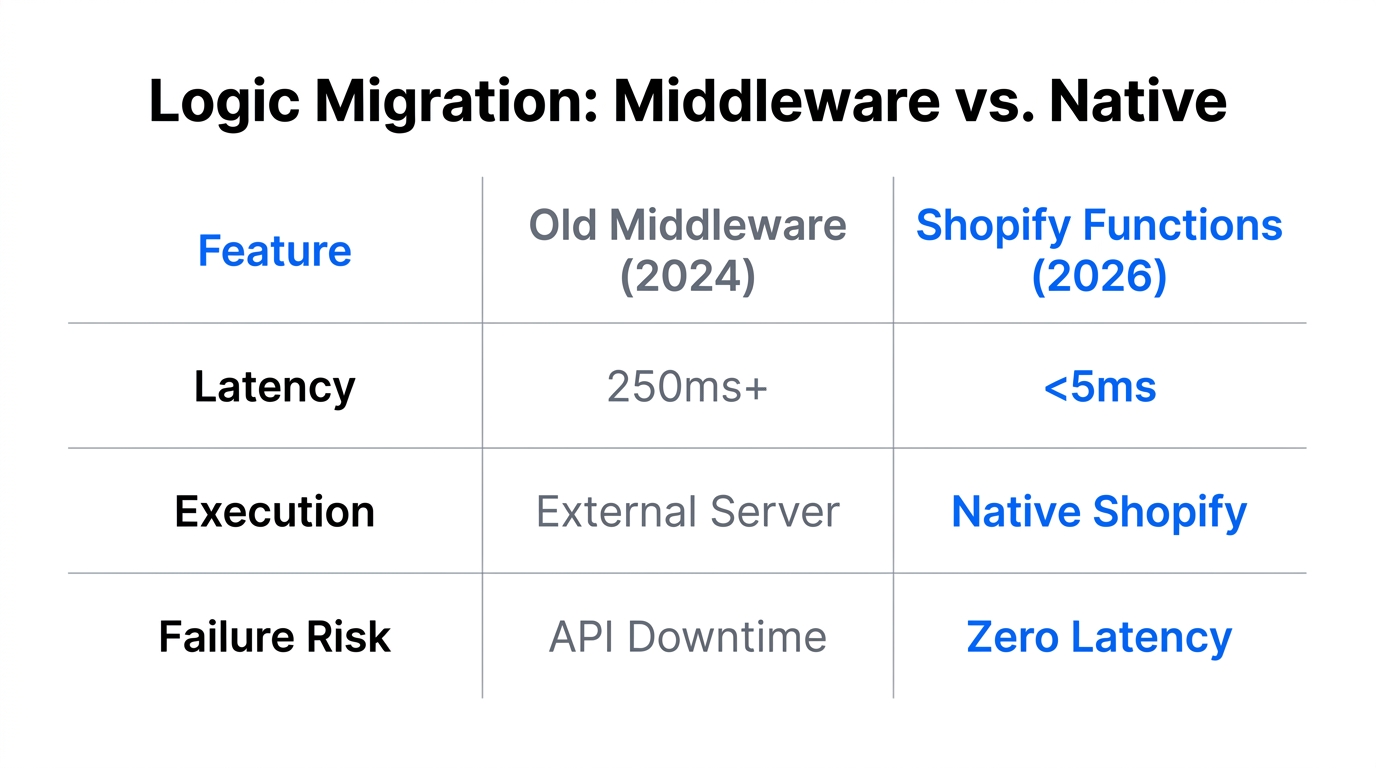
For years, Shopify merchants relied on third-party apps to handle complex discounting and cart behavior. These apps often functioned as "middleware," sitting between the customer and the checkout, frequently causing latency or conflicting with one another. By 2026, Shopify Functions have effectively replaced legacy scripts and many specialized apps by allowing developers to write custom code that runs natively on Shopify’s infrastructure.
As highlighted in recent technical breakdowns, while the Shopify Admin API is essential for managing store data, it cannot be used to manipulate a live checkout session in the way Functions can. Functions are not traditional APIs; they are modular logic blocks that plug directly into the commerce engine. This means your Shopify logic automation happens without the milliseconds of delay that often cost high-volume brands thousands in abandoned carts.
"The future of ecommerce isn't about finding the right app; it's about owning the logic that makes your brand unique."
Case Study: Hyper-Specific Discount Rules for 2026
Imagine a scenario where a standard "Buy X Get Y" discount isn't enough. You want to offer a discount that only triggers if a customer has a specific loyalty tier, has purchased from a certain collection in the last 90 days, and has at least two items from a partner brand in their cart. In the past, this would require a complex web of apps and tagging. Today, you use the Discount Function API.
By leveraging Shopify Metafields to store customer loyalty data, a custom Function can evaluate the cart's contents and the customer's profile simultaneously. This allows for "invisible" promotions that feel personalized rather than generic. To keep these complex rules running smoothly, many founders now rely on an AI ecommerce employee like Stormy AI. Stormy can monitor the performance of these custom discounts, checking if they are driving the intended lift in AOV or if they are eating too deeply into margins, flagging issues directly in a shared spreadsheet.
| Feature | Legacy Discount Apps | Shopify Functions (2026) |
|---|---|---|
| Execution Speed | Dependent on app server latency | Native Shopify speed |
| Reliability | Can break during high traffic | Built for Black Friday scale |
| Customization | Limited to app UI settings | Unlimited programmatic logic |
| Integration | Often conflicts with other apps | Deeply integrated with Checkout |
The Cart Transform API: Sophisticated BOGO and Upsells
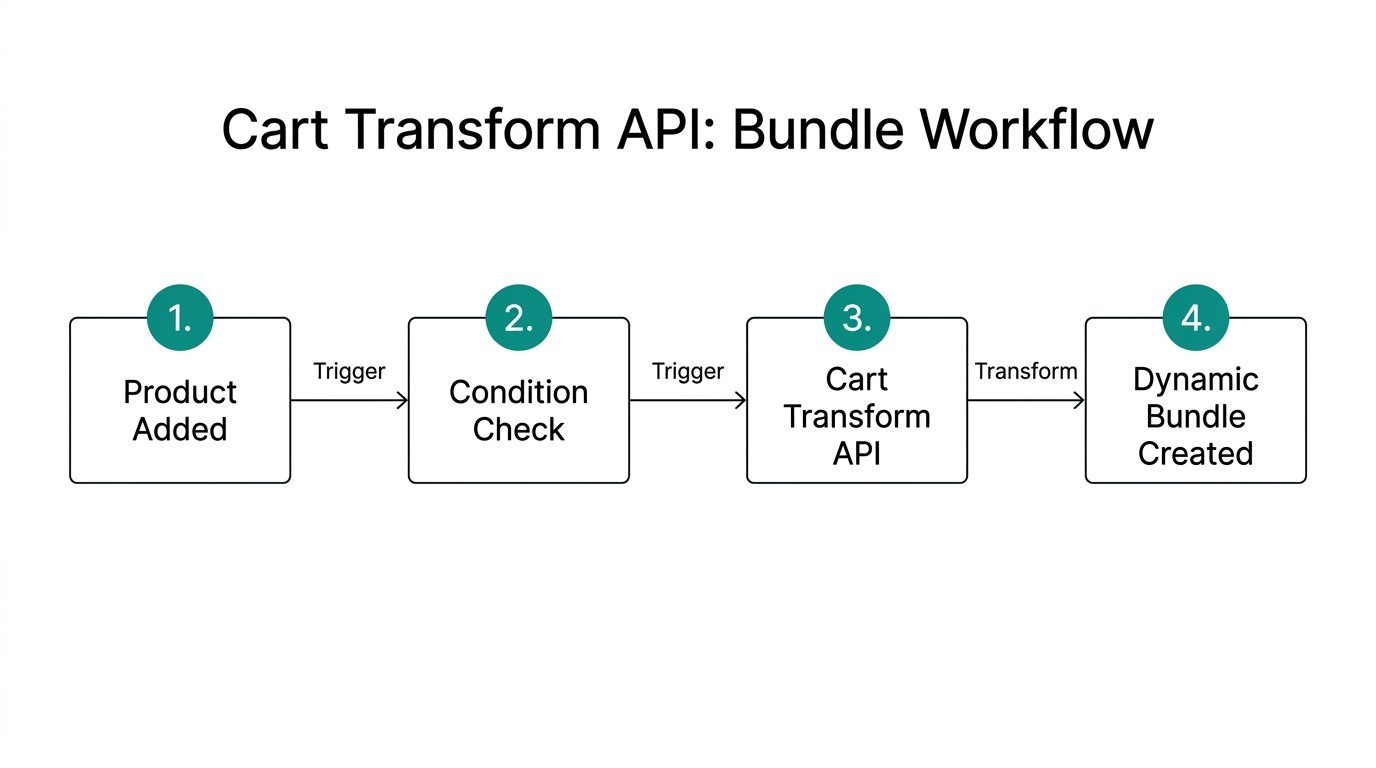
The Shopify Cart Transform API is perhaps the most powerful tool for founders looking to increase Average Order Value (AOV) in 2026. This API allows you to programmatically change how items appear in the cart. You can take two separate SKUs and "bundle" them into a single line item with a unique price, or automatically swap a standard product for a "gift with purchase" version if certain criteria are met.
For example, if you are running a flash sale on TikTok Shop and syncing those orders back to Shopify, you can use the Cart Transform API to ensure that customers coming from social channels receive specific promotional packaging or tiered bundles that aren't available to the general public. This level of logic-driven personalization ensures your marketing spend on platforms like TikTok Ads Manager is maximized.
While these technical shifts happen under the hood, Stormy AI acts as the operations lead. Stormy can watch the cart transformation logs and inventory levels in Shopify, ensuring that if a custom bundle logic starts depleting a specific SKU faster than anticipated, a restock alert is sent to your supplier immediately.
Stability and Speed: Why Functions Win Flash Sales
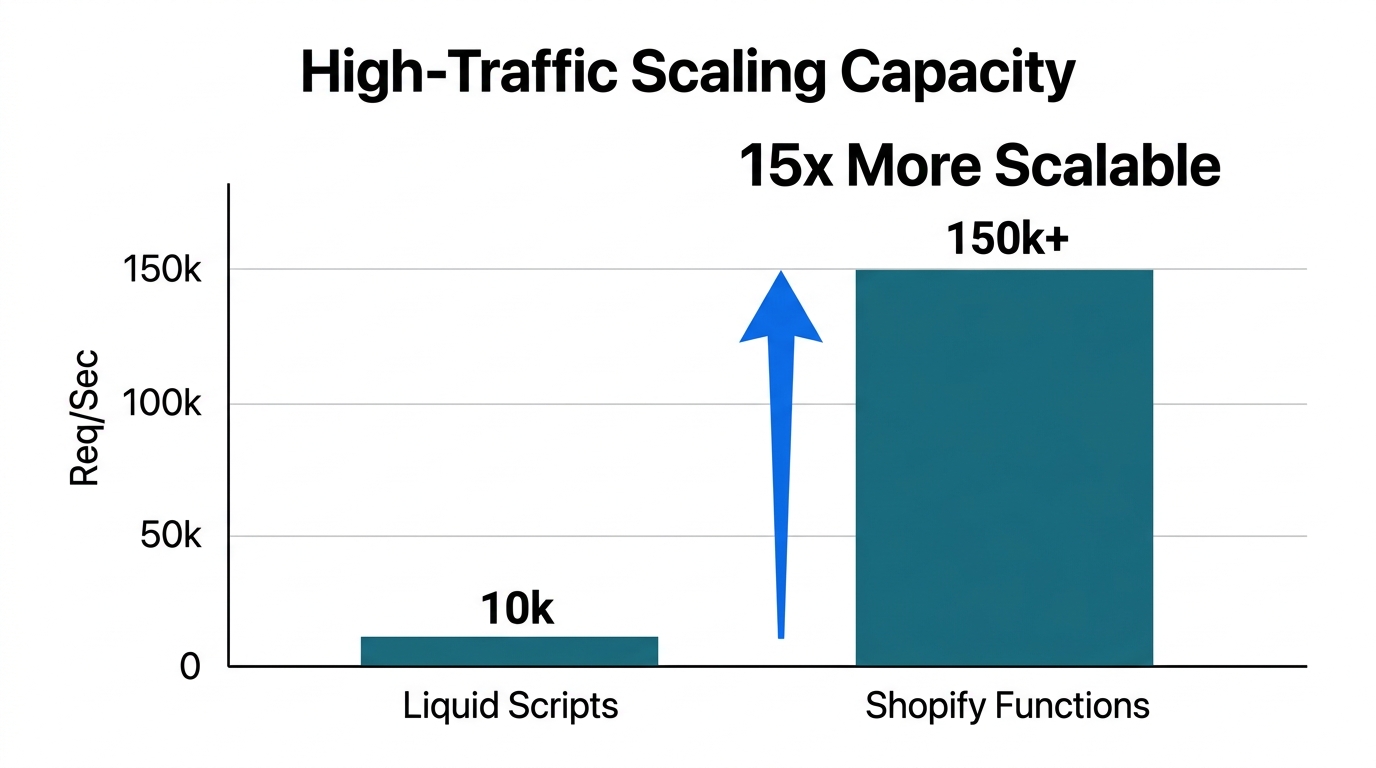
In 2026, the difference between a successful product drop and a site crash is how much logic you've offloaded to the native layer. Traditional middleware apps often struggle with rate limits. As Jan from CodingWithJan explains, the Admin API has strict limits on how many requests can be made per second. If your discount app needs to ping a server for every customer in a 50,000-person queue, it will fail.
Shopify Functions, however, are pre-compiled and executed by Shopify's own servers. There is no external API call. This architectural advantage is why the world's largest brands have migrated their core promotional logic to Functions. It eliminates the "spinning wheel" at checkout that kills conversions during high-pressure sales events.
"If your checkout takes more than 2 seconds to calculate a discount, you aren't just losing a sale; you're losing a customer for life."
Planning Your 2026 Promo Calendar with Custom Logic
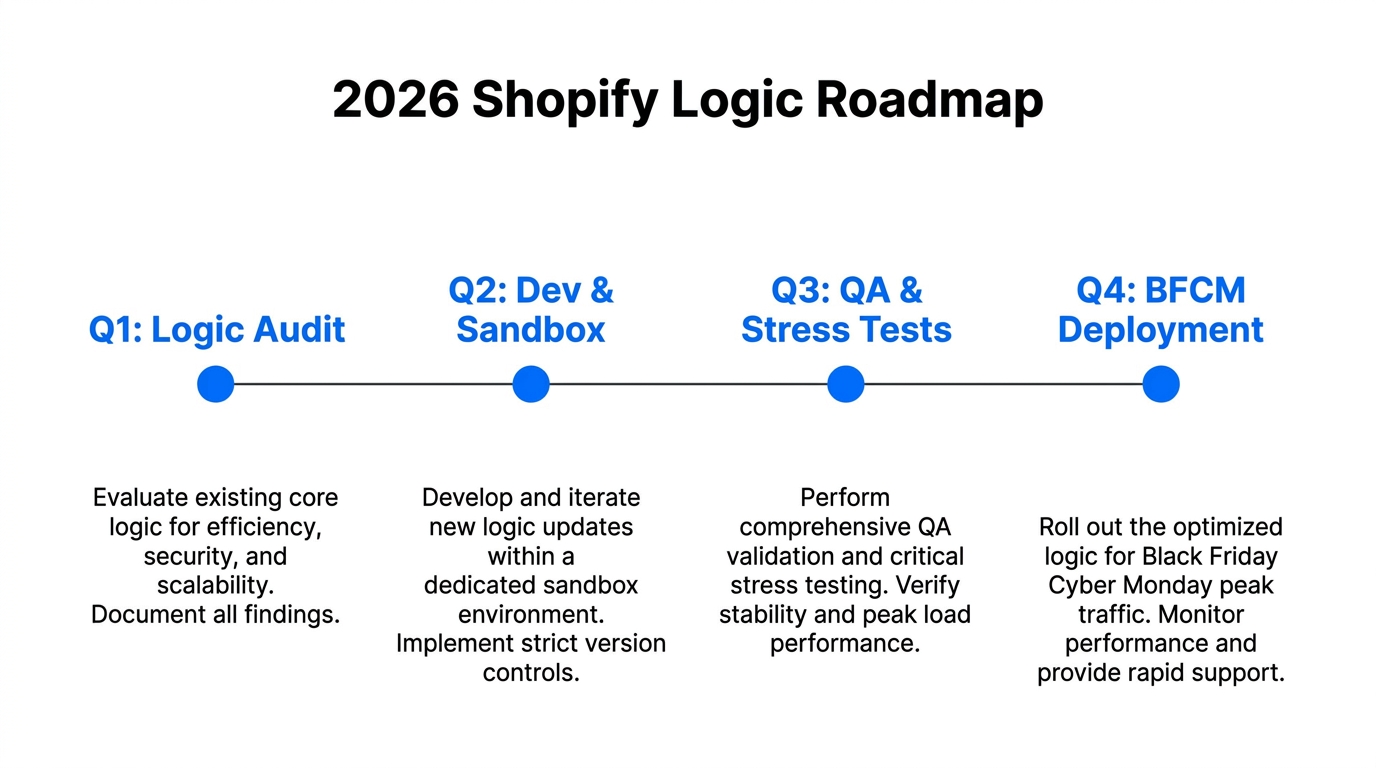
To stay competitive, your 2026 marketing calendar should be built around these technical capabilities. Instead of generic 20% off sales, consider playbooks like:
- Dynamic Bundling: Automatically bundling complementary products based on real-time inventory levels fetched via the Storefront API.
- Tiered Access: Using Functions to restrict certain products or discounts to customers who have an active subscription via Recharge or similar 2026-compliant tools.
- Geo-Specific Logic: Adjusting cart contents or offering localized freebies based on the customer's shipping zone, managed natively to avoid compliance issues with international shipping.
Playbook: Implementing Your First Shopify Function
Transitioning to a Function-based architecture requires a clear roadmap. Here is how to approach it in 2026:
- Identify the Bottleneck: Look at your current app stack. Are you paying for three different apps just to handle discounts and bundles? Those are your first candidates for a custom Function.
- Define the Logic: Write down your "If-This-Then-That" rules clearly. For example: "If a customer is in the 'VIP' segment and spends over $200, apply a 25% discount to the lowest-priced item in the cart."
- Development & Testing: Use the Shopify CLI to create a new Function. Test it in a sandbox environment to ensure it doesn't conflict with your theme's Ajax API calls.
- Monitor with AI: Once live, let Stormy AI handle the boring part. It can track every order that uses the new logic, cross-reference it with your Stripe payouts, and ensure the math is always in your favor.
The Bottom Line
9:27Customizing your Shopify store with Functions and the Cart Transform API is no longer a luxury for the "Plus" crowd; it is a necessity for any brand that wants to scale in 2026. By moving logic into the native layer, you gain unmatched speed, reliability, and creative freedom.
As you build these complex systems, remember that you don't have to manage them alone. An AI ecommerce employee like Stormy AI can act as your 24/7 operations manager, watching the data while you focus on the vision. The technical bridge between your code and your commerce has never been stronger—it's time to use it to its full potential.