In the high-stakes arena of mobile app marketing, the traditional approach to App Store Optimization (ASO) is no longer enough to displace established incumbents. As we move into 2025, approximately 65–70% of all app discoveries occur directly through organic search, according to data from SplitMetrics. For non-gaming utilities, this figure can soar to 80%. To win in this environment, growth marketers must look beyond simple keyword density and master the dual levers of app download velocity and long-tail intent-driven strategies. This playbook outlines how to utilize semantic search and aggressive velocity hacking to outrank competitors with deeper pockets.
The Mechanics of App Download Velocity

The most potent, albeit temporary, ranking factor in both the Apple App Store and Google Play Store is Download Velocity. This metric measures the number of installs an app receives within a specific window—typically the last 24 to 72 hours. When an app experiences a sudden surge in installs, the store algorithms interpret this as a signal of high relevance and "trendiness," resulting in a significant boost in keyword rankings across the board. Expert analysis from KeyApp confirms that velocity is the single biggest booster for breaking into the top 10 for high-volume terms.
"Download velocity isn't just a metric; it is a temporary window of opportunity that allows smaller apps to leapfrog industry giants by proving immediate market demand."
Dominating Through Long-Tail Keywords for Apps
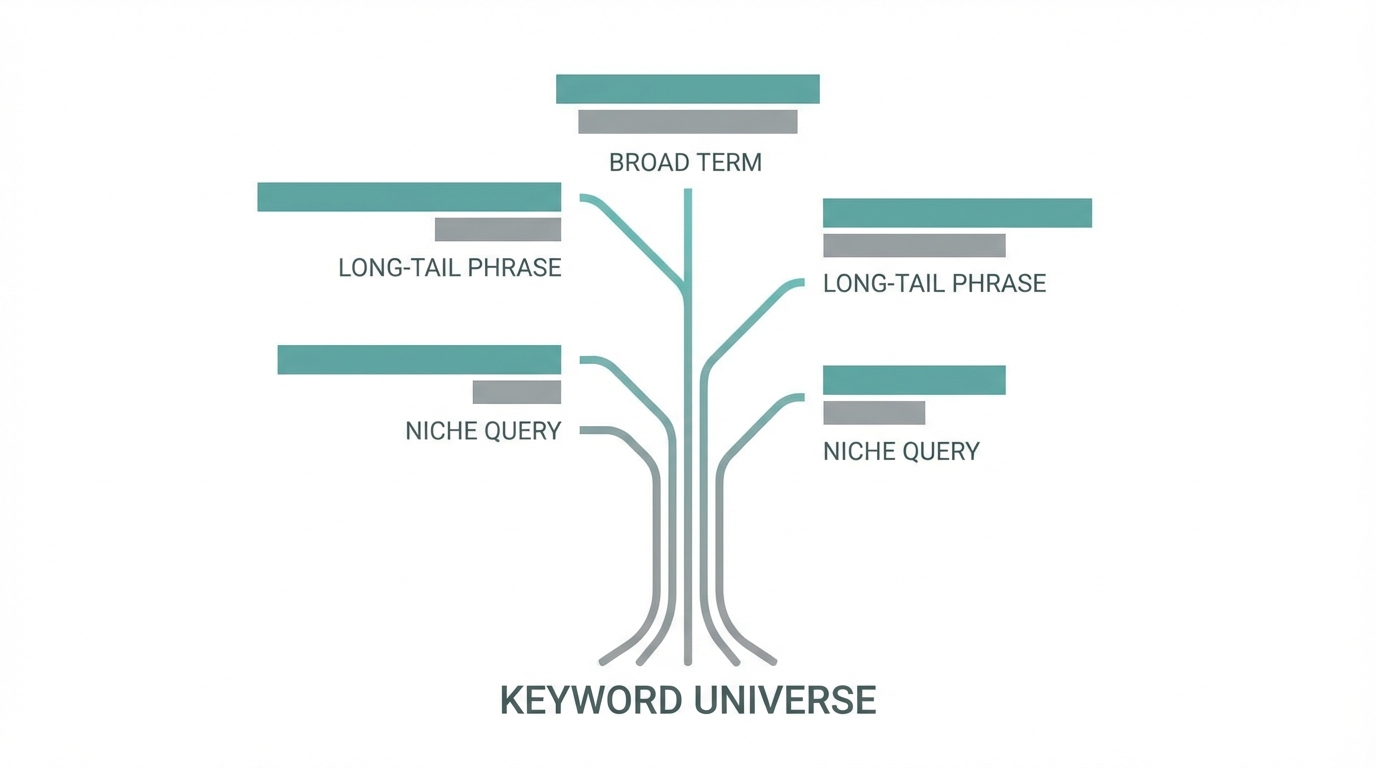
While incumbents battle for broad, high-volume terms like "flights" or "meditation," growth hackers find their edge in long-tail keywords for apps. These are multi-word phrases that represent specific user intent. Targeting "meditation for anxiety" or "budget flight tracker for students" offers two distinct advantages: lower competition and significantly higher Conversion Rates (CVR). Since ASO algorithms now treat CVR as a direct ranking signal, winning on high-intent long-tail phrases eventually helps you rank for broader "head" terms. Research by ASOMobile highlights that long-tail keywords often capture users further down the funnel who are ready to install immediately.
- Lower Difficulty: Long-tail terms allow you to reach #1 status much faster than competitive head terms.
- Semantic Relevance: Modern algorithms use Natural Language Processing (NLP) to understand context, making descriptive phrases more valuable.
- User Intent: A user searching for "HIIT workout for beginners" is more likely to convert than one just searching for "fitness."
Case Study: Kiwi.com’s Low-Competition Playbook
The travel app Kiwi.com provides a masterclass in competitive ASO strategy. Instead of burning their entire budget trying to outrank giants for the term "flights," they optimized their metadata for "low-competition, mid-traffic" keywords. By identifying specific routes, travel hacks, and niche search terms, they built a foundation of organic installs that eventually fueled the app download velocity needed to compete for more generic terms. This approach, often cited by industry experts at ASO Guru, proves that a bottom-up keyword strategy is more sustainable than a top-down one.
"Kiwi.com scaled by winning thousands of small battles on niche keywords rather than losing one big battle for a single high-volume term."
Seasonal ASO Strategy: The Headspace Model
App Store trends are rarely static. Successful mobile app marketing tactics involve pivoting metadata to match seasonal shifts. Take Headspace, for example. During the "New Year, New Me" rush in January, they shift their focus toward keywords like "resolutions," "habit tracker," and "new year goals." By aligning their 100-character keyword field and subtitles with these trending phrases, they capture the massive seasonal search volume. ConsultMyApp suggests updating metadata every 4–6 weeks to stay ahead of these cultural shifts and prevent rankings from becoming stagnant.
Semantic Search and the AI Keyword Surge
The most significant trend of 2024–2025 is the 300% year-over-year increase in AI-related search volume. Whether you have a photo editor or a productivity tool, integrating "AI" into your metadata is no longer optional—it is a necessity. However, because both Apple and Google have shifted toward semantic search, simply stuffing the word "AI" is insufficient. You must optimize for intent. As noted by Practical Logix, the algorithm now understands the "context" of a query. If your app is an AI writing assistant, the stores look for semantic neighbors like "essay helper," "grammar check," and "text generator" to confirm your relevance.
To maintain high download velocity while targeting these competitive AI terms, many top-tier apps are turning to influencer-led User Generated Content (UGC). Tools like Stormy AI can help growth marketers source and manage UGC creators who drive high-intent traffic directly to the app store listing, creating the exact download velocity spikes needed to dominate new, trending AI categories.

Technical Execution: iOS vs. Android Playbook
A competitive ASO strategy must account for the mechanical differences between the two major platforms. On the Apple App Store, the Title and Subtitle are the primary ranking drivers, while the 100-character keyword field is hidden. You should never repeat keywords across these fields, as Apple ignores duplicates, wasting precious space. Conversely, on Google Play, the algorithm indexes the entire 4,000-character description. Here, keyword density should be maintained at a natural 1–2%. Experts at Passionfruit warn that exceeding this can lead to "keyword stuffing" penalties, effectively shadow-banning your app from search results.
"The secret to Google Play ranking is not more keywords, but better engagement. Your ratings and reviews are indexed—treat your user feedback as part of your metadata."
Conclusion: The Growth Hacker’s ASO Loop
ASO is no longer a "set it and forget it" task. It is a continuous cycle of research, testing, and analysis. By focusing on app download velocity and the long-tail keywords for apps that competitors overlook, you can build a sustainable organic growth engine. Remember to leverage seasonal trends, stay ahead of the AI semantic shift, and use modern tools to find the creators who will fuel your install spikes. If you are ready to scale, start by identifying your top 20 long-tail phrases today and planning a 48-hour velocity burst to claim your spot at the top of the charts.