In the fast-paced retail landscape of 2026, the static white-background product shot has become a relic of the past. As attention spans shorten and the digital marketplace becomes increasingly crowded, ecommerce growth managers are turning to AI-driven visual storytelling to capture consumer interest. The shift is no longer just about showing a product; it is about placing that product in a lifestyle context that resonates emotionally with the buyer. By leveraging Adobe Firefly, brands are now able to generate hyper-realistic environments that were once restricted to high-budget studio sessions. This strategic move toward Generative Scene Placement is not just a trend—it is a proven lever for increasing conversion rates by 30% to 58% while simultaneously reducing content production overhead.
The 2026 Shift: Why White Backgrounds Are Dying
For decades, the "Amazon-standard" white background was the gold standard for ecommerce. However, 2026 data shows a massive pivot. Today, 75% of online shoppers cite high-quality, contextual product images as the single most influential factor in their purchasing decisions, according to recent Statista retail reports. Consumers want to see how a luxury watch looks in a dimly lit cocktail lounge or how a skincare serum sits on a sun-drenched marble vanity.
The AI product photography market, which was valued at $450 million in 2024, has skyrocketed to a projected $5 billion by 2035, according to Microsoft AI research and industry analysts. This 24.5% CAGR is driven by the fact that roughly 80% of retail executives now utilize AI automation for visual content. The primary benefit? Speed and scale.
"The move from sterile studio shots to AI-staged lifestyle environments is the biggest conversion lever available to ecommerce brands in 2026."
Cost-Benefit Analysis: AI Workflows vs. Traditional Studios
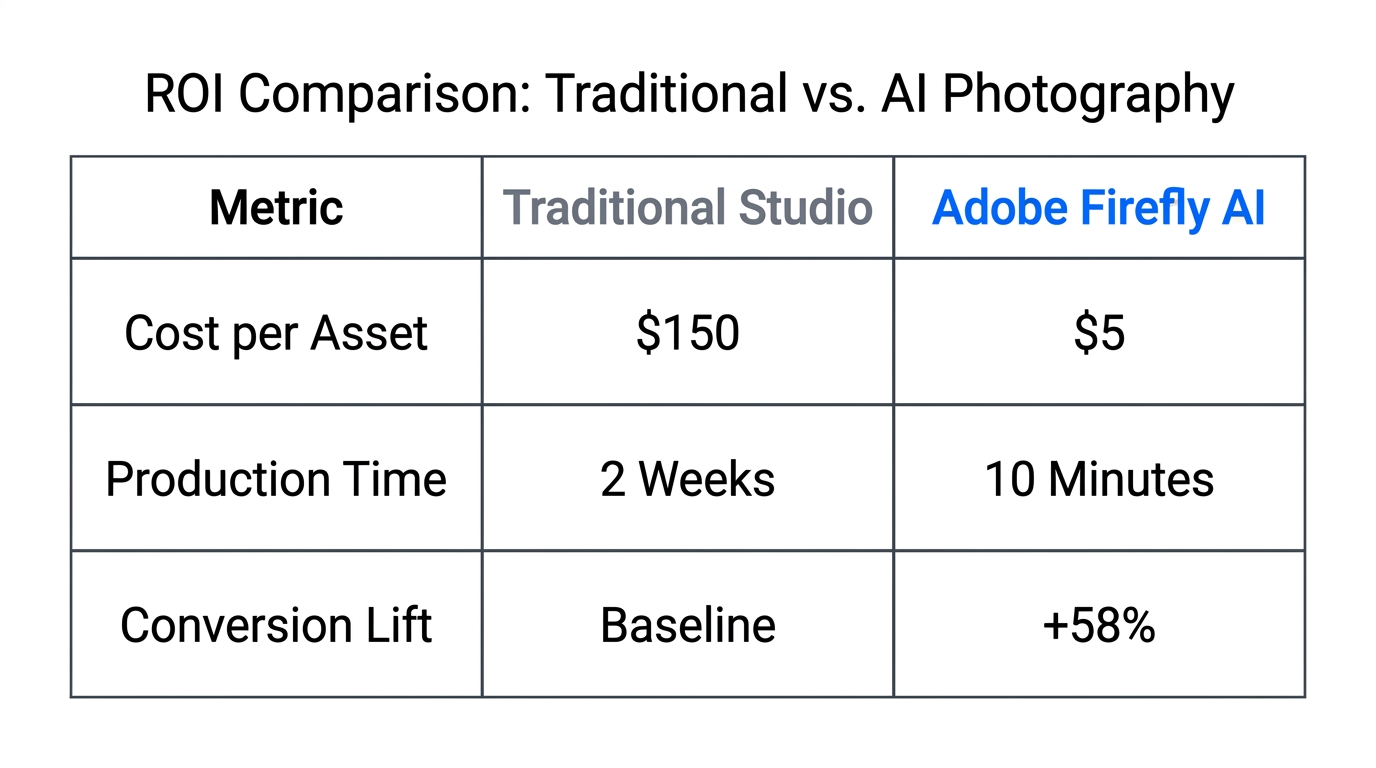
Traditional photoshoots are logistical nightmares involving studio rentals, photographers, lighting technicians, and physical samples. In 2026, ecommerce managers are choosing product photography cost reduction strategies that eliminate these bottlenecks. AI-driven image production can reduce photography costs by 40% to 90%. Beyond the financial savings, the sustainability impact is significant; brands are drastically reducing their carbon footprints by avoiding the global shipping of physical samples for editorial shoots, a priority often highlighted by the UN Environment Programme.
| Metric | Traditional Studio Shoot | Adobe Firefly AI Workflow |
|---|---|---|
| Cost per Image | $150 - $500 | <$5 |
| Turnaround Time | 2-4 Weeks | Minutes |
| Scalability | Limited by physical space | Unlimited variations |
| Flexibility | Requires reshoots for changes | Instant prompt-based edits |
The Adobe Firefly Playbook: Step-by-Step Generative Scene Placement
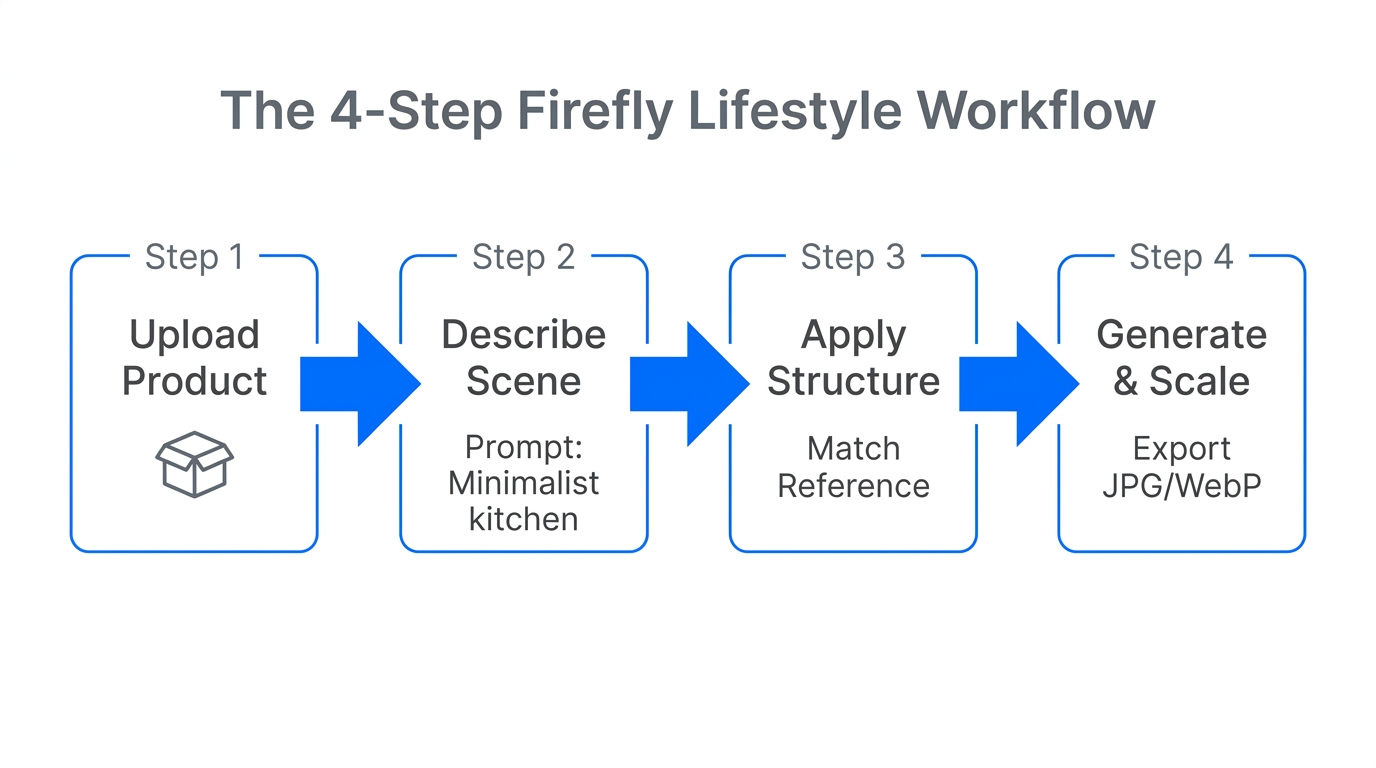
To achieve professional results that drive ecommerce conversion rate optimization, you must follow a disciplined workflow. Adobe Firefly’s Generative Fill and Text-to-Image capabilities allow for seamless integration of physical products into digital worlds.
Step 1: High-Resolution Product Capture
AI cannot "hallucinate" fine details that aren't there. Start with a high-resolution (at least 2000px) photo of your product with neutral lighting. Use tools like remove.bg to create a clean transparent PNG if you aren't using Firefly’s built-in removal tools.
Step 2: Generative Scene Staging
Upload your product to Adobe Firefly. Use the Generative Fill tool to describe the environment. Avoid vague prompts. Instead of "modern background," use specific descriptors: "Minimalist wooden table, soft morning window light, high-end skincare aesthetic, eucalyptus leaves in soft focus in the background." Detailed documentation on these techniques can be found on the Adobe Help Center.
Step 3: Lighting and Shadow Alignment
The secret to 2026-grade AI photography is shadow consistency. Firefly’s AI naturally attempts to match the lighting of the background to your product, but you may need to use Creative Generative Fill to add contact shadows where the product touches the surface. This grounds the object and prevents the "floating" look.
"Quality still depends on expertise. High-end retouching for fine textures like jewelry still requires a human eye to ensure the product remains the hero."
Maintaining Brand Trust: Avoiding the 'Uncanny Valley'
A major mistake in AI ecommerce marketing trends 2026 is over-processing. If a product looks too perfect, it looks fake, leading to a loss of consumer trust. To keep your visuals authentic:
- Keep Product Textures 100% Original: Only use AI for the background and environment. Never let the AI regenerate the product's label, texture, or logo.
- Batch Quality Enhancement: Use Claid.ai to ensure that after AI background generation, the entire image maintains a consistent sharpness and resolution.
- Consistency Across the Catalog: Use the same lighting prompts for all products in a collection. Tools like Pebblely or PicCopilot can help maintain this visual rhythm across a 1,000-item catalog.
Technical Requirements: Amazon and Shopify Compliance
While AI gives you creative freedom, marketplaces have strict rules. Amazon and Shopify require technical precision to ensure your listings aren't suppressed. Review the latest Shopify image guidelines to stay compliant.
- Resolution: Ensure your final export is at least 2000px on the longest side to enable "Zoom" features. If your AI output is low-res, use an upscaler like Let's Enhance.
- Aspect Ratios: Standardize 1:1 for Shopify grids and 4:5 or 9:16 for social commerce platforms like TikTok Shop.
- Platform Rules: Many fashion brands are moving to "On-Model" AI using Botika or Uwear to turn flat-lays into realistic model shots. Ensure these models represent your target demographic to boost relevance.
Integrating AI Visuals Into Your Marketing Stack
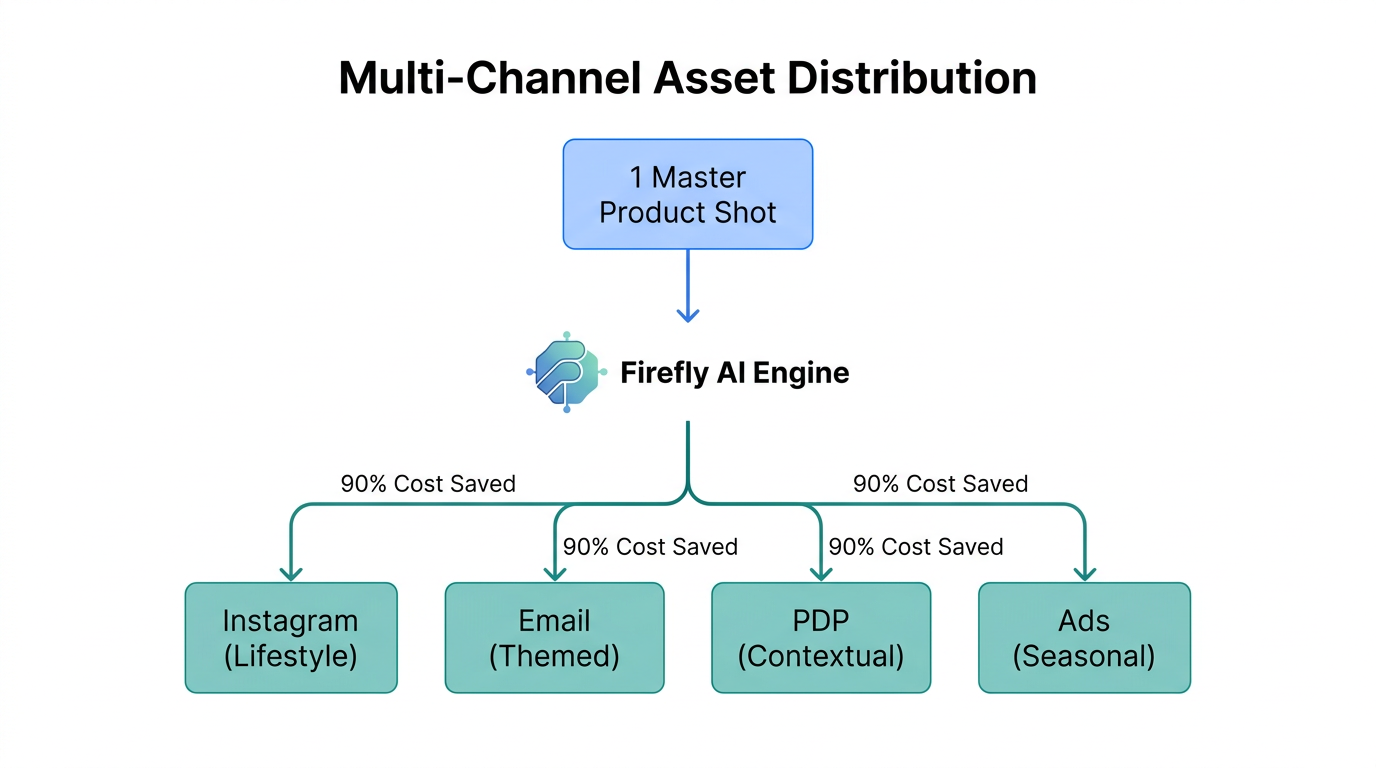
High-converting imagery is only effective if it reaches the right audience. In 2026, the most successful brands combine AI-generated product photography with influencer-led content. For instance, you might use Adobe Firefly for your high-end website hero banners, while sourcing authentic User-Generated Content (UGC) for your social ads. Platforms like Stormy AI allow you to discover and manage creators who can provide the base photos that your AI tools then enhance or "stage" for different seasonal campaigns.
By using Stormy AI to automate creator outreach, growth managers can ensure a steady stream of raw product assets, which are then processed through Firefly to create a hyper-personalized visual experience for every customer segment.
"2026 is the year of the Hybrid Workflow: Studio-quality precision mixed with AI-powered scale."
Conclusion: The Future of Ecommerce Imagery
The adoption of Adobe Firefly product photography workflows is no longer optional for brands that want to remain competitive. By shifting from static, expensive studio shoots to agile AI lifestyle scene generation, you can achieve a level of creative variety and product photography cost reduction that was previously impossible.
The roadmap for 2026 is clear: Authenticate your product details, Automate your environmental staging, and Optimize your conversion rates through hyper-realistic storytelling. Start by testing a single product line with Firefly and Claid.ai, monitor the lift in your Shopify analytics, and scale your AI visual engine to dominate the digital shelf.