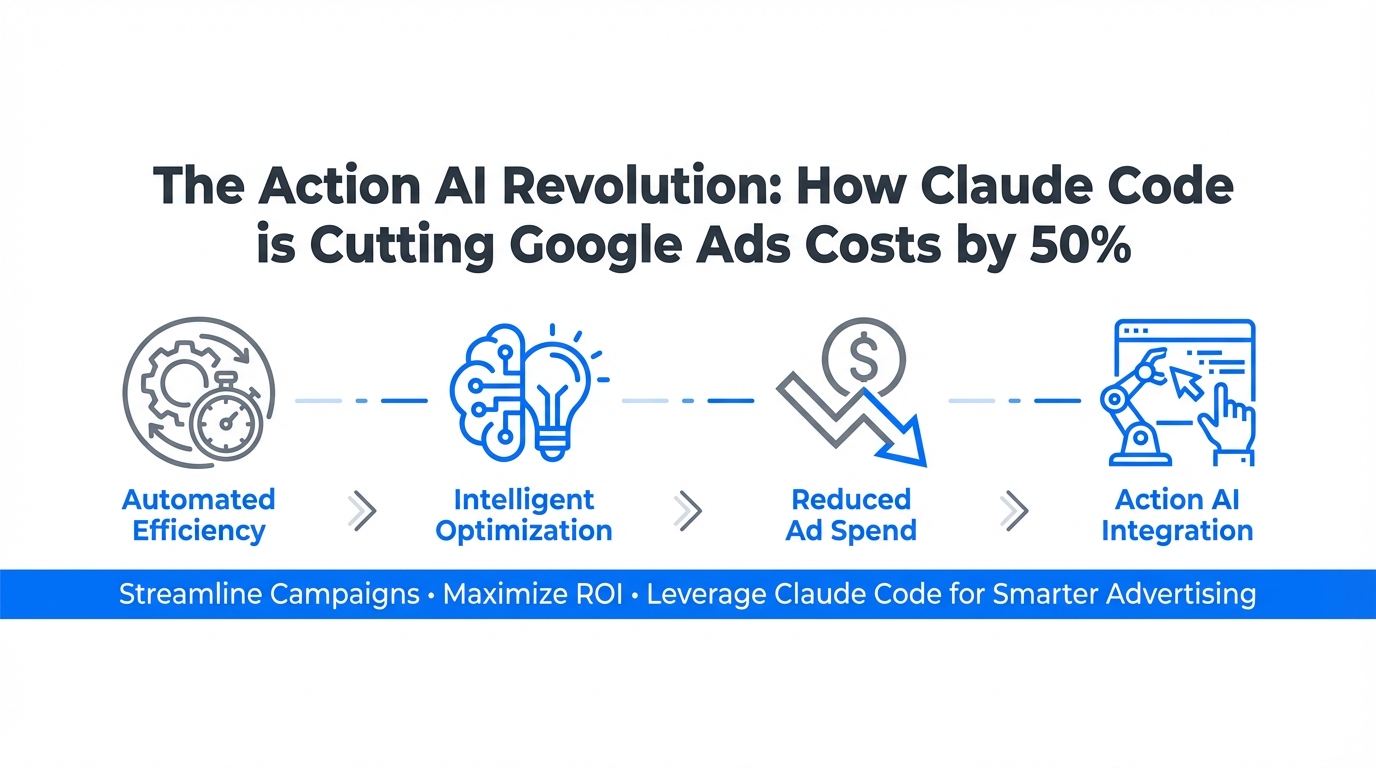
We have officially exited the era of "Chat AI"—that experimental phase where marketing teams spent hours massaging prompts just to generate a decent ad headline or a generic blog post. In 2025, the industry has shifted toward Action AI: a paradigm where artificial intelligence doesn't just talk about work, but executes it. For performance marketing leaders, this transition is manifesting in a 50% reduction in Google Ads costs and a fundamental change in how lean growth teams outcompete massive agencies.
The catalyst for this change is the rise of agentic workflows. Instead of human-in-the-loop cycles for every micro-task, marketers are now deploying "sub-agents" via tools like Claude Code. This isn't just about saving time; it's about reclaiming 75% of the bandwidth previously lost to repetitive keyword research and audit reporting. As we navigate the 78% adoption rate of AI in business functions, the focus has moved from "what can AI write?" to "what can AI do?"
The 2025 Shift: From Prompt Engineering to Agentic Workflows
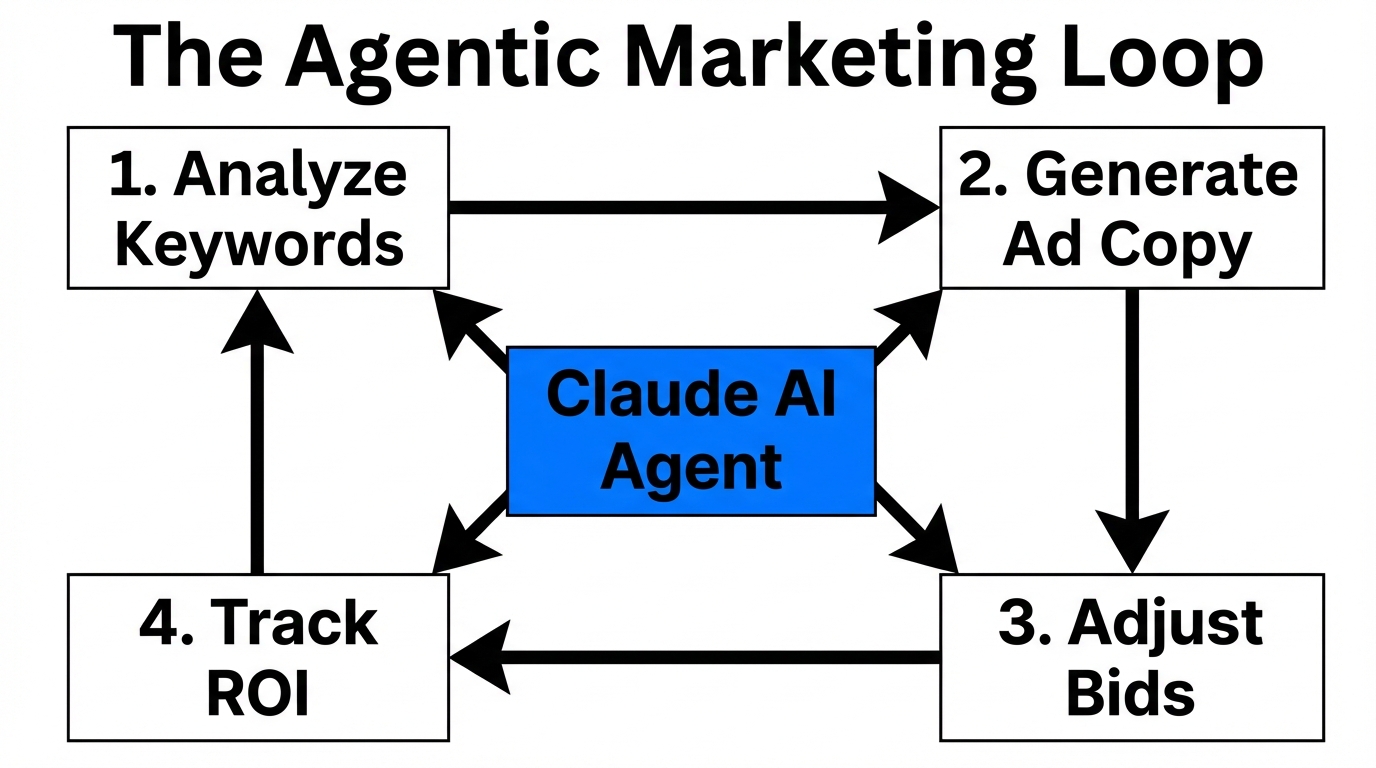
For the past two years, "prompt engineering" was the buzzword of the C-suite. However, the limitation was clear: prompts required constant human supervision. In 2025, we are seeing a move toward agentic workflows, where AI systems like Claude Code operate as autonomous units capable of navigating file systems, executing terminal commands, and making API calls to platforms like Google Ads.
This shift allows for performance marketing ROI levels previously thought impossible for small teams. By moving away from manual data exports and toward the Model Context Protocol (MCP), Claude can now pull live data directly from your ad accounts, analyze it against a Meta Ads benchmark, and update a Shopify inventory list—all without a single copy-paste action.
"Action AI is the standardized nervous system of modern marketing, turning static strategy into autonomous execution."
The Financial Impact: Cutting Costs While Increasing Conversions
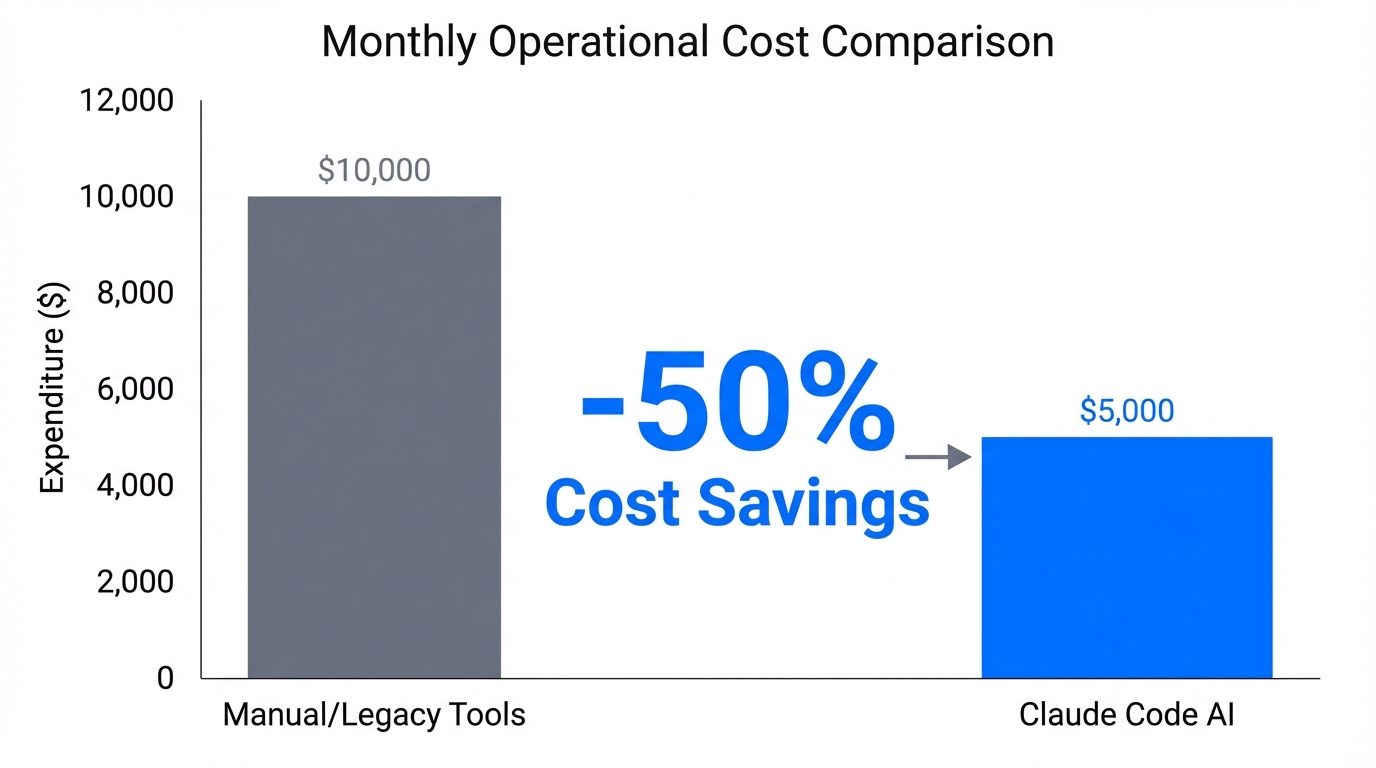
The primary driver for google ads automation in 2025 isn't just novelty—it's the bottom line. Recent data indicates that AI-driven optimization can reduce Google Ads costs by up to 50% while simultaneously increasing conversion rates by 30%. This is achieved by eliminating "bleeding" spend that human managers often miss due to the sheer volume of data.
| Metric | Traditional Management | Action AI (Claude Code) | Impact |
|---|---|---|---|
| Daily Audit Frequency | Once per day | Real-time / Hourly | Immediate Pivot |
| Keyword Pruning | Manual Weekly Review | Automated via MCP | -40% Waste |
| Ad Copy Iteration | 3-5 variations per month | 10+ variations per week | +30% CTR |
| Data Analysis Time | 4-6 hours | Seconds | 75% Time Saved |
By using claude ai for business, teams can implement "Vibe Marketing." This trend allows lean growth teams to manage enterprise-level budgets by replacing traditional agency overhead with high-speed AI agent chains. Instead of paying a 15% management fee to an agency, brands are investing in their own AI infrastructure to achieve better marketing cost reduction.
The Playbook: Setting Up Your Action AI Environment
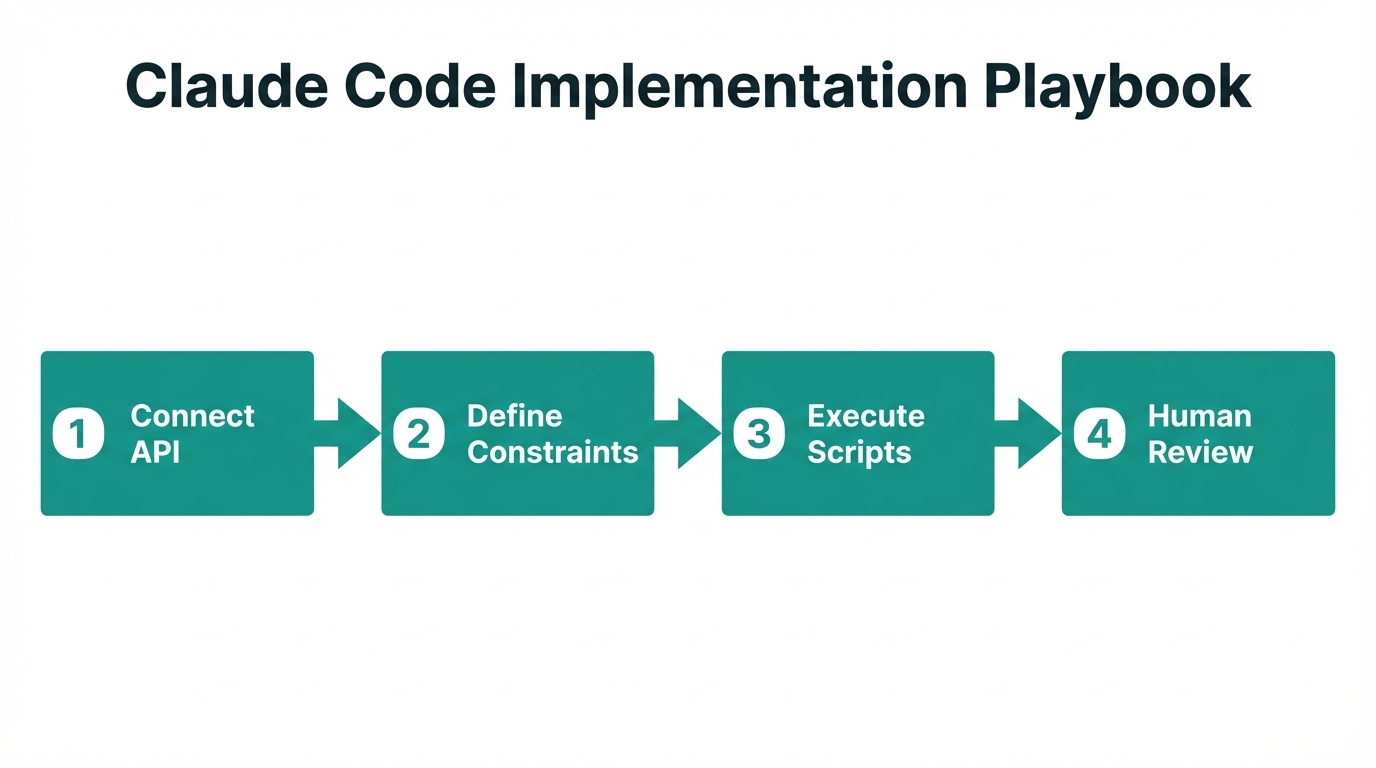
If you want to move beyond basic chatbots, you need to set up a terminal-based environment. This allows Claude to act as a "Vibe Coder," writing and deploying Google Ads scripts directly into your account.
Step 1: Install the Environment
Start by installing the official CLI tool. Use the command npm install -g @anthropic-ai/claude-code. This gives you a direct line to Anthropic's most advanced reasoning model via your terminal, enabling it to interact with your local files and external APIs.
Step 2: Connect to Ad Data via MCP
Use a connector like GAQL.app to generate a secure token. This is the bridge that lets Claude "see" your account data without manual CSV exports. For more complex setups, you can explore specialized MCP servers like Flyweel, which are designed specifically for ad data retrieval.
Step 3: Integrate Logic with n8n
To create truly autonomous workflows, integrate Claude with n8n. You can set up "if-then" logic, such as: "If ROAS drops below 2.0 in the last 4 hours, have Claude pause the ad group and notify the team on Slack." This creates a fail-safe system that operates while you sleep.
Advanced Use Cases: Negative Keywords and Bid Pacing
The real power of google ads automation lies in its ability to perform surgical tasks at scale. One of the most effective strategies is Negative Keyword Pruning. You can instruct Claude to analyze search term reports via MCP and identify keywords with high spend but zero conversions. Agencies using these "sub-agents" report a 75% reduction in time spent on these repetitive maintenance tasks.
Another high-ROI use case is Automated Ad Copy Refreshes. By using the /ads plan skill, marketers can generate dozens of variations of Responsive Search Ads (RSAs) based on historical performance data. This ensures that your creative never fatigues, which is a common pitfall in ai marketing trends 2025. For brands heavily invested in influencer marketing or UGC, tools like Stormy AI can complement this by sourcing high-performing creators whose content can be turned into these automated ad variations.
"The brands winning in 2025 aren't the ones with the biggest budgets, but the ones with the most efficient AI agent chains."
Lessons from the Giants: Nike and Starbucks
Enterprise brands are already leading the way in predictive AI. Nike and Starbucks utilize custom AI models like "Deep Brew" to personal ad delivery and product recommendations at a massive scale. Previously, this level of sophistication required a team of data scientists. Today, Claude's coding capabilities make these predictive analytics accessible to mid-market brands.
For instance, developers have built tools like "Claude Ads," a skill featuring over 190 PPC audit checks that can run across Google, Meta, and TikTok simultaneously. This level of cross-platform auditing ensures that a brand's message remains consistent while budgets are shifted dynamically to the highest-performing channel.
Mitigating the 'Error Gap': Why Experts Still Matter
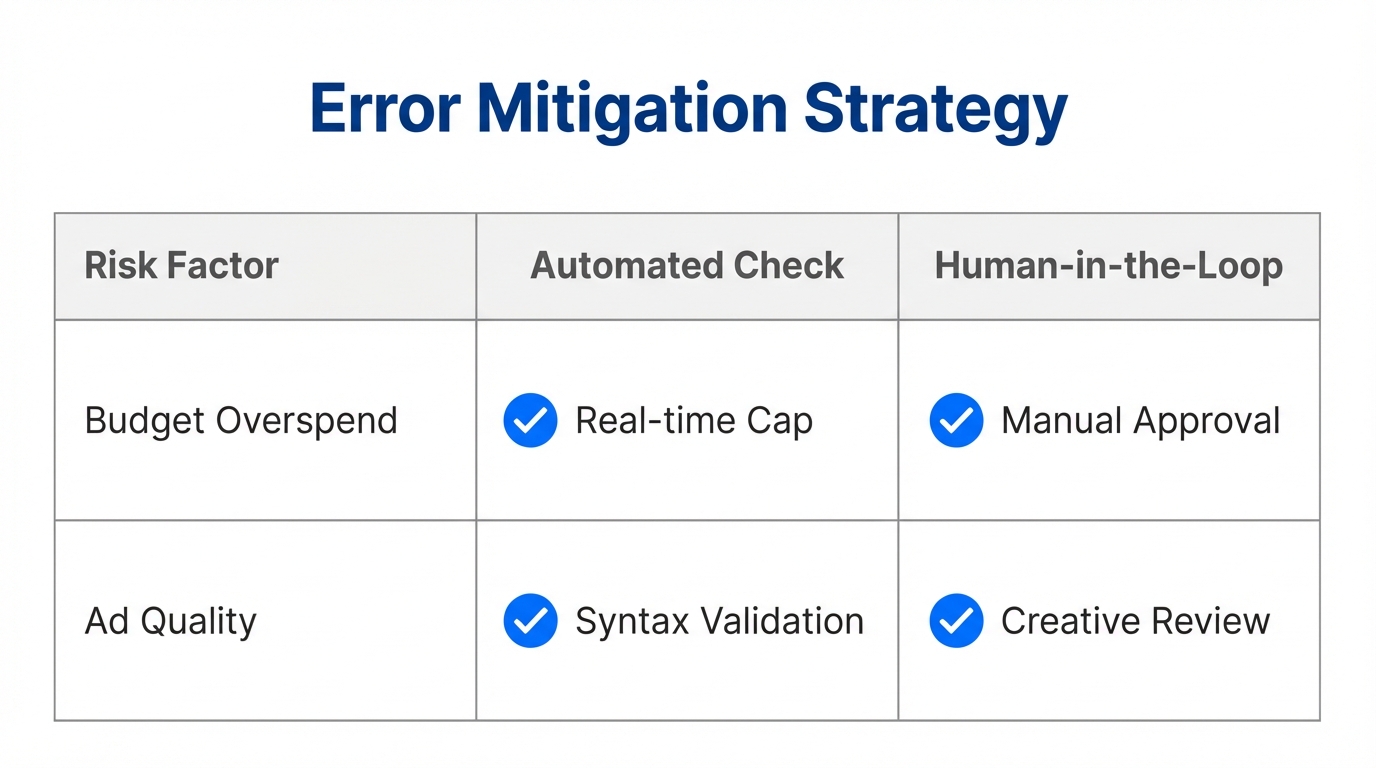
Despite the revolutionary gains, the "Error Gap" remains a significant risk. A 2025 study found a 20% average error rate in AI-generated PPC advice. This is often caused by "hallucinated" bidding strategies or technical misunderstandings of the Google Ads API.
To avoid these pitfalls, marketing leaders must implement several safeguards:
- Portfolio Bidding Strategies: Never let an AI set bids without a "Max CPC" cap. This prevents budget spikes if the AI over-optimizes for a high-cost keyword.
- Avoid the Context Death Spiral: Don't create new chat windows for every task. Use Claude Projects or
CLAUDE.mdfiles to maintain brand guidelines and technical constraints across sessions. - Native Conversion Tracking: Avoid the mistake of importing 'blind' data from GA4. Set up conversions natively in Google Ads so the AI has the most direct feedback loop possible.
- Human Creative Oversight: While AI can generate images, over-automation of creative assets can lead to brand confusion. Always have a creative director review the final outputs.
Conclusion: Embracing the Action AI Revolution
The shift from Chat AI to Action AI is the most significant change in digital marketing since the introduction of Smart Bidding. By leveraging Claude Code and agentic workflows, brands can achieve a marketing cost reduction that was once reserved for the Fortune 500. Whether it is through automating negative keyword lists or using Stormy AI to discover the next generation of UGC creators for your ads, the goal is the same: maximum ROI with minimum manual overhead.
As we move deeper into 2025, the competitive advantage will lie with those who can effectively manage these AI "sub-agents." The tools are here, the scripts are ready, and the 50% cost reduction is waiting. It is time to stop prompting and start acting.