In the high-stakes landscape of 2026, the traditional ‘build-and-hope’ model of startup growth has officially hit a wall. For years, founders believed that if they spent eighteen months in stealth mode perfecting a product, the users would miraculously appear on launch day. Today, that approach is not just risky—it is the most expensive way to fail. With customer acquisition costs (CAC) reaching all-time highs on platforms like Meta Ads, the smartest entrepreneurs are reversing the script. They are using the ACP Framework to guarantee market fit before a single line of code is even written.
Why the ‘Product-First’ Approach is the Most Expensive Way to Fail in 2026
The 2026 economy is defined by attention scarcity. The hardest part of building a business today isn’t the execution; it is getting people to pay attention. When you start with a product, you are essentially ‘renting’ an audience through paid advertising or luck. If the algorithm shifts or your ad budget dries up, your business vanishes. This is what many industry experts call ‘soul-destroying’—launching a polished product to a room of zero people.
Bootstrap founders can no longer afford to burn years of runway hoping for organic discovery. To survive, you must ‘dig the well before you need the water.’ according to the philosophy popularized by Harvey Mackay. By the time you are ready to sell, you should already have a line of customers waiting at the door. Modern growth now relies on organic growth for startups that treat attention as an asset rather than an expense.
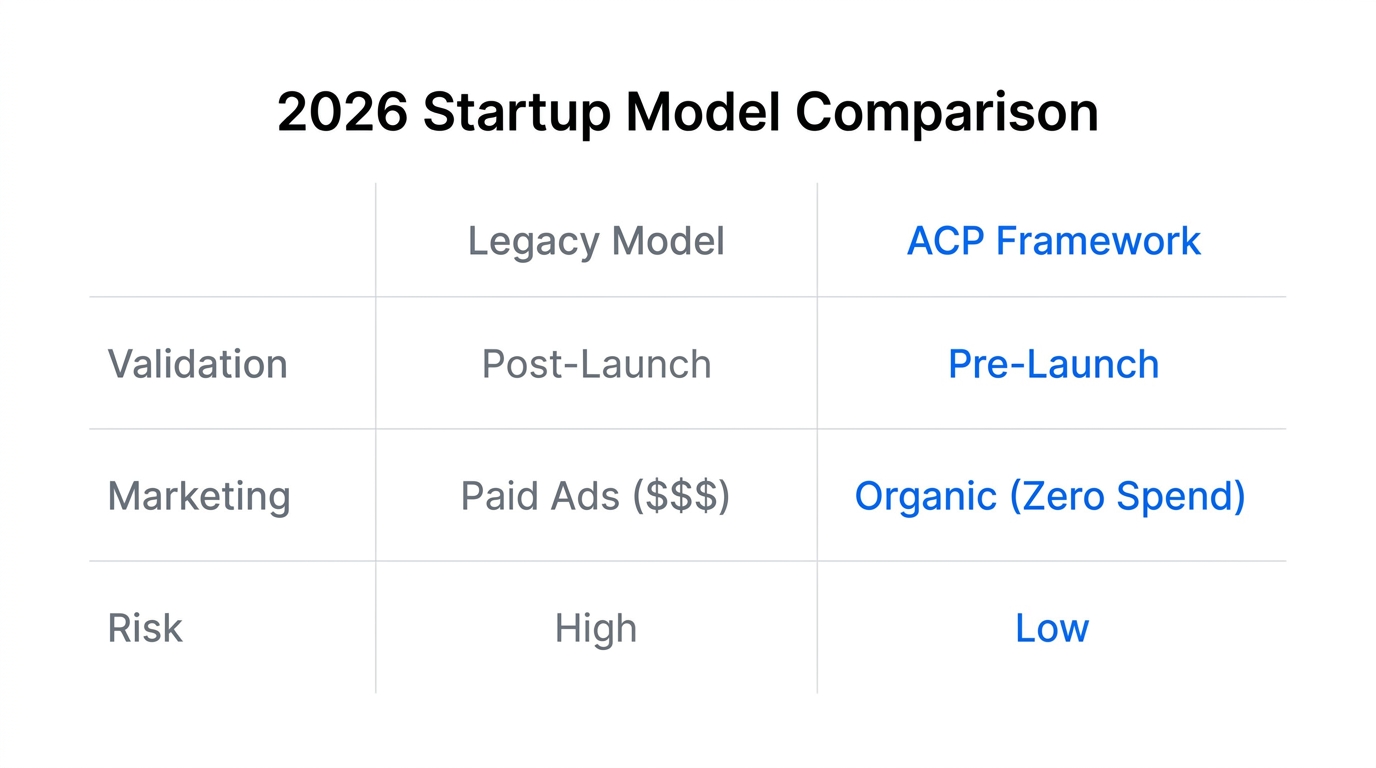
| Feature | Traditional Product-First Model | ACP Framework (Audience-First) |
|---|---|---|
| Primary Risk | Building something nobody wants | Spending time on content that doesn't resonate |
| Validation | Post-launch (Expensive) | Pre-launch (Free/Low Cost) |
| Feedback Loop | Slow; requires shipping code | Instant; based on content engagement |
| Marketing Cost | High (Paid Ads/Sponsorships) | Zero/Organic (Owned Media) |
Defining the ACP Framework: Audience, Community, Product
 1:43
1:43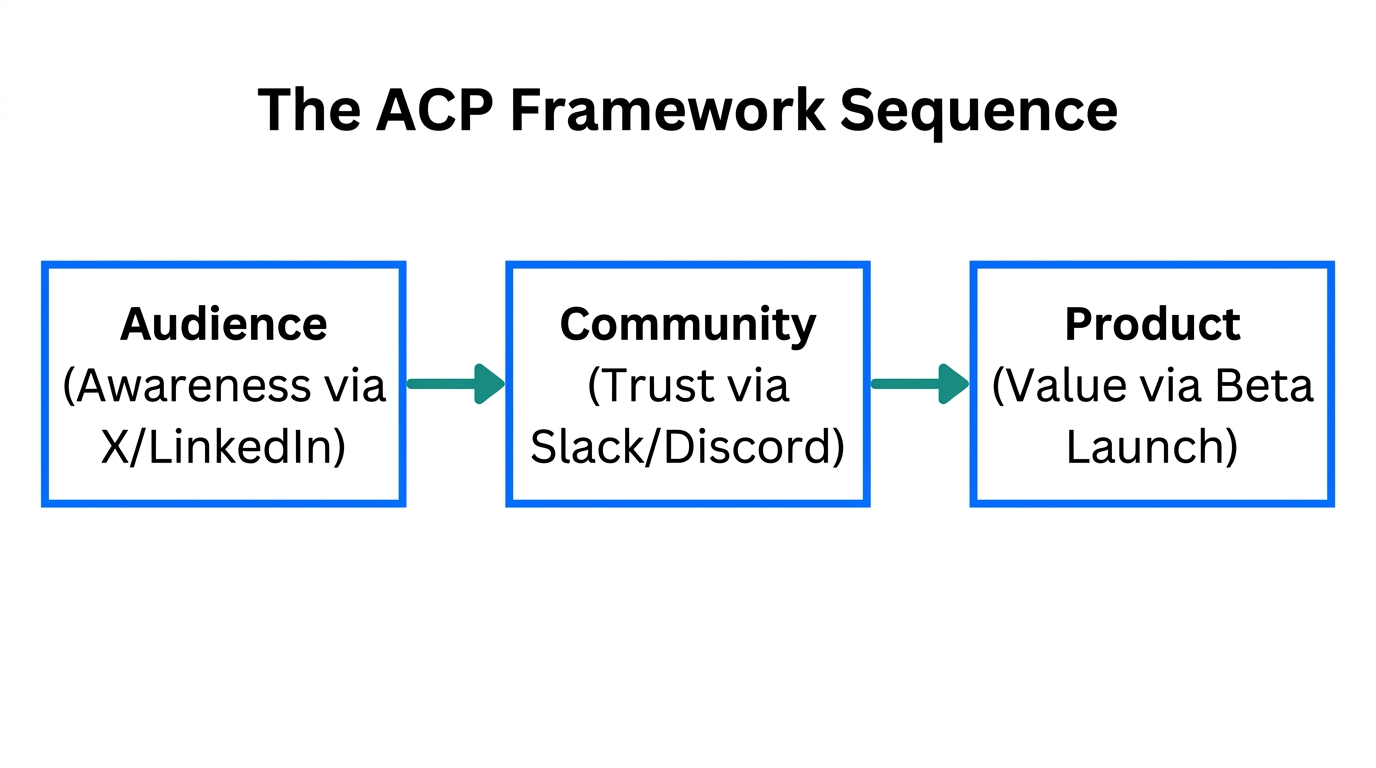
The ACP Framework, popularized by founders like Nathan Barry, is a sequential three-step playbook for building a modern startup. It stands for Audience, Community, and Product. The order is non-negotiable. If you skip to the end, you lose the compounding dividends of trust that define successful brands in 2026.
- Audience (A): Identifying and reaching people in your niche who are passionate about a topic but underserved in some way. This is the broad reach phase.
- Community (C): Transitioning your audience into ‘hardcore people.’ These are the individuals who interact with you, provide feedback, and feel a sense of belonging.
- Product (P): The final step where you sell a solution to the problems your audience has already told you they have.
"Starting with the audience gives you options and confidence. There is nothing more valuable than an audience to fall back on—it is your ultimate insurance policy."
Step-by-Step Guide to Identifying Your Target Niche
To succeed with an audience-first startup, you must identify what your audience is not getting from others. In 2026, the internet is saturated with generic advice. To stand out, you need to provide ‘the sauce’—radical transparency and high-execution insights that others are gatekeeping.
1. Find the ‘Sauce’
Ask yourself: What can I share that feels like a competitive advantage? If you are a ‘vibe coder’ or a marketer, don't just share results; share the exact playbook. For example, using automation tools like Zapier to discover creators and then detailing the exact conversion rates of your outreach emails is ‘sauce.’ It provides value that a generic ‘how-to’ post cannot match.
2. Broaden to Narrow
If you aren't getting engagement, you might have picked a niche that is too small for the algorithm to find. Start one level broader (e.g., ‘UX Design’) to build momentum on platforms like LinkedIn, then funnel that traffic down to your specific niche (e.g., ‘Design Sprints for AI Apps’).
The ‘Dig the Well’ Philosophy: Cultivating Community
16:05Once you have an audience, you must convert them into a community. This is where you move from 1-to-Many communication to 1-to-1 or Many-to-Many interaction. In 2026, trust is the only currency that isn't inflating. Community is the bridge that turns a follower into a customer.
One of the most effective tactics for this is the ‘Reply Guy’ strategy on X. By consistently replying to major voices in your niche with insightful, valuable comments, you build a reputation before you ever ask for a follow. This is the creator economy trend of 2026: being a participant in the conversation rather than just a broadcaster, a trend highlighted in recent Goldman Sachs research.
"Building an audience is like an index fund; the dividends build and compound over the years, providing security during any market recession."
Phase 3: Treating Content Like a Product
30:53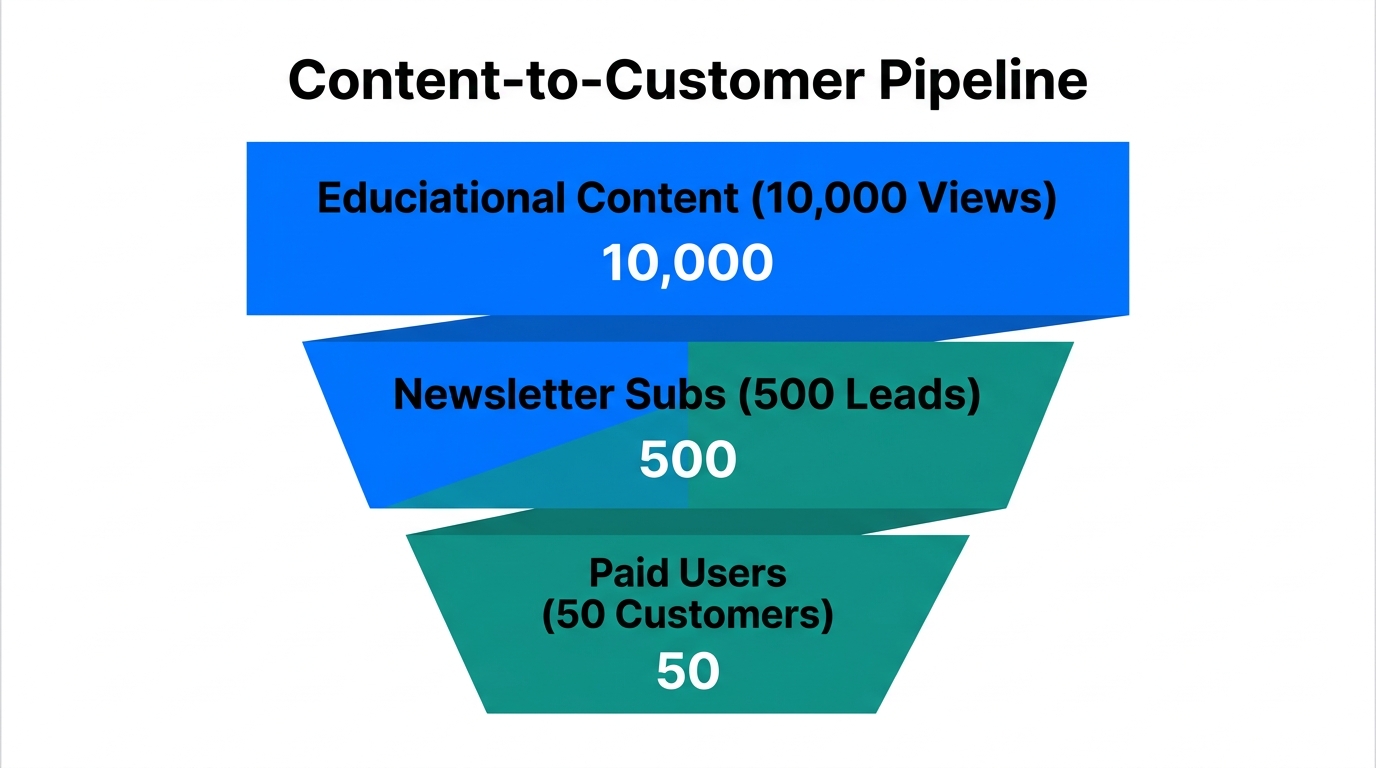
In the ACP Framework, your content is your Minimum Viable Product (MVP). Every tweet, newsletter on Beehiiv, or video is a test of a potential feature. If a post about a specific problem goes viral, that is your signal to build a product that solves that problem.
By using tools like Stormy AI, you can track which topics are trending among creators and use those insights to inform your product roadmap. This ensures that when you finally launch, you aren't guessing. You are simply fulfilling a demand you've already measured.
Systems: How to Stay Consistent Without Burnout
20:24Building an audience-first startup requires rigor. You cannot rely on ‘vibe-based’ posting. You need a system that treats content creation with the same importance as product development. Organic growth for startups is a marathon, not a sprint.
- Ideas Capture System: Use simple tools like Apple Notes or Notion to record every spark of creativity throughout the day.
- Creative Faucet Routine: Figure out what gets your juices flowing—whether it’s listening to podcasts or analyzing creator trends.
- Batching: Set a specific day (e.g., Friday) to turn your raw ideas into high-quality posts and newsletters.
- Scheduling: Use tools like Buffer or native platform schedulers to ensure your ‘A’ and ‘C’ phases are always active, even while you sleep.
Conclusion: Scaling Faster with Zero Ad Spend
The ACP Framework isn't just a marketing tactic; it is a fundamental shift in how businesses are built in 2026. By starting with the audience, you build insurance. If your current startup fails, your audience remains. You can pivot, launch a new product, or even land a high-tier job because you have built a foundation of trust and authority.
Stop focusing on the ‘P’ and start obsessing over the ‘A.’ Find your niche, give away the sauce, and dig your well today. If you're ready to start sourcing the creators who will help you build that first layer of audience, you can discover creators on Stormy AI and begin your journey toward a truly resilient, audience-first startup.