In the hyper-competitive landscape of 2025, waiting for manual content creation to move the needle on your bottom line is a recipe for stagnation. With global ecommerce sales projected to reach $6.42 trillion this year according to Backlinko, the window for capturing market share is narrowing. While traditional SEO focuses on high-volume keywords, the real winners are utilizing programmatic SEO for ecommerce to dominate the long-tail. Organic search remains the powerhouse of digital commerce, driving over 60% of global traffic. This guide provides a battle-tested 90-day ecommerce SEO roadmap designed to automate your growth and secure organic revenue growth at scale.
The 2025 Programmatic SEO Landscape
Programmatic SEO (pSEO) is no longer a niche tactic for travel sites or directories; it is the fundamental engine for modern ecommerce scaling. Currently, Google maintains a dominant 90.4% global search market share as noted by Statcounter, which means your strategy must be perfectly aligned with their technical requirements. However, the game is shifting. We are moving toward Generative Engine Optimization (GEO), where pages must not only rank but also be cited by AI assistants like ChatGPT and Gemini. Research from Princeton researchers suggests that brands are now optimizing for "Agentic AI"—autonomous shopping agents that prioritize structured data and high-value landing pages.
"The future of search belongs to those who can build high-quality pages at the speed of data, ensuring they meet the 'value threshold' required by modern AI crawlers."
The Value Threshold Framework: Avoiding the 'Thin Content' Trap
One of the biggest risks in any pSEO strategy is being flagged for low-value content. Experts emphasize the Value Threshold Framework. This framework dictates that every programmatic page must "deserve to exist" by offering unique utility. If you find that 90% of your generated pages are not being indexed, it is a clear sign you have failed this threshold. To avoid this, you must move beyond raw manufacturer descriptions. According to Google Search Central, using duplicate manufacturer copy is one of the most common mistakes that triggers duplicate content filters. Instead, use AI tools to rewrite and enrich your product data with unique insights, customer reviews, and dynamic FAQs.
Success in programmatic SEO requires a data-first mindset. You aren't just building pages; you are building a database that Google can trust. This involves using tools like Clay for data enrichment and DataForSEO to pull real-time SERP data. By layering these data points, you create pages that offer more than just a product listing—they provide comparisons, usage guides, and localized information that AI agents value.
The 90-Day Scaling Protocol: Step-by-Step Execution
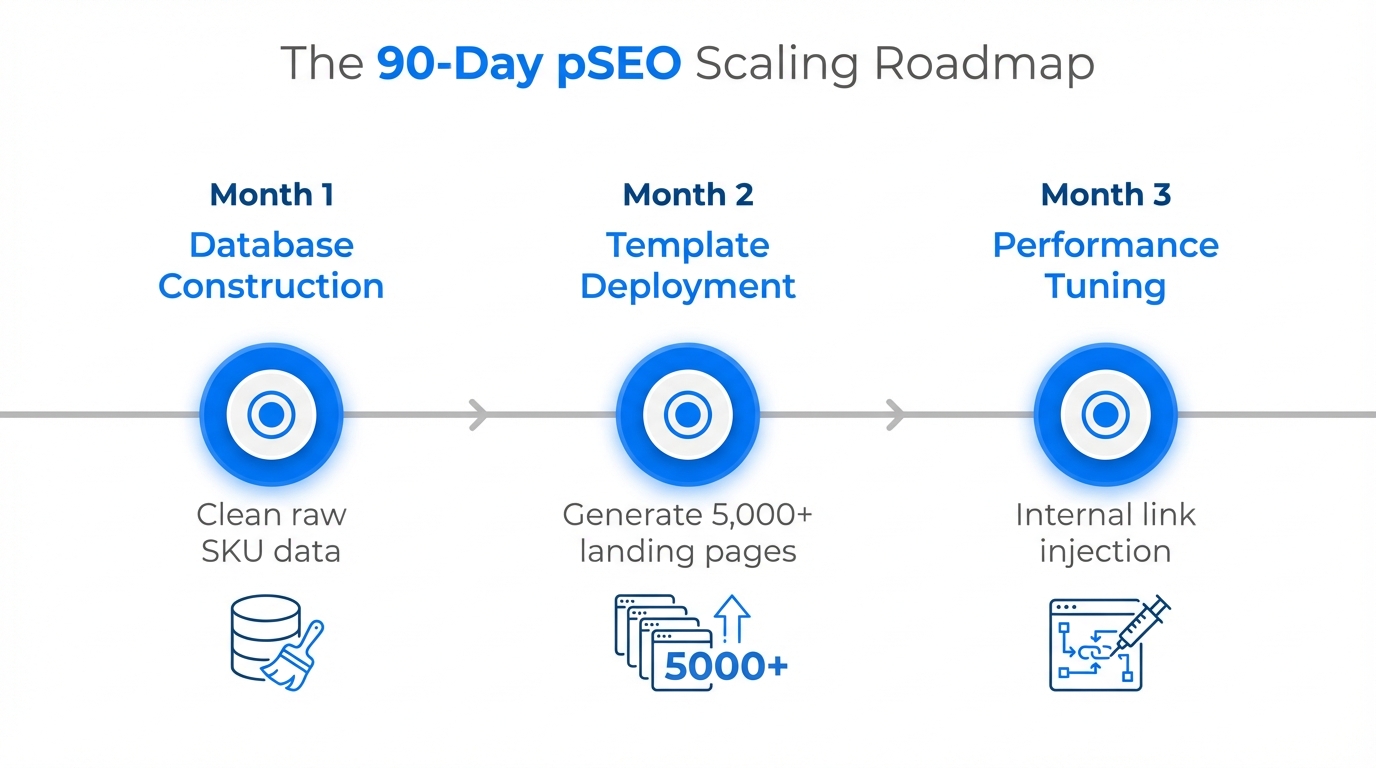
Scaling organic traffic isn't an overnight switch; it is a calculated pSEO strategy that evolves over three distinct phases. Following the protocol outlined by industry leaders, we can break down the roadmap into 30-day blocks.
Phase 1: Days 1–30 (Audit & Pilot)
Start with a deep data audit. Identify your keyword gaps using Ahrefs and determine which long-tail modifiers (e.g., "best for [use case]" or "[product] vs [competitor]") have the highest intent. Once your dataset is clean, launch a 100-page pilot program. This pilot allows you to test your templates, monitor how Google crawls your new structure, and identify any technical bottlenecks before going full scale. Focus on high-intent long-tail keywords that have low difficulty but clear transactional value.
Phase 2: Days 31–60 (Refine & Index)
Monitor your indexation rates obsessively during this period. Tools like Indexly can help speed up this process for Shopify stores. If your pages aren't indexing, revisit the Value Threshold. Are the pages too thin? Is the content too repetitive? This is also the time to implement internal linking density. A common rule is to maintain 5–15 internal links per page to prevent orphan pages. By linking from established high-authority pages to your new programmatic pages, you signal their importance to search engines as highlighted in Moz's SEO guide.
Phase 3: Days 61–90 (Full-Scale Deployment)
Once your pilot pages are ranking and the technical foundation is stable, it is time for scaling ecommerce organic traffic at full throttle. Deploy your templates across your entire database, aiming for 1,000+ pages. At this stage, you should be using automation tools like Make.com to sync your data sheets with your CMS seamlessly. Watch for "perception drift"—a metric that measures how AI models categorize your brand authority as your page count grows.
"Organic revenue growth is the result of technical precision meeting creative automation. Scale the system, and the revenue follows."
The Programmatic SEO Tech Stack
Choosing the right tools is the difference between a successful rollout and a technical nightmare. Depending on your platform, your ecommerce SEO roadmap will look different. For instance, brands looking to inject authentic social proof into their pages can use platforms like Stormy AI to discover creators who can generate the UGC needed to make programmatic pages feel less automated and more human-centric.
| Platform | Key Scaling Tool | Primary Function |
|---|---|---|
| Shopify | Alli AI | Bulk on-page & meta optimization |
| Magento | Amasty SEO | Automated SKU meta templates |
| WooCommerce | SEOmatic | Spin syntax & landing page generation |
| Any | Clay | Data enrichment & scraping |
Beyond basic metadata, focus on structured data. As we move toward 2026, "Autonomous Shopping Agents" will rely heavily on Schema.org markup to understand product relationships. Using a tool like Rank Math for bulk schema implementation ensures your programmatic pages are ready for the AI-first search era.
Internal Linking: The Secret to Crawlability
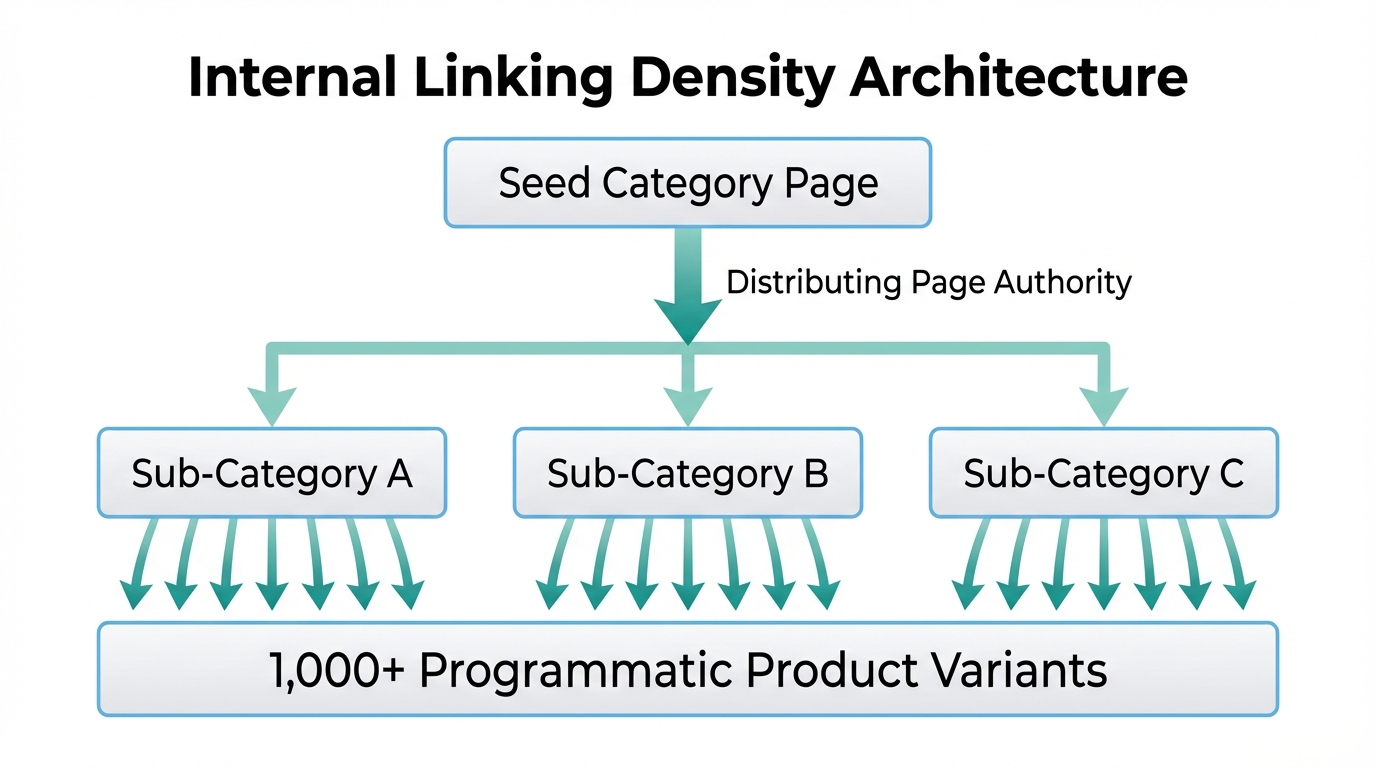
Many pSEO projects fail because their pages become "orphans"—isolated nodes that search engine spiders never reach. To avoid this, you must implement an internal linking density strategy. Research indicates that pages with 5–15 internal links are indexed faster and rank higher. This can be achieved through:
- Dynamic Breadcrumbs: Creating a clear hierarchy for both users and bots as per Google's best practices.
- Related Product Modules: Using AI to suggest products based on intent, not just category.
- Content Hubs: Centralized pages that link out to hundreds of long-tail sub-pages.
When sourcing content for these hubs, modern marketers are turning to AI-driven tools. For example, Stormy AI helps ecommerce brands source and manage UGC creators at scale, providing the unique video and image content that search engines crave to distinguish your pages from the competition.
Revenue Projections: What to Expect
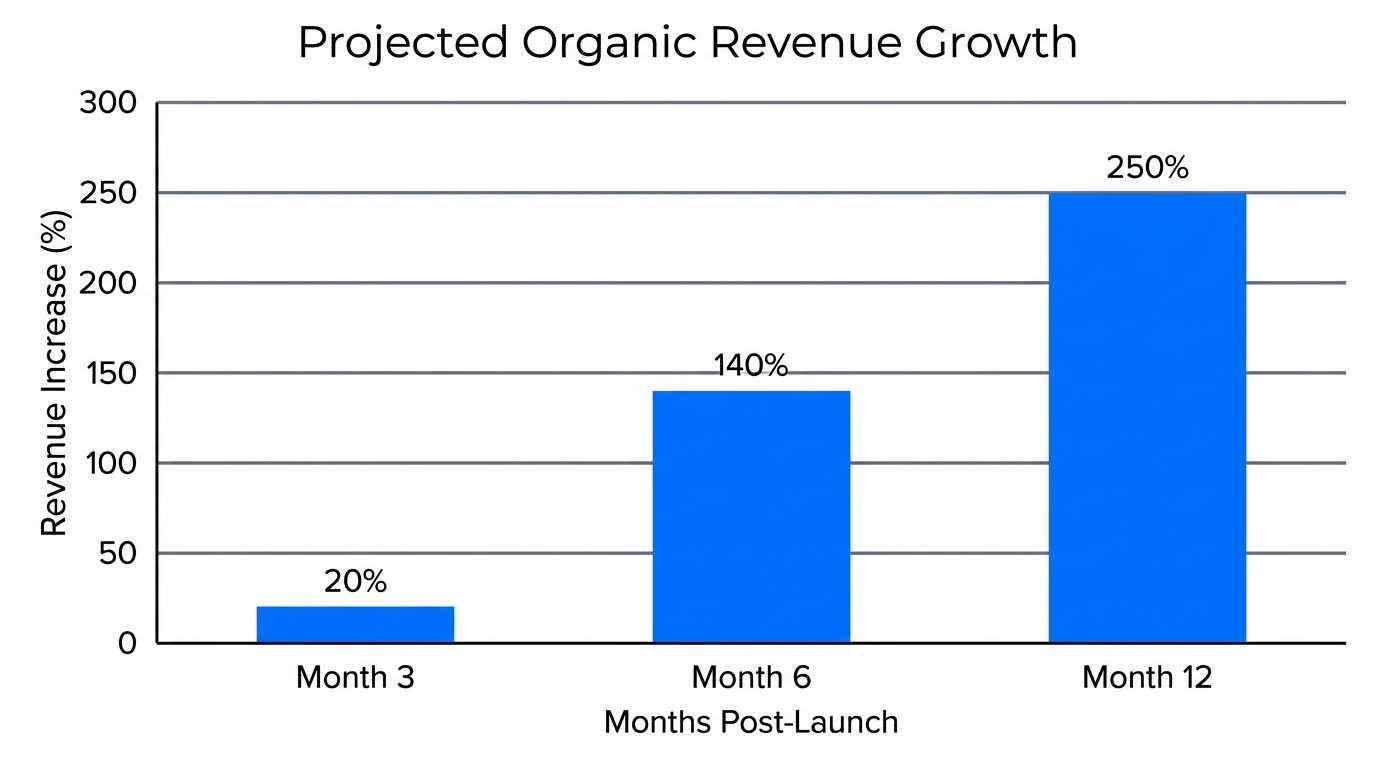
The goal of scaling ecommerce organic traffic is ultimately organic revenue growth. Case studies show that companies targeting high-intent long-tail keywords can see signups explode by over 3,000% in under a year. By Day 90 of your protocol, you should see the first signs of this growth. Based on current market trends, a successful pSEO deployment typically delivers a 40% to 250% increase in organic revenue within the first six months. This is because programmatic pages often target keywords closer to the bottom of the funnel—where users are ready to buy, but competitors haven't built specific pages for them yet.
"The 90-day mark is the tipping point. This is where the compound interest of your technical foundation and content automation starts to dominate the SERPs."
Conclusion: Your 90-Day Roadmap to Dominance
The ecommerce SEO roadmap for 2025 and 2026 is clear: automate the technical, enrich the data, and humanize the content. By following the 90-Day Scaling Protocol and adhering to the Value Threshold Framework, you can transform your ecommerce store into a traffic-generating machine. Remember to focus on internal linking density to ensure every page is reachable, and use programmatic SEO for ecommerce to capture the long-tail intent that generic category pages miss. The era of manual page-building is over; the era of programmatic revenue has begun. Start your audit today, launch your 100-page pilot, and prepare for a transformative shift in your organic performance.