The era of "talking to AI" is officially over. In 2026, the marketing landscape has shifted from basic chatbots to autonomous execution agents that don't just suggest optimizations—they perform them. Leading this revolution is OpenClaw (the framework formerly known as Moltbot), which has surged to over 247,000 GitHub stars as marketers abandon traditional SaaS for private, system-level execution. For growth marketers, mastering this Age of Execution Agents isn't just an advantage; it's a survival requirement for scaling Google Ads in a hyper-competitive environment.
The Fundamental Shift: From Chatbots to Execution Agents
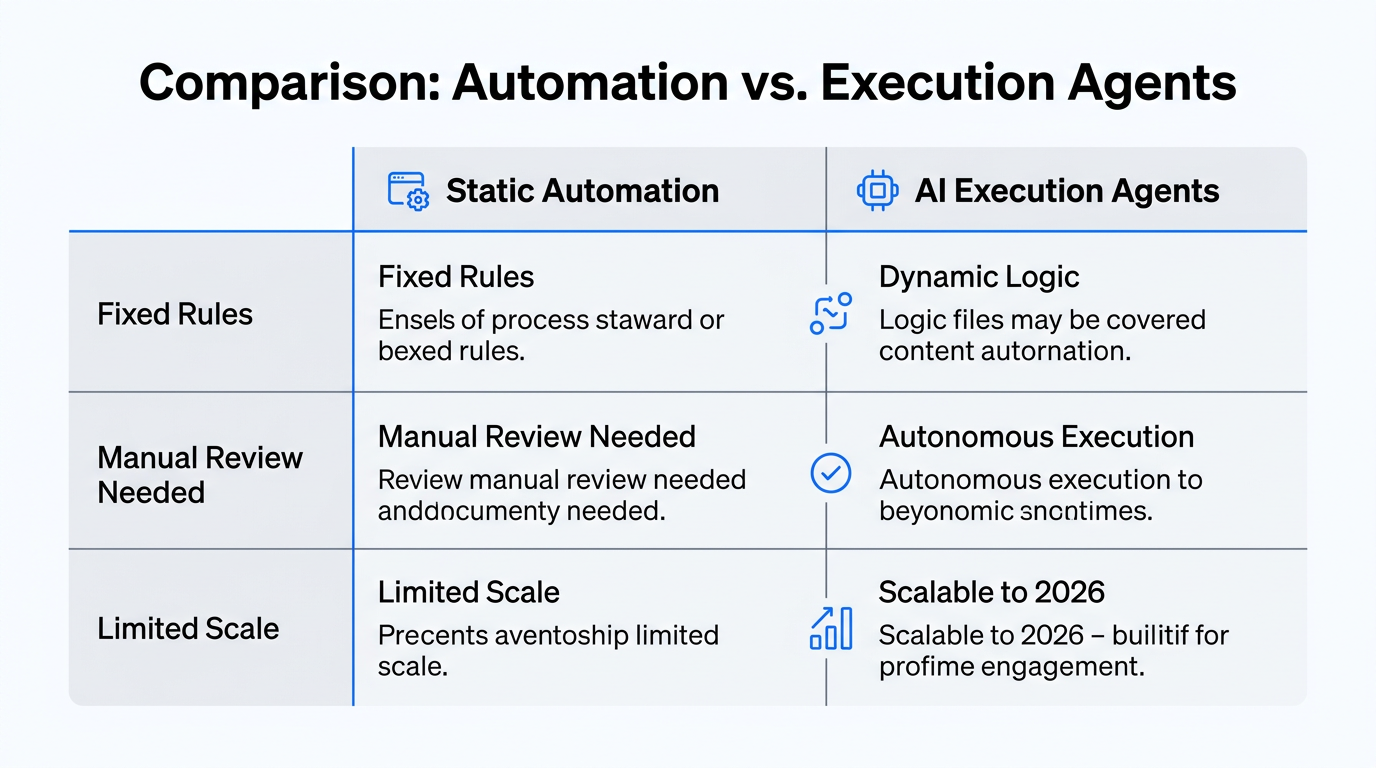
By early 2026, the industry consensus has pivoted. We are no longer satisfied with an AI that tells us our Click-Through Rate (CTR) is low; we demand an agent that identifies the cause, drafts new copy, and updates the campaign while we sleep. According to industry experts from Salesforce's State of Marketing reports, 88% of marketers are expected to utilize autonomous agents for at least 50% of their workflow by the end of this year.
"The focus has shifted from agents that talk to agents that do. If your marketing stack isn't executing autonomously in 2026, you're already behind."
This transition is driven by the need for speed and precision. While a human manager might check an account once a day, an OpenClaw agent monitors it 2,880 times every 24 hours. This constant oversight is why accounts using automated auditing see a 2.5–4% higher conversion rate compared to those relying on manual oversight.
1. The Performance Auditor
The first and most critical skill for any OpenClaw Google Ads strategy is the Performance Auditor. This skill acts as a 24/7 security guard for your budget. It automatically scans accounts for "budget leaks," such as keywords spending over $500 with zero conversions or technical failures where the Google Tag isn't firing correctly.
A common mistake marketers make is failing to set ROI Thresholds in the agent's memory. Without these bounds, the agent might flag high-spend keywords that actually carry significant assisted-conversion value. To avoid this, always pair your auditor with multi-touch attribution data to give the agent the full picture of the customer journey.
2. Bid & Budget Manager
Gone are the days of manual weekly bid adjustments. The Bid & Budget Manager skill dynamically reallocates funds from underperforming campaigns to "winners" in real-time. Whether you are optimizing for Target CPA (tCPA) or Return on Ad Spend (ROAS), this agent ensures your capital is always flowing toward the highest-probability conversions.
Real-world applications of this are transformative. For instance, a B2B SaaS founder recently maintained a consistent 1.8x ROAS while traveling for several weeks, simply by allowing an OpenClaw agent to manage budget shifts via a Telegram integration. This level of autonomy allows founders and growth leads to focus on high-level strategy rather than daily bid tweaks.
3. The Creative Analyst
Creative fatigue is the silent killer of performance marketing. The Creative Analyst skill diagnoses this by tracking CTR decay across 7, 14, and 30-day windows. When the agent detects a 20% drop in performance, it doesn't just send a notification—it triggers a Creative Refresh Loop.
This loop can include:
- Drafting three new headline variations using historical top-performers.
- Notifying the design team via Slack or Linear that new assets are required.
- Referencing influencer-led content trends to suggest new UGC angles.
Agencies utilizing this specific skill report saving 12–13 hours per week on routine creative reporting and management. For brands looking to scale further, platforms like Stormy AI can streamline the discovery of new creators to provide the fresh visual assets these agents demand.
"Automating the detection of creative fatigue is the difference between a campaign that lasts a week and one that scales for a year."
4. Keyword Opportunity Finder
In 2026, search behavior is changing rapidly due to Google’s AI Overviews (SGE). The Keyword Opportunity Finder scans search term reports (STR) to find high-intent queries that didn't exist a month ago. By capturing these "long-tail" trends before the competition, marketers have reported a 22% boost in ROAS.
| Metric | Manual Management | OpenClaw Agentic Workflow |
|---|---|---|
| Time Spent on Keywords | 5-8 Hours/Week | < 30 Minutes/Week | New Keywords Found | Bi-weekly checks | Real-time Discovery | ROAS Improvement | Baseline | +22% Average |
To maximize this skill, use "Qualification Criteria" logic. This ensures the agent only adds keywords with transactional intent (e.g., "buy," "best price," "trial"), effectively filtering out purely informational queries that waste budget without driving sales.
5. Budget Pacing Monitor
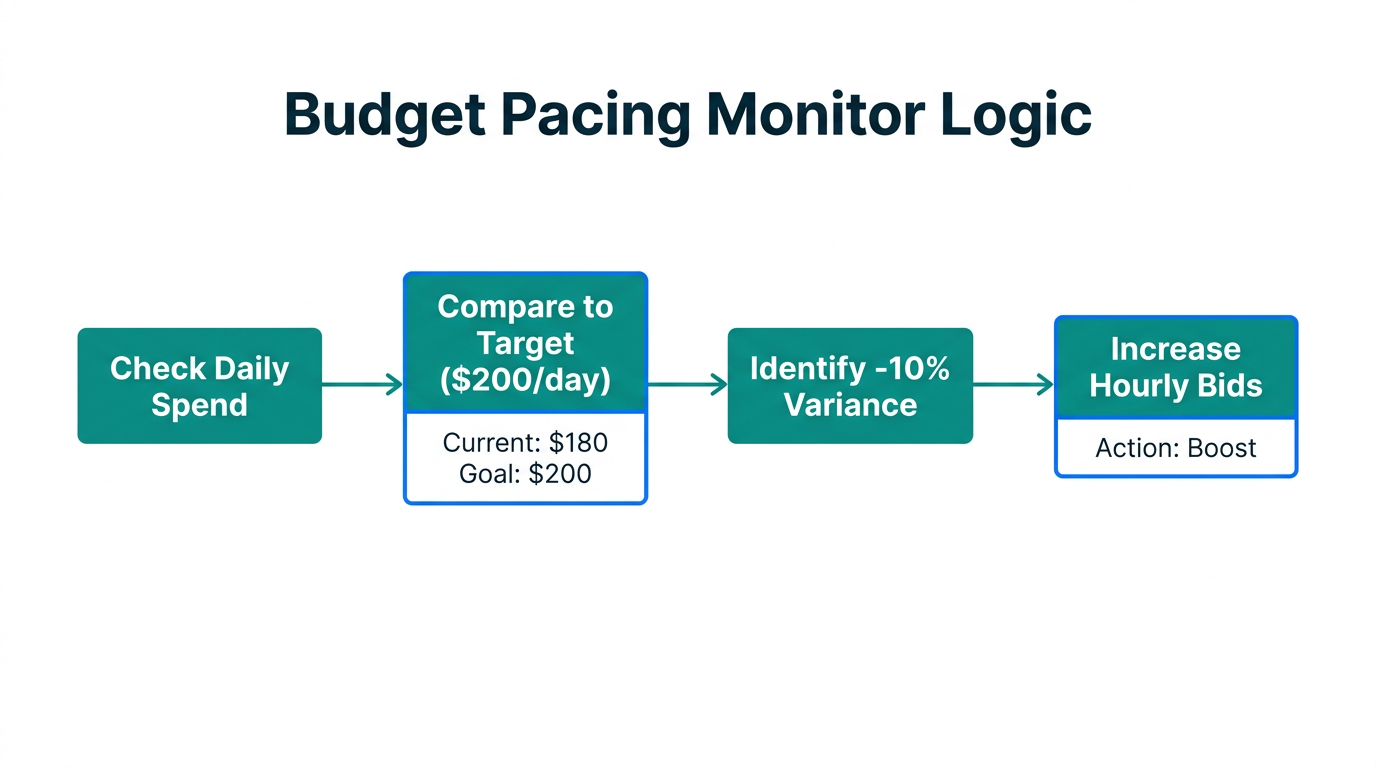
Few things are as frustrating as a campaign that exhausts its budget by 10 AM or, conversely, fails to spend its allocation by the end of the month. The Budget Pacing Monitor skill uses historical data to predict month-end spend and adjusts daily caps to ensure a smooth delivery.
You can configure a "Watcher" notification through tools like LobeHub that alerts your team if a campaign is 30% under-paced by the 15th of the month. This proactive approach prevents the "end-of-month panic" where managers desperately hike budgets to hit targets, usually at a much higher CPA.
6. Audience Architect
The Audience Architect skill bridges the gap between your CRM and your ad account. In 2026, the most successful brands use agents to build Value-Based lookalike audiences autonomously. The agent analyzes which customer segments have the highest Lifetime Value (LTV) and creates exclusion lists for segments where internal competition is driving up CPMs.
By cleaning audience exclusion gaps, marketers can reduce wasted reach by up to 15%. This is particularly effective in high-competition sectors like e-commerce and mobile gaming, where every dollar spent on a non-converting user is a dollar lost to a competitor.
7. Search Term Analyzer
The final skill is perhaps the most practical: Search Term Analyzer. This is a specialized engine for Negative Keyword mining. It scans for irrelevant queries that consume budget without intent. For example, if you are selling high-end software, the agent can automatically negative-match any query containing "free" or "cracked" across all campaigns instantly.
For security, always ensure you are running these high-frequency browser automations on a dedicated VPS like DigitalOcean. Running OpenClaw on a personal machine can lead to credential leaks or performance throttling during critical optimization windows.
Implementing the 'Human-in-the-Loop' (HITL) Safety Layer
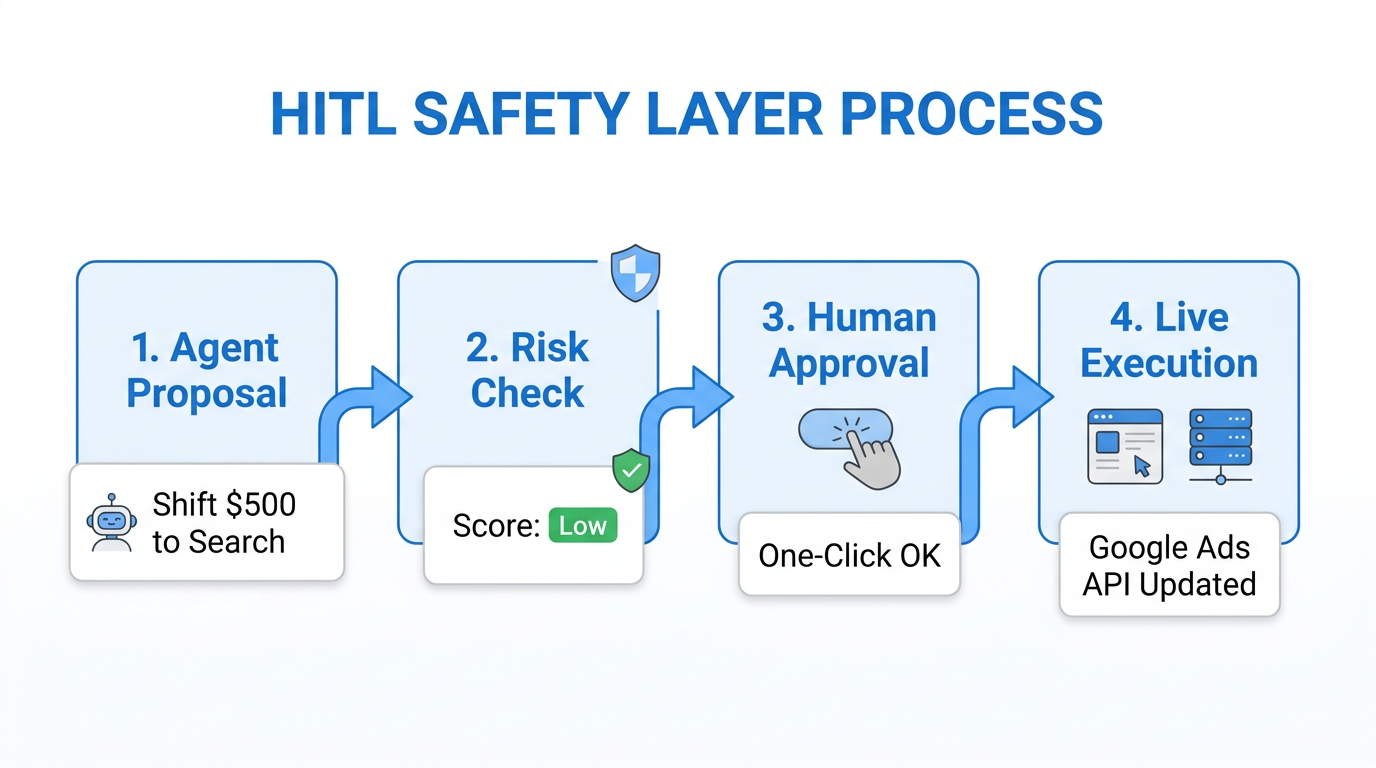
While the goal is automated Google Ads management, the most sophisticated 2026 strategies involve a Human-in-the-loop (HITL) safety layer. This is a dashboard where the agent proposes major changes—such as a budget increase over 20% or a fundamental shift in bidding strategy—and waits for a human click to execute.
This prevents accidental overspend during temporary traffic spikes (like a viral news event) that the agent might misinterpret as a permanent trend. By balancing agentic speed with human strategic oversight, businesses can scale with confidence, knowing the "big levers" are still under human control while the "micro-adjustments" are handled by AI.
Conclusion: Scaling Your Business in the Age of Agents
Mastering these 7 OpenClaw skills is no longer optional for growth teams. By transitioning to performance marketing automation, you aren't just saving 13 hours a week—you are building a system that is faster, smarter, and more resilient than any manual workflow. Whether it's the Skill Registry or custom integrations, the tools to dominate Google Ads in 2026 are already at your fingertips.
Ready to take your creator-led growth to the next level? While your OpenClaw agents handle the ads, use Stormy AI to find the high-quality UGC creators that will fuel your creative refresh loops and drive your 2026 ROAS to new heights.