When most people think of overnight wealth, they picture a tech genius in a Silicon Valley garage or a viral app taking the world by storm. But the reality of wealth creation in America is far more grounded—and often a lot more industrial. In fact, there is a bold claim currently circulating in the investment world: there are more millionaires generated from franchising than all the combined players ever in the history of the NFL. While the glamorous world of venture-backed startups gets the headlines, thousands of savvy operators are quietly building fortunes by mastering unsexy business ideas that solve everyday problems. These high-margin franchises don't require a game-changing invention or a rabbit out of a hat; they require execution, a proven playbook, and a willingness to embrace the 'boring.'
The Power of Unsexy Business Models
The allure of the "next big thing" often blinds entrepreneurs to the stability and scalability of traditional services. High-margin franchises in industries like home repair, cleaning, or specialized installation often benefit from fragmented markets where there is no clear national winner. This creates a massive opportunity for a disciplined operator to step in with a professionalized approach. Unlike tech companies that face high burn rates and intense competition, these businesses focus on core human needs that aren't going away.
Modern investors are increasingly looking at these businesses through a more white-collar lens. Traditionally, a franchise was seen as a mom-and-pop operation or a high-barrier investment like a McDonald’s requiring $3 million in capital. However, as noted in recent Wall Street Journal reports, private equity and "white collar" operators are moving into the space, performing roll-ups of multiple units to create nine-figure portfolios. They aren't just buying a job; they are building enterprise value by treating low overhead business models with the same rigor as a software firm.
1. Turf Installation: Riding the Regulatory Tailwinds

One of the most compelling examples of a "boring" business with massive upside is artificial turf installation. Companies like Waterlue Turf are capitalizing on a unique intersection of environmental necessity and luxury home improvement. The turf industry in the United States is currently valued at $4 billion and is projected to grow by half a billion next year [source: IBISWorld]. What makes this one of the best franchises to own right now is the presence of regulatory tailwinds. In markets like Las Vegas, new regulations are prohibiting homeowners from growing natural grass, essentially mandating the use of turf.
The economics are equally attractive. For an investment of roughly $105,000 to $150,000, a franchisee can own a business generating an average annual revenue of $1.3 million with profits around $270,000. Because there is no retail storefront and minimal fixed equipment, it is a quintessential low overhead business model. Platforms like Stormy AI help these types of local service brands find UGC creators who can film "before and after" transformations using natural-language search across TikTok and Instagram, which perform exceptionally well on Meta Ads Manager to drive local leads.
2. Indoor Golf Simulators: The Economics of the 'Unattended' Model

The rise of "unattended" business models—where automation replaces the need for full-time staff—is changing the franchise landscape. Another Nine is a prime example of this trend. It is a 24/7 indoor golf simulator franchise that operates similarly to an Anytime Fitness. Members fob in with their phones, play on high-end equipment, and leave without ever interacting with an employee. This model eliminates the two biggest headaches in retail: labor and food/beverage management.
A single unit can be built for approximately $320,000 to $800,000, depending on the number of bays. Because there is no labor cost, profit margins can soar to 55%. A typical unit generating $300,000 in revenue can yield $150,000 in passive income. For entrepreneurs using Google Ads to target local hobbyists, the return on ad spend (ROAS) is often significantly higher than in traditional brick-and-mortar retail because the operational costs are so low.
3. Senior Care: The Demographic Jackpot

If you want to follow the money, follow the Baby Boomers. The aging population in America is creating a supply-demand gap that is almost impossible to fill. Many senior care facilities and in-home services are booked out 8 to 12 months in advance. This is not a trend or a fashion choice; it is a fundamental demographic shift. High margin franchises like Home Watch Caregivers require an investment of $120,000 to $177,000 but can produce $2.5 million in average yearly revenue.
This industry requires more empathy and management than a golf simulator, but it offers recession-resistant recurring revenue. For those looking to scale, these businesses are highly attractive to private equity groups looking for stable cash flow. To reach families making these difficult decisions, savvy operators are increasingly using Stormy AI to vet local creators and verify their audience demographics, ensuring they find authentic voices who can speak to the peace of mind that professional senior care provides.
4. Garage Door Repair: The $250 Million Local Monopoly
It sounds mundane, but garage door repair is a goldmine for those who sweat the details. Companies like A1 Garage have scaled to over $250 million to $300 million in annual revenue simply by being more professional than the local "guy with a truck." By implementing checklists—like asking permission to enter, wearing shoe covers, and incentivizing Google reviews—these businesses take over local markets.
The Garage Kings franchise model, which focuses on epoxy flooring and shelving, follows a similar path. These units can generate $1.3 million to $1.4 million a year with profits nearing half a million dollars. The key is customer experience in a blue-collar industry. When you provide white-collar service in a blue-collar sector, you can charge premium prices and enjoy high margin franchise status.
5. Nothing Bundt Cakes: A Masterclass in Unit Economics
Don't let the name fool you—Nothing Bundt Cakes is a financial behemoth. While many food franchises struggle with complex menus and high waste, this brand focuses on a single, simple product. This focus leads to low food costs and streamlined operations. A single location can generate upwards of $3 million in Average Unit Volume (AUV).
The brand is currently part of the Roark Capital Group portfolio, a private equity firm that manages over $37 billion and employs 1.4 million people through various franchise brands. By specializing in one item, they’ve created a business in a box that is incredibly easy to replicate. This is a perfect example of why some entrepreneurs prefer owning 50 units of a proven concept rather than trying to invent their own.
6. Crime Scene Cleanup: The Ultimate Niche
Perhaps the most extreme example of an unsexy business is biohazard and crime scene cleanup. Brands like BioOne or Aftermath operate in a space that most people don't even want to think about. However, because of the specialized nature of the work and the strict regulations involved, it is an incredibly high-margin service with very little traditional competition.
These businesses don't rely on foot traffic; they rely on being the first name called by insurance companies and law enforcement. For a marketing-savvy owner, using Apple Search Ads to ensure their mobile app or contact info appears first during a localized crisis is a key growth lever. It is a grim business, but one that provides an essential service with significant wealth-creation potential.
How to Vet a Franchise: The Playbook for Success

Not every franchise is a ticket to wealth. The industry is rife with slimy brokers and predatory fees. If you are looking for home service franchise opportunities, you must follow a strict vetting process to avoid buying a "lemon."
Step 1: Scrutinize the FDD
The Franchise Disclosure Document (FDD) is a 200-page legal requirement regulated by the FTC. Look specifically at Item 20, which shows how many units have opened versus how many have shut down. A high closure rate is the ultimate red flag. You should also look for declining AUVs or excessive litigation in the system.
Step 2: Perform the "Would You Do It Again?" Test
Never rely on the references the franchisor gives you; they will only show you their top 1% of performers. Instead, find 3-5 franchisees on LinkedIn who aren't on the list. Call them and ask one critical question: "Knowing everything you know now, would you do this again?" Listen for the pain in their voice. If they are in the "J-curve" (the initial period of loss before profit), they might be hesitant, but they should still be bullish on the long term.
Step 3: Analyze the Support vs. Royalty
A standard royalty is around 6% of gross revenue. You need to determine if the franchisor is providing 6% worth of value through bulk purchasing power, menu innovation, or proprietary technology. If you could run the same business on your own without the brand and keep that 6%, the franchise might not be worth it.
Scaling with UGC and AI-Powered Marketing
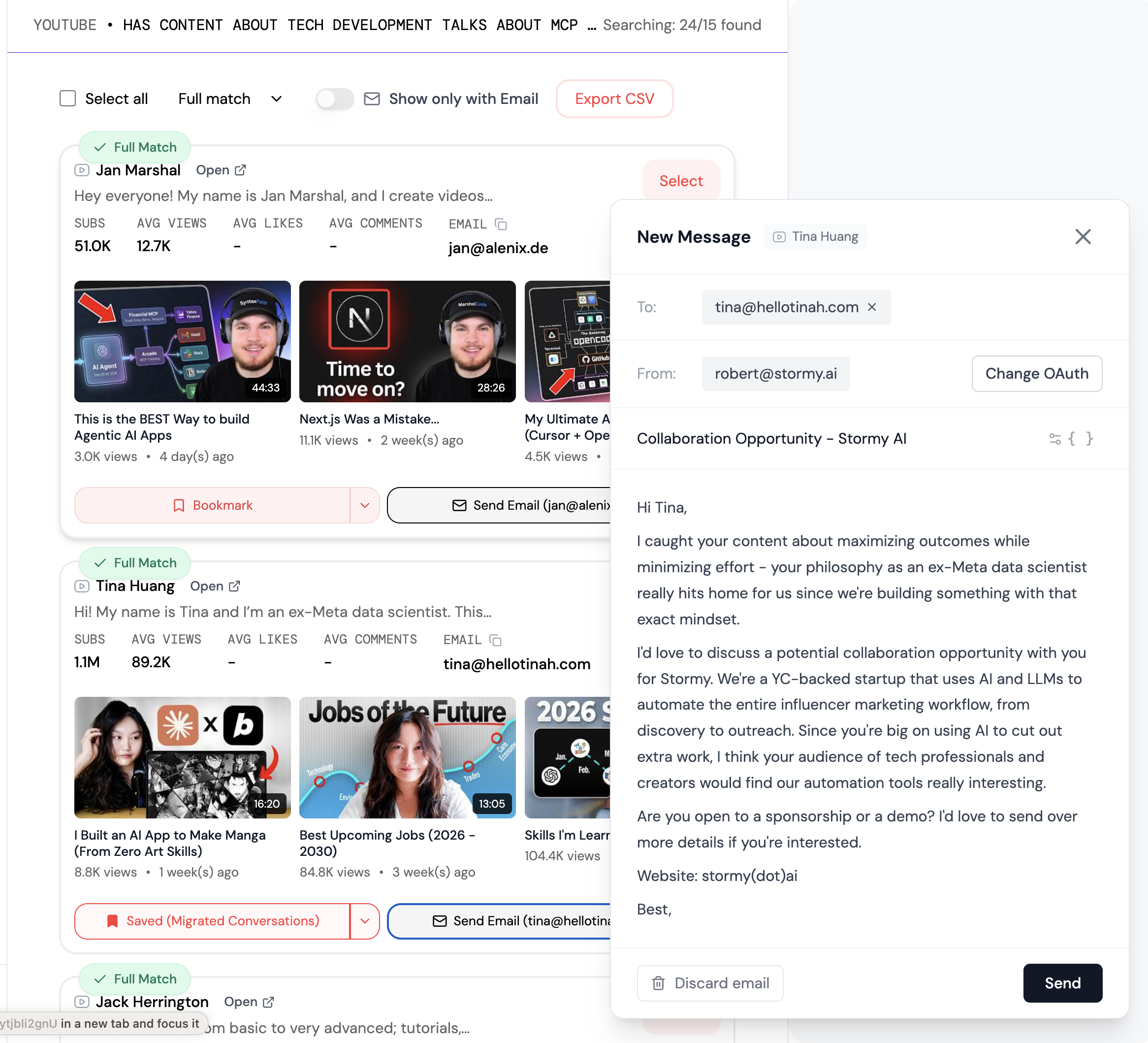
The modern franchise owner doesn't just wait for the phone to ring. To scale from one unit to ten, you need a sophisticated marketing engine. This is where an all-in-one platform like Stormy AI is a competitive advantage. It allows you to set up an autonomous AI agent that discovers, outreaches, and follows up with creators on a daily schedule—fully automated—so you can focus on operations while the platform fills your pipeline.
Platforms like Stormy AI allow franchise owners to quickly find creators who fit their local demographic. Whether it’s a homeowner showing off their new turf or a golfer demonstrating an unattended simulator, UGC builds the trust that traditional corporate ads lack. By leveraging these creators and managing all communications through a built-in AI email inbox, multi-unit owners can run highly targeted campaigns that feel personal and local, even if they are managing 50 locations from a central office.
Conclusion: Embrace the Boring
The path to becoming a millionaire doesn't have to go through a tech incubator. For many, the more reliable route is through unsexy business ideas that have been professionalized and scaled through a franchise model. Whether it’s turf, senior care, or garage doors, the key is to find a high-margin, low-overhead model and execute the playbook with militant discipline.
If you're ready to escape the corporate grind, stop looking for a genius invention and start looking for a proven system. In the world of business, boring isn't just better—it's often much more profitable. Success isn't about pulling a rabbit out of a hat; it's about following the instructions that come with the hat.