In 2026, the barrier to entry for building software has effectively hit zero. We are living in an era where the "technical co-founder" is no longer a bottleneck but a choice. For non-technical founders, the focus has shifted entirely: building features is now a commodity, while building distribution is the ultimate moat. With a lean budget of just $5,000, entrepreneurs are using "Deep Research" AI agents as junior McKinsey analysts to validate markets, simulate product workflows, and architect $100M ARR roadmaps before writing a single line of custom code.
Validating Startup Ideas with the Opportunity Matrix
 8:54
8:54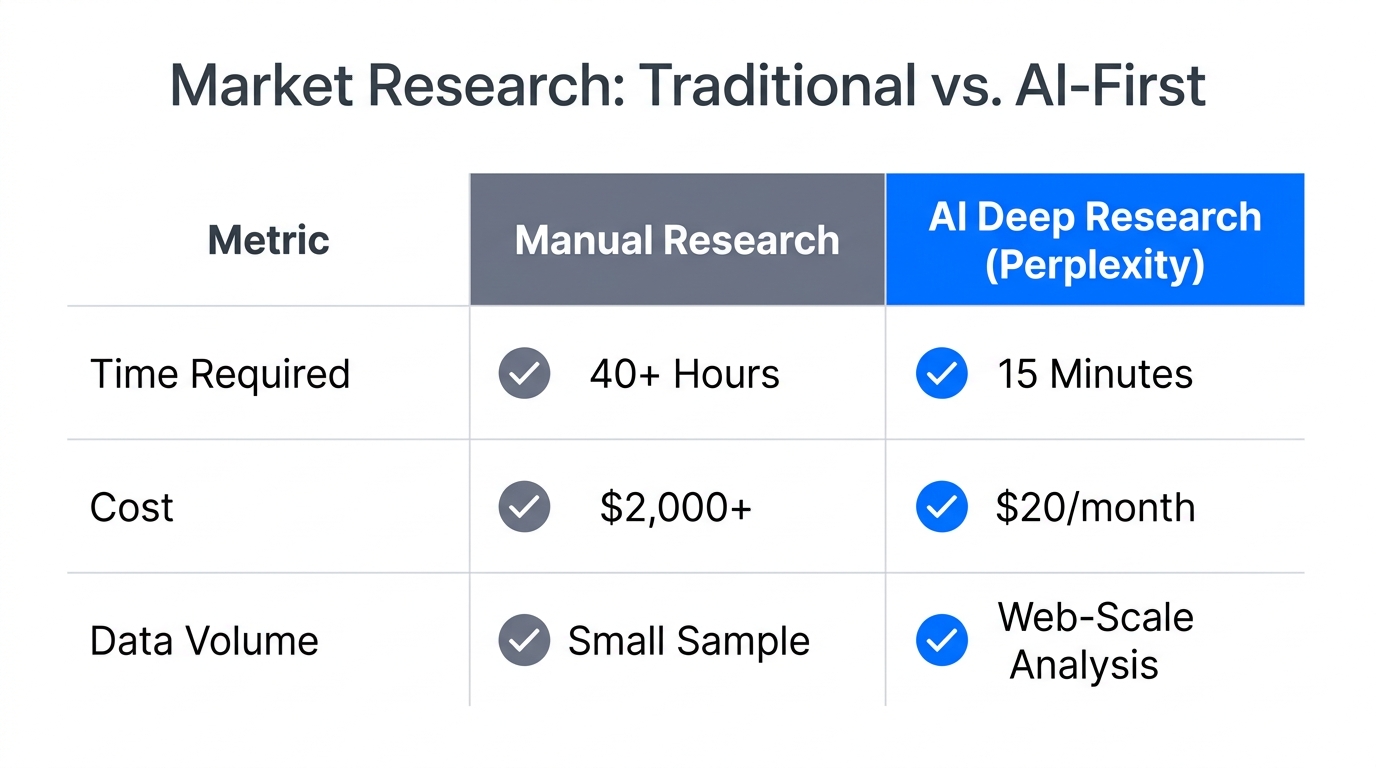
The first step in the 2026 startup playbook is moving past "vibes-based" ideation. Founders are now utilizing the Deep Research capabilities of Perplexity AI and OpenAI's ChatGPT Pro to generate what we call an Opportunity Matrix. Unlike standard LLM prompts, Deep Research agents browse dozens of sources—including YouTube transcripts, Reddit threads, and SEC filings—to find underserved niches with high defensibility.
"Deep Research is like having a junior McKinsey analyst working for $200 a month, digging through 40+ sources to find the 'cracks' in billion-dollar industries."
For example, a deep dive into the legal sector reveals that corporate legal teams waste 23% of their time manually reviewing boilerplate contracts. This inefficiency costs enterprises an estimated $2.4 billion annually in compliance penalties. By prompting Perplexity to find "non-obvious moats," a founder might discover that clause genealogy—using blockchain-inspired versioning to track how a specific NDA clause evolves—is an under-defended niche that highly-funded competitors like Harvey have overlooked.
The 'Wizard of Oz' MVP Method
20:51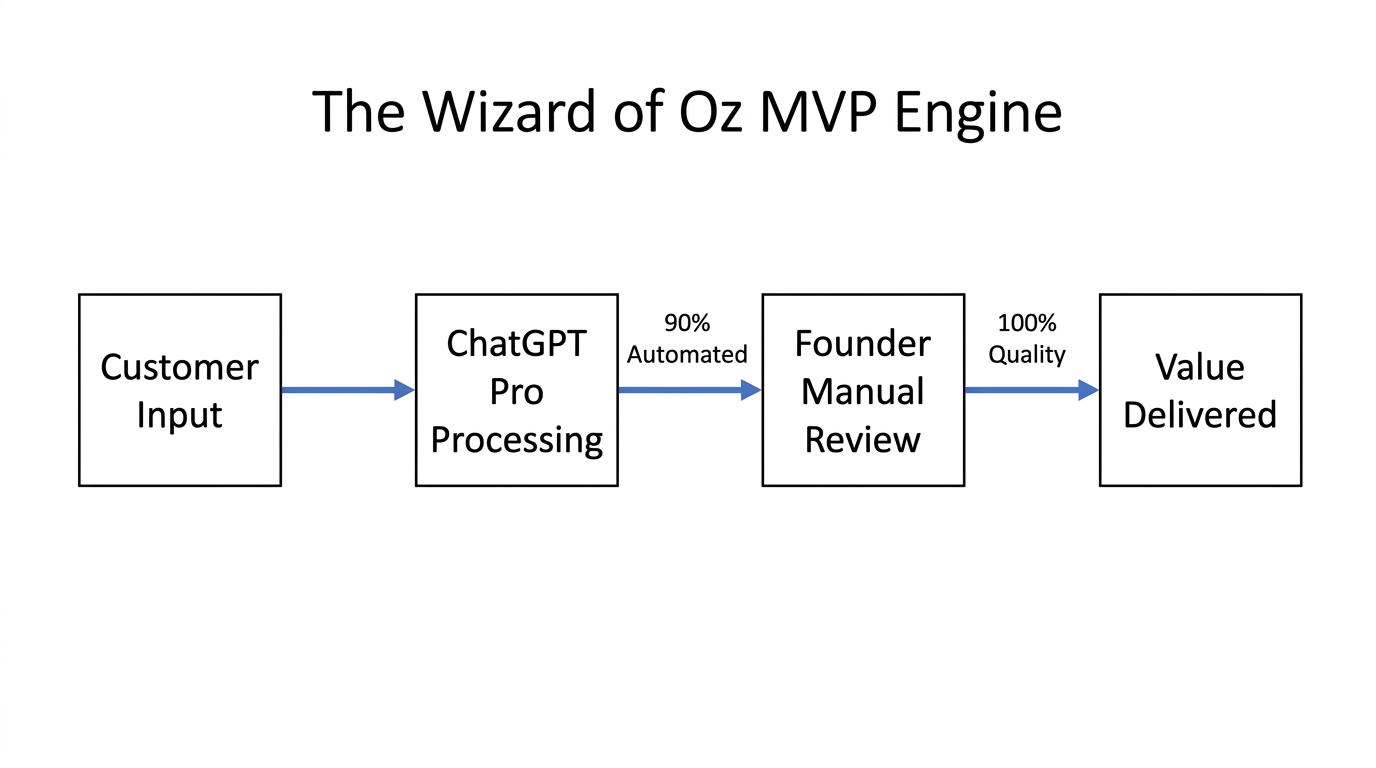
Once you have your niche, the goal is to build a Minimal Viable Product (MVP) for under $5,000. In 2026, we do this using the "Wizard of Oz" method: the front end looks automated, but the back end is a mix of AI APIs and manual human oversight. This allows you to validate market demand without the heavy capital expenditure of building a fully autonomous system on day one.
Building the Tech Stack for $0
Instead of hiring a full-stack developer, founders are leveraging low-code templates and specific AI APIs. If you're building a podcast sponsorship agent, for instance, you can use AssemblyAI or OpenAI's Whisper for transcription and ChatGPT Pro via API for the reasoning engine. This keeps your development costs to zero dev cost if you use tools like Framer or Typedream for the landing page.
| Feature | Technical Approach | 2026 Cost Estimate |
|---|---|---|
| User Interface | Framer / Low-Code Template | $50 - $100 |
| Reasoning Engine | OpenAI GPT-4o API / Claude 3.5 | Usage-based ($200/mo) |
| Data Processing | AssemblyAI / Whisper | Free Tier / Low Cost |
| Human-in-the-loop | Manual Review (Founder) | $0 |
The beauty of the 2026 model is that if the AI is unsure, it flags the task for a human to handle. This "manual fallback" ensures high quality while you gather the proprietary data necessary to improve your prompts and eventually automate the entire workflow. This is how platforms like Startup Empire members are launching products in weeks rather than months.
Distribution: The Only Real Defensibility
37:49In a world where anyone can generate code, your distribution strategy is your only true moat. Direct sales are expensive and slow. The winners in 2026 are focusing on Product-Led Growth (PLG) and viral self-serve loops. For a B2B sales outreach tool, this might mean offering a "freemium" tier where the first 50 AI-generated emails are free, getting your foot in the door of enterprise teams without a long procurement cycle.
"In 2026, building a product is the easy part. Building an audience that cares is the war."
To scale distribution, savvy founders are leaning into niche creator networks. For instance, when launching a new growth tool, identifying the right influencers on TikTok or LinkedIn is critical. Platforms like Stormy AI streamline this by allowing you to find niche creators with high engagement who can trigger a viral loop within your specific target industry. By automating the outreach to these creators, you ensure your $5,000 budget is focused on scaling what works rather than manual data entry.
Allocating Your $5,000 Launch Budget
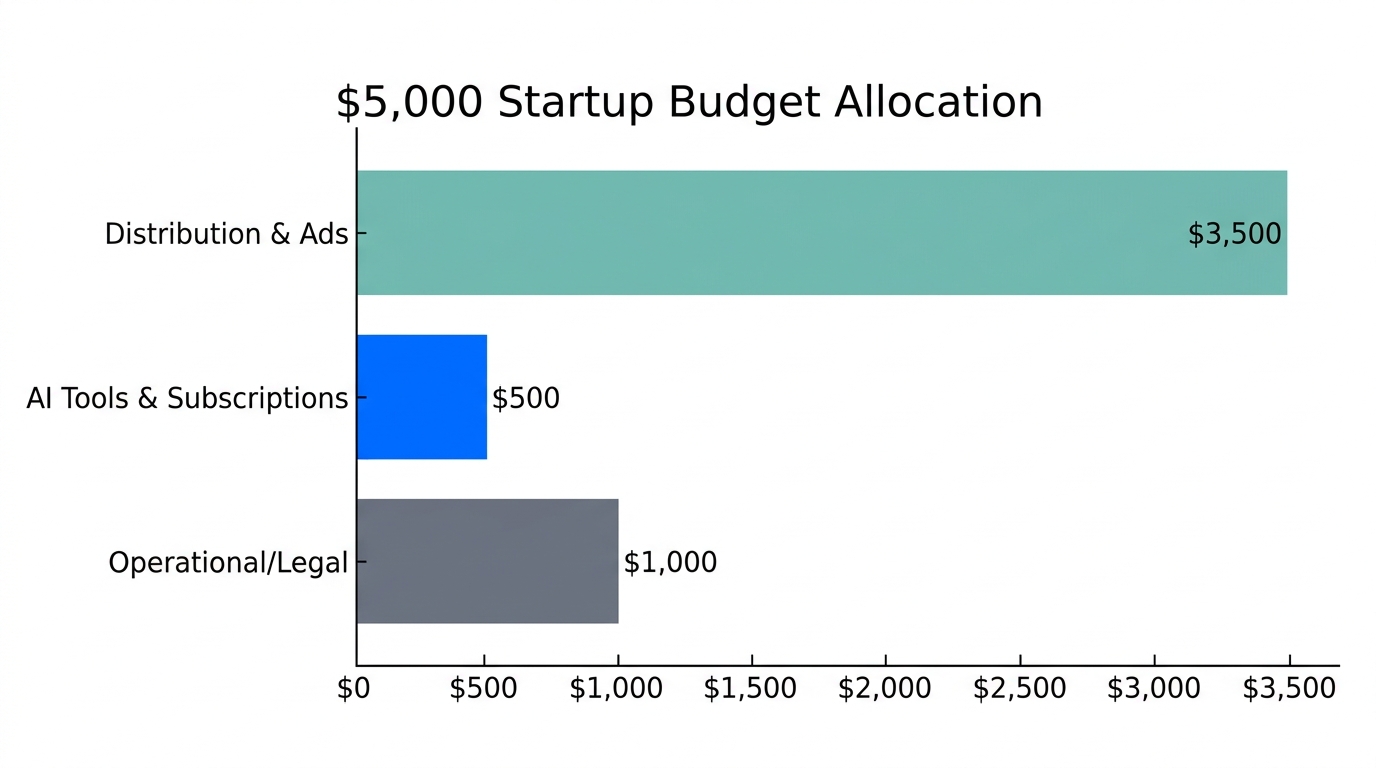
How do you actually spend $5,000 for maximum impact? In 2026, you don't spend it on office space or fancy branding. You spend it on speed and signal. Here is the breakdown for a successful zero-to-one launch:
- Market Research & Tooling ($500): Subscriptions to ChatGPT Pro, Perplexity Pro, and specialized data scrapers like Apify to build your initial lead list.
- Infrastructure & Low-Code ($1,000): Domain, hosting on Webflow, and API credits for your reasoning engine.
- Initial Distribution & Ads ($2,500): Highly targeted spend on TikTok Ads or Meta Ads to test your value proposition. If you can't get a click for under $1.00, your messaging is wrong.
- Creator Outreach & Samples ($1,000): Using Stormy AI to find and partner with micro-influencers who can provide social proof and early beta users.
Using ChatGPT Pro for VC-Ready Scaling
24:50Once you've hit your first $10k in MRR, it's time to think about the $100M ARR roadmap. ChatGPT Pro’s Deep Research is exceptionally good at drafting pitch decks that speak the language of VCs. It can analyze the current funding environment, identify which firms (like Sequoia or a16z) are investing in your specific niche, and draft a data-backed scaling plan.
By inputting your actual user engagement data—retention rates, CAC/LTV ratios, and viral coefficients—the AI can generate a financial model that projects your path to $1M ARR in year one and $5M by year three. It understands the difference between "linear growth" and "network effects," and will help you articulate how your AI agent develops institutional memory that makes it impossible for customers to churn.
"The future of the pitch deck is not a pretty PDF; it's a verifiable data room generated by an AI that has been auditing your growth since day one."
As you scale, you'll need to move your operations into a more robust stack. Transition your email sequences to Klaviyo for automation and use Stripe for usage-based billing—the standard for 2026 SaaS models. The shift from a solo-founder project to an enterprise-grade platform is now a matter of upgrading your APIs and your distribution channels, not hiring a 50-person engineering team.
The Bottom Line for 2026 Founders
The "$5,000 MVP" is not just a budget; it's a philosophy. It’s the realization that in 2026, intelligence is cheap but attention is expensive. By using Deep Research tools like Perplexity and ChatGPT Pro, you are essentially buying a head start. You are skipping the months of "guessing" and moving straight to "validating."
Your goal this year is to build a business that is defensible through data and distribution. Whether you're building a legal automation agent or a niche podcast ad network, the playbook remains the same: find the gap, simulate the solution, and own the distribution channel. The tools are ready—the question is, are you ready to build?