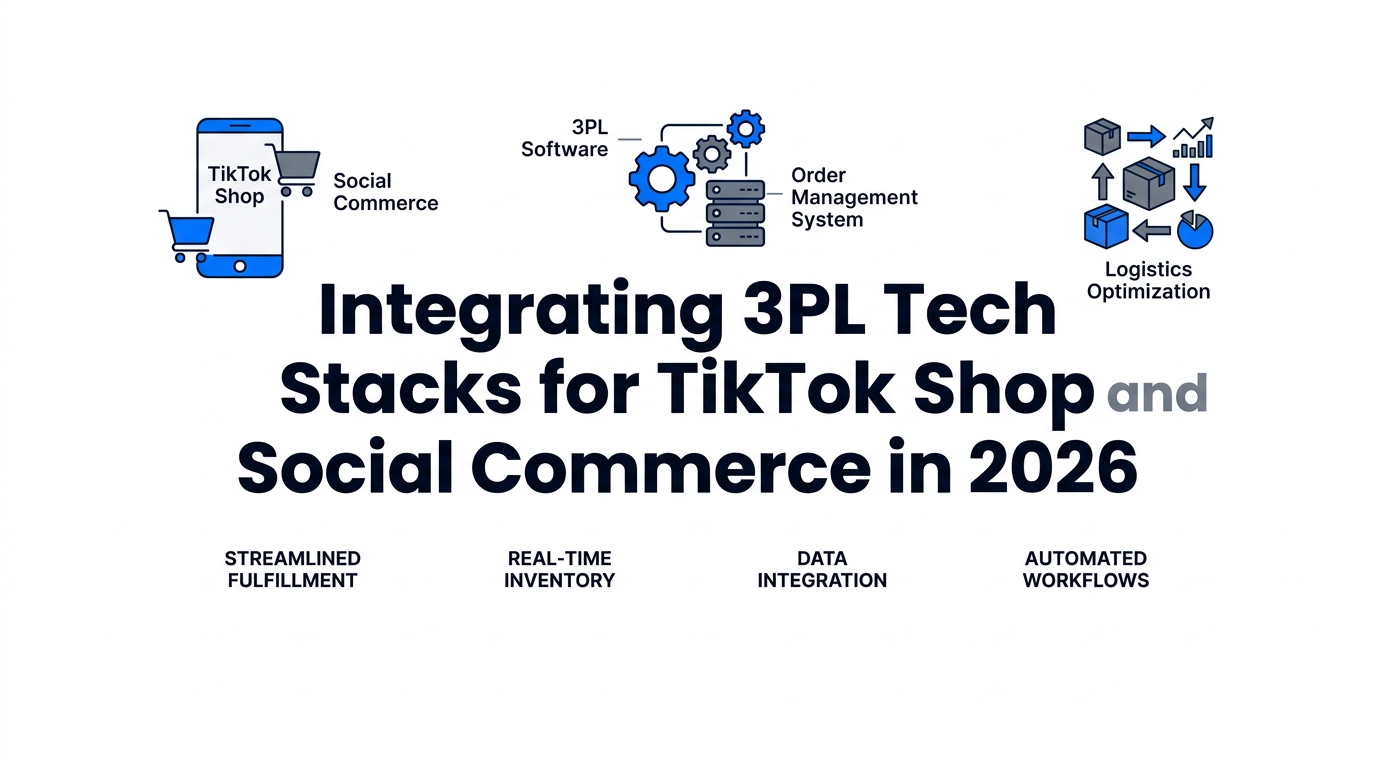
In 2026, the distance between a viral TikTok video and an order confirmation is measured in milliseconds, but the distance between that confirmation and a customer’s doorstep defines the brand's long-term survival. As social commerce matures into a primary revenue driver, the traditional logistics model has been replaced by a high-velocity, data-driven ecosystem. Today, successful brands don’t just look for a warehouse; they look for 3PL technology integration that acts as the central nervous system of their entire operation.
The Multi-Channel Mandate: TikTok Shop, Shopify, and Amazon
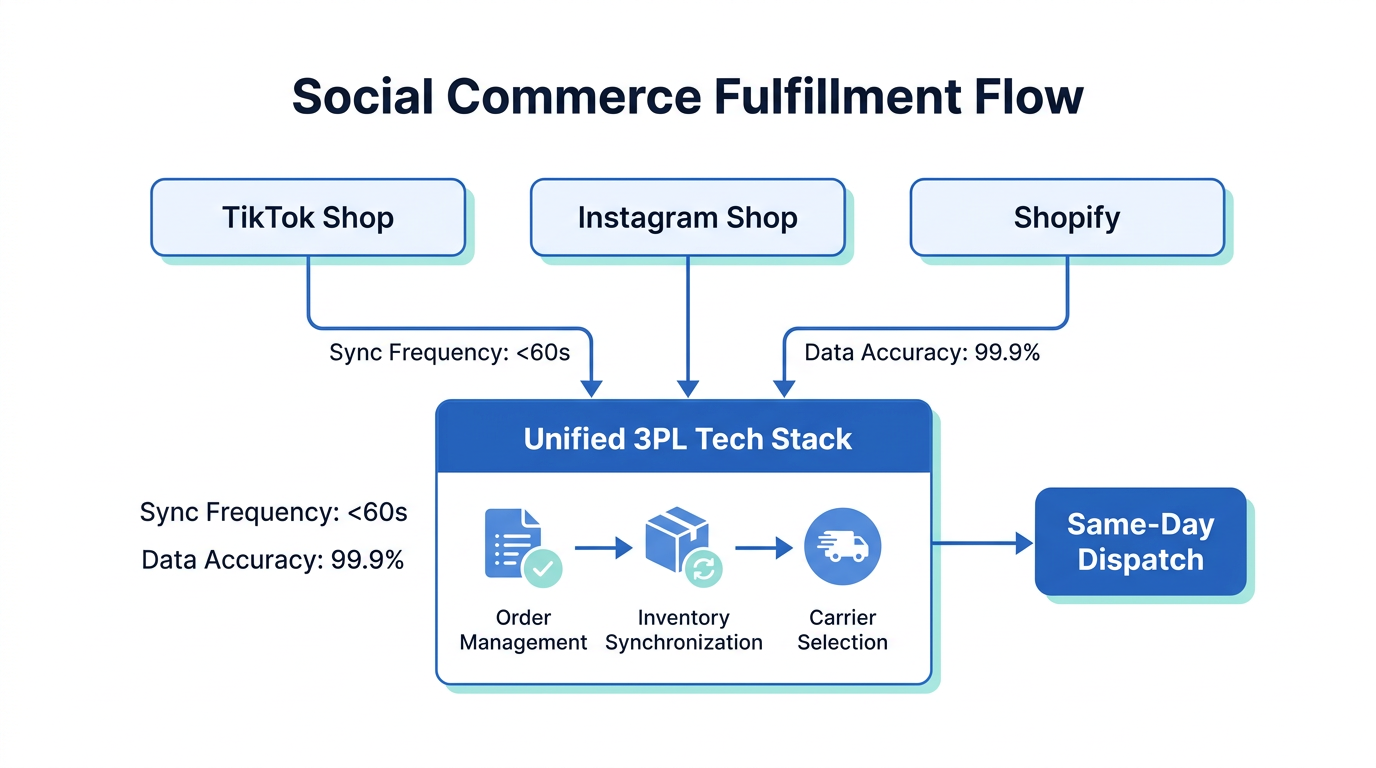
The modern consumer journey is fragmented. A shopper might discover a product on TikTok, research it on Amazon, and eventually purchase it through a Shopify-powered storefront. To capture this demand without creating operational silos, your 3PL tech stack must offer native, real-time integration across all these platforms simultaneously. According to data from Digital Commerce 360, brands that fail to sync inventory across social and traditional channels see a 22% higher rate of overselling, which leads to account penalties and lost customer trust.
Native TikTok Shop fulfillment is no longer a luxury; it is a technical requirement. Because TikTok Shop has stringent shipping SLAs, your 3PL’s Warehouse Management System (WMS) must communicate directly with TikTok’s API to generate labels and update tracking numbers instantly. Using omnichannel logistics software like ShipHero allows brands to view their total stock pool as a single entity, dynamically allocating inventory to whichever channel is currently "hot."
"In the age of social commerce, your supply chain is either your greatest marketing asset or your most expensive bottleneck. There is no middle ground."
AI-Driven Predictive Logistics: Beating the Viral Spike
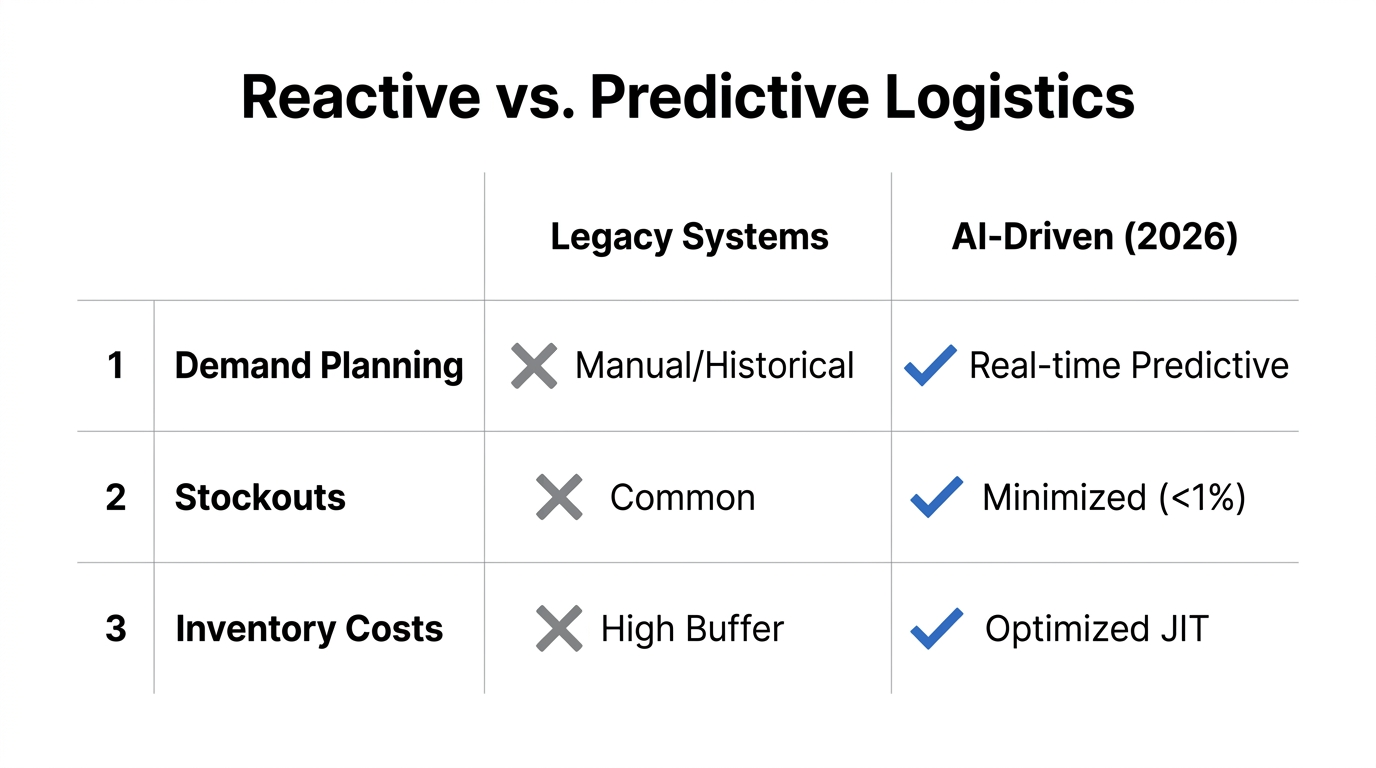
The most significant shift this year has been the mainstreaming of AI predictive logistics. With AI now accounting for 38.5% of the logistics technology market, 3PLs are moving away from reactive shipping to a model of "pre-positioning." This involves using machine learning to analyze social media sentiment, creator campaign schedules, and historical data to move inventory to regional hubs before the orders even happen.
If a brand is launching a major campaign with a creator found via Stormy AI, that marketing data can be fed into the 3PL's predictive engine. The system then moves stock to specific micro-fulfillment centers in high-density regions. This "multi-node" strategy has led to a 15% reduction in shipping zones and a 16% increase in in-region fulfillment, according to recent benchmarks from Inbound Logistics. Pre-positioning is the only way to meet the 2026 consumer expectation of 4.2-day average delivery speeds.
| Logistics Model | Average Delivery Time | Inventory Accuracy | Scalability |
|---|---|---|---|
| Traditional (Single Warehouse) | 6.6 Days | 96.2% | Low |
| AI-Predictive (Multi-Node) | 3.1 - 4.2 Days | 99.5% | Infinite |
Leveraging Open APIs for Marketing Automation
The real magic happens when your WMS talks to your marketing stack. By using open API platforms, brands can trigger hyper-personalized customer communications based on real-world logistics events. For instance, when a 3PL like ShipBob marks an order as "out for delivery," an automated trigger can send a Klaviyo notification that doesn't just provide a tracking link, but also shares a tutorial video on how to use the product.
This level of ecommerce shipping automation directly impacts customer retention. If an item goes out of stock due to a viral surge, an API-driven "Back in Stock" notification can be sent the moment the 3PL receives new inbound freight. This reduces the friction of manual updates and ensures that your marketing engine is always in sync with your physical reality. As noted by experts in CRM systems, the integration of WMS data into customer management platforms is the leading predictor of high Customer Lifetime Value (CLV) in 2026.
Case Study: Youth To The People’s 300% Surge
One of the most compelling examples of 3PL tech integration is the skincare brand Youth To The People. As they scaled from a family-run operation to a global powerhouse, they faced a massive challenge: handling a 300% volume surge during Black Friday without compromising their shipping speed. By integrating their tech stack with Aeronet Worldwide, they were able to automate their entire fulfillment workflow.
This integration allowed them to manage multiple sales channels and high-volume creator collaborations with surgical precision. The lesson for 2026 is clear: you cannot manually scale a social commerce brand. Your growth is capped by the limitations of your software's ability to talk to your warehouse's hardware.
"The 300% surge wasn't a crisis; it was a planned event because the data bridged the gap between the marketing team's vision and the warehouse's capacity."
The 2026 Playbook for 3PL Tech Integration
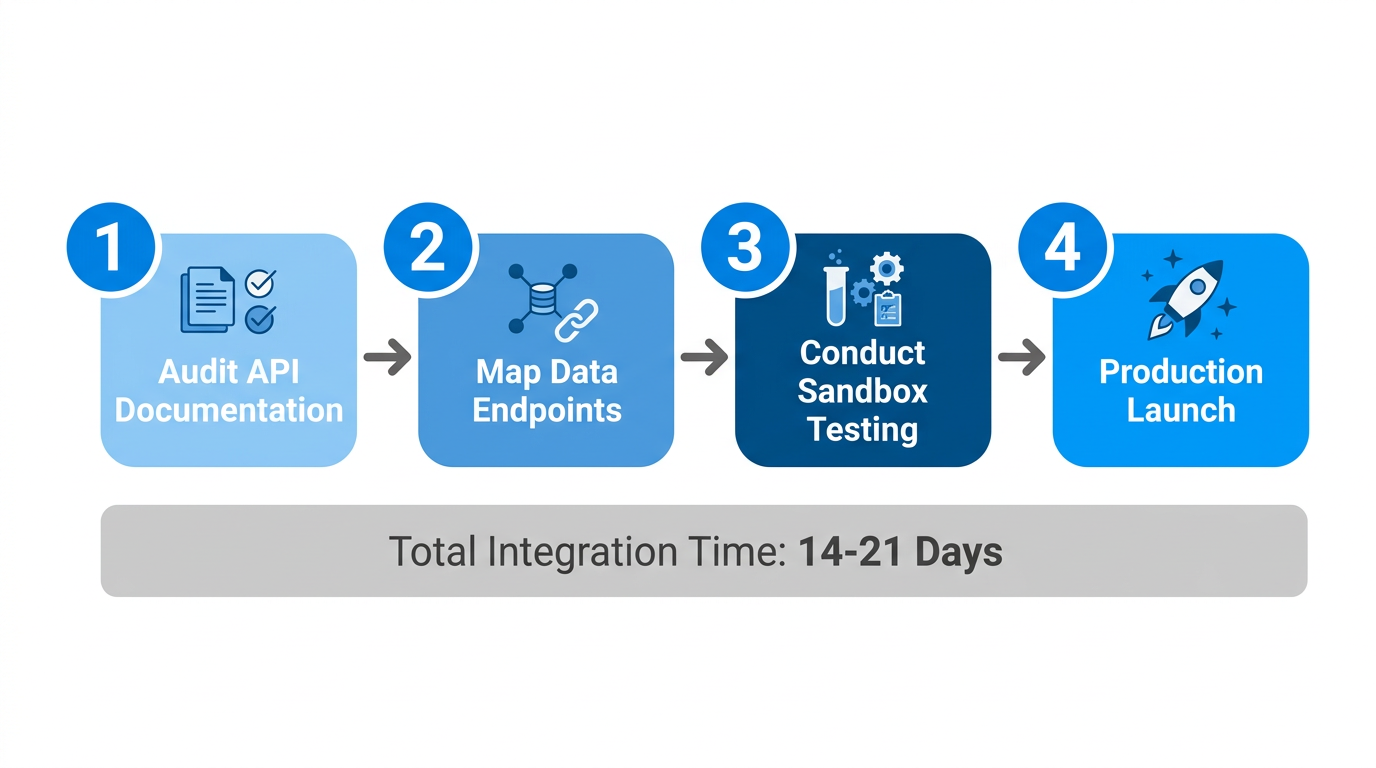
Building a tech-forward logistics stack requires a strategic approach. Follow these steps to ensure your fulfillment can keep up with your social commerce ambitions:
Step 1: Audit for API Connectivity
Ensure your 3PL uses a modern WMS like Extensiv or Logiwa. You need "Open API" access to build custom triggers for your marketing tools. If your 3PL still relies on CSV uploads or manual entry, you are already behind.
Step 2: Implement Multi-Node Inventory Placement
Don't store all your eggs in one basket. Use data to split stock across at least 3–4 regional hubs. This ensures 2-day ground shipping to 95% of the U.S. and protects you from regional carrier delays, a strategy recommended by Red Stag Fulfillment for high-growth brands.
Step 3: Automate Reverse Logistics
In social commerce, return rates can be high due to impulse purchases. Use a 3PL with a dedicated returns portal that automatically inspects and restocks items. This can recover 10-15% of lost revenue that would otherwise sit in a "reverse logistics" pile for months.
Conclusion: Agility Over Cost
In 2026, the global 3PL market has reached a staggering $1.3 trillion, yet many brands still choose partners based on the lowest per-unit picking fee. This is a mistake. As we have seen, the true value of a 3PL lies in its logistics agility and its tech stack's ability to facilitate growth. By prioritizing 3PL technology integration, embracing AI-driven predictive logistics, and ensuring your warehouse can handle the unique demands of TikTok Shop fulfillment, you aren't just shipping boxes—you are building a resilient, scalable brand for the future of social commerce.
Ready to find the creators who will trigger your next stock-out? Use Stormy AI to discover and manage the influencers driving the next generation of social sales.