The traditional SaaS model is imploding. In 2026, the barrier to entry has dropped so low that the old way of building—hiring a massive engineering team and spending six months on a 'stealth' MVP—is officially dead. Today, the most successful AI entrepreneurs are non-technical founders who leverage an AI SaaS launch playbook to find, build, and charge for solutions in under a month. If you are looking to create a business that generates $10,000 to $70,000 in monthly recurring revenue (MRR), the secret isn't in 'revolutionary' tech; it's in the boring, repetitive manual buttons that millions of knowledge workers click every single day.
The Export Button Theory: Finding Your $10K Opportunity
 2:58
2:58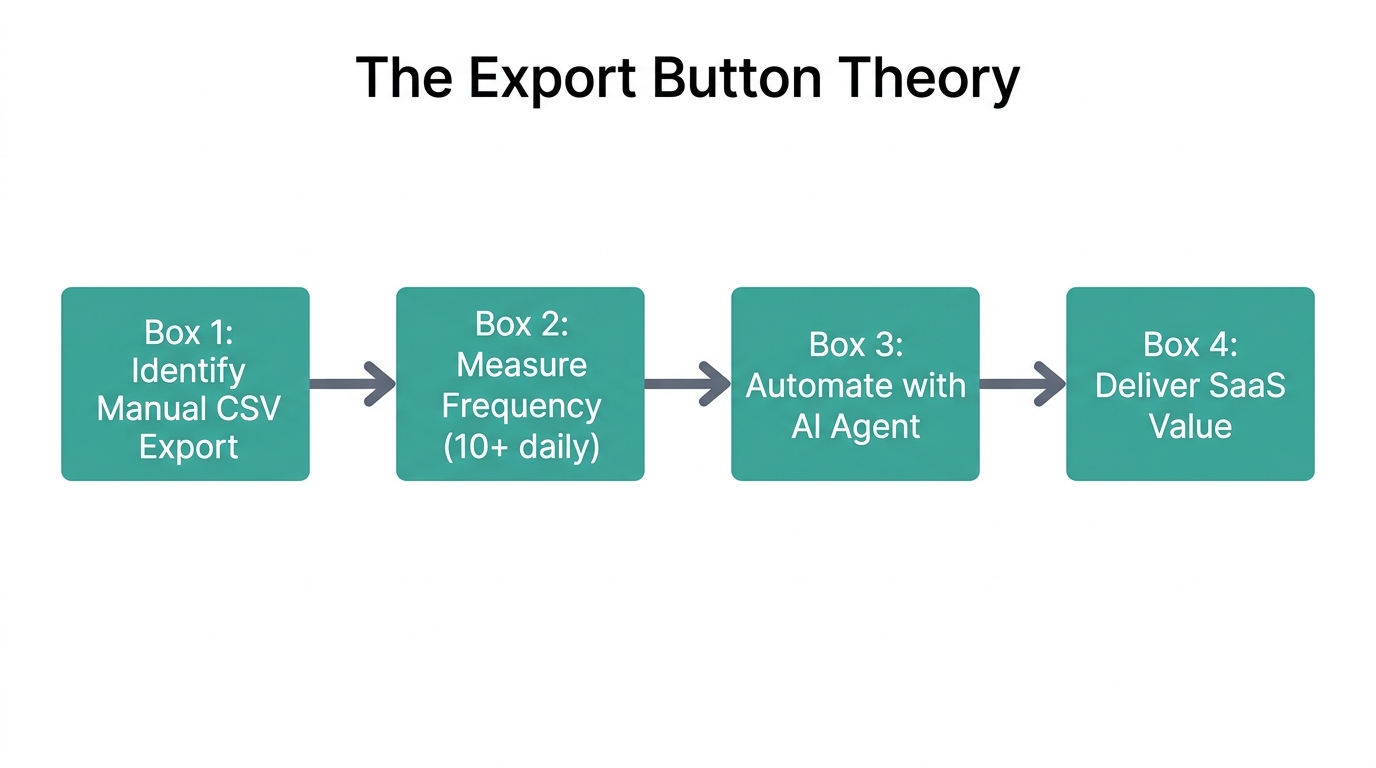
Every time a user clicks an "Export" button in a piece of enterprise software, they are signaling a workflow breakdown. When a financial analyst exports QuickBooks data into Excel, they are essentially saying: "This software doesn't do what I need, so I have to take my data elsewhere to do manual labor."
Each of these exports represents a pain point, manual work, and a potential high-value feature. This is the foundation of lean SaaS validation. Instead of guessing what people want, you look for where the current tools are failing to provide the final output. In 2026, the real gold mines are found by adding intelligence to these manual exits. For instance, a Stripe export that feeds into an AI-powered revenue analysis tool can easily command a $50,000 to $100,000 MRR once scaled.
"Every export button in software represents a business opportunity. It is a sign that a human is about to do manual work that an LLM could handle in seconds."
Days 1-10: Researching Export Habits and Power User Interviews
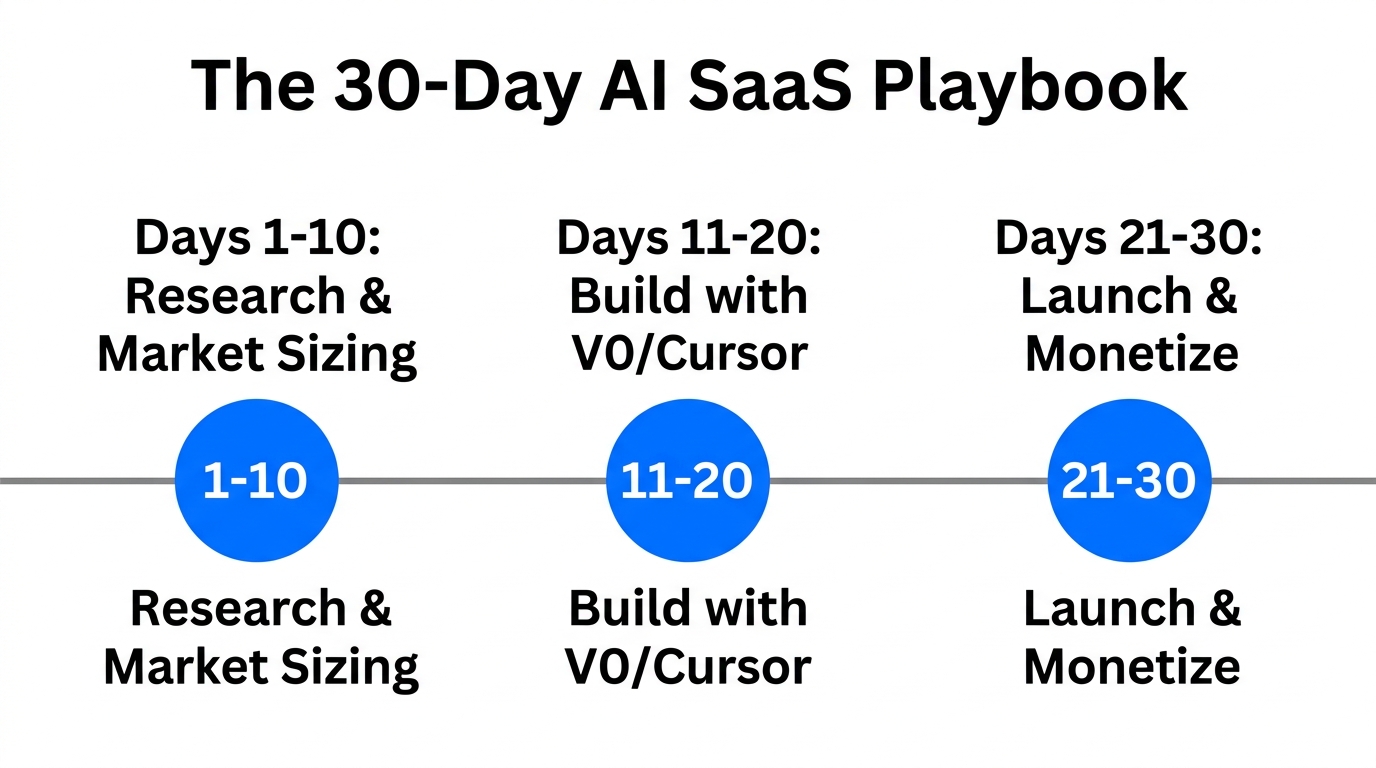
The first ten days of your AI SaaS launch playbook 2026 are dedicated to validation. You cannot build a solution until you understand the manual workflow that follows the export. Your goal is to identify "pain patterns" where users are reformatting data, copying and pasting between tools, or building the same reports weekly.
Start by researching communities on Reddit or using tools like Gummy Search to find people complaining about specific software limitations. Once you've identified a niche—for example, accountants using QuickBooks—you must interview power users. Ask them:
- What do you do with the data once you click export?
- How long does the post-export processing take?
- What value would it create if this report generated itself?
During this phase, it is also helpful to start building a presence on X (formerly Twitter). Sharing your research openly can help you attract your first five beta users. If you're building in a crowded niche like influencer marketing, you might use a tool like Stormy AI to find creators or agencies who are frustrated with legacy platforms and offer them a seat in your early beta.
The Market Size of Manual Buttons
17:31It's not just the export button. Several manual actions in modern software are screaming for AI automation. Here is a breakdown of the potential market sizes for automating these common tasks:
| Manual Button | AI Opportunity | Estimated Market Size (2026) |
|---|---|---|
| Generate Report | Automatic Insight Generation | $2.5 Billion |
| Schedule Meeting | Context-Aware Scheduling | $1.8 Billion |
| Upload CSV | Intelligent Data Processing | $3.2 Billion |
| Reconcile Data | Real-Time Data Harmonization | $2.1 Billion |
| Format Document | One-Click Brand Rule Formatting | $1.5 Billion |
Days 11-20: Leveraging V0 and Cursor for Rapid Prototyping
22:21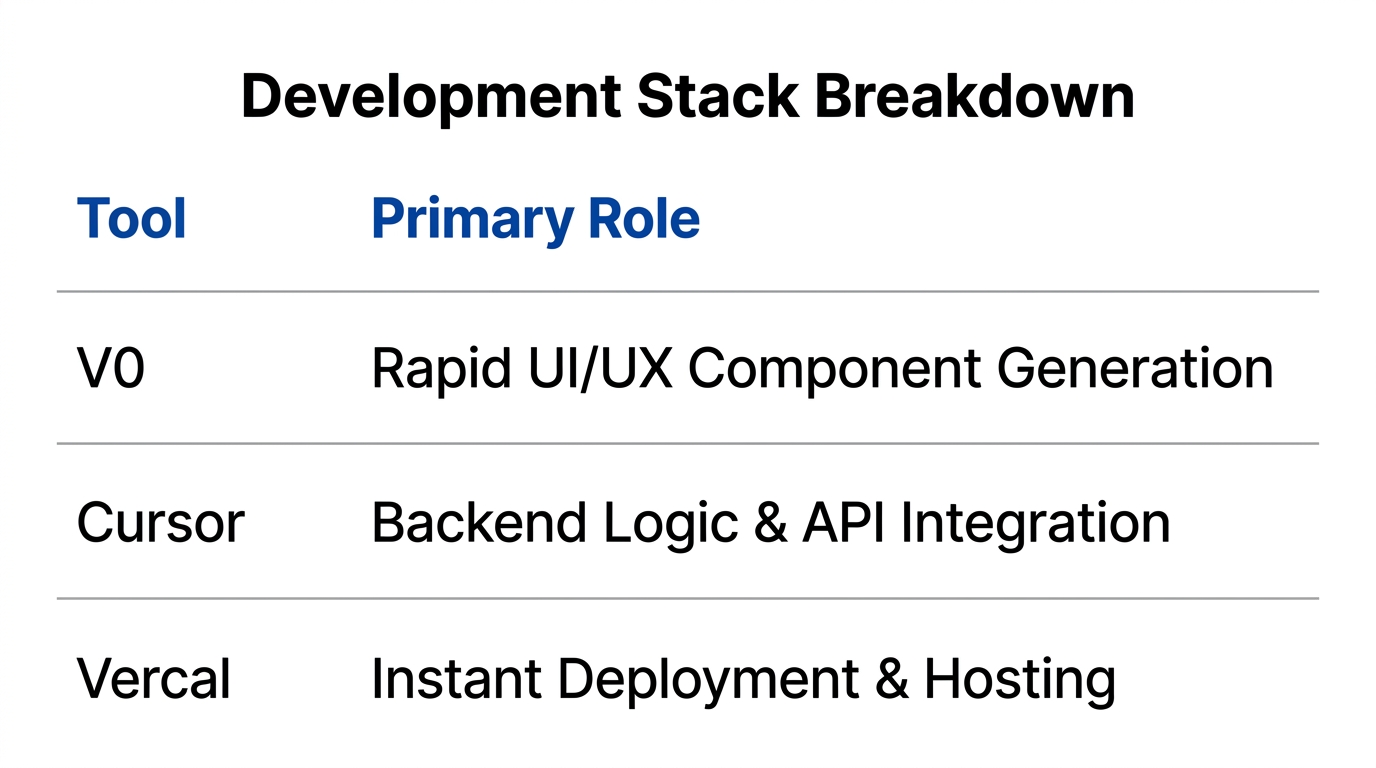
Once you've validated the pain, it’s time to build. In 2026, you don't need a computer science degree to build a functional SaaS. Using V0 for business founders allows you to generate high-fidelity UI components simply by describing them. Combine this with a Cursor AI startup strategy, where the AI writes the backend logic, and you can have a working prototype in days, not months.
Your goal is a "Minimum Viable Prototype" that performs just one or two post-export functions. If you're building for the QuickBooks ecosystem, your tool should take a raw export and instantly turn it into a management-ready PDF. Tools like V0 by Vercel handle the frontend beautifully, while Cursor AI acts as your senior engineer to connect APIs and handle data processing.
"The winners in the AI era won't be the ones with the most impressive tech demos; they'll be the ones who solve a boring, painful workflow 10x better than a spreadsheet."
Bridging Data Silos: The Hidden SaaS Moat
11:02A significant part of the 30-day build involves bridging data silos. Most companies have valuable data trapped in separate systems that don't talk to each other. For example, a B2B SaaS might have customer success data in one tool and sales data in another. By building an AI layer that connects these—using tools like Zapier or Make alongside your Cursor-built app—you create immense value.
Look for phrases like "I wish I could see this data alongside that" or "I have to manually check if these match." These are your cues to build a bridge. A company that built an AI layer connecting success and sales data to identify upsell opportunities recently scaled to $250,000 MRR by solving this exact problem.
Days 21-30: The 'Charge Immediately' Rule
The final ten days are for the launch. The most critical rule of entrepreneurship with AI tools is this: Charge immediately. If you are solving a real, painful problem, people will pay from day one. Do not make it free. Making it free deprives you of the most important signal: whether someone values your solution enough to open their wallet.
Reach out to your first five beta users gathered from X or LinkedIn. Offer them a deal—perhaps 80% off for the first year—in exchange for a video testimonial. Video is essential in 2026; text testimonials are easily faked and often ignored. Use a platform like Startup Empire to find co-founders or mentors who can help you refine your pricing strategy during this final push.
Acquisition Strategy: Building Your First Audience
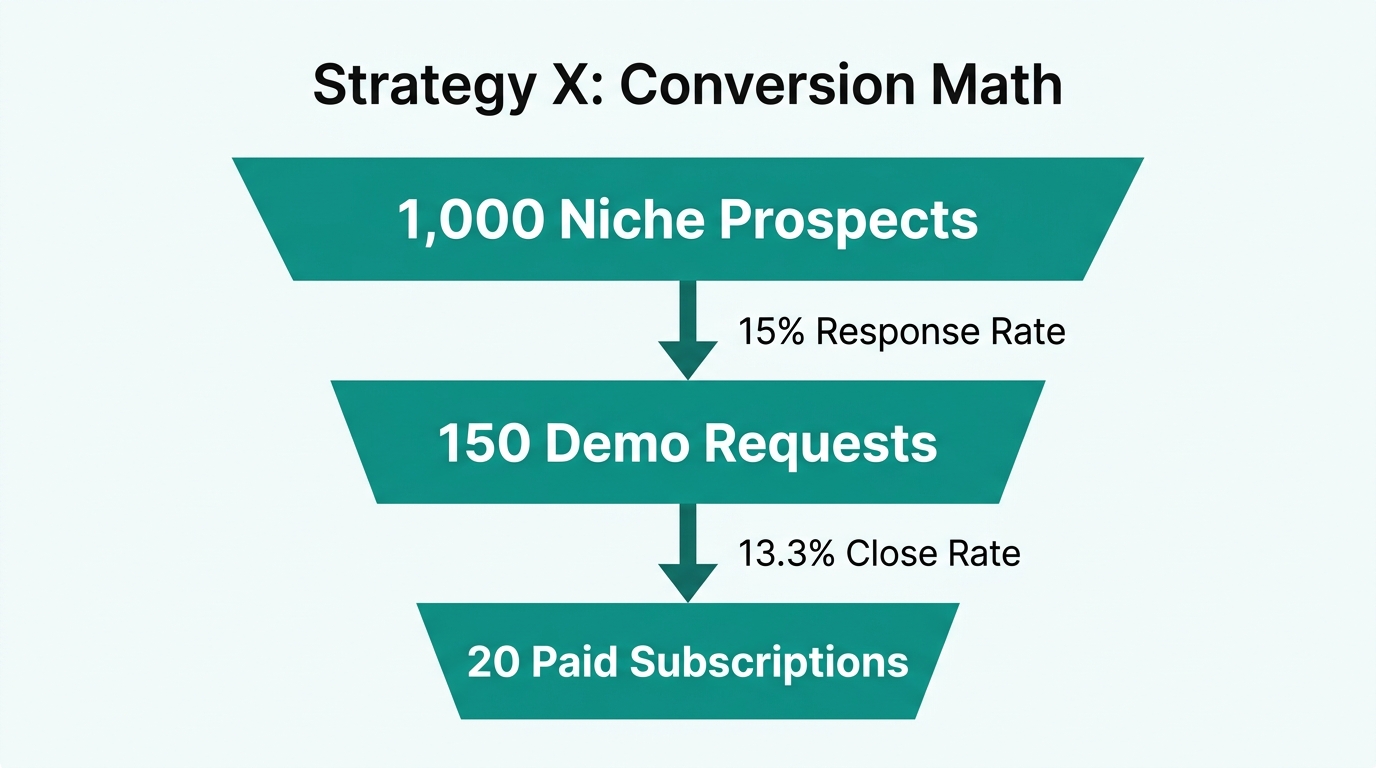
You don't need a massive marketing budget to launch. Focus on building an audience on X by documenting your build. Use the "Build in Public" movement to share your V0 screenshots, your Cursor code snippets, and the insights you're gaining from user interviews. This creates a pipeline of interested users before you even officially launch.
When you're ready to scale beyond your first five users, you can use AI discovery tools. For example, if you've built a tool for the creator economy, Stormy AI can help you find influencers who are already talking about the problems your SaaS solves. You can then use its AI-personalized outreach to contact them automatically, turning your launch into a repeatable growth machine.
"In 2026, the best marketing isn't an ad; it's a documented journey of solving a specific, painful problem for a niche community."
Conclusion: From Zero to Monetized
Building an AI SaaS in 30 days is no longer a pipe dream—it's a repeatable framework. By identifying repetitive pain points through the Export Button Theory, using V0 and Cursor to build at lightning speed, and following the 'Charge Immediately' rule, you can validate a business idea with real revenue before the month is over.
Remember to start small and go niche. Whether it is a QuickBooks report automator or a specialized CRM connector, the winners of 2026 will be those who understand the boring workflows better than anyone else. Stop looking for the 'next big thing' and start looking for the next 'Export' button.