Imagine building a $70,000 monthly recurring revenue (MRR) business without spending a dime on traditional advertising for the first two years. While most SaaS founders are burning cash on Meta ads or fighting for scraps on LinkedIn, Vasco, the founder of the AI SEO tool Arvo, scaled to over 600 paying clients using a single platform: YouTube. The secret wasn't high-production value or a massive existing following; it was a disciplined YouTube content strategy centered around building "money-making assets" that work while you sleep. By focusing on long-form content that establishes trust, Vasco turned simple screen recordings into a million-dollar-a-year engine.
The 3-Bucket Framework: Structuring for Growth
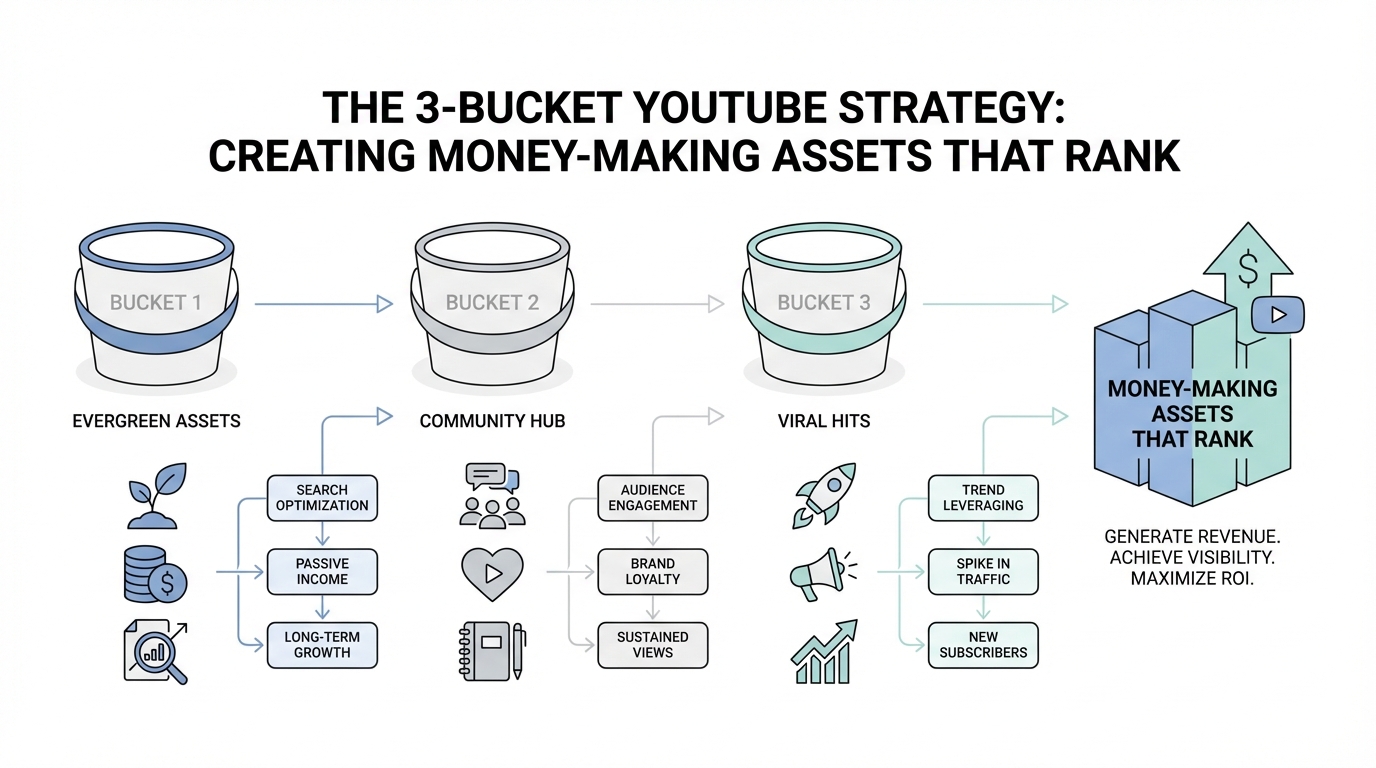
To succeed with evergreen video marketing, you cannot simply post random updates and hope they stick. Vasco’s success stems from a rigorous video content framework that categorizes every upload into one of three "buckets." This ensures the channel captures immediate search demand while also capitalizing on viral trends and long-term authority.
Bucket 1: Evergreen Assets
The first and most important bucket consists of evergreen assets. These are videos designed to answer specific, high-intent questions that users will be asking for years to come. For example, a tutorial on the "Best AI SEO Writer" remains relevant as long as the technology exists. Unlike social media posts that disappear in hours, these videos gain momentum over time. Evergreen content acts as a 24/7 salesperson, consistently bringing in leads long after the initial upload date.
Bucket 2: News-Relevant Updates
The second bucket focuses on news-driven traffic. When a major industry shift occurs—such as a massive Google Search algorithm update or a new AI breakthrough—you must be the first to cover it. These videos are designed to spike quickly, generating a massive influx of new subscribers and "eyeballs" in the first 48 to 72 hours. While these videos eventually "die out" in terms of views, they are the primary driver for rapid channel growth and brand awareness.
Bucket 3: Viral and Software Experiments
The third bucket is the hardest to execute but offers the highest ceiling: viral-style experiments. Think of this as the "Mr. Beast" style applied to software. These might involve extreme case studies, such as "I tried to rank 1,000 pages in 24 hours using AI." These videos are high-risk but high-reward, designed to appeal to the YouTube algorithm's recommendation engine rather than just search intent. For companies looking to scale, platforms like Stormy AI are becoming essential for finding the right UGC creators using natural-language AI search to execute these high-energy, experimental concepts at scale.
Case Study: The 1.2M Impression Tutorial
The power of YouTube search optimization is best illustrated by Vasco’s tutorial on "How to Make a Wikipedia Page." Despite being recorded in a basement with basic tools, this video has generated over 1.2 million impressions and continues to pull in 300 views every single day, two years after it was posted. It is a textbook example of a money-making asset.
What makes this video successful isn't the production quality—Vasco admits it’s a "bad tutorial" by professional standards—but its utility. It solves a specific problem. Currently, 65% of its traffic comes from YouTube search, while another 20% comes directly from external searches on Google. This "double-dipping" effect means the video serves as a high-intent landing page that converts viewers into Arvo users at a fraction of the cost of a traditional PPC campaign. When you use Stormy AI to vet creators for audience quality and engagement fraud, you can replicate this "search-first" approach across multiple niches.
SEO Double-Dipping: Ranking on YouTube and Google

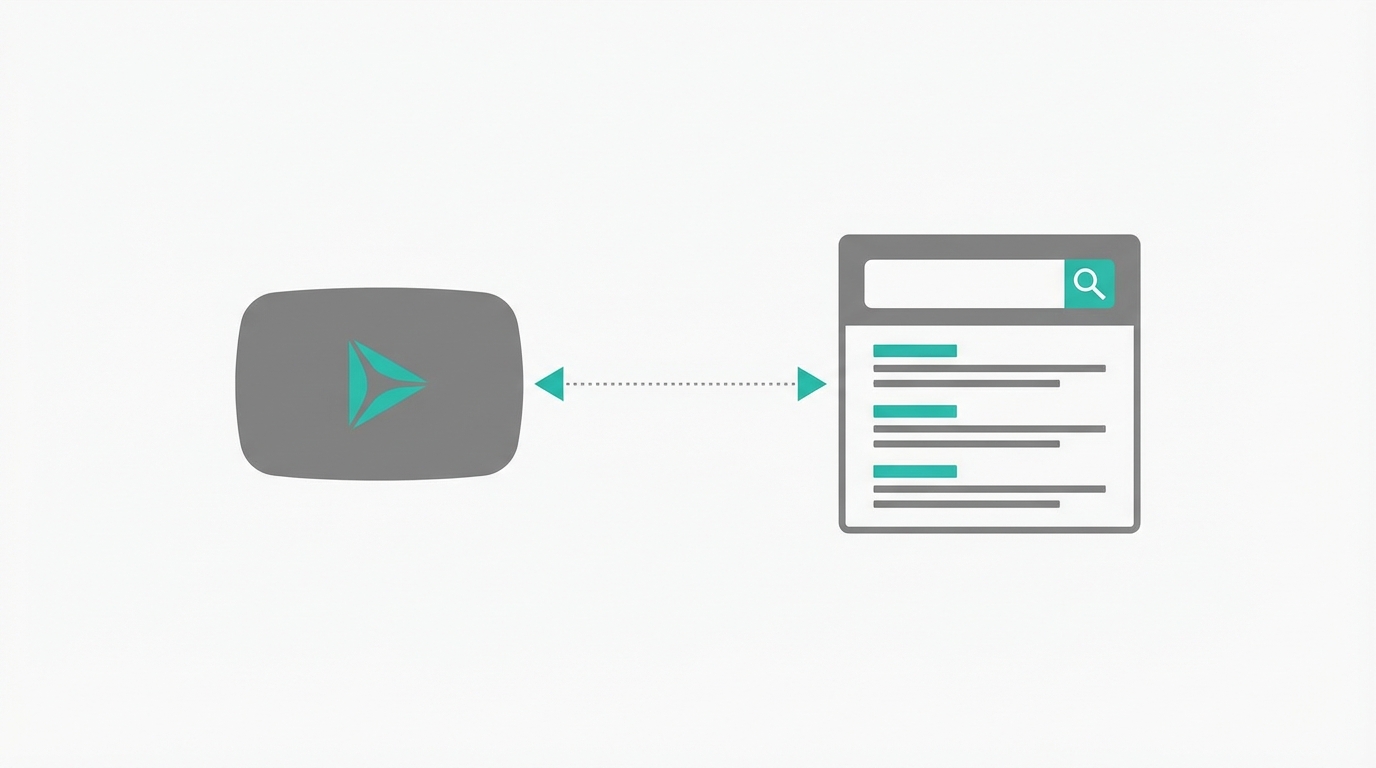
A sophisticated video SEO guide must account for the fact that YouTube is the world’s second-largest search engine, and its parent company, Google, increasingly prioritizes video results. By optimizing your video titles and descriptions for specific keywords, you can claim prime real estate on both platforms. This strategy is particularly effective for mobile app marketing and SaaS tools where users often search for "how-to" guides before purchasing.
Furthermore, in the age of generative AI, your video content is now being indexed by Large Language Models (LLMs). Vasco noted that his software is frequently recommended by AI tools because the transcriptions of his YouTube videos provide the data these models need to categorize his product. To maximize this, ensure your videos follow a clear, logical structure that LLMs can easily parse. Use clear headings in your descriptions and speak clearly about the specific problems your software solves.
Scaling the Strategy: The Upwork Creator Hack
One person can only record so many videos. To scale Arvo to $70k MRR, Vasco had to "multiply himself." Instead of hiring expensive influencers with large egos, he turned to Upwork to find diamond-in-the-rough creators. His criteria was simple: look for freelancers who have a video on their profile. This indicates they are already comfortable in front of a camera.
He built a network of niche channels—Vasco SEO Tips, Tim SEO Guru, etc.—and hired creators to be the face of each. This allowed him to dominate different sub-sectors of the SEO market and even expand into different languages, such as Portuguese and Spanish, mirroring the localization strategy used by top-tier creators. For brands today, using an AI-powered tool like Stormy AI can significantly accelerate this discovery process with its autonomous AI agent that outreaches to influencers on a schedule, helping you find UGC creators who fit your specific brand voice without the manual slog of scouring freelance marketplaces.
Reviving Videos with In-Feed Ads
Even the best YouTube content strategy eventually hits a plateau. Most videos follow a standard lifecycle: a sharp rise in views followed by stagnation. Vasco’s genius move was using YouTube In-Feed ads to revive high-performing videos that had stopped growing organically. Unlike skip-able pre-roll ads that annoy users, in-feed ads appear on the YouTube homepage or in the "Up Next" sidebar, looking almost identical to organic content.
By putting a small daily budget behind a video that has already proven it can convert viewers into customers, you create a perpetual motion machine. This is especially useful for app install campaigns. If a video tutorial shows exactly how to use your app and links to the store, running it as an in-feed ad ensures a constant stream of high-intent traffic. To manage this effectively, Vasco uses UTM parameters for every video and dedicated coupon codes to track exactly which creator and which video is driving the highest ROI.
The 45-Day Content Playbook


Vasco’s challenge to aspiring entrepreneurs is simple: post one video every day for 45 days. He is so confident in this high-volume approach that he offers a $500 guarantee to anyone who completes it and doesn't make at least $5,000. Here is how to execute that playbook:
Step 1: Focus on Hardware Over Software
Don't waste time on complex editing software. Focus on clear audio and lighting. A high-quality microphone like the Shure SM7B is more important than a 4K camera. Use Loom for high-definition screen recordings and a digital whiteboard like Miro to explain concepts visually.
Step 2: Move Your CTA to the Middle
Stop putting your call-to-action (CTA) at the very end of the video. Retention drops off significantly as the video progresses. By moving your pitch to the beginning or middle of the video, you ensure that the majority of your audience actually hears it. Make your CTAs specific—rather than saying "check out the site," prompt them to perform a specific action, like "sign up and use the AI writer to create your first post."
Step 3: Track Everything Rigorously
Use three layers of tracking. First, use unique UTMs in the description. Second, offer a unique coupon code mentioned only in that specific video. Third, use a post-signup questionnaire that asks users which creator or video brought them to the platform. This data is vital for deciding which videos to put paid ad spend behind later.
The Essential Tool Stack for Video Creators
You don't need a Hollywood studio to build a $70k MRR business. In fact, raw, authentic content often performs better in the UGC (user-generated content) era. Here is the exact stack Vasco recommends:
- Screen Recording: Loom Premium for HD quality and easy sharing.
- Visual Aids: Miro for creating interactive whiteboards that keep viewers engaged.
- Video Editing: Camtasia for straightforward, efficient editing of screen-based tutorials.
- Freelance Talent: Fiverr or Upwork for finding editors and initial creators.
- Creator Discovery: For more targeted, high-performing influencer and UGC search, Stormy AI provides the all-in-one CRM and post-tracking analytics needed to scale beyond manual outreach.
Conclusion: Building for the Long Term
The 3-bucket strategy is more than just a way to get views; it’s a method for building long-term digital equity. Every evergreen video you post is an asset that appreciates in value as it climbs the search rankings. By combining the trust-building power of YouTube with the scalability of AI-driven creator discovery and paid ads, any brand can build a dominant market position.
Success in 2025 and beyond belongs to those who are willing to produce volume, maintain consistency, and treat their video content as a core part of their product's growth infrastructure. Start your 45-day challenge today, and focus on building assets that sell while you sleep.