Closing the Output Gap: A 2026 Strategy for Buffer, HubSpot, and Ocoya
Learn how to close the 'Output Gap' in 2026 with a high-efficiency marketing strategy using Buffer, HubSpot, and Ocoya to boost content volume by 150%.
In 2026, the digital landscape has reached a tipping point where manual content creation is no longer a viable competitive strategy. Marketing agencies and growth teams are currently facing a phenomenon known as the Output Gap. This gap represents the massive disparity between brands that utilize social media marketing automation to flood every available channel and those still relying on traditional, human-only workflows. To dominate the social feeds this year, your organization must adopt a high-efficiency content distribution strategy that leverages the combined power of Buffer, Stormy AI, and Ocoya.
Defining the 'Output Gap': The New Competitive Baseline
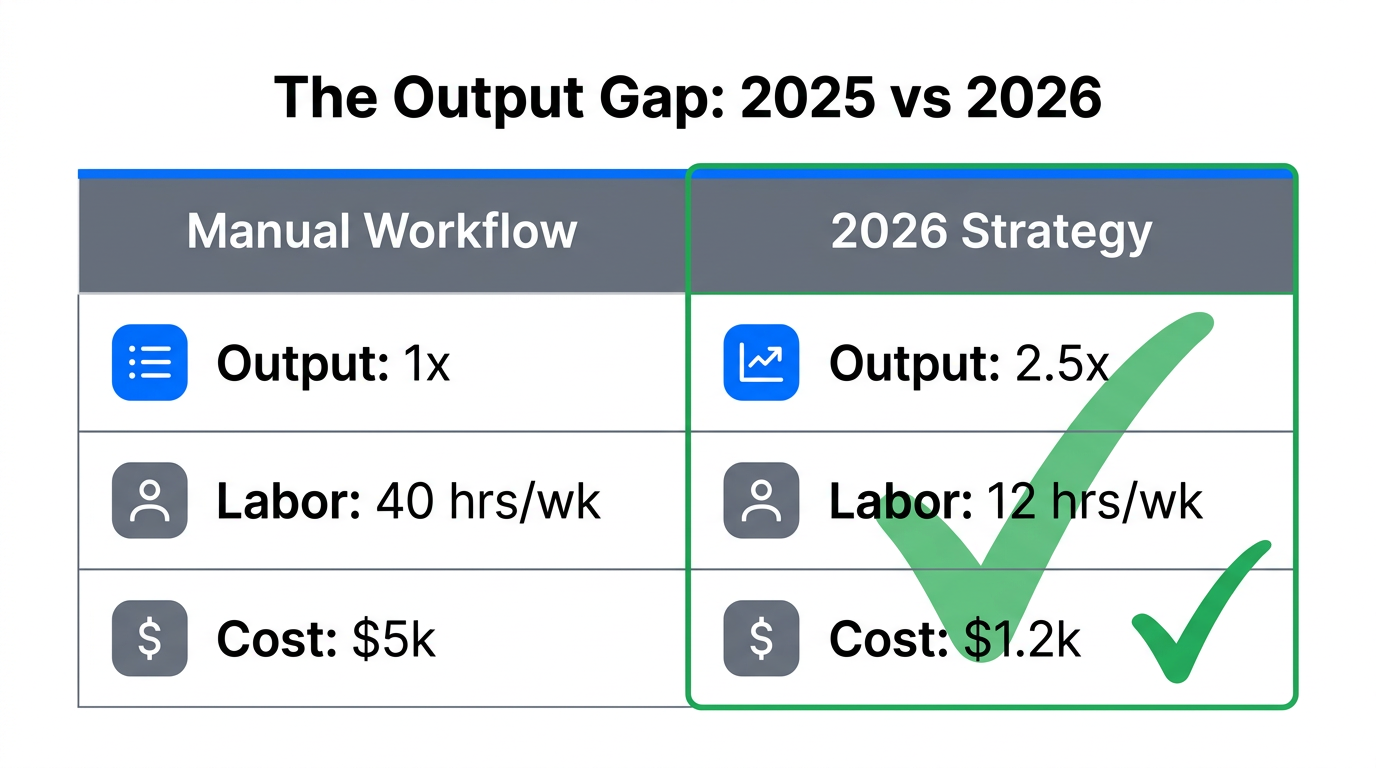
The term "Output Gap," coined by industry experts like John Premkumar of Infosys, describes a world where AI-enabled competitors can publish ten times more quality content than those working manually. According to MarTech research, this surge in volume doesn't just increase brand awareness; it effectively dominates search results and social algorithms, pushing slower competitors into obscurity. In 2026, the goal isn't just to be present; it's to be omnipresent.
"The Output Gap is the single biggest threat to legacy agencies. In 2026, if you aren't producing 10x the content of your 2024 baseline, you are effectively invisible to the algorithm."
By shifting to an automated infrastructure, marketing departments are seeing a 14.5% increase in productivity and a significant 12.2% reduction in overhead costs, as highlighted by Templated.io. For a scaling social media agency, these efficiency gains are the difference between stagnation and exponential growth. The average AI marketing ROI currently sits at $5.44 for every $1 invested, according to latest data from Influencer Marketing Hub, making the transition to an automated stack not just a choice, but a financial necessity.
The Ocoya Playbook: Instant Content Generation and Multi-Channel Planning
To close the Output Gap, you need a tool that bridges the space between ideation and execution. Ocoya serves as the high-velocity engine of this 2026 strategy. Unlike traditional schedulers, Ocoya combines content creation, AI captioning, and scheduling into a single interface, allowing teams to move from a blank page to a multi-channel campaign in minutes.
Step 1: AI-Powered Campaign Architecture
Instead of manually drafting posts for each platform, start by feeding your product links or campaign themes into Ocoya’s AI engine. The platform uses hyper-personalization at scale to generate dozens of slight content variations based on user behavior and platform-specific requirements. As noted by Flytask, this approach moves away from "one-size-fits-all" posts and toward dynamic content that resonates with specific niche segments.
Step 2: Syncing the Product Catalog
For e-commerce brands, 2026 is the year of social commerce explosion. By syncing your Shopify or WooCommerce catalog directly with your creation tools, you can automate daily product posts. This ensures that new arrivals and bestsellers are instantly formatted into shoppable content, reducing the friction in the buying journey as described by ALM Corp.
| Feature | Manual Workflow | Ocoya + AI Workflow |
|---|---|---|
| Caption Generation | 15-30 minutes per post | Instant AI variations |
| Platform Optimization | Manual resizing/formatting | Automatic multi-channel adaptation |
| Product Integration | Manual image uploads | Direct Shopify/WooCommerce Sync |
| Volume Potential | 3-5 posts per week | 10+ posts per day |
Workflow Automation: Connecting Buffer to Stormy AI for Revenue Tracking
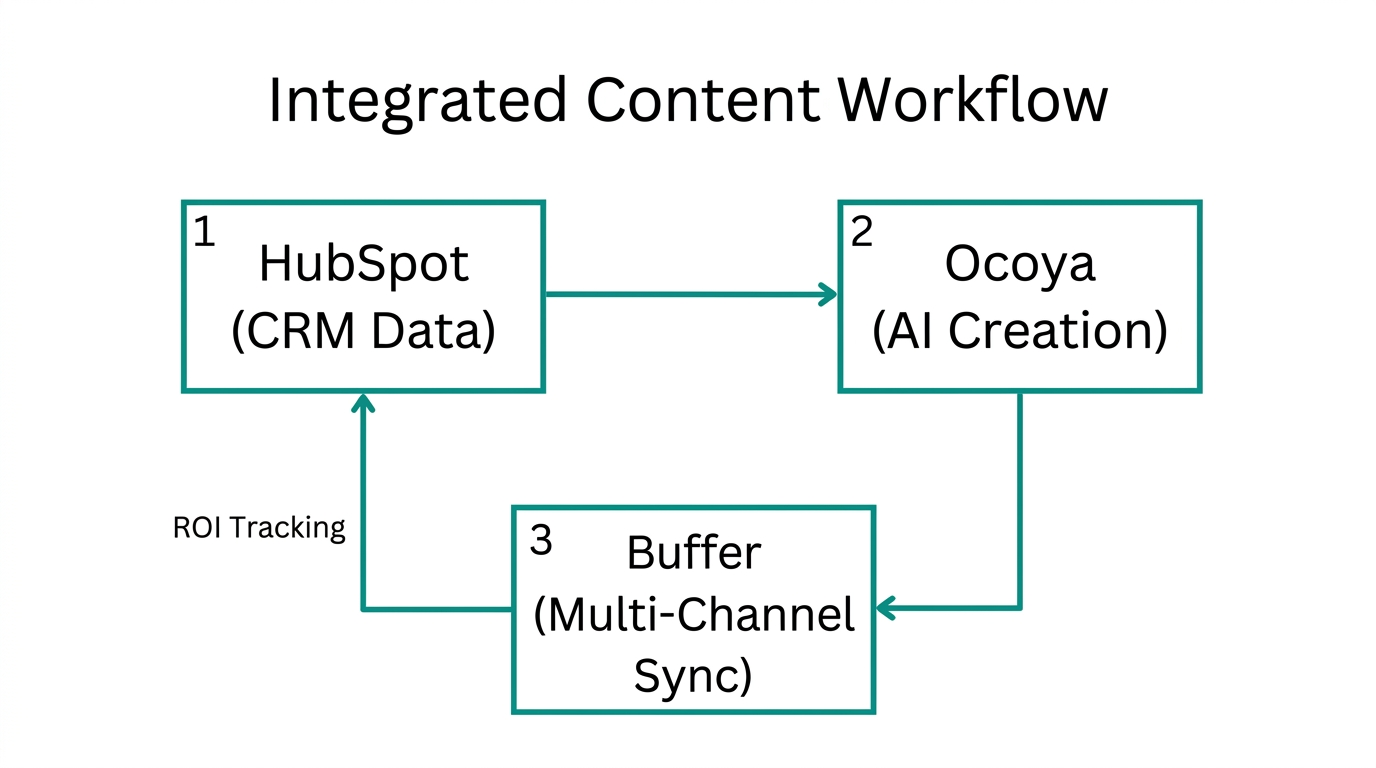
Content volume is useless if it doesn't lead to conversion. In 2026, leading growth teams are connecting Buffer for distribution and Stormy AI for revenue and creator attribution. This allows you to track the direct ROI of every social interaction, turning "likes" into traceable lead data.
When you use social media marketing automation to distribute content through Buffer, every click should be tagged with UTM parameters that feed directly into your Stormy AI CRM. This integration allows you to see which specific social posts influenced a high-value deal. By identifying these patterns, you can double down on the content pillars that actually drive growth rather than just engagement.
Furthermore, using AI-driven scheduling that analyzes real-time audience activity peaks—rather than static schedules—typically results in a 20–30% lift in engagement per post. Platforms like Buffer and other advanced AI suites now offer these predictive timing features as standard, ensuring your high-volume output hits the feed when your audience is most likely to convert.
"The 2026 marketer doesn't ask if social media works; they show exactly how much revenue a single LinkedIn post generated through their CRM dashboard."
Scaling a Lean Team: Managing 50+ Accounts with AI Agents
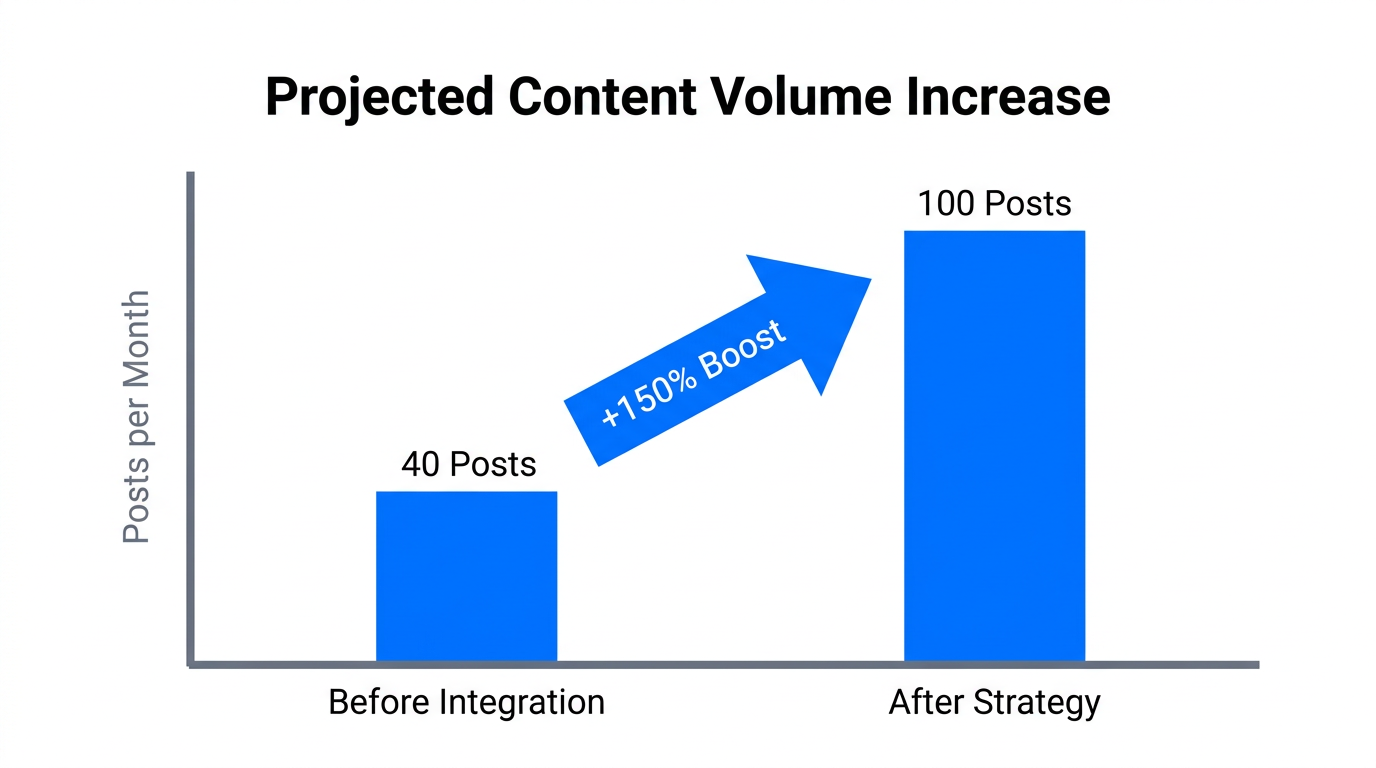
One of the most impressive feats of 2026 marketing is the ability of a 3-person team to manage the social presence of 50+ clients. This is made possible through AI Agents and predictive segmentation. A case study from DevITCloud showcases an agency that boosted content volume by 150% while saving 70% of manual work time by implementing autonomous scheduling agents.
To achieve this, teams are adopting the 70:30 Rule. As recommended by Hashmeta, 70% of content—routine scheduling, repurposing blogs, and hashtag research—should be handled by AI. This leaves 30% of the team’s time for human-led storytelling, real-time community engagement, and high-level strategy. This balance prevents the "Autopilot Trap" where brands become tone-deaf or disconnected from their audience.
While automation handles the bulk of distribution, sourcing the high-quality User Generated Content (UGC) that fuels these feeds is the next challenge. Platforms like Stormy AI streamline this by helping brands discover and outreach to creators who can provide the raw video and photo assets that AI then repurposes across dozens of posts.
Reducing Overhead and Maximizing AI Marketing ROI
The financial argument for scaling social media agency operations with AI is undeniable. Beyond the 12.2% reduction in overhead costs, the ability to repurpose a single asset into multiple formats is a massive cost-saver. By using tools like Predis.ai or Ocoya, a single blog post can be transformed into:
- A 60-second TikTok script with trending sounds.
- A series of 5 high-engagement Instagram Reels.
- Ten unique LinkedIn carousels.
- A set of Shoppable Pins for Pinterest.
This content distribution strategy ensures that no effort is wasted. Instead of paying a designer to create four different assets, the AI "clones" your brand voice—as advocated by Brittany Long of Impact Driven AI—and generates these variations at zero marginal cost. This allows small teams to operate with the capacity of a global agency without the associated payroll.
Avoiding the 2026 Automation Pitfalls
Despite the efficiency gains, total automation is not without risks. 52% of consumers are increasingly wary of brands that post AI-generated content without disclosure, according to research found on ALM Corp. To maintain trust, brands must be transparent about their AI use and ensure a human remains "in the loop" for final approvals.
Common mistakes to avoid in your 2026 strategy include:
- Generic Brand Voice: Failing to train your AI on specific brand guidelines, resulting in content that sounds like a generic chatbot (WayMore).
- Lack of Real-Time Relevance: Scheduling weeks of content without checking for shifting trends or global events (LinkNow).
- Over-Automation: Neglecting the 30% of human interaction that builds genuine community rapport.
"AI can scale your reach, but only human intuition can scale your brand's soul. Don't let the machine talk to your customers until a human has taught it how to listen."
The Path Forward: Closing the Gap
Closing the Output Gap in 2026 requires a shift in mindset from creation to orchestration. By integrating Ocoya for high-speed content generation, Buffer for strategic distribution, and Stormy AI for revenue tracking, marketing agencies can finally achieve the scale needed to dominate the modern social feed.
Start by identifying the 70% of your mechanical tasks that can be offloaded to social media marketing automation. Once your infrastructure is in place, you can focus your energy on the 30% that truly matters: strategy, creativity, and building lasting relationships with your customers. The future of marketing is high-volume, high-value, and high-efficiency—and the tools to achieve it are already at your fingertips.