The 2026 Social Commerce Playbook: Automating Shopify and WooCommerce Sales with Xyla AI and Flytask
Learn how to master shoppable social media posts in 2026 using Shopify social media automation and TikTok trend automation for explosive e-commerce growth.
In 2026, the barrier between "scrolling" and "shopping" has effectively vanished. With U.S. social commerce expected to exceed $100 billion this year, according to ALM Corp, the traditional manual workflow of posting products is no longer just inefficient—it is a competitive liability. The industry has moved beyond simple post-schedulers into the era of autonomous AI agents that don’t just post content but manage entire multi-platform growth cycles. For Shopify and WooCommerce store owners, the goal is no longer just to be present on social media; it is to build a self-sustaining ecosystem where shoppable social media posts are generated, optimized, and published in real-time based on live inventory and viral trends.
The 2026 Shift: From Generators to AI Agents
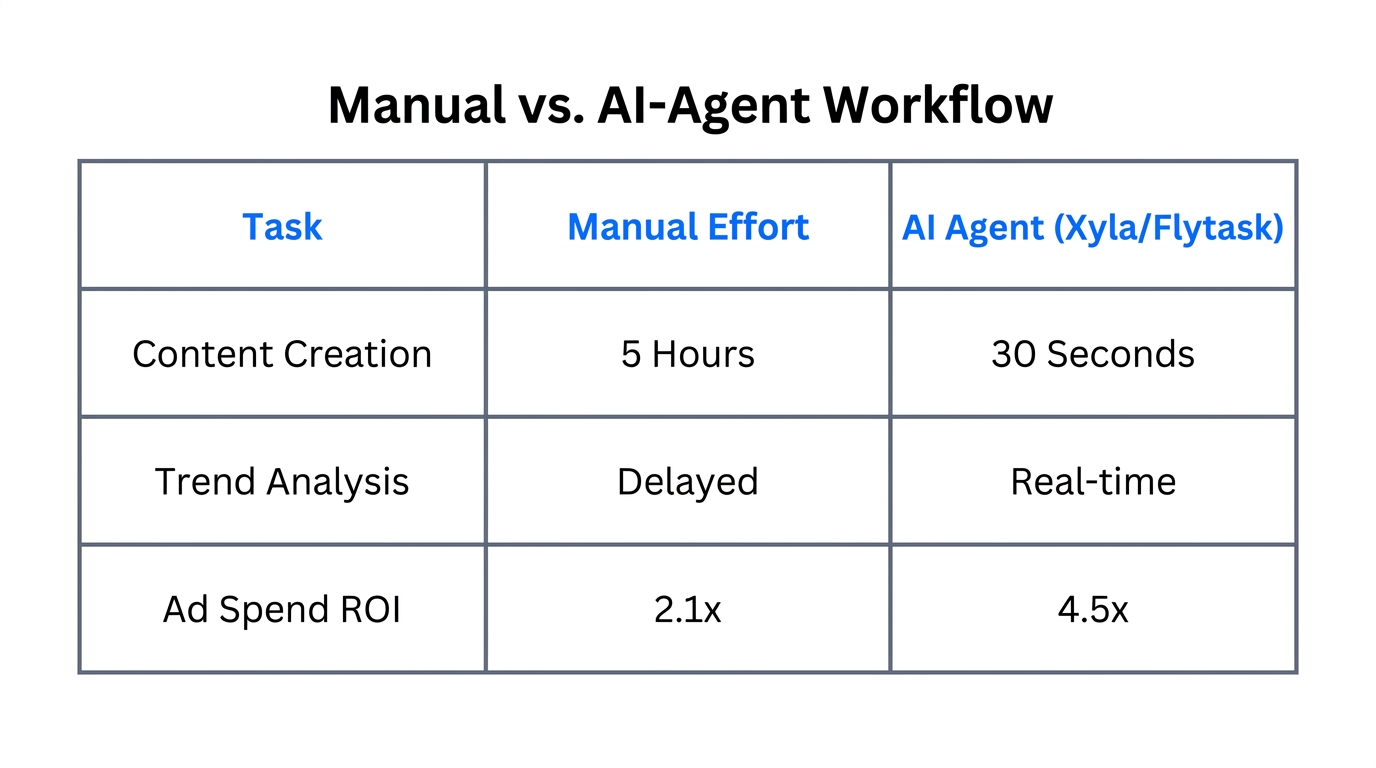
Last year was about AI generation; 2026 is about AI agency. As Collective Alternative notes, the trend has shifted toward tools that autonomously gather data and interact across systems with minimal human input. This is particularly vital for e-commerce, where 69.1% of marketers have already incorporated AI into their strategy to handle the increasing complexity of multi-channel sales, as reported by Sociality.io. By utilizing platforms like Xyla AI for catalog management and Flytask for campaign orchestration, brands are closing the "output gap"—a term coined by John Premkumar of Infosys to describe the massive advantage AI-powered teams have in volume and reach.
"The output gap is real: competitors using AI can now publish ten times more quality content than those working manually, effectively dominating social feeds."
Step 1: Automating Shopify and WooCommerce Product Loops
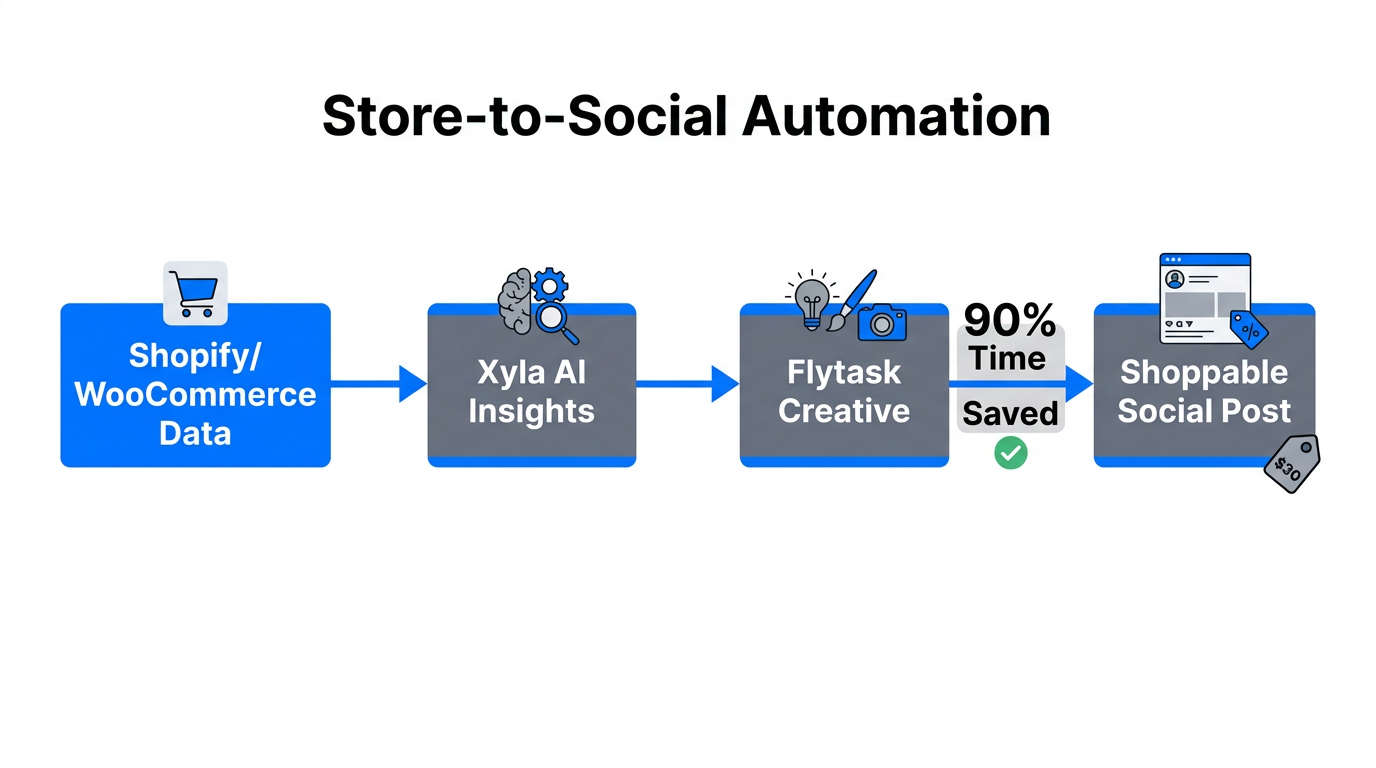
The foundation of Shopify social media automation is a direct sync between your product catalog and your AI agent. Tools like Xyla AI connect directly to your store’s API, allowing the system to "know" the moment a new product is added or when a specific item becomes a bestseller. Instead of a social media manager manually downloading images and writing captions, the AI agent identifies these inventory shifts and triggers a sequence of shoppable social media posts.
The Technical Integration Workflow
- API Connection: Connect Xyla AI to your Shopify or WooCommerce backend. This grants the AI access to product descriptions, pricing, and high-resolution imagery.
- Content Pillar Setup: Define your "New Arrival" and "Bestseller" triggers. For example, instruct the AI to generate a 5-slide Instagram carousel every time a new SKU is added with more than 50 units in stock.
- Voice Training: Use the "cloning" technique advocated by Brittany Long of Impact Driven AI, which you can learn more about via Social media Examiner. This ensures that every automated post sounds like your brand, not a generic chatbot.
| Automation Trigger | AI Action | Platform Focus |
|---|---|---|
| New Product Added | Generates 1x Reel, 1x Pin, 1x Tweet | Instagram, Pinterest, X |
| Inventory < 10 Units | Triggers "Last Chance" urgency post | Instagram Stories, Facebook |
| Bestseller Status | Creates "Customer Favorite" video | TikTok, YouTube Shorts |
Step 2: TikTok Trend Automation with Flytask Agents
TikTok moves faster than any other platform, making manual trend-jacking almost impossible for small teams. This is where TikTok trend automation becomes a superpower. By using AI agents like Flytask, brands can monitor trending sounds and visual filters in real-time. When a trend aligns with your brand’s niche, the agent can automatically suggest how to adapt your existing product features into a viral-ready video format.
To keep your feed authentic, follow the 70:30 Rule suggested by Hashmeta: use AI to handle the mechanical 70% of content—routine scheduling, hashtag research, and basic repurposing—while reserving 30% for human-led storytelling. To fuel this pipeline with high-quality assets, many brands use Stormy AI to discover and vet UGC creators who can provide the raw video footage that AI agents then edit and optimize for specific trends.
"Trend-jacking is no longer about being clever; it's about being fast. If you aren't reacting to a TikTok sound within 48 hours, you've already missed the wave."
Step 3: Scaling Pinterest Marketing for E-commerce
Pinterest is a sleeping giant for social commerce, specifically because its users have high purchase intent. Effective Pinterest marketing for e-commerce in 2026 involves the automated creation of "Shoppable Pins." Using tools like Predis.ai, you can convert a single product link into a high-performing Pin that includes direct pricing and deep links back to your checkout page.
AI agents can analyze which product images perform best on Instagram and automatically repurpose those high-engagement visuals into Pinterest-optimized layouts. This cross-platform intelligence ensures that you aren't just posting everywhere, but posting what works. For agencies managing multiple stores, this level of automation is the only way to scale; one case study from DevITCloud showed an agency boosting content volume by 150% while saving 70% of manual work time through similar AI scheduling tactics.
Predictive Timing Over Static Scheduling
The biggest mistake in 2026 is sticking to a rigid "Monday/Wednesday/Friday" posting schedule. Modern AI agents have moved toward predictive timing. Instead of guessing when your audience is online, AI analyzes real-time activity peaks which can shift drastically during holiday sales or global events. Advanced social management platforms use algorithmic scheduling to identify these windows, but AI agents take it a step further by adjusting the type of content based on the time of day—e.g., educational content in the morning, high-energy shoppable Reels in the evening.
The "Autopilot" Trap: Pitfalls to Avoid
While automation is powerful, it is not foolproof. Hashmeta warns against the "Autopilot Trap"—treating AI as a fully autonomous manager that requires no oversight. This can lead to tone-deaf posts during sensitive global events or factual inaccuracies in pricing. Furthermore, WayMore highlights the risk of a generic brand voice; if you don't train your AI agents on your unique brand identity, your feed will eventually sound like a repetitive chatbot, alienating your most loyal customers.
Always maintain a human-in-the-loop for final approvals of high-stakes campaigns. This balance ensures you benefit from the efficiency of AI—which boasts an average ROI of $5.44 for every $1 invested according to Templated.io—without sacrificing the soul of your brand.
"Automate the workflow, but never the empathy. Your customers can tell when a brand has stopped caring."
Conclusion: Building Your Automated Sales Engine
The 2026 playbook for social commerce is clear: integrate, automate, and iterate. By connecting your Shopify or WooCommerce store to AI agents like Xyla and Flytask, you transform your social media from a chore into a high-velocity sales engine. Remember to utilize tools like Stormy AI to keep your content library fresh with authentic creator content, and always prioritize predictive timing over static queues. The brands winning in 2026 aren't the ones working the hardest—they're the ones with the smartest agents.