In early 2026, the era of the "prompt engineer" has officially given way to the Skill Engineer. For the last three years, marketing consultants and agencies lived on the "prompt engineering hamster wheel"—the exhausting cycle of re-explaining brand context, tone, and campaign goals in every new chat window. But as we move through 2026, the market has shifted. According to recent data from Fortune Business Insights, the global market for agentic AI has reached $9.14 billion, driven by a move toward persistent, tool-augmented capabilities. The gold rush isn't in selling PDF prompt packs anymore; it's in selling executable Skill Folders that plug directly into an agent's brain.
The Death of the Prompt Marketplace: Why Skills are the New Gold Rush
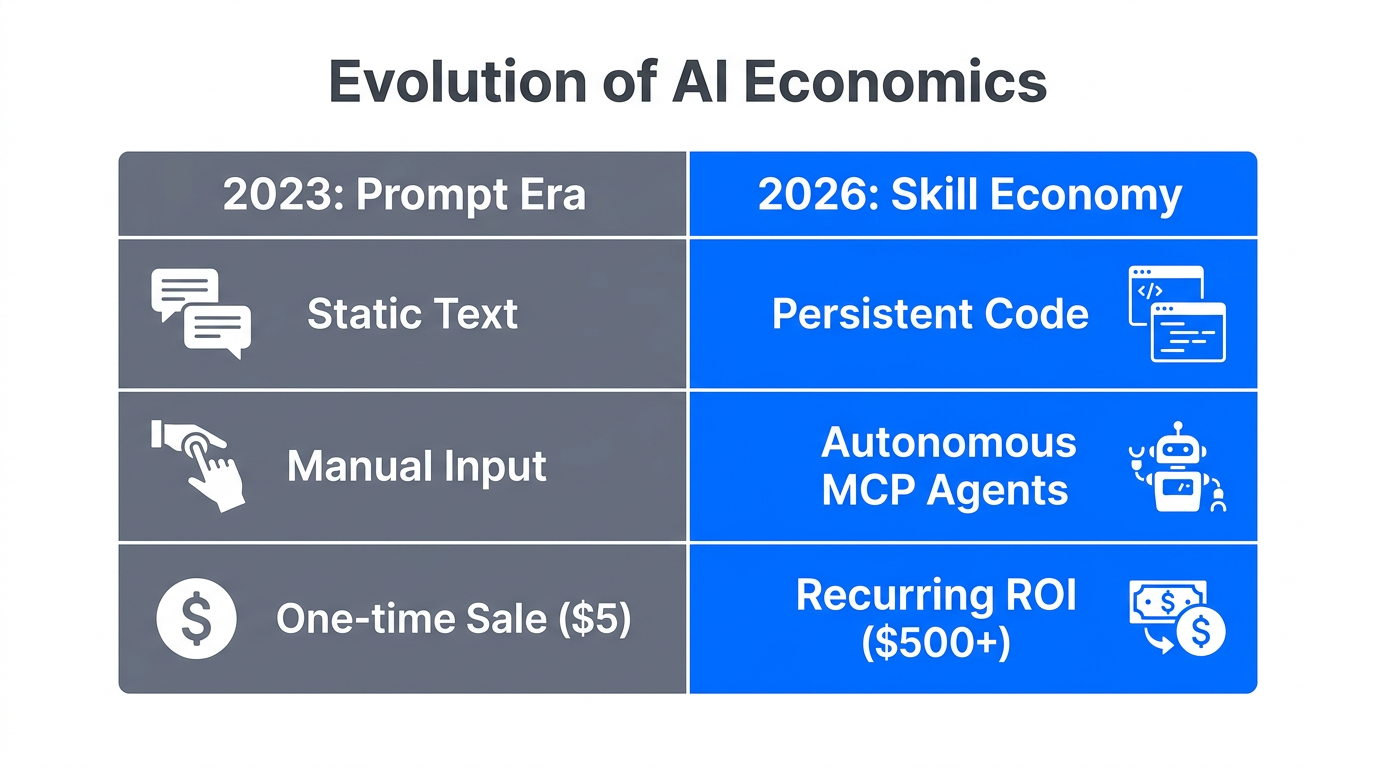
In 2024 and 2025, entrepreneurs made millions selling "Mega-Prompts" on marketplaces. By 2026, those prompts are considered "low-leverage" fossils. The fundamental flaw of a prompt is its lack of persistence—it dies when the session ends. Today, agency owners are building Model Context Protocol (MCP) servers and Skill folders that act as a permanent "brain upgrade" for tools like Claude Code.
The MCP ecosystem has exploded from 1,000 servers in early 2025 to over 10,000 active servers today. This growth reflects a massive shift in how businesses integrate AI. Instead of teaching an AI how to do marketing every morning, you install a "Marketing Skill" that already knows how to access your Meta Ads Manager, pull your latest TikTok Ads performance data, and cross-reference it with creator lists from Stormy AI to suggest new partnerships.
"The real test in 2026 is no longer writing clever prompts, but guiding agentic systems with judgment and accountability." — Bernard Marr, Author and Analyst.
| Feature | Prompt Engineering (Old School) | Skill Engineering (2026 Standard) |
|---|---|---|
| Persistence | Ephemeral (Lost per chat) | Persistent (Folder-based) |
| Context | Manual (Copy-paste) | Automatic (via MCP) |
| Execution | Suggestions only | Executes code/commits |
| Scaling | Linear | Exponential |
The Triple Crown Standards: Packaging Agency Expertise
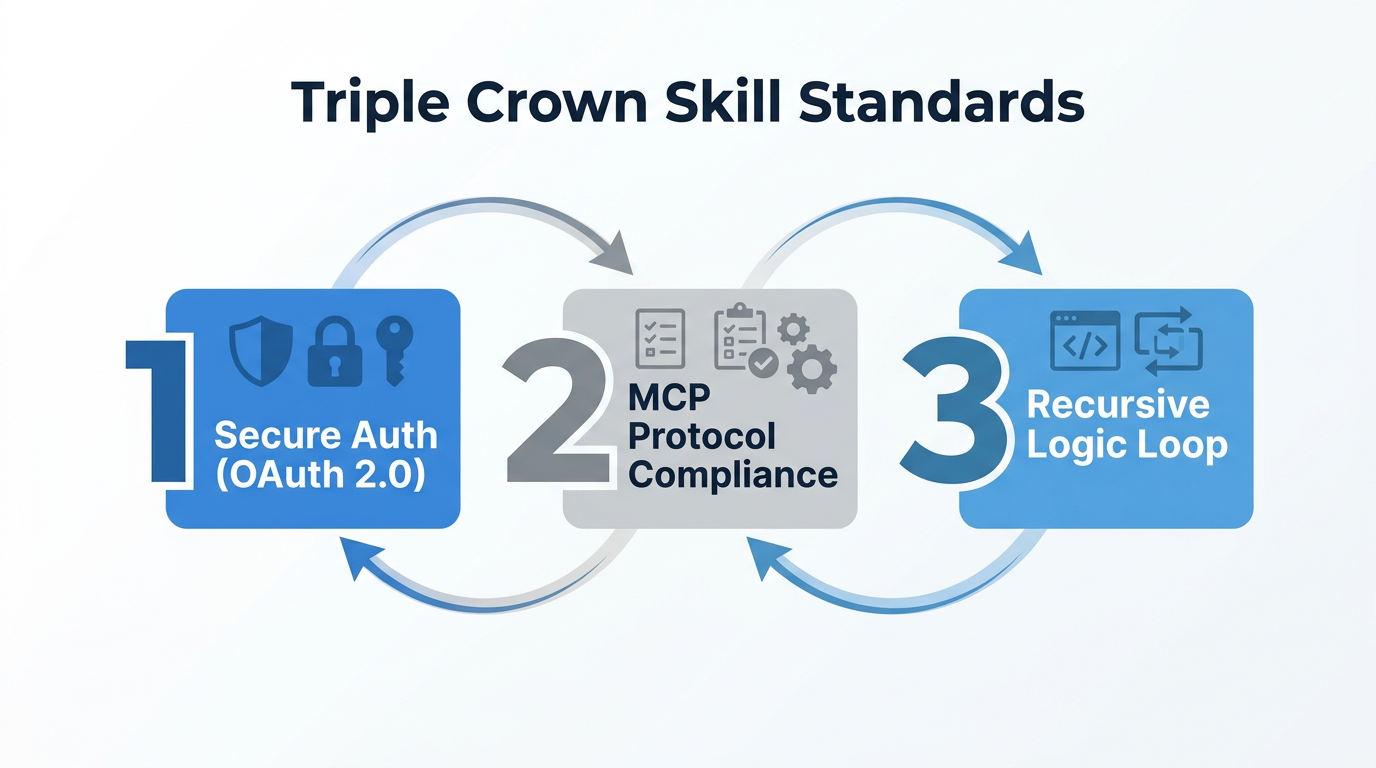
To monetize AI agents effectively in 2026, your "Skill" must adhere to the Triple Crown of agentic standards. These are the protocols that ensure your marketing workflow can run on any enterprise system without custom coding.
- MCP (Model Context Protocol): The bridge that connects Claude or GPT-5 to your data sources. If you're building a content marketing skill, your MCP server should be able to fetch live SEO data from tools like SEOptimer or search indices.
- Goose: The open-source local execution framework from Block. It allows your skills to run locally on a client's machine without sending sensitive data to a central server.
- AGENTS.md: The universal markdown standard for project-specific instructions. Over 60,000 repositories now use this to tell agents how to behave within a specific folder.
By packaging your expertise into these three formats, you are no longer selling "advice." You are selling digital workers. An agency that specializes in App Store Optimization (ASO) can now sell a "Skill Folder" that a developer drops into their project. That folder contains a SKILL.md defining ASO logic and a .js helper that uses an MCP server to check rankings on Apple Search Ads.
Monetizing Marketing Skills: From Consultant to Software Provider
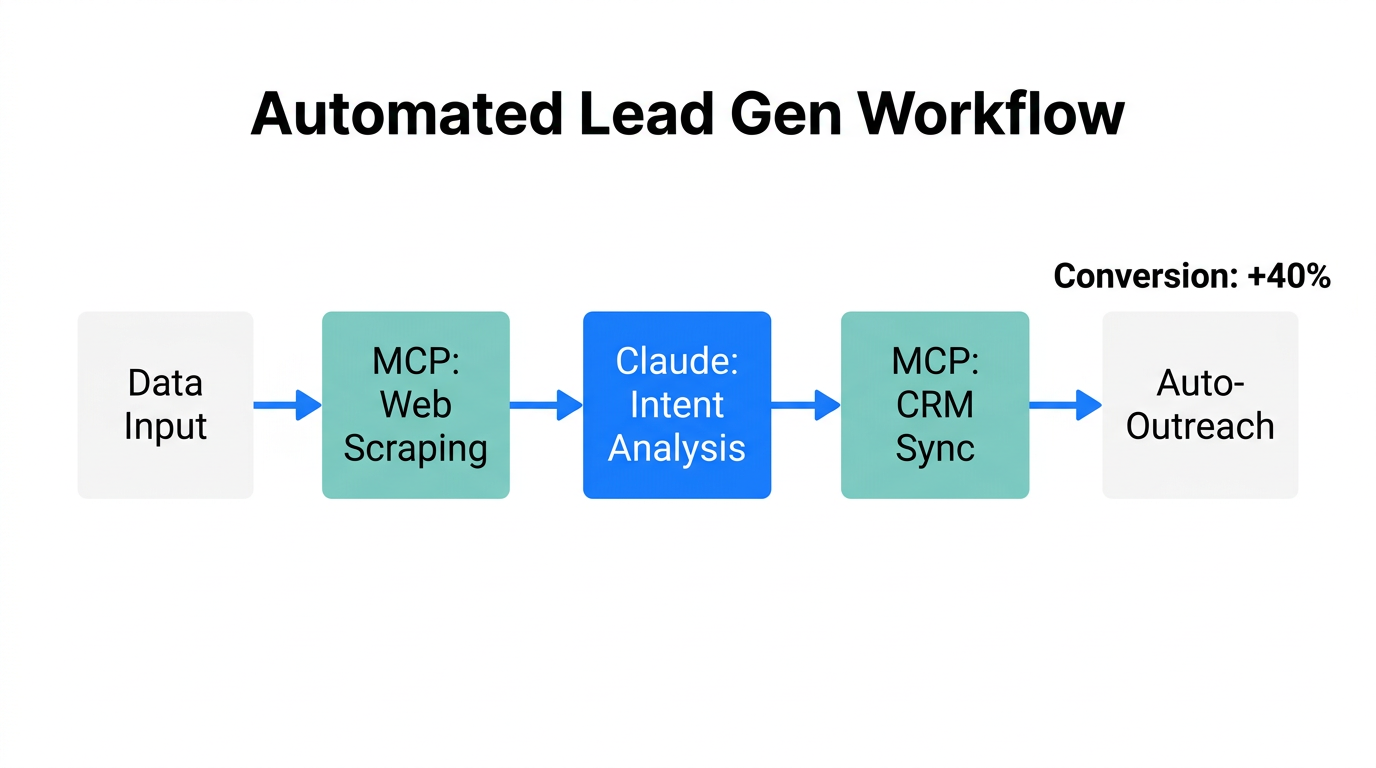
The business model for agencies in 2026 has been flipped on its head. Instead of charging for hours, they charge for Skill Access. A modern "Marketing Skill" for Claude Code is a directory that includes automated activation triggers. This is known as Progressive Disclosure—the model only loads your high-level instructions and scripts when it detects a task-match, such as when a user mentions "influencer outreach."
For example, a UGC (User-Generated Content) agency could build a skill that automatically identifies high-potential creators. When the user says, "Find me creators for our new fitness app," Claude Code activates the skill, calls the discovery engine, and returns a vetted list of influencers based on the agency's proprietary quality scoring logic.
"MCP will revolutionize software development... Instead of a tightly defined API, you put an LLM on both ends and let them negotiate." — Andy Ellis, Security Expert.
The Skill Engineering Playbook: Step-by-Step
- Step 1: Define the Domain: Choose a specific marketing niche (e.g., "SaaS Retention Email Logic").
- Step 2: Create mcp-server.json: Configure the connection to your tools, like Klaviyo or Stripe, to pull live data.
- Step 3: Write SKILL.md: Document the reasoning. If a customer has a churn risk > 20%, what is the agency-approved response?
- Step 4: Script the Tools: Use Javascript to create helper functions that the agent can execute autonomously.
- Step 5: Bundle and Sell: Package this folder for tools like Maxim AI or distribute it as a managed MCP server via AgentPatch.
Addressing the 2026 Security Crisis: Auditing Your Skills
As we dive deeper into the Skill Economy 2026, security has become the primary bottleneck. A 2026 audit by CData of over 2,600 MCP servers found that 82% were vulnerable to path traversal and 67% to code injection. For agencies selling skills, a single security breach can destroy a reputation.
The risk of Prompt-to-RCE (Remote Code Execution) is real. An attacker could potentially use the chat interface to inject commands that execute on the host machine via your Skill's tools. Entrepreneurs must implement strict sandboxing. Microsoft has already begun enforcing "Security-by-Default" for MCP in Windows 11, but for cross-platform tools like Claude Code, the responsibility lies with the Skill Engineer.
Key security practices for 2026 include:
- Input Validation: Never pass raw user prompts directly into shell commands within your JS tools.
- Credential Management: Use environment variables or secret managers like Supabase to store API keys for ad platforms.
- Audit Logs: Implement logging to track what actions the agent takes on behalf of the user.
The IDE Wars: Where to Deploy Your Marketing Skills
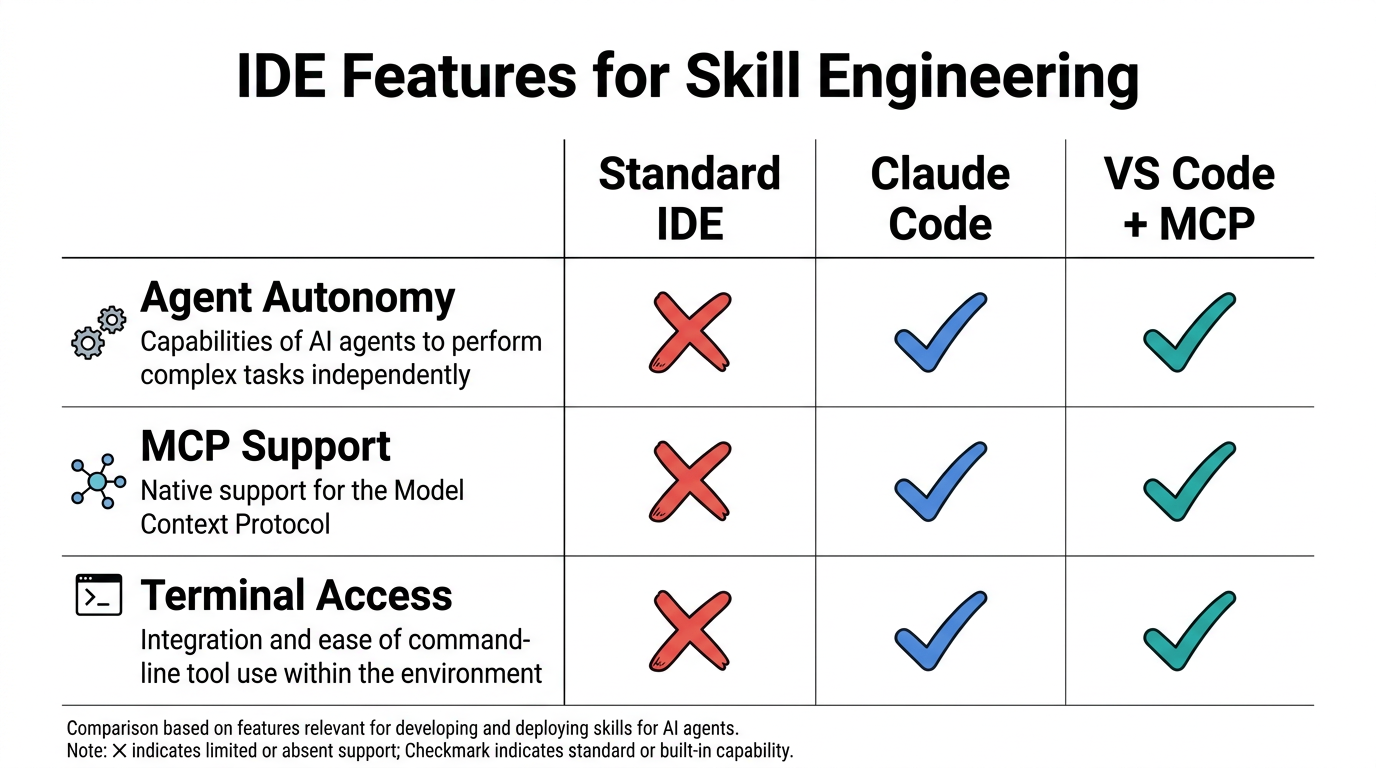
While you can build skills anywhere, the "IDE Wars" of 2026 have created distinct niches for different tools. Choosing the right environment for your marketing skill is crucial for user adoption.
| Tool | Primary Niche | Best For... |
|---|---|---|
| Claude Code | Complex Architecture | Deep reasoning and refactoring monorepos. |
| Cursor | Polished UX | Standard autocomplete and fast UI edits. |
| Windsurf | Rapid Prototyping | Building MVPs and front-end assets quickly. |
| OpenCode | Privacy Purists | Running local models without cloud leaks. |
For marketing agencies, Claude Code is currently the professional standard. Its ability to maintain "Deep Context" allows it to handle massive marketing plans and entire content databases without losing the plot. However, keep an eye on token costs. Sachin Rekhi recently pointed out that high-frequency MCP calls can become "token-expensive," recommending that high-frequency tasks be converted into Command Line Tool equivalents to save money.
"At $3 per million input tokens, your agent's 'thinking' can cost more than your rent if you don't optimize your MCP calls." — Sachin Rekhi, Product Leader.
Conclusion: The Future of the Skill Economy
The transition from Prompt Engineering to Skill Engineering isn't just a technical change; it's an economic one. By early 2026, 79% of organizations have adopted some level of agentic AI, according to Landbase. The businesses that thrive will be those that codify their unique "secret sauce" into executable, persistent skills.
If you are an agency owner or consultant, your task is clear: Stop writing prompts and start building servers. Move your workflows into .md and .js folders. Connect them to the data sources your clients already use, from HubSpot for sales data to Stormy AI for creator management. In the 2026 Skill Economy, persistence is the ultimate competitive advantage.