In 2026, the barrier between a domestic brand and a global powerhouse has been reduced to a few core primitives. Gone are the days when 'going global' meant spinning up five different Shopify store instances, fragmented inventory, and a customer support team drowning in translation tickets. Today, the most successful Direct-to-Consumer (DTC) brands treat their store as a single, modular engine capable of reconfiguring itself for any territory in real-time. This is the era of Composable Commerce, where the complexity of the back office isn't solved by more humans, but by smarter models and AI teammates.
Success in 2026 requires more than just a great product; it requires a deep understanding of your domain and the durability of your data models. As brands scale, they often reach a 'Neo in the Matrix' moment—a realization that the entire operation is essentially code and logic. When you model your cross-border DTC strategy correctly using primitives like Shopify Markets and multi-location inventory, you aren't just selling to new countries; you are bending the physics of commerce to your advantage. But managing these pieces manually is a 'gushing neck wound' for growth. That’s why an AI ecommerce employee like Stormy AI is now a standard part of the stack, handling the messy logistics while you focus on the brand.
The 2026 Shift: From Headless to Composable Commerce
 20:30
20:30For years, 'Headless' was the buzzword of choice for brands wanting flexibility. However, many discovered that headless setups often created as many problems as they solved—mostly in the form of technical debt and 'unforced errors' in developer ergonomics. In 2026, the industry has shifted toward Composable Commerce. This means instead of building a bespoke, monolithic frontend, brands use modular components that can be swapped and scaled independently.
"You can’t win by developer ergonomics alone, but you can very quickly lose if you don’t pay attention to it. Composable commerce is about modeling your domain so durably that it lasts for years, not just months."
Shopify has led this charge by breaking monolithic features into discrete components. Features like Metafields and Metaobjects have become load-bearing pillars, allowing brands to store complex data—like regional certifications, local size guides, or warehouse-specific lead times—directly inside the platform. When your data is modeled this way, Stormy AI can read these custom fields to automate decisions, such as which warehouse should fulfill an order based on the buyer's custom metadata.
Modeling Multi-Location Inventory for Global Fulfillment
17:25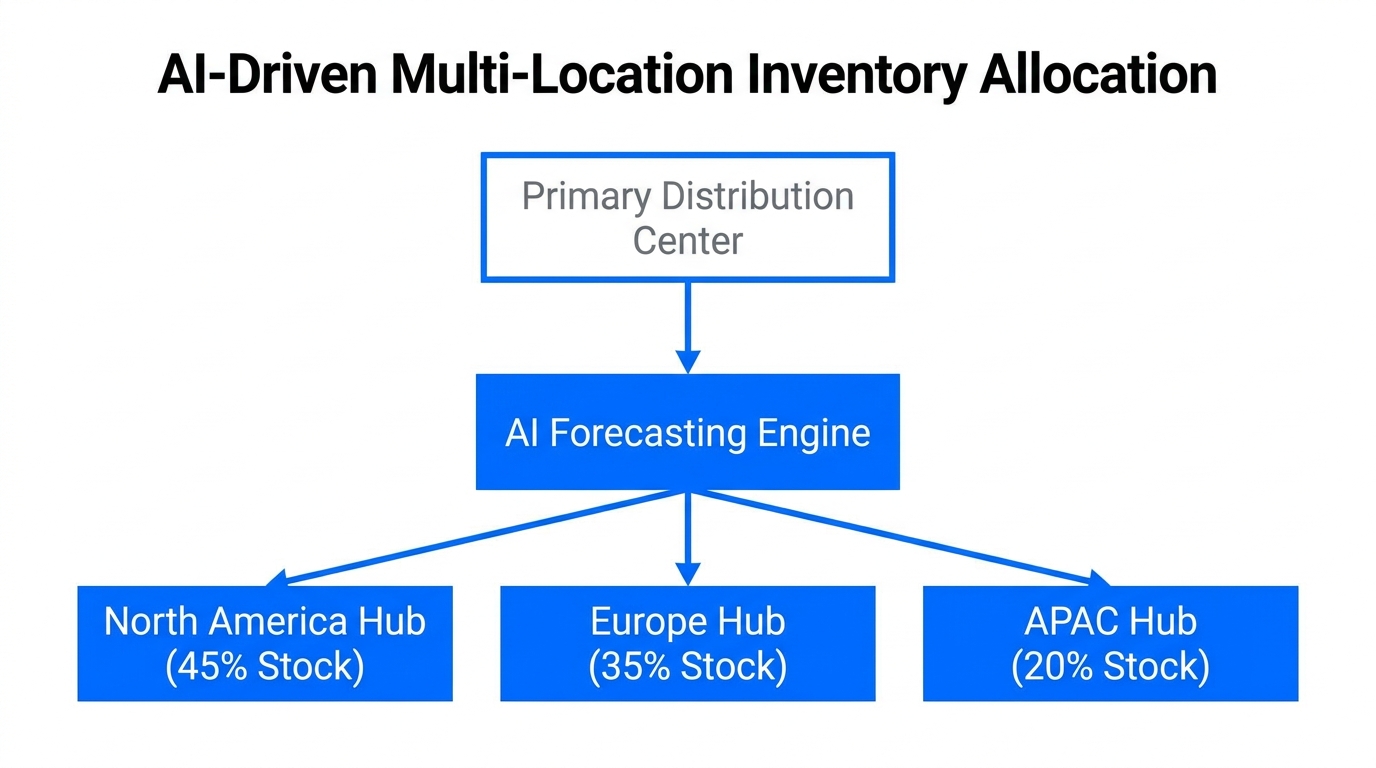
The foundation of any cross-border DTC strategy is multi-location inventory Shopify modeling. In the past, a 'location' was just a place to store boxes. In 2026, a location is a dynamic selling node with its own capabilities, events, and logic. You might have a central warehouse in the US, a 3PL in Germany, and a retail 'showroom' in London that only carries display stock but can trigger a shipment from the warehouse.
To scale without soaring shipping costs, you must model these locations to automate routing. This is where Stormy AI shines. Instead of a human manually checking which 3PL has the 'Blue Hoodie' in stock for a French customer, Stormy monitors inventory levels across all locations in real-time. If the German warehouse is low, Stormy can automatically trigger a restock from your primary supplier before a stockout occurs, ensuring you never lose a sale to a 'listing suppressed' notification on TikTok Shop or Amazon.
| Fulfillment Model | Best For | AI Automation Level |
|---|---|---|
| Centralized | Early-stage global scaling | Medium (Routing rules) |
| Regional 3PL | High-volume established markets | High (Inventory rebalancing) |
| Hybrid (Retail + Whse) | Omnichannel brands | Very High (BOPIS + Local Delivery) |
By modeling your domain correctly, you avoid the 'local solution' trap. As the Shopify team notes, solving a problem locally might seem easier today, but it can 'gum up' the entire system tomorrow. Modeling for the next ten years means ensuring every location, variant, and SKU is part of a cohesive global system.
Shopify Markets: Localizing Without Fragmentation
19:30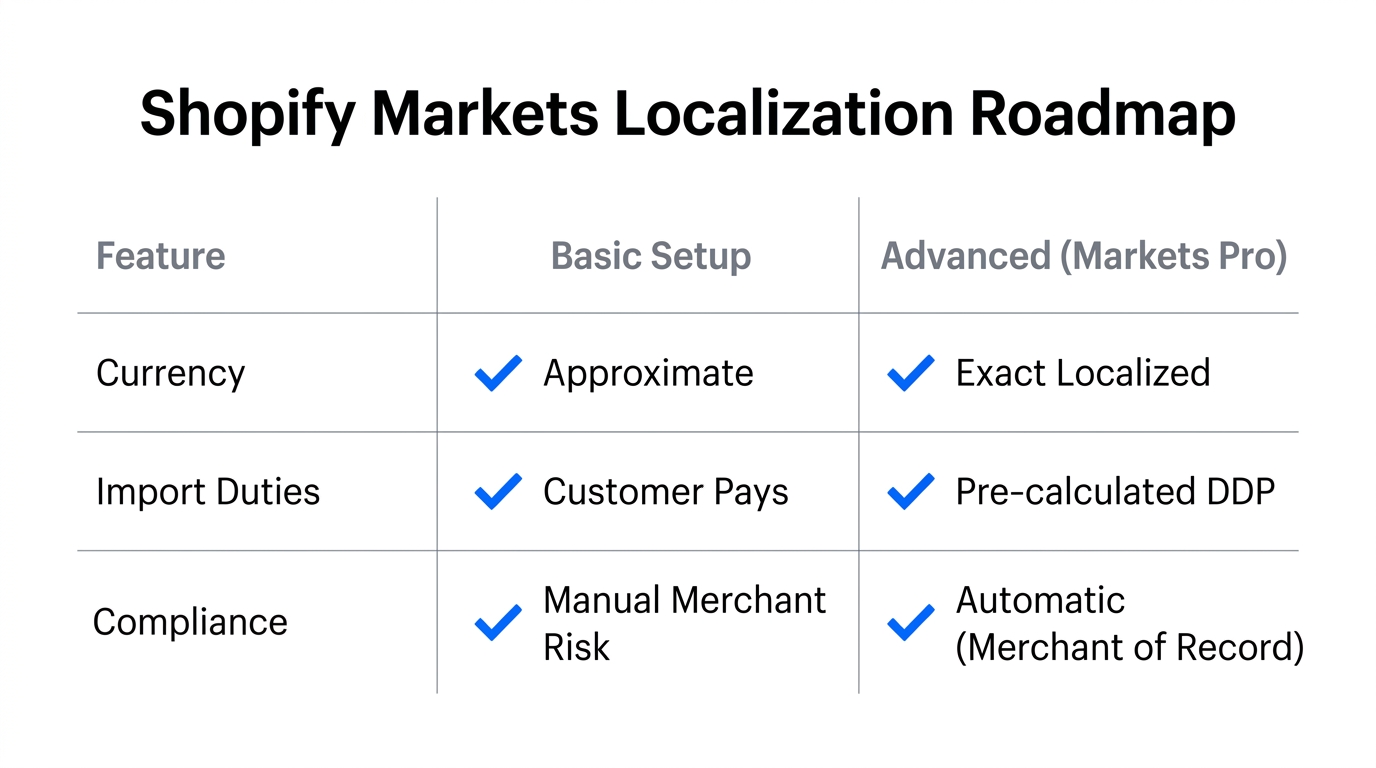
One of the biggest breakthroughs in Shopify inventory management is the ability to localize the 'presentation' of your store without creating separate instances. Shopify Markets allows you to manage currency, language, duties, and local payment methods from a single admin. This creates a unified 'contract' between the buyer and the merchant.
In 2026, localization goes beyond just translating text. It’s about 'presentation currency' and regional pricing strategies. You might want a higher margin in Switzerland to cover higher shipping costs, or a specific promotion for TikTok Ads in the UK. Shopify Markets makes this possible, but keeping it updated is a full-time job. This is why brands 'hire' Stormy AI to act as their global operations manager. Stormy can watch exchange rates, update regional price lists in a spreadsheet, and ask for human approval before pushing those changes live to your global storefront.
"The medium of global commerce requires both writers and editors. The AI acts as your tireless writer, but you remain the editor who ensures the brand's '10-degree difference' remains consistent across every market."
Automating Supplier Follow-ups and Restocks
A global supply chain is only as strong as its weakest link—which is usually a late email or a missed spreadsheet row. Global ecommerce automation isn't just about the frontend; it's about the back office. When you are managing inventory across five different countries, the manual toil of following up with suppliers becomes a bottleneck to growth.
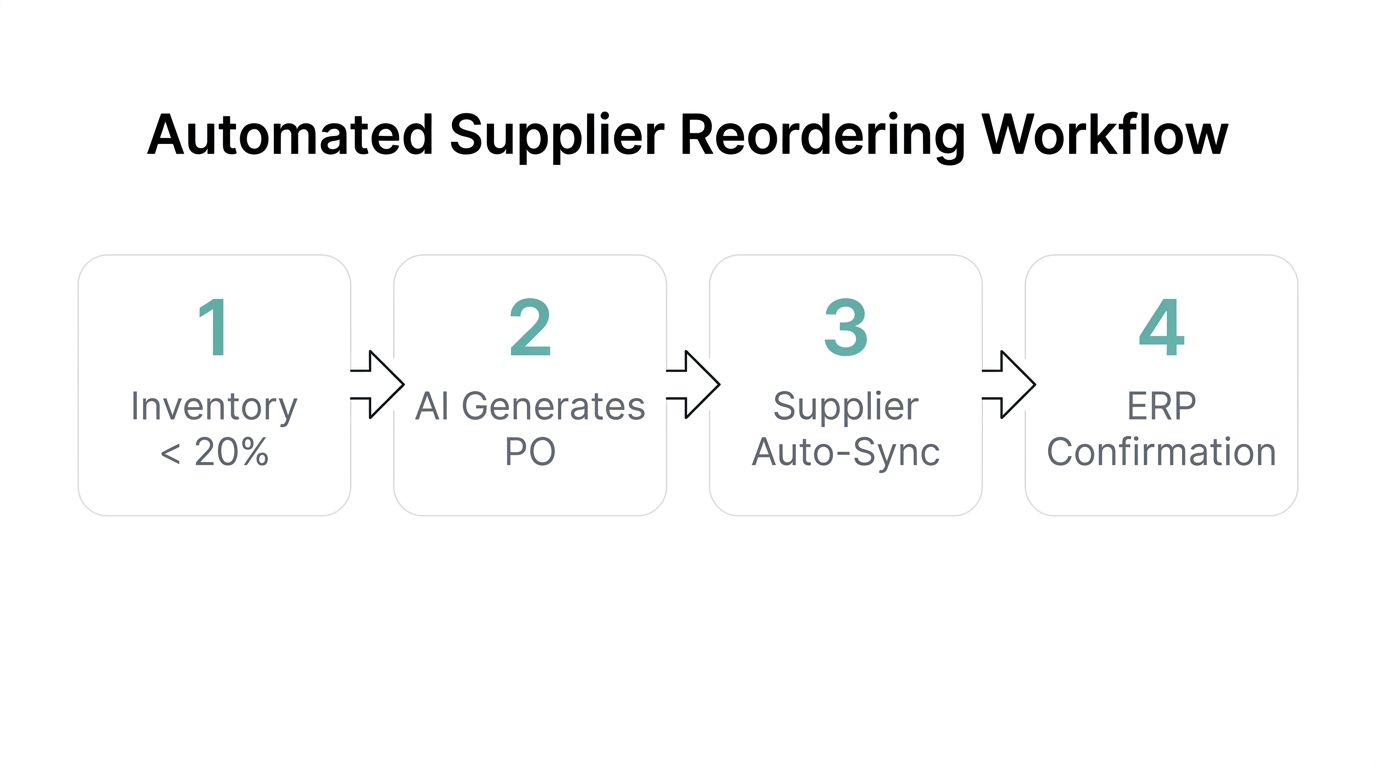
Stormy AI handles this by acting as a teammate in your inbox. You can set row-level reminders in a dynamic spreadsheet: "If the German warehouse drops below 50 units, check the shipment status from the supplier." If the supplier hasn't replied, Stormy AI sends a polite follow-up. This 'autonomous loop' ensures that your Shopify inventory management stays ahead of demand, rather than reacting to 'gushing neck wounds' like stockouts during a peak sales period.
The Reorder Playbook with AI
- Monitor: Stormy tracks SKU levels across all Shopify Locations.
- Predict: Using historical data from Google Ads and Meta, Stormy forecasts when you'll hit a stockout.
- Execute: Stormy drafts a Purchase Order (PO) and emails the supplier.
- Report: You receive a weekly summary of all pending shipments and risks.
Syncing Ad Spend with Local Inventory Levels
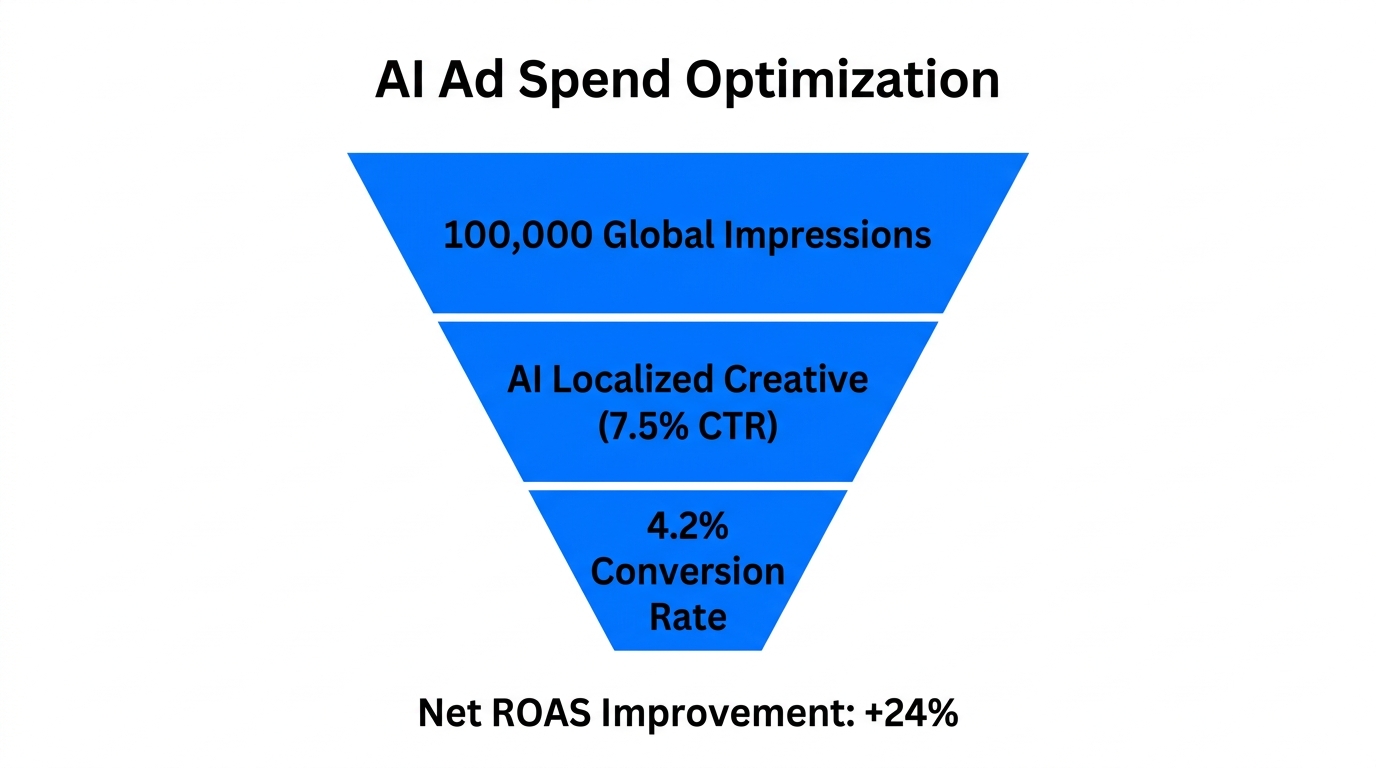
Perhaps the most 'Neo-like' move a brand can make in 2026 is syncing their marketing spend with their physical inventory. There is nothing more wasteful than spending thousands on Meta Ads for a product that is out of stock in the buyer's region. Shopify Markets and multi-location modeling allow you to know exactly what is available where.
By connecting your ad platforms to Stormy AI, you can create a 'smart switch.' If the UK warehouse sells out of the 'Summer Collection,' Stormy can automatically pause the UK-specific campaigns in Google Ads or shift that budget to the US market where stock is plentiful. This level of global ecommerce automation ensures your ROAS (Return on Ad Spend) stays high by never advertising what you can't fulfill.
"A 10-degree difference in how you solve a problem today determines if Shopify is a completely different (and better) product 10 years from now. The same applies to your brand's data modeling."
Conclusion: The Future of Global DTC Operations
Scaling globally in 2026 is no longer a matter of 'how many people can I hire?' but 'how well can I model my business?' By leveraging Shopify's powerful 'Markets' and 'Locations' primitives, you build a foundation that is ready for the future. But the foundation is only half the battle; the other half is the day-to-day operation of that system.
The brands that win are those that treat AI as a teammate, not just a tool. Whether it's monitoring multi-location inventory Shopify, automating supplier follow-ups, or syncing global ad spend, an AI ecommerce employee like Stormy AI allows you to run a multi-million dollar global operation with a lean, strategic team. Don't let your back office become a gushing neck wound. Model your domain, trust your intuition, and let AI handle the toil of the messy back office.
Ready to automate your global back office? Ask Stormy AI to manage your inventory and supplier follow-ups today.