It is 2026, and the barrier to entry for building software has effectively vanished. As legendary builder Greg Isenberg recently noted in his latest framework, it has never been cheaper to build a SaaS, yet the competition for attention has never been more fierce. The winners of this year aren't just those who can ship code; they are the founders who master the hybrid model of organic virality and precision-targeted paid media. If you are still relying on a linear sales funnel, you are operating in the past. Today’s high-growth SaaS distribution strategy 2026 relies on identifying sub-niches, deploying AI-driven content marketing, and using tools like Claude Code to find the non-obvious hooks that trigger massive ROI.
Step 1: The Sub-Niche Research & the Claude Code Advantage
Discover how to use AI tools to identify profitable sub-niches and map workflows.
The biggest mistake software founders make in 2026 is trying to compete in broad markets where venture-backed giants play. Instead, the current playbook demands finding a sub-niche inside a massive market. For instance, rather than building a general "finance app," you might target the FIRE (Financial Independence, Retire Early) movement specifically for Gen Z. To find these goldmines, savvy growth hackers are using Claude Code to scrape and analyze sentiment across Reddit and X to identify where users are frustrated with legacy tools.
By using Claude Code for growth hackers, you can prompt the AI to "Analyze the daily workflow of a roofing company owner and identify the three most repetitive mechanical steps that involve financial transactions." This level of research allows you to build a product that solves a $400-per-hour problem rather than a generic pain point. You can map these workflows visually on FigJam or Excalidraw to see the automation opportunities clearly.
"The orchestration layer is the new interface layer. We are moving into the conductors era where whoever owns the flow of agentic work owns the market."
Step 2: Building an 'AI CMO' for Scroll-Stopping Content
Greg explains how to leverage AI as a CMO to create viral, scroll-stopping content.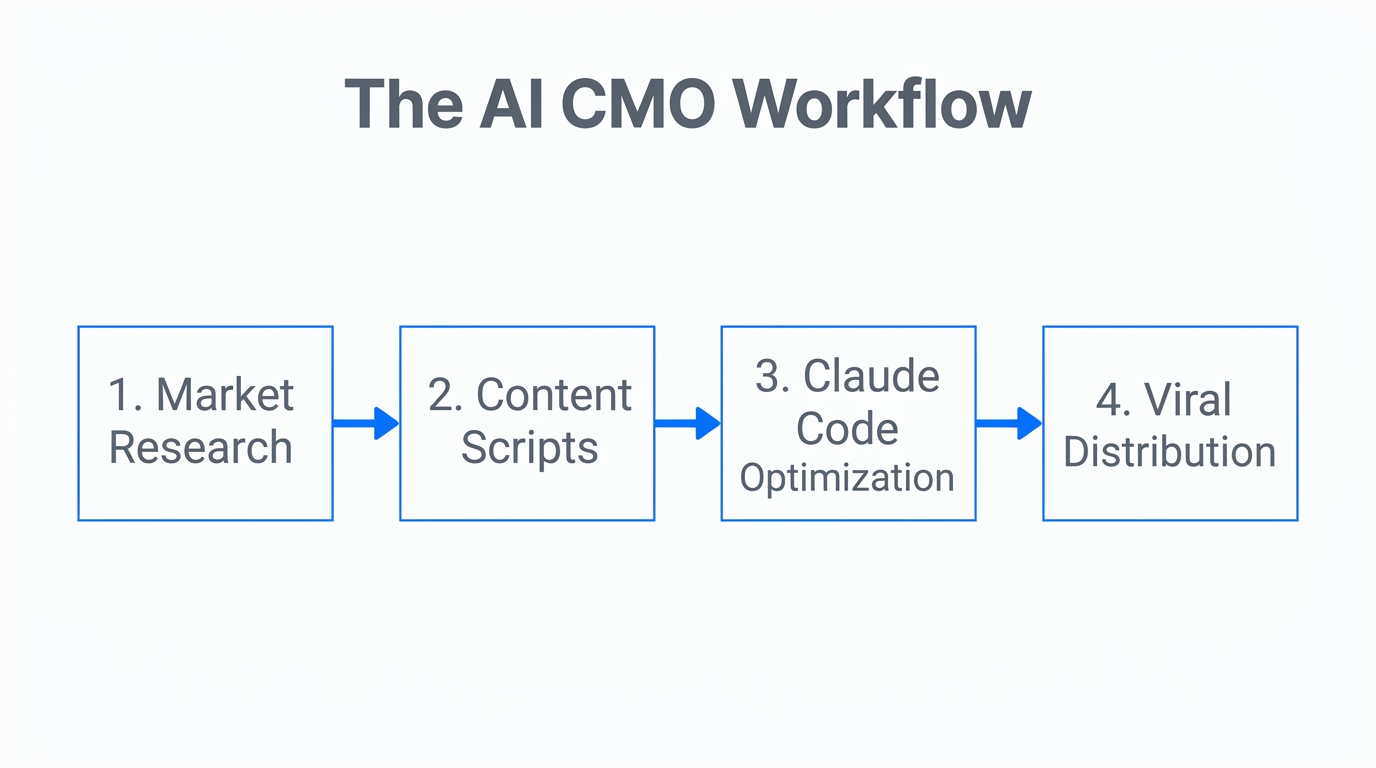
Once your niche is defined, you must become a media company first. In 2026, creator-led SaaS acquisition is the primary driver of low CAC. You don’t need a massive marketing team; you need a dialed AI CMO workflow. This involves using tools like Manus AI or Claude Code to generate non-obvious content ideas that go beyond surface-level advice. Instead of "How to Save Money," your AI should suggest "The 3 specific tax loopholes Gen Z FIRE enthusiasts are using in 2026."
To maintain a daily publishing schedule, you should set up automated tasks that scan TikTok and Instagram for trending sounds and formats within your niche. Use these insights to script high-retention videos. You can even leverage CapCut or Descript to speed up the editing process. The goal is to produce content that triggers saves, replies, and DMs—these are the leading indicators of high-converting ad creative.
Step 3: Scaling Viral Winners to Google Ads and Meta
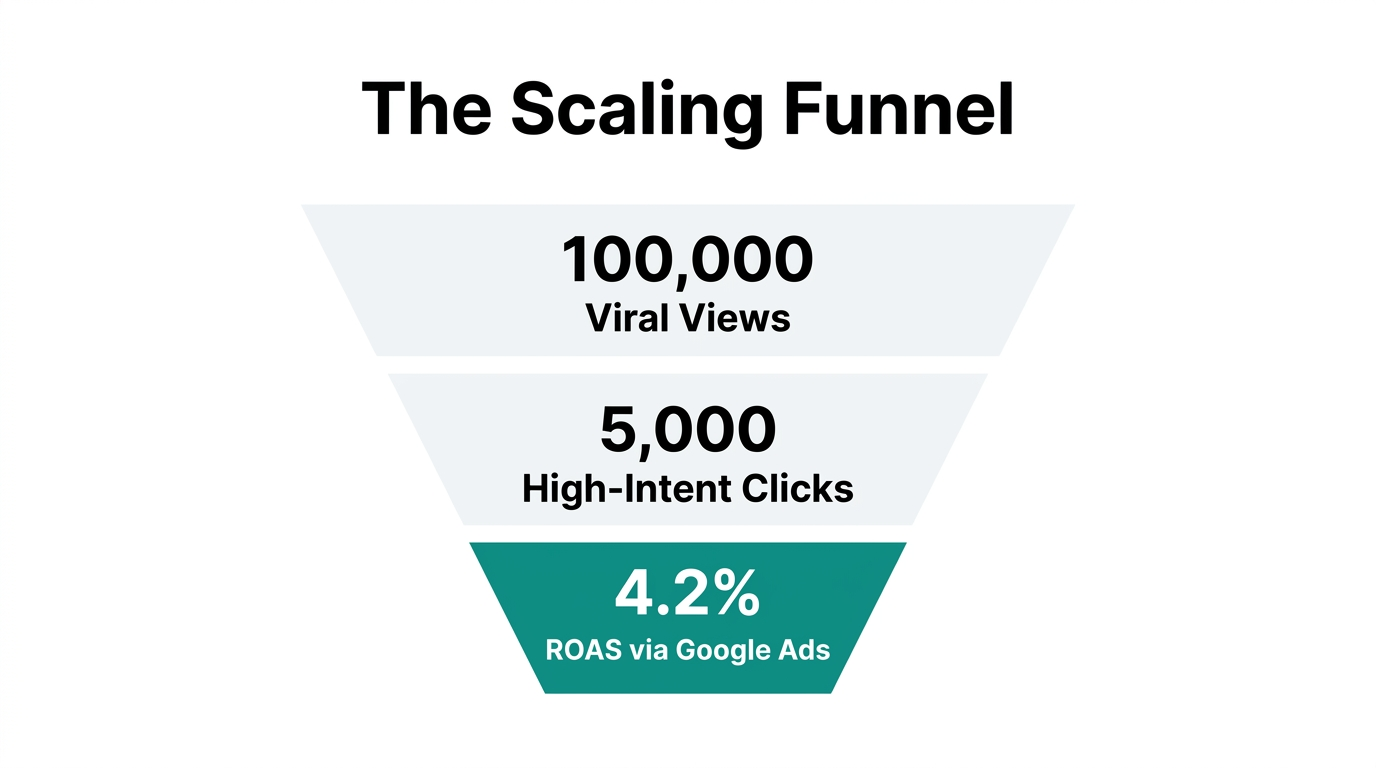
The transition from organic to paid is where most SaaS startups fail. In 2026, you should never launch a paid campaign with an unproven hook. Instead, study your organic insights. If a video gets 5,000 bookmarks on Instagram, that is your signal to move it into Meta Ads Manager or TikTok Ads Manager immediately.
For Google Ads for software startups, the strategy has shifted from bidding on broad keywords to intent-based video retargeting. Use the same "scroll-stopping" hooks that worked on social to capture searchers looking for solutions in your sub-niche. This synergy between platforms ensures that your brand remains top-of-mind across the entire customer journey.
| Metric | Organic Focus | Paid Scaling Focus |
|---|---|---|
| Primary Goal | Engagement & Social Proof | Customer Acquisition Cost (CAC) |
| Content Style | Raw, educational, or POV | High-intensity hooks |
| Key Feedback | Saves & DMs | ROAS & Sign-ups |
| Iteration Speed | Daily experiments | Weekly budget adjustments |
Platforms like Stormy AI are essential during this phase, as they allow you to discover and vet the exact creators who can help you scale these proven organic angles into professional UGC-style ads that don't feel like commercials.
Step 4: Transitioning from Software to Agentic Outcomes
Learn why building agent workflows and orchestration is the ultimate competitive advantage for SaaS.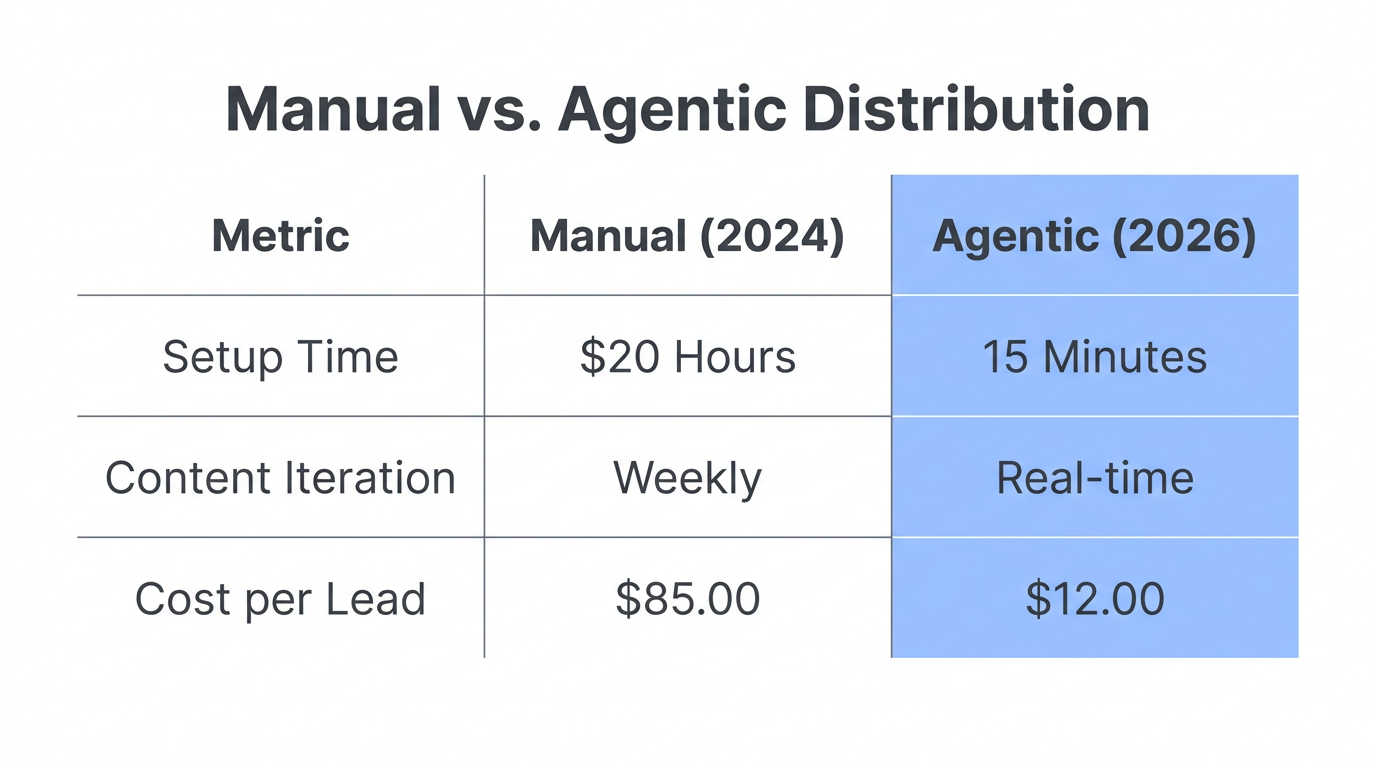
As you scale your distribution, your product must evolve. The SaaS market in 2026 is moving away from the "per-seat" model toward per-task or outcome-based pricing. Users no longer want to click buttons; they want the outcome. This means your software should essentially be a collection of AI agents performing mechanical tasks.
Using the Model Context Protocol (MCP), you can connect your agents to real-world tools like Stripe, Salesforce, and Slack. If your software saves a roofing owner 50 hours a year by automating lead responses, you should price based on the value of that time (e.g., $400/hour) rather than a $20/month subscription fee.
"People say SaaS is dying. I believe the opposite: SaaS is evolving into the execution layer of the global economy."
Step 5: Using Social Sentiment and Proof to Lower CAC
Understand the importance of publishing measurable proof to demonstrate real-world ROI to customers.In the 2026 landscape, measurable proof is your strongest marketing asset. You must document every success story with precision. Don't just publish a written testimonial; send a camera crew to your power users or use Luma AI to create high-quality video case studies. When potential customers see actual revenue increases or hours saved, your conversion rates on Apple Search Ads and Google Ads will skyrocket.
By capturing emails from day one using tools like Beehiiv or Klaviyo, you create a foundation that isn't dependent on algorithm changes. This list becomes your most valuable asset when sales are down or when you're launching new agentic workflows.
Conclusion: The Default Execution Layer
The goal of the 2026 SaaS Distribution Playbook is to become the default execution layer for your sub-niche. By combining AI-driven content marketing with a rigorous transition from organic to paid, you can build a cash-flowing startup that disrupts legacy players. The era of the bloated, general-purpose SaaS is over. The era of the lean, agent-led, creator-driven software powerhouse has begun. Start by finding your niche, use Claude Code to map the pain, and leverage Stormy AI to find the partners who will help you broadcast your solution to the world. The future is built on outcomes, not seats.