In 2026, the era of "growth at all costs" has officially been buried. For modern founders, revenue is increasingly seen for what it truly is: a vanity metric that often masks deep operational rot. The real challenge today isn't just hitting an eight-figure run rate; it's ensuring that growth translates into founder liquidity and sustainable entrepreneurial cash flow management. Too many entrepreneurs fall into the "Rainy Day" trap—hoarding every cent of profit back into the business under the guise of "reinvestment," only to realize years later they’ve built a high-stress job rather than a wealth-generating asset. Adopting a Profit First for entrepreneurs mindset is the only way to ensure your business serves you, rather than the other way around.
The Fictitious Revenue Myth: Why P&Ls Lie to You
 61:04
61:04Most founders look at their Profit and Loss (P&L) statement once a month and see a number at the bottom they call "profit." But if that money never leaves the business bank account, it is effectively fictitious. In 2026, high-performing founders are moving away from traditional accounting and toward a feedback loop centered on monthly owner draws. When you physically transfer profit out of the business and into your personal account, it creates an immediate psychological and operational response. If you can’t afford the draw one month, you know instantly that something is broken in your business growth operations. Without this physical transfer, you might wait 15 months to realize your margins are slipping because the "money" only exists as numbers on a spreadsheet.
"Profit is not what's left over; it's what you take out first. If you don't receive the check, the money is fictitious."
This approach, popularized by the Profit First methodology, suggests that you should set aside a specific percentage for profit and taxes before even looking at your operating expenses. Tools like Stripe and HubSpot can help track these flows, but the discipline must be manual. By making expenses the "remainder," you force your business to become more efficient. You stop overspending on SaaS tools you don't use and start scrutinizing every line item.
The 'Replacement Cost' Rule: Your True Business Health
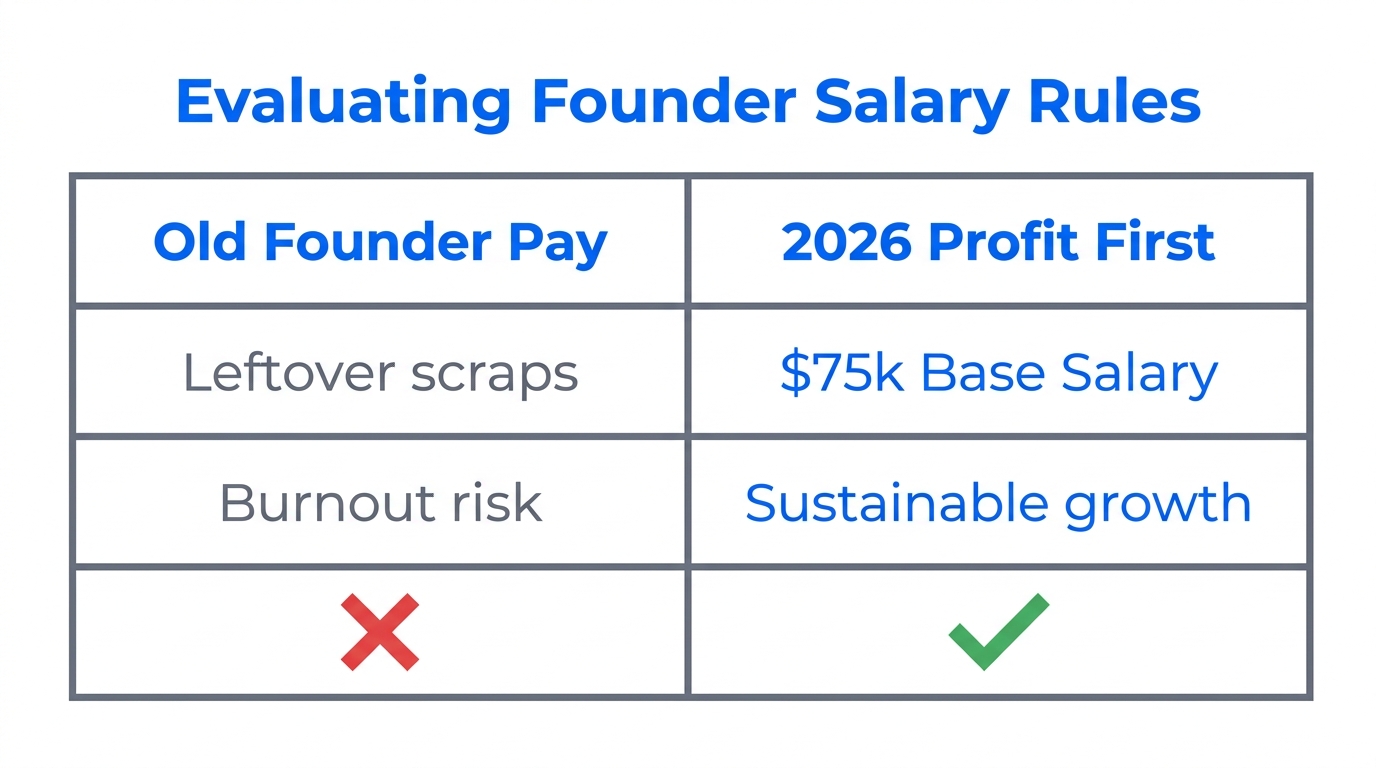
Are you actually running a profitable business, or are you just working for free? One of the most dangerous habits of early-stage founders is taking a sub-market salary to "help the business grow." This obscures the replacement cost of your role. If you had to step away today, could the business afford to hire a CEO at a market rate of $150,000 to $250,000? According to recent CEO salary data, if the answer is no, your business isn't truly profitable; it’s being subsidized by your unpaid labor. To truly understand your scaling business profits, you must pay yourself what it would cost to replace you.
Paying yourself a market salary isn't just about personal lifestyle; it’s about stress-testing the model. It ensures that the business can survive without you. When you pay yourself $150,000 a year—even if you're tempted to keep it in the bank—you are accounting for the real cost of operations. This discipline prevents you from making bad hiring decisions or over-committing to projects that only "look" profitable because your own time isn't being billed to the project.
| Metric | Founders Hoarding Cash | Profit First Founders |
|---|---|---|
| Owner Draw | Erratic / None | Scheduled & Consistent |
| Feedback Loop | Slow (12-18 months) | Immediate (30 days) |
| Market Salary | Underpaid | Replacement Value |
| Business Value | Low (Owner-dependent) | High (Operationalized) |
Breaking the Conservative Cash-Hoarding Habit
It is easy to enter "rainy day mode" and keep 12 months of working capital sitting in a low-interest business account. While a safety net is essential, over-capitalization is a form of procrastination. Modern founders in 2026 are adopting the "Lend Back" strategy. Instead of leaving $2 million in a business account where it gathers dust, they take it out as profit. If the business ever truly hits a crisis, the founder can simply lend the money back to the company. This keeps the money in the founder's control and forces the business to stay lean.
This strategy is particularly effective for businesses that aren't inventory-heavy. If your main expense is payroll, which you can manage through Gusto or Rippling, your risk of "wild swings" is low. Keeping excessive cash in the business account often leads to "lifestyle creep" for the company—hiring unnecessary middle managers or investing in unproven marketing channels like Google Ads without proper attribution. Research on working capital management shows that lean operations often outperform over-capitalized firms in the long run.
"If you have 12 months of cash sitting in your business, you aren't being safe; you're being inefficient. Take the money off the table and force the business to perform."
Case Study: The Fleet Packaging $1.7M Profit Year
17:03Consider the journey of Fleet Packaging, a distributor that specializes in custom branded bags for retailers. When the business was acquired, it was doing roughly $800,000 in annual profit. By 2026 standards, the business was "autopilot" but stagnant. The new ownership applied a rigorous founder salary framework 2026 and focused on high-margin growth. In just one year, revenue jumped to $13.8 million, with a staggering $1.7 million in profit. This wasn't achieved through luck; it was achieved by renegotiating supplier contracts and diversifying a client base that was previously 50% dependent on a single account.
Success in this model requires a deep dive into the "hair" of a deal. For Fleet Packaging, the risk was client concentration. By using a forgivable seller note—where the debt to the previous owner is forgiven if a major client leaves—the buyer mitigated the downside. This allowed for aggressive reinvestment into growth while maintaining a clear path to founder liquidity. Many searchers find these opportunities on BizBuySell or Acquire.com, but the real value is unlocked through operational discipline after the close.
Managing a business of this scale often requires high-quality creator partnerships for B2B brand awareness. While traditional outreach is manual, platforms like Stormy AI allow founders to discover niche industry influencers and automate the outreach process, ensuring the top-of-funnel remains full while the founder focuses on the P&L.
Managing Working Capital in High-Growth Environments
47:09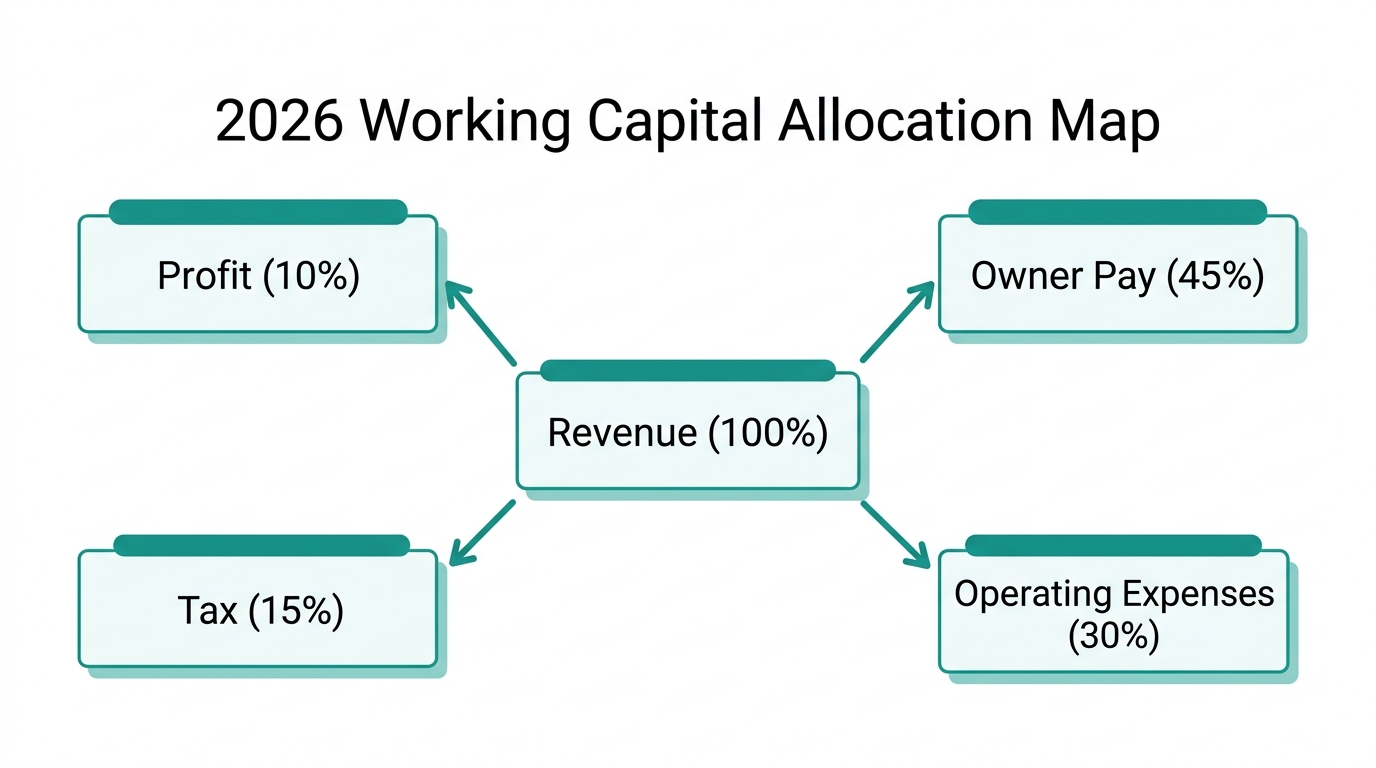
High growth is a cash-hungry beast. In businesses like packaging or manufacturing, you often have to write huge checks for supplies months before the customer pays you. This is where entrepreneurial cash flow management becomes a competitive advantage. You cannot simply look at your bank balance; you must manage your cash conversion cycle.
The Fleet Packaging example shows that even in a "boring" industry, scaling to $1.7M in profit requires being "anal about the paperwork." You have to sweat the $3,000 charges and the 2% supplier discounts. If you are an "unserious" person who hates the details, buying a business or scaling one to this level will likely end in disaster. Success belongs to the founder who memorizes the rulebook and watches the cents so the dollars take care of themselves.
Operationalizing the 'Lean Startup' for Brick-and-Mortar
The Profit First mentality isn't just for digital companies; it's a lifeline for brick-and-mortar founders. In 2026, the smartest entrepreneurs are avoiding the 10-year lease trap. Instead of signing a personal guarantee on a $500,000 build-out for a new restaurant or retail concept, they use commissary kitchens and MVP tests to validate demand, a principle rooted in The Lean Startup. Renting a kitchen for $20 an hour on The Kitchen Door allows you to test recipes and delivery demand via Door Dash before committing to a physical location.
Step 1: Validate with Zero Commitment
Before you ever look at a storefront, run a delivery-only model. Use Canva to create high-quality menus and run small-batch Meta Ads to see if your local neighborhood actually wants what you're selling. If you can't get 50 orders a week from a commissary kitchen, a 10-year lease won't save you.
Step 2: Solve the 'Horrible' Problems
Entrepreneurs find opportunity in what others find annoying. If delivery in your area is "horrible" because the food is cold and the packaging leaks, don't walk away. That is your competitive advantage. By stamping fresh-made times on boxes or using webcams so customers can see their orders being prepared, you can create a 10x experience in a crowded market.
"The customer says, 'It's horrible.' The entrepreneur says, 'What an opportunity.' If you fix the four things everyone hates, you own the market."
Conclusion: The 2026 Founder's Path to Liquidity
53:51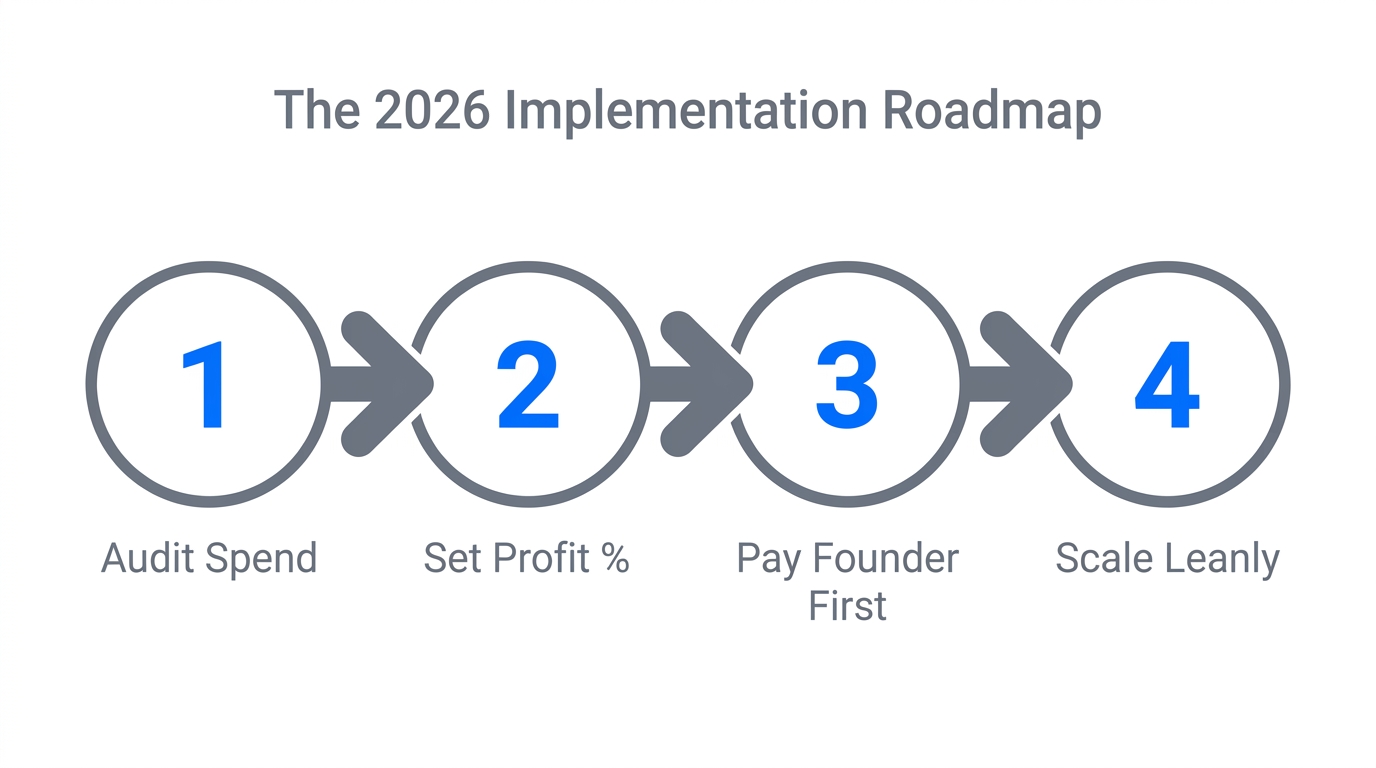
The goal of any business is to provide freedom, yet most founders end up as slaves to their own spreadsheets. By implementing the Profit First framework, you reclaim control. Start by paying yourself a market replacement cost salary, transition to monthly physical owner draws to create a feedback loop, and stop the unhealthy habit of cash-hoarding within the business entity. Whether you are running a SaaS company or a packaging distributor like Fleet Packaging, the principles remain the same: efficiency is the engine of profit.
If you're ready to start your journey of acquisition or scaling, join communities like Searchfunder to connect with other serious entrepreneurs. And when you're ready to scale your top-of-funnel without adding massive overhead, let Stormy AI handle your creator discovery and outreach. The tools exist—the only thing left is for you to put Profit First.