The entrepreneurial landscape of 2026 has undergone a seismic shift. While the previous decade was defined by the high-burn, "blitzscaling" tech startup model, today’s most sophisticated investors are looking toward a different path: Entrepreneurship Through Acquisition (ETA). Instead of wrestling with the 90% failure rate of new ventures, savvy operators are buying proven, profitable B2B companies and applying modern growth levers to scale them. This isn't just a trend; it’s the ultimate growth hack for the current economic climate.
Consider the story of Dan Certain, a former Facebook engineer and startup CTO. After years in the high-stakes world of Silicon Valley, Dan pivoted. He didn't start a new SaaS company; he bought Fleet Packaging, a 15-year-old packaging distributor. In less than two years, he more than doubled the company's profits, moving from $800,000 to over $1.7 million in annual profit. This playbook breaks down the exact strategy Dan used to navigate the search, the due diligence, and the first 100 days of ownership.
The 2026 Shift: Why 'Boring' Beats 'Beta'
 10:54
10:54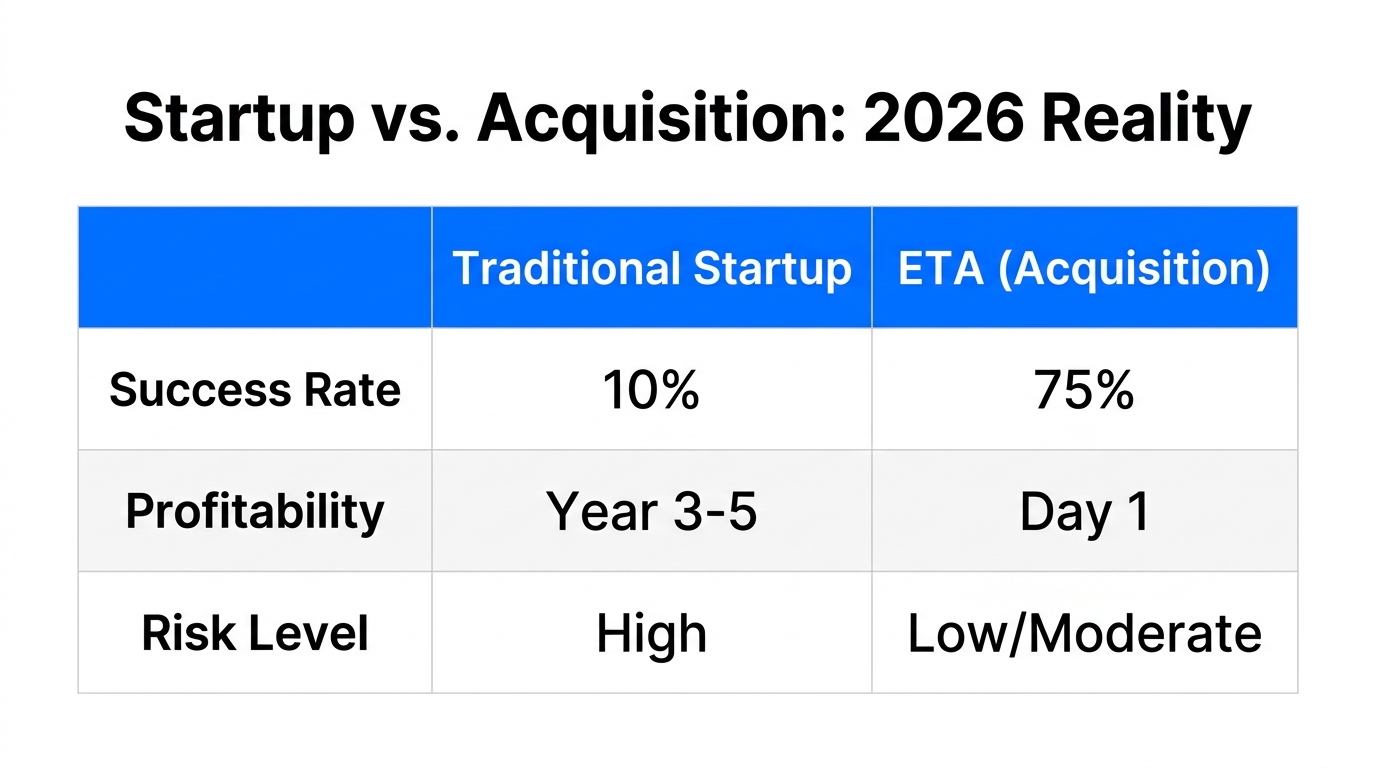
In 2026, the cost of customer acquisition on platforms like Meta Ads Manager and Google Ads has reached an all-time high. Building a brand from zero is no longer just difficult—it’s capital-inefficient. In contrast, "boring" businesses like packaging, HVAC, and logistics offer validated demand, existing cash flow, and historical data.
| Feature | High-Burn Tech Startup | Entrepreneurship Through Acquisition (ETA) |
|---|---|---|
| Failure Rate | Estimated 90%+ | Significantly Lower (Proven Cash Flow) |
| Time to Revenue | Months to Years | Day 1 |
| Financing | VC Equity (Dilutive) | SBA Loans & Seller Notes (Non-Dilutive) |
| Product-Market Fit | Hypothetical | Historical (10+ Years) |
As Dan discovered, buying a business for $3.4 million that already clears $11 million in revenue is a far safer bet than trying to raise a Seed round in a tight credit market. By acquiring a "boring" asset, you skip the "valley of death" and move straight into the optimization phase.
"You don't need a killer original idea to be a millionaire. You just need a killer execution plan for an idea that's already working."
The 'Secretary Problem' Framework for Sourcing
28:25How do you find a diamond in a sea of mediocre listings? Most first-time buyers fall in love with the first business they see on BizBuySell or Acquire.com. This is a fatal mistake. To optimize your search, you must apply the Secretary Problem (also known as the 37% rule).
The mathematical theory suggests that if you plan to interview 100 candidates (or look at 100 businesses), you should reject the first 37 unconditionally. Use that first 37% of your search to establish a baseline for what a "good" business looks like in your niche. After that, pull the trigger on the very next business that exceeds the quality of everything you saw in the initial 37.
When Dan searched for a company, he looked at hundreds of SIMs (Confidential Information Memorandums). He vetted everything from sausage manufacturers to SEO agencies. By the time he found Fleet Packaging, he could spot a winner in five minutes because he had already seen 99 losers. He utilized research frameworks from resources like HubSpot to reverse-engineer market gaps before settling on the logistics space.
The 'Financial Colonoscopy': Due Diligence Steps
Once you've found a target, you enter the most critical phase: Due Diligence. In the ETA world, this is colloquially known as a "financial colonoscopy." You aren't just looking at the P&L; you are hunting for the "gotchas" that the broker has polished over.
- Verify Quality of Earnings (QofE): Don't trust the tax returns alone. Hire a forensic accountant to ensure the profit is real and not padded by one-time events.
- Customer Concentration: Fleet Packaging had one client representing 50% of revenue. This is a massive risk. Dan mitigated this by structuring a forgivable seller note.
- Shadowing the Owner: Dan spent weeks sitting in the office, watching the owner work. This reveals the "hidden" labor that doesn't show up on a spreadsheet.
- The 'Taboo' Check: Look for businesses in unsexy or slightly taboo industries. These often have lower multiples because people are embarrassed to tell their friends they own a funeral home or a trash valet service.
"If the owner is 26 and selling, ask why. If the owner is 70 and wants to play golf in Florida, you've found your deal."
During this phase, it’s vital to document everything. Dan wrote a one-page memo for every deal, forcing himself to argue against the purchase. This intellectual honesty is what prevents buyers from "falling in love" with a bad asset during the fatigue of a 6-month search.
Structuring the Deal: SBA Loans and Seller Notes
19:39One of the biggest myths in 2026 is that you need millions of dollars to buy a business. In reality, leverage is your best friend. Dan bought a $3.4 million business with only $200,000 down. Here is how the capital stack looked:
| Source | Amount | Description |
|---|---|---|
| SBA 7(a) Loan | $1.8 Million | Government-backed loan with favorable terms. |
| Seller Note | $1.4 Million | Forgivable if the major client leaves within a set timeframe. |
| Personal Equity | $200,000 | Cash from savings and a 401k loan. |
By using an SBA loan, Dan was able to put his "house on the line," which provided the necessary skin in the game for the bank to approve the deal. However, the real genius was the forgivable seller note. This effectively made the previous owner a partner in Dan's success; if the business's largest client walked away, Dan wouldn't be on the hook for that portion of the debt.
The First 100 Days: Excitement vs. Knowledge
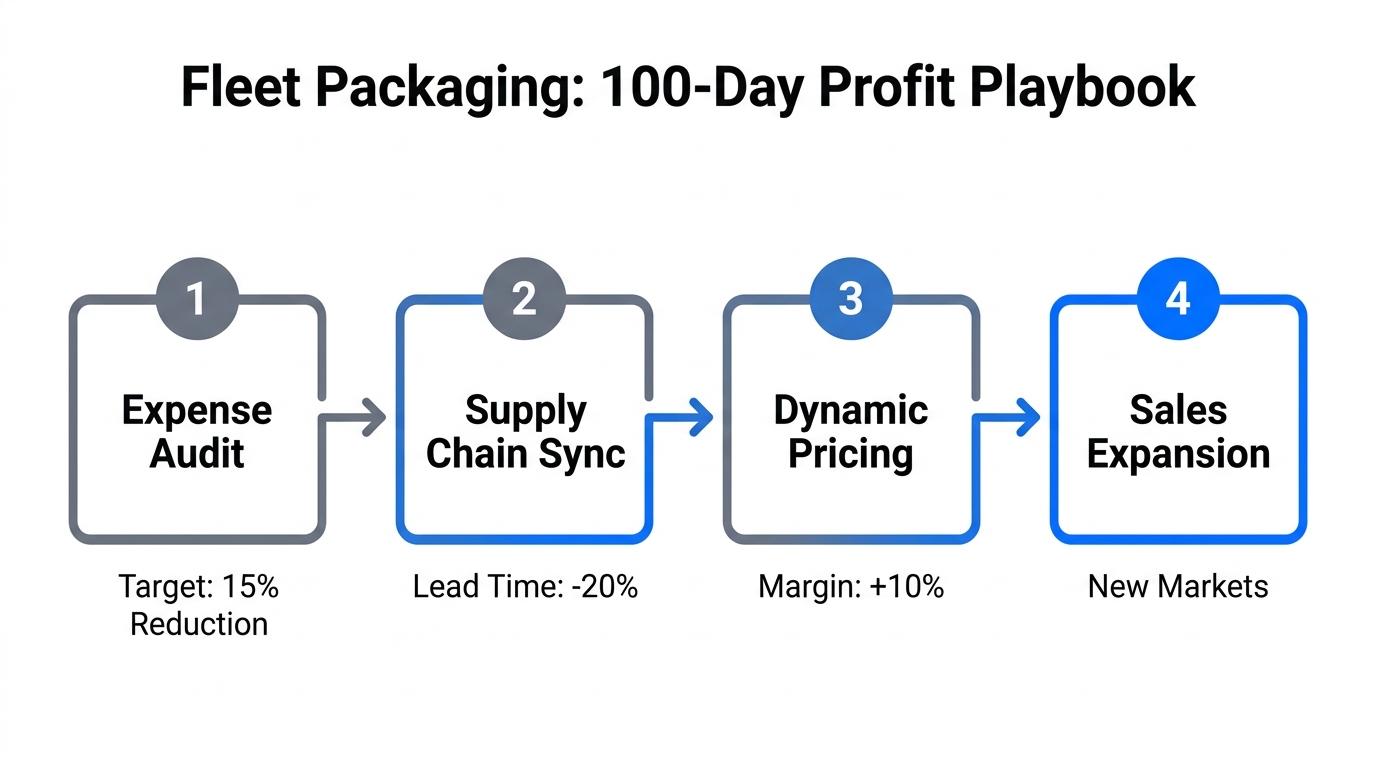
The transition from "Searcher" to "Owner" is often a brutal reality check. Dan describes this as moving from High Excitement/Low Knowledge to the "Pit of Despair"—Low Excitement/Low Knowledge—before finally reaching mastery.
- Audit the Workflows: Don't change anything in the first 30 days. Just watch. Dan used the same undercover tactics he learned years prior while working at Noodles & Company to understand how the "sausage gets made."
- Build Supplier Relationships: In a B2B business like packaging, your margins are made at the buy, not just the sell. Renegotiating supplier contracts can instantly add 5-10% to the bottom line.
- Modernize the Growth Stack: Many of these "boring" businesses have zero digital presence. By applying modern marketing strategies—like using AI to discover new B2B leads or sourcing UGC creators for LinkedIn campaigns—you can leapfrog competitors who are still using 2010 tactics.
For example, a packaging company in 2026 can grow significantly by partnering with e-commerce influencers who review unboxing experiences. To do this efficiently, platforms like Stormy AI can help new owners discover and outreach to creators who specialize in retail and logistics niches, automating the growth that the previous "boomer" owner likely ignored.
"The first 100 days is about moving from being the guy who bought the business to being the guy who runs the business."
Where the Opportunities Lie in 2026
53:51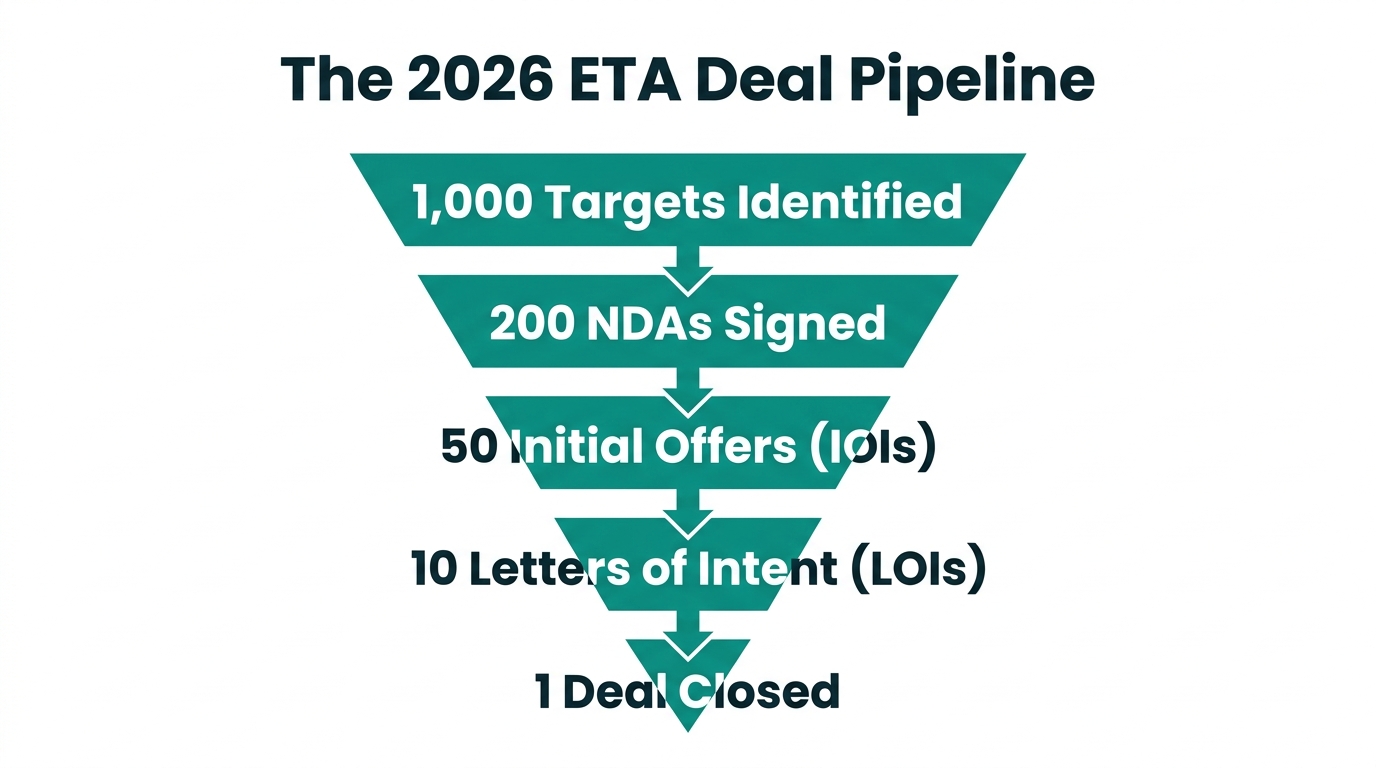
Beyond packaging, the "Silver Tsunami" of retiring Baby Boomers is leaving thousands of profitable businesses up for grabs. Based on the 2026 market data seen on LinkedIn and niche forums like Searchfunder.com, here are the top sectors for acquisition:
- Family Entertainment Centers: Laser tag, bowling alleys, and climbing gyms. These are increasingly AI-proof and have high margins once the initial equipment is depreciated.
- Medical Transportation: Non-emergency medical transport for an aging population is a recession-proof government-subsidized play.
- Micro-Niche Retail: With the bankruptcy of giants like Party City, local specialty stores (e.g., high-end balloon delivery or fireworks) are seeing a massive resurgence in demand with zero competition.
- UGC-Driven Service Brands: Buying a local HVAC or plumbing company and scaling it via TikTok Ads using authentic creator content. AI-driven platforms like Stormy AI make it easy to manage these high-volume creator relationships at scale.
Conclusion: Your Asset is Your Freedom
Buying a profitable business in 2026 is the most reliable path to wealth for the modern entrepreneur. As Dan Certain proved with Fleet Packaging, the combination of SBA leverage, a boring industry, and modern execution can turn a $200k investment into a $1.7M annual profit engine. Stop trying to build the next Facebook and start looking for the next great "unsexy" company in your own backyard.
Success in ETA requires discipline, a willingness to perform a "financial colonoscopy," and the grit to survive the first 100 days. But once you've crossed that bridge, you aren't just an employee or a founder—you’re an owner of a cash-flowing asset that works as hard as you do.