In 2026, the retail landscape has reached a point where generic shopping experiences are no longer just inefficient—they are a liability. With the global AI-enabled eCommerce market projected to soar to $22.6 billion by 2032, according to Precedence Research, the infrastructure of online selling has fundamentally shifted. Today, the brands winning the market share are those that treat every visitor like a segment of one. Data from McKinsey confirms that companies excelling at personalization generate 40% more revenue than those that do not, proving that personalization is the ultimate engine for retail growth in 2026.
This playbook outlines the strategic shift from basic product sorting to a comprehensive ai personalization strategy. We will explore how real-time behavioral triggers, dynamic content adaptation, and automated testing models—often integrated with platforms like Shopify—are driving 15% to 23% boosts in conversion rates for the world's most innovative brands.
The Death of Collaborative Filtering: Why 'Relevancy Score' is the New Gold Standard
For years, the industry relied on standard collaborative filtering—the classic "people who bought this also bought that" logic. While functional, it was often lagging and disconnected from the user's immediate intent. In 2026, the industry has transitioned to the relevancy score. As noted by Vinod Sivagnanam, Senior Product Manager at Adobe, success is no longer about showing more products, but showing the most relevant ones by synthesizing clickstream data in real-time.
Modern engines, such as those provided by Clerk.io, now analyze micro-behaviors to calculate these scores. These insights, often tracked through behavioral analytics, include:
- Hover Time: How long a user lingers over a specific product image without clicking.
- Scroll Depth: Whether a user is exploring technical specifications or just skimming reviews.
- Active Search Intent: Real-time processing of natural language queries to understand the "why" behind a search.
"The core of AI personalization is the relevancy score—moving beyond historical data to capture the pulse of the current session."
| Feature | Old Method (Collaborative) | New Method (AI Relevancy) |
|---|---|---|
| Data Source | Historical purchase data | Real-time session signals |
| Accuracy | Broadly directional | Hyper-specific to current intent |
| Latency | Daily/Weekly updates | Milliseconds (Edge computing) |
Deploying Dynamic Product Recommendations Across the Funnel
To maximize ecommerce conversion rate optimization, dynamic product recommendations must be embedded into every critical touchpoint—specifically Product Detail Pages (PDPs) and Cart pages. This isn't just about cross-selling; it's about reducing friction. According to Sailthru, 71% of consumers feel frustrated when their shopping experience is impersonal.
On the PDP, AI should prioritize "visually similar" items if the current item is out of stock or "complementary" items that complete a look. Platforms like Bloomreach use their Loomi AI to ensure these recommendations are contextually aware, preventing the common mistake of suggesting a high-carb snack to a customer who has only ever purchased keto-friendly products.
Mastering Behavioral Marketing Triggers: Browse vs. Cart Abandonment
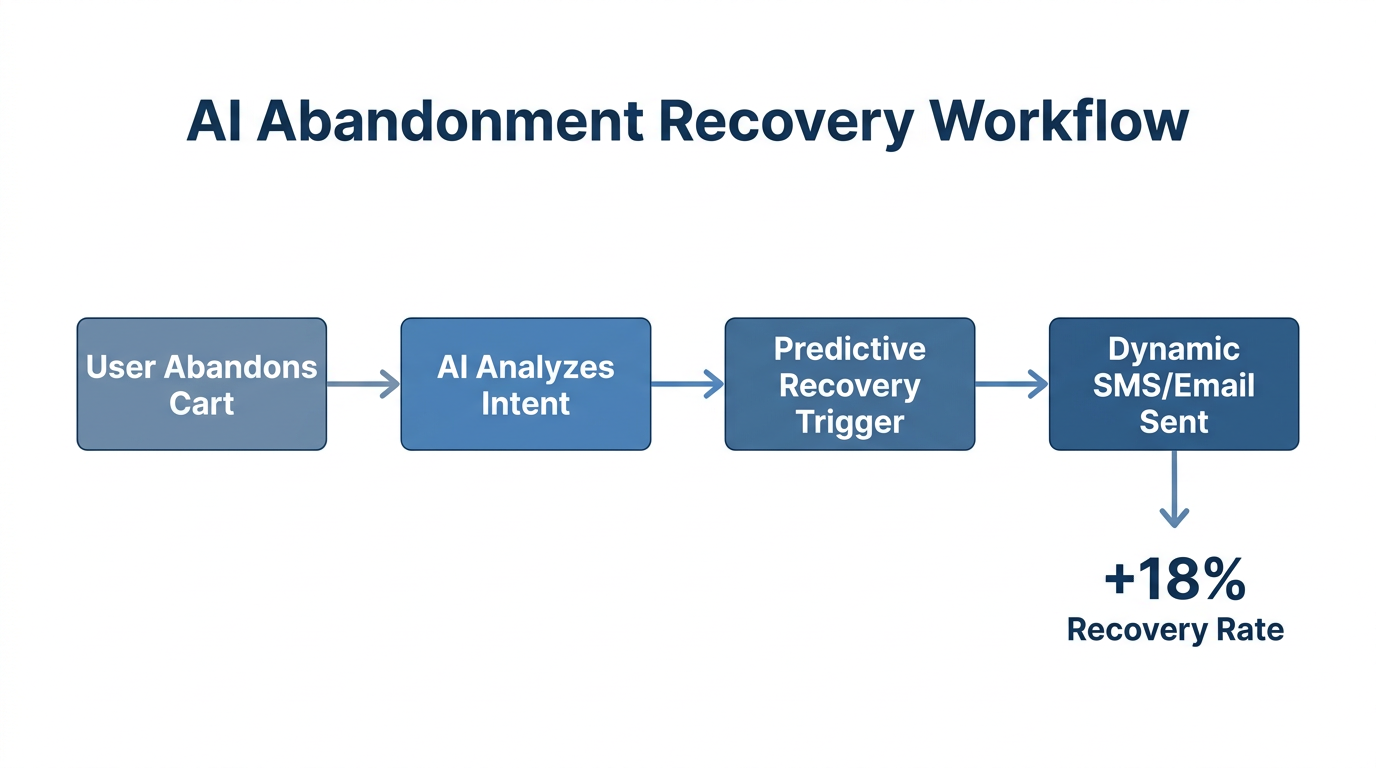
One of the most significant retail growth 2026 strategies is the nuanced separation of abandonment triggers. While cart abandonment emails are standard, browse abandonment is where the untapped revenue lies. AI engines now detect when a user has viewed a specific category multiple times but hasn't added anything to the cart.
Using automation tools like Klaviyo AI or CartBoss, marketers can trigger hyper-personalized SMS or email flows. For example, if a user browses sustainable dresses under $200 but exits, an AI agent can trigger a "personal shopper" style nudge featuring three alternatives within that exact price bracket and style profile.
"78% of consumers are more likely to make a repeat purchase from brands that personalize their post-browse interactions." [Source: Epsilon]
Effective behavioral marketing triggers in 2026 also include "replenishment nudges." If the AI predicts a customer is running out of a consumable product (like skincare or supplements), it can trigger a notification before the customer even begins a new search, effectively capturing the sale before the competition can intervene.
First-Touch Personalization: Adapting the Homepage in Real-Time
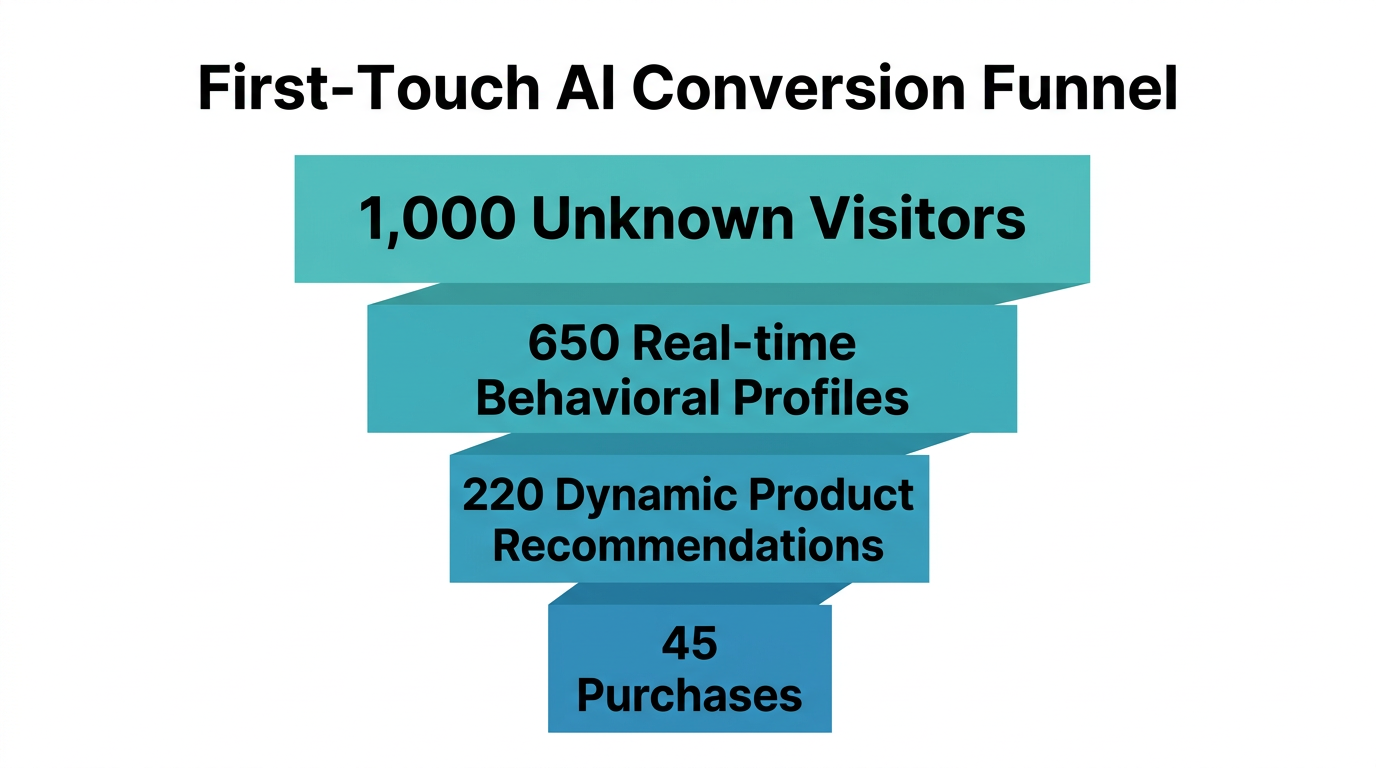
The homepage is often the most neglected part of a personalization strategy, yet it is the digital storefront. In 2026, "First-Touch Personalization" is used to adapt hero banners and featured collections based on the referral source and geography. Tools like Insider allow brands to change content based on whether a user clicked from a TikTok Ads Manager campaign or an organic LinkedIn post.
Consider these real-world examples from the research:
- Saks Global: Implemented AI-personalized homepages, leading to a 7% increase in revenue per visitor.
- Sephora: Uses an AI Beauty Assistant to provide 1:1 skin-tone matching, resulting in a 20% jump in online sales.
- L’Oréal: Their virtual diagnostic tools deliver 3x higher conversion rates compared to static images.
To scale these personalized creative assets, many brands use Stormy AI to discover and vet UGC creators who can produce the specific visual content needed for these dynamic segments. Sourcing creators who resonate with specific geographic or interest-based cohorts ensures the personalized homepage feels authentic, not just algorithmic.
Automating A/B Testing Using Self-Retraining AI Models
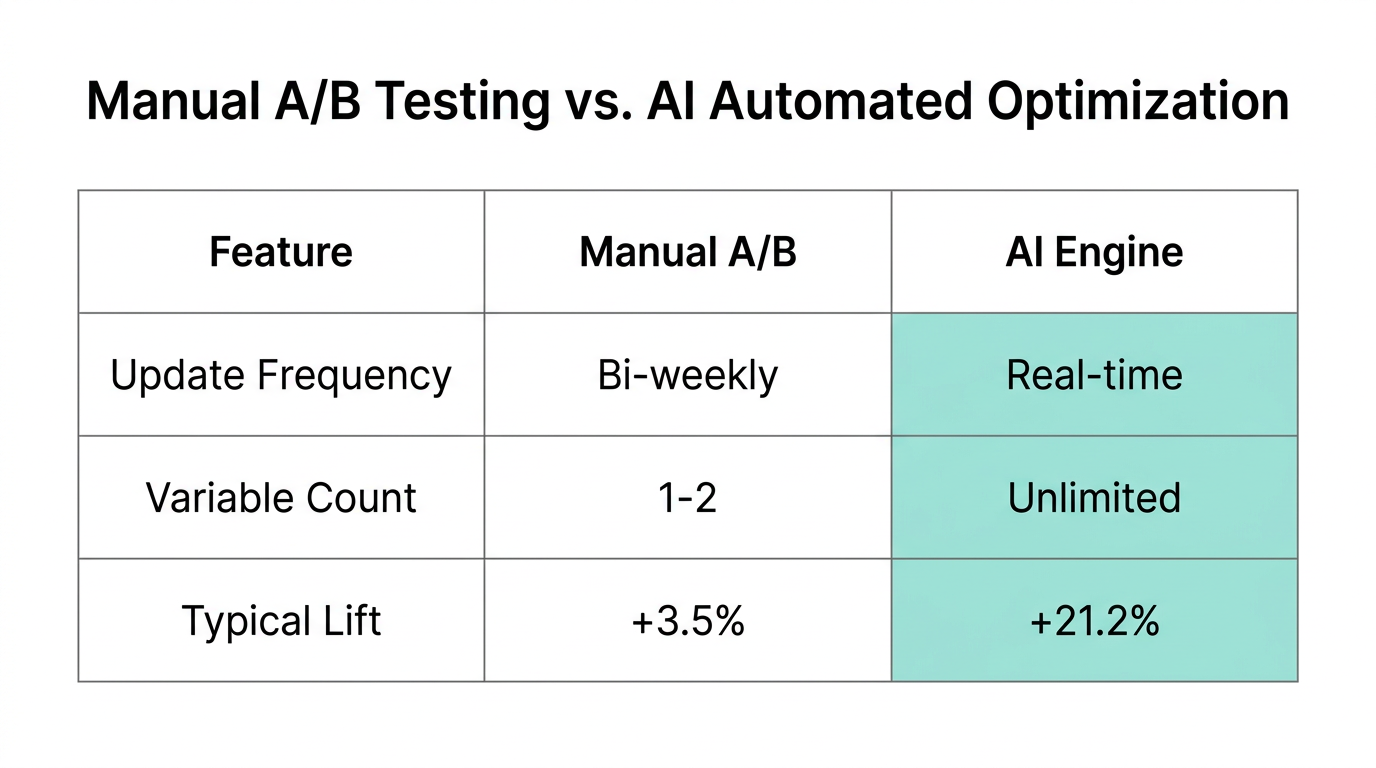
The traditional method of manual A/B testing—where a marketer checks results after two weeks and manually picks a winner—is too slow for the 2026 market. Modern ai personalization strategy involves self-retraining models that handle optimization autonomously. Platforms like Dynamic Yield or Nudge allow for "Auto-Retraining" experiments.
These models automatically shift traffic toward the most successful content variations in real-time. If a specific hero banner is converting better for users in London than for users in New York, the AI adapts the traffic distribution without manual intervention. This allows growth teams to focus on strategy and creative direction rather than spreadsheet analysis in Google Analytics.
"Automation in testing isn't just about speed; it's about eliminating the human bias that often leads to sub-optimal conversion winners."
The 2026 Pitfalls: Common Personalization Mistakes to Avoid
Even with the best tools, such as Nosto or OptiMonk, strategy can fail due to execution errors. To ensure your AI engine drives growth, avoid these four critical mistakes:
- Data Silos: Ensure your engine knows if a customer already bought the item in-store. Running personalization on incomplete data leads to redundant and annoying recommendations.
- Over-Automation: Never remove the human element entirely. Customers still want a human representative when AI-driven chats become circular or complex.
- Ignoring Real-Time Signals: Don't rely solely on historical data. If a customer who usually buys electronics is suddenly browsing for baby gifts today, the engine must adapt to the current session intent immediately.
- Poor UX Integration: If your personalized recommendations are buried at the bottom of a long mobile scroll, they might as well not exist.
Conclusion: Building Your 2026 Growth Engine
The transition to a fully realized ai personalization strategy is no longer a luxury for enterprise retailers—it is the baseline for survival. By moving toward relevancy scores, automating your A/B testing, and mastering behavioral marketing triggers, you can unlock the 40% revenue lift seen by industry leaders.
Remember that the quality of your personalization is only as good as the content you feed it. Using an all-in-one platform like Stormy AI to manage your creator relationships and source authentic UGC ensures that your AI engine has the high-quality, personalized assets it needs to convert. In the race for ecommerce conversion rate optimization, the winner is the brand that can deliver the most human-centric experience at a machine-driven scale.