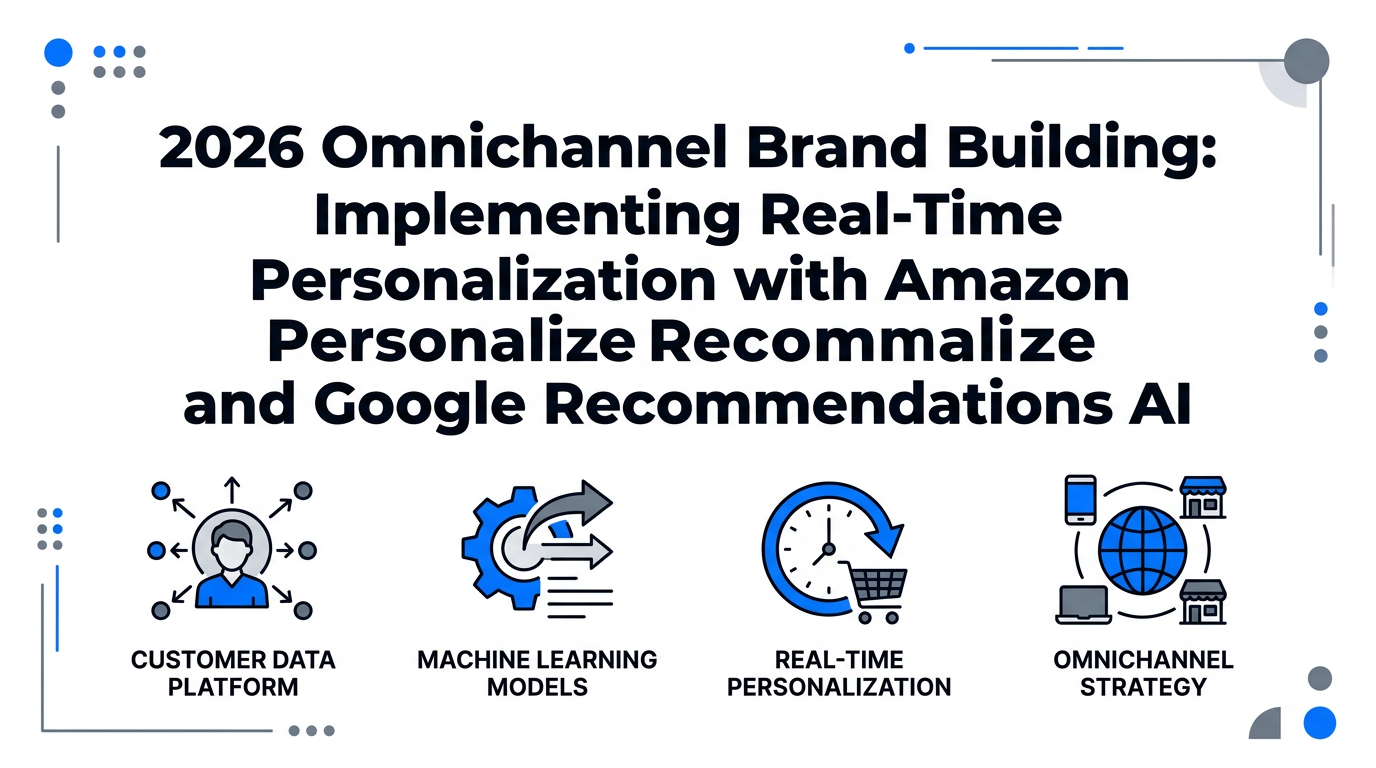
In 2026, the divide between digital and physical commerce has effectively dissolved. For modern brands, the challenge is no longer just being present on multiple channels; it is ensuring that the brand experience remains cohesive and intelligent across every single touchpoint. As we move deeper into this year, AI-enabled ecommerce is projected to reach a staggering $64 billion by 2034, driven by a fundamental shift in how consumers interact with products. Today’s shopper doesn't just appreciate personalization—they demand it. 71% of consumers now expect personalized experiences, and nearly 76% report significant frustration when brands fail to deliver contextually relevant interactions.
The 2026 Consumer Expectation: Preventing Brand Frustration
The core of brand building with AI in 2026 lies in the elimination of friction. Consumers are moving away from the traditional "search and scroll" model toward what experts call "ask and act" commerce. Frustration occurs when a brand treats a returning customer like a stranger, or worse, suggests products they have already purchased due to fragmented data silos.
"Product recommendations now drive up to 31% of total ecommerce site revenue, making AI-driven personalization the single most effective lever for brand loyalty in 2026."To avoid "tone-deaf" marketing failures, brands are leveraging sophisticated engines like Amazon Personalize and Google Recommendations AI. These platforms allow for customer retention strategies 2026 that prioritize the user's current intent over historical averages. By analyzing real-time signals—such as scrolling speed, hover time, and even local weather patterns—brands can adjust relevancy scores instantly.
Building Omnichannel Continuity: The Persistent AI Profile
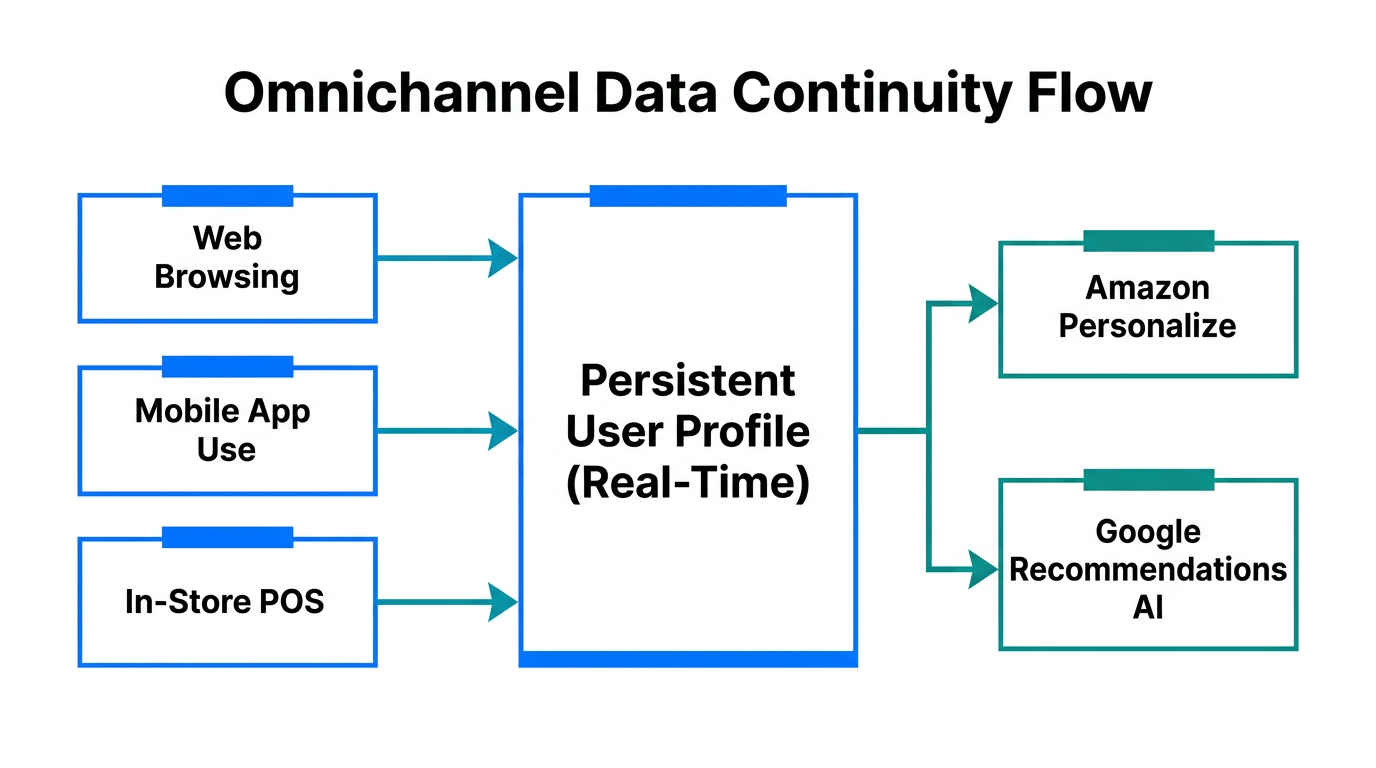
One of the most critical components of omnichannel marketing 2026 is the concept of the "persistent profile." Whether a customer is browsing on a mobile app, clicking through a newsletter, or walking into a physical flagship store, the AI should recognize their journey. This continuity ensures that recommendations remain consistent and additive across every touchpoint.
Oleksandr Khimiak of Sigma Software notes that the brands winning this year are those with centralized and well-structured data pools. Without a unified data avatar, your AI will struggle with "hallucinations" or irrelevant suggestions that damage long-term trust. For example, using Google Recommendations AI omnichannel capabilities allows brands to sync online behavior with in-store POS data, preventing the common mistake of recommending a jacket the customer just bought at a physical location.
The Role of Contextual Triggers
Context is the new currency. 2026 brands use real-time triggers to make AI feel more human. This includes:
- Location-Based Personalization: Suggesting umbrellas or raincoats when the local forecast predicts a storm.
- Visual Discovery: Allowing users to search with images, a segment that has seen 70% global growth recently.
- Session Intent: Recognizing if a user is in "gift-buying mode" versus "personal shopping mode" based on initial clicks.
Amazon Personalize vs. Google Recommendations AI: A 2026 Comparison
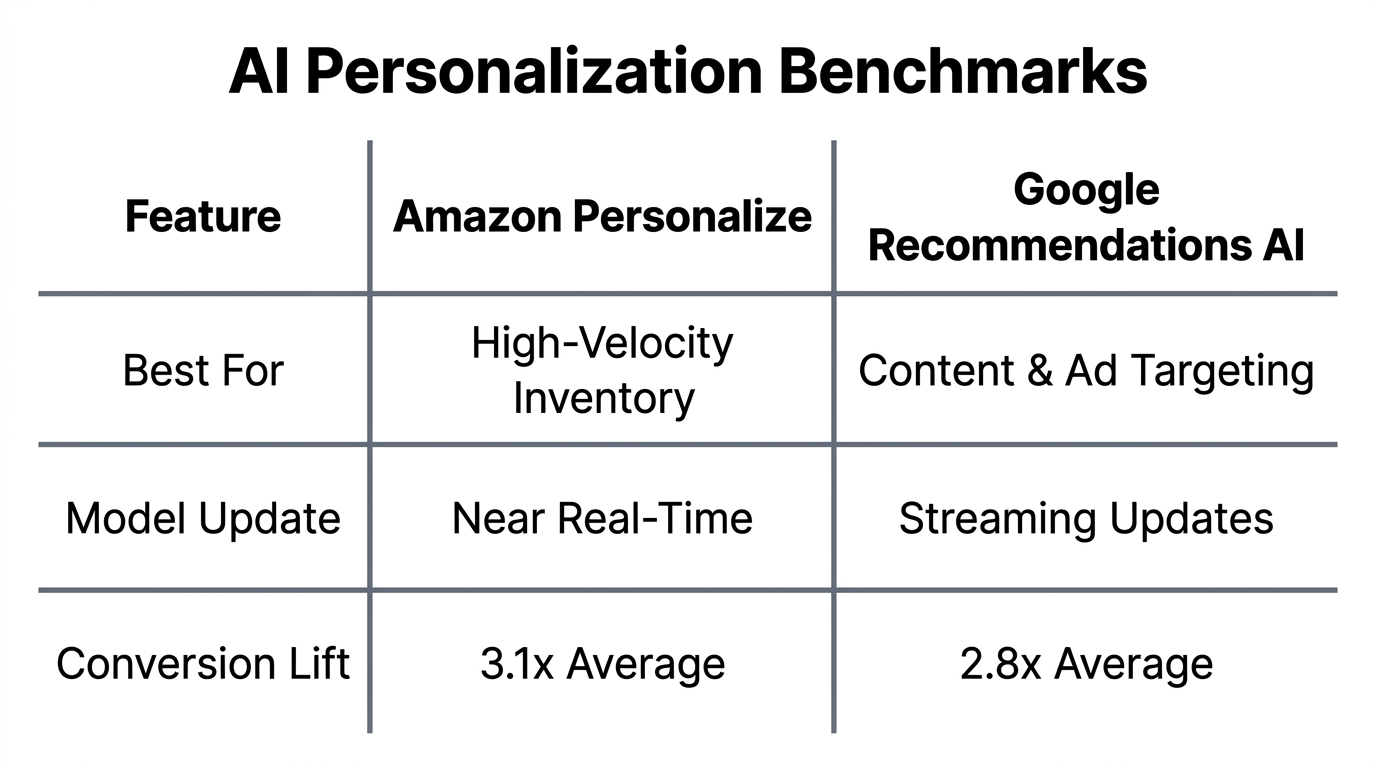
Choosing the right engine is vital for Amazon Personalize customer loyalty and long-term scaling. Both platforms offer deep learning models, but their strengths lie in different areas of the ecosystem.
| Feature | Amazon Personalize | Google Recommendations AI |
|---|---|---|
| Primary Strength | Real-time retail logic & upsell/cross-sell | Deep learning integration with Google Cloud & Search |
| Data Integration | Strong AWS ecosystem integration | Seamless sync with Google Analytics & Ads |
| Scalability | Proven for massive, diverse catalogs | Excellent for high-speed, multimodal search |
| Best For | Retailers seeking high-ROI conversion lift | Brands focused on omnichannel discovery |
While these tools handle the backend, many brands find that the quality of their AI suggestions is only as good as the content they serve. This is where Stormy AI becomes essential for modern marketing stacks. By using Stormy's AI search engine to discover creators on Stormy who produce authentic user-generated content (UGC), brands can feed their recommendation widgets with high-converting social proof rather than static catalog images.
A Playbook for UX Integration: Assist, Don't Interrupt
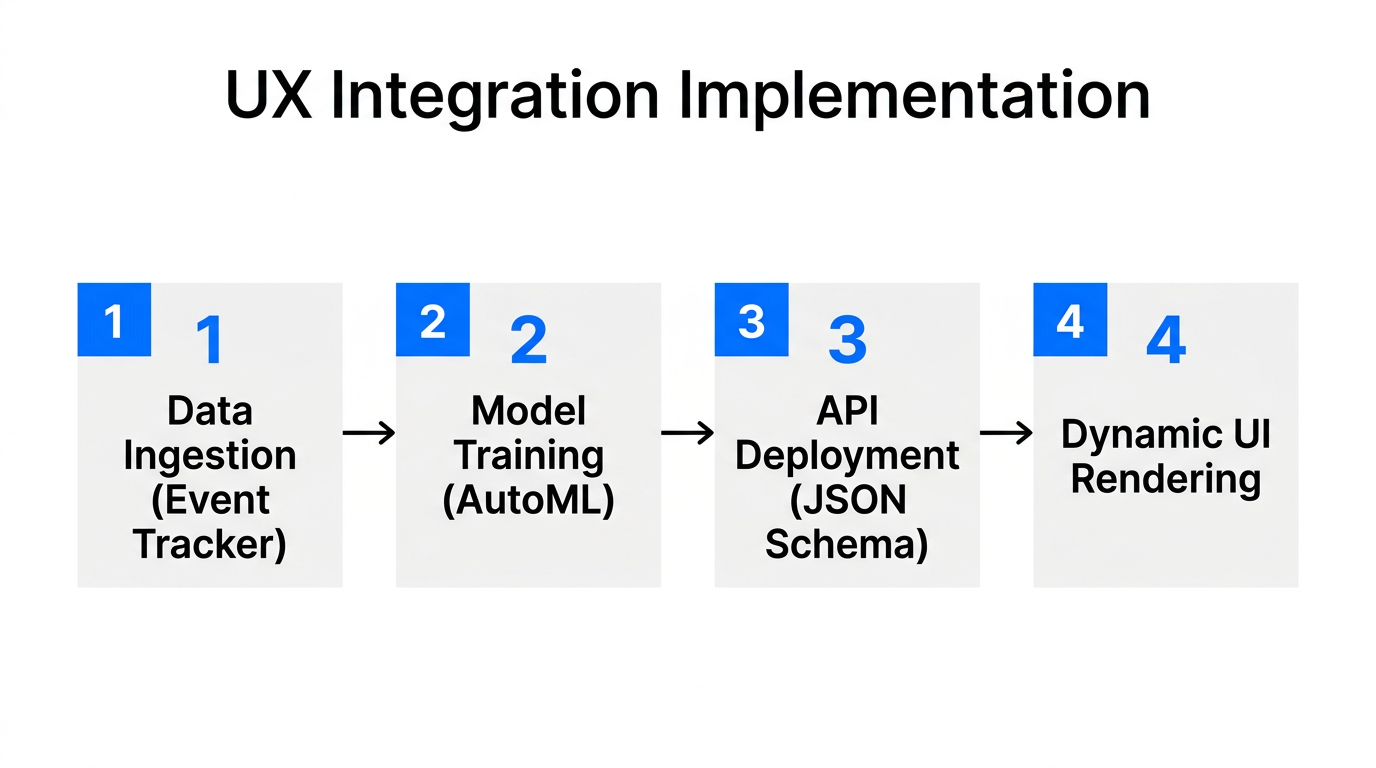
A common mistake in AI implementation is choice overload. Showing too many recommendations on a single page can paralyze a shopper. The goal of a recommendation widget should be to assist the journey, not hijack the checkout flow. Successful integration requires hypothesis-led A/B testing to ensure every widget serves a purpose.
"82% of AI failures in conversational commerce are attributed to misinformation rather than system crashes. Trust is harder to build than technology."Brands should follow this 2026 UX playbook:
- Phase 1: Above the Fold placement. Use statistical significance testing to determine if placement increases Click-Through Rate (CTR) by at least 15%.
- Phase 2: Hybrid Filtering. Combine collaborative filtering (what others liked) with content-based filtering (product attributes) to solve the "cold start" problem for new users.
- Phase 3: Checkout Assistance. Only show "Frequently Bought Together" items in the cart if they are low-friction, complementary items (e.g., batteries for a toy).
Lessons from Industry Leaders: L’Oréal and IKEA
The results of high-engagement AI tools are transformative. L'Oréal’s virtual try-on tools, powered by AI recommendations, have resulted in 3x higher conversion rates by giving users the confidence to purchase personalized shades.
Similarly, IKEA Place AR app users saw a 35% increase in online sales and a significant 20–30% reduction in returns. These brands succeed because they use AI to solve a specific consumer problem—visualization and fit—rather than just to push more products.
Conclusion: The Future of AI Loyalty
As we navigate 2026, the brands that thrive will be those that treat AI as a core component of their brand identity. Omnichannel marketing 2026 requires more than just high-tech algorithms; it requires a commitment to customer-centricity and contextual awareness. By implementing robust engines like Amazon Personalize or Google Recommendations AI, and enriching them with authentic creator content found through Stormy AI, you can ensure your brand remains a trusted partner in the consumer's journey. Start by unifying your data, testing your UX, and always prioritizing the person behind the persistent profile.