As we navigate the mid-point of 2026, the ecommerce landscape has shifted from a frantic race for volume to a sophisticated exercise in "outcome engineering." With global ecommerce ad spend projected to hit $271 billion this year according to Statista, the margin for error has evaporated. Marketers are no longer just buying traffic; they are orchestrating intelligent commerce journeys. While the median Return on Ad Spend (ROAS) currently sits at 3.2x, the top 10% of advertisers are pulling ahead with an extraordinary 8.4x ROAS. The secret isn't just in the bidding algorithms—it’s in a creative-first strategy that leverages the raw authenticity of User-Generated Content (UGC) and the viral mechanics of TikTok Spark Ads.
The 2026 Performance Landscape: Meta vs. TikTok
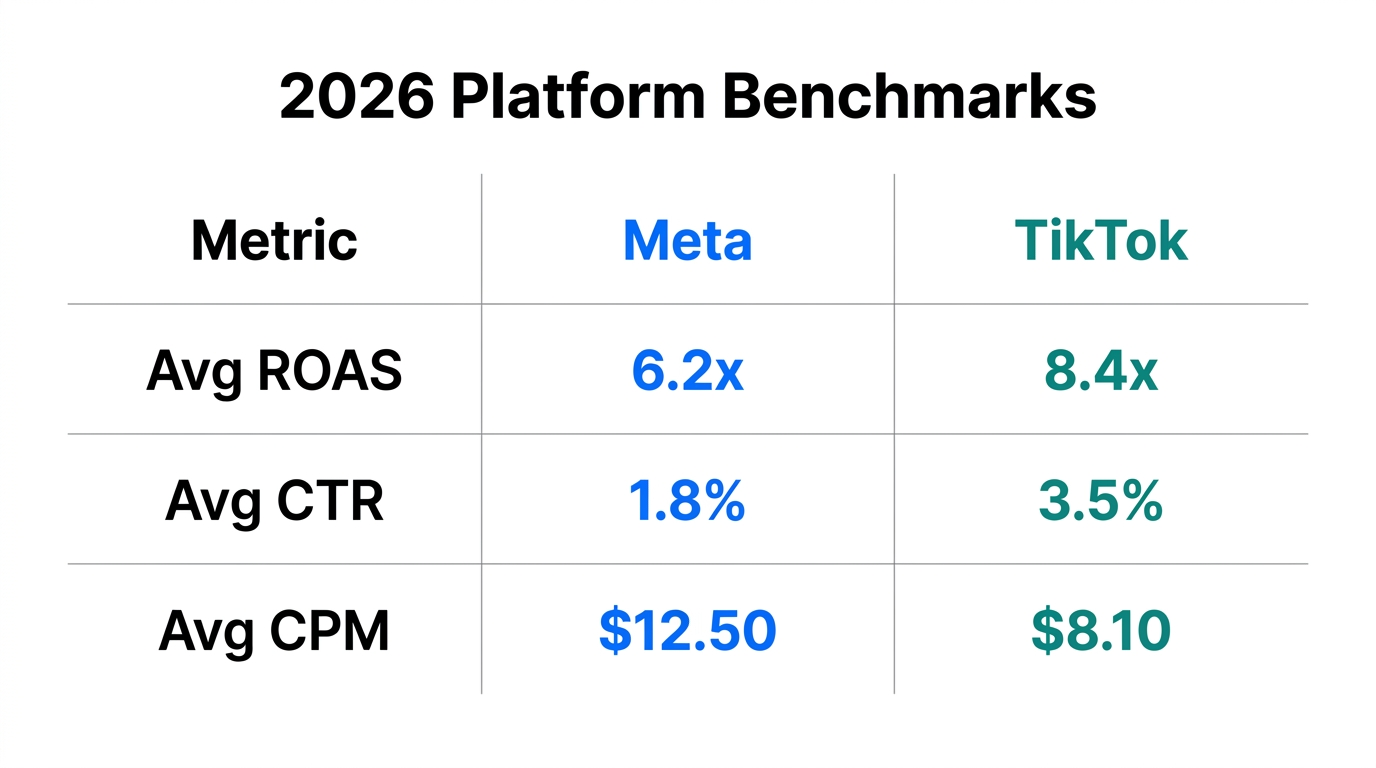
To optimize Meta ecommerce ad spend optimization, one must first understand the current benchmarks. In 2026, Meta (Facebook and Instagram) remains the powerhouse for broad-reach conversion, maintaining an average 2.5x ROAS with a CPM of approximately $11.54. TikTok, while often perceived as a brand awareness play, has matured into a performance titan. Although its average ROAS of 1.8x appears lower, its ability to drive social commerce mainstreaming is unparalleled. Forrester predicts that in 2026, marketers will shift 10% of performance media budgets directly into social commerce environments.
| Platform | Average ROAS (2026) | Key Metric | Primary Strength |
|---|---|---|---|
| Google Shopping | 4.2x | $1.16 CPC | High Intent Conversion |
| Meta Ads | 2.5x | $11.54 CPM | Scale & Lookalikes |
| TikTok Ads | 1.8x | $52.00 CPA | Viral Discovery & Spark Ads |
| Amazon Sponsored | 5.8x | Direct Attribution | Closed-Loop Purchase |
While these benchmarks provide a baseline, the goal of scaling TikTok ads for ecommerce is to outperform the median. This requires moving beyond "shotgun" advertising and toward SKU-level optimization. Advertising out-of-stock items or low-margin products can increase your Customer Acquisition Cost (CAC) by as much as 340%, according to data from Digital 1010. Success in 2026 demands that every dollar spent is backed by real-time inventory and high-performing creative.
"The divide between average and elite advertisers in 2026 is defined by creative agility—the ability to turn a viral UGC moment into a Spark Ad within hours, not weeks."
The 42% Advantage: Short-Form Video as the 2026 Standard
Creative is the new targeting. In the current environment, video ads generate 42% higher ROAS than static image ads. However, the length of that video is critical. The 2026 standard for high-performance creative is the 6–15 second clip. These micro-assets outperform long-form video by 41% according to recent industry reports, capturing attention before the user's thumb can scroll away. The most successful brands are those that treat their ad account like a laboratory, constantly testing UGC content marketing for ROAS gains.
To achieve these results, many brands are turning to AI-powered discovery tools. Using a platform like Stormy AI allows marketers to quickly find and vet creators who already resonate with their target audience. By automating the search for fitness creators or tech reviewers who produce high-quality 6-15 second clips, brands can maintain a constant pipeline of fresh creative, which is essential to combatting ad fatigue and maintaining a high ROAS.
The UGC Playbook: How to Reduce CPA by 23%
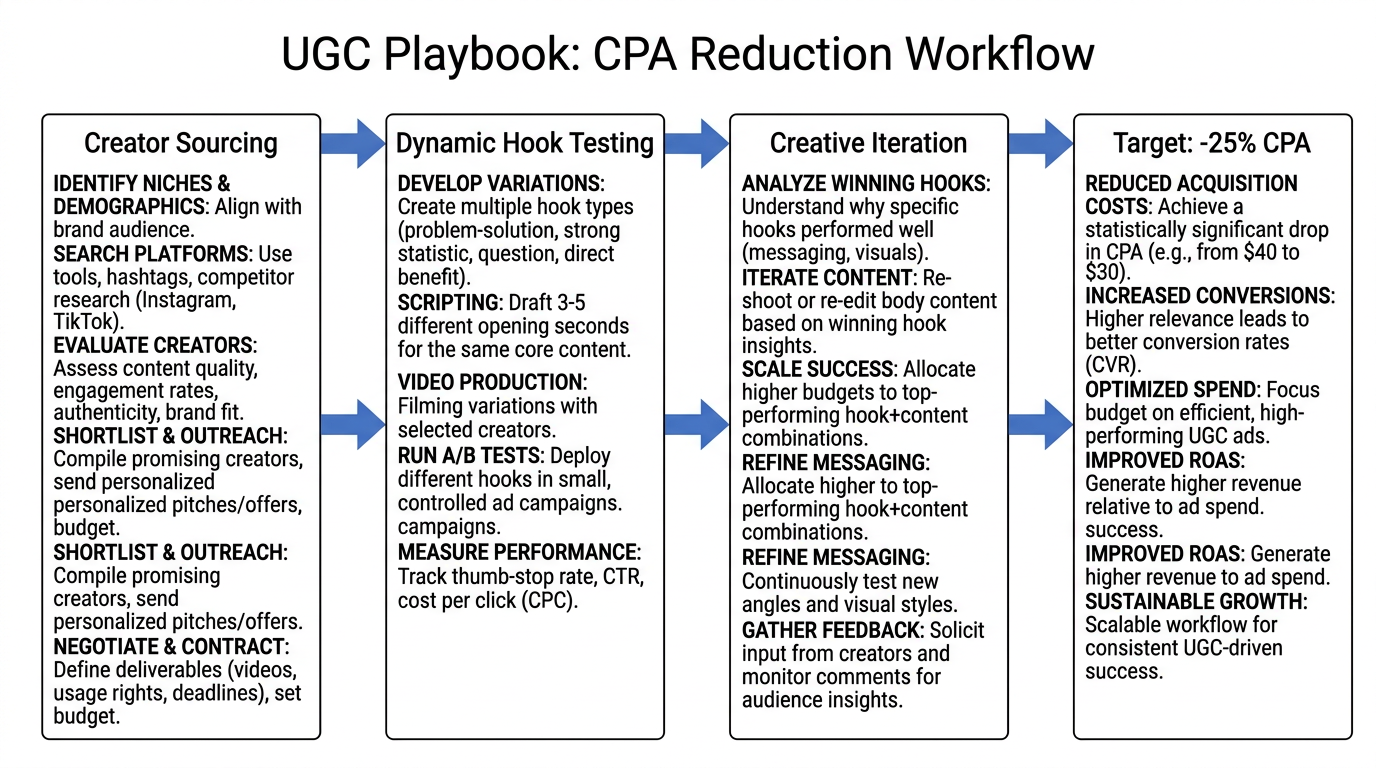
User-Generated Content (UGC) is no longer just a "nice-to-have"—it is a mandatory pillar of Meta ecommerce ad spend optimization. Authenticity drives action. When a real customer shares their unboxing experience or a raw tutorial, it bypasses the "ad filter" in a consumer's brain. Research from Black Coffee Media shows that unpolished UGC can reduce CPA by 23% compared to high-production studio ads.
- Identify High-Potential Creators: Don't just look for follower counts. Use data to find creators with high engagement rates and audience alignment.
- Brief for Authenticity, Not Perfection: Give creators the freedom to use their own voice. The most effective TikTok Spark Ads strategy 2026 relies on content that feels like a native post.
- Test and Iterate: Deploy 5-10 UGC variations at low spend. Identify the top 20% and move them into your scaling campaigns.
- Leverage First-Party Data: Connect your Shopify data via server-side tracking (like Elevar) to ensure you are measuring the true impact of your UGC.
Brands that fail to implement server-side tracking in 2026 risk losing 20-40% of their conversion data, making it impossible to accurately calculate ROAS. Without a "source of truth" provided by tools like Triple Whale or Northbeam, you are essentially flying blind.
"UGC is the bridge between social discovery and transactional intent. It’s the highest-converting asset in the 2026 marketing stack."
Case Study: Goodfairy’s 87.2% CTR Increase via TikTok Spark Ads
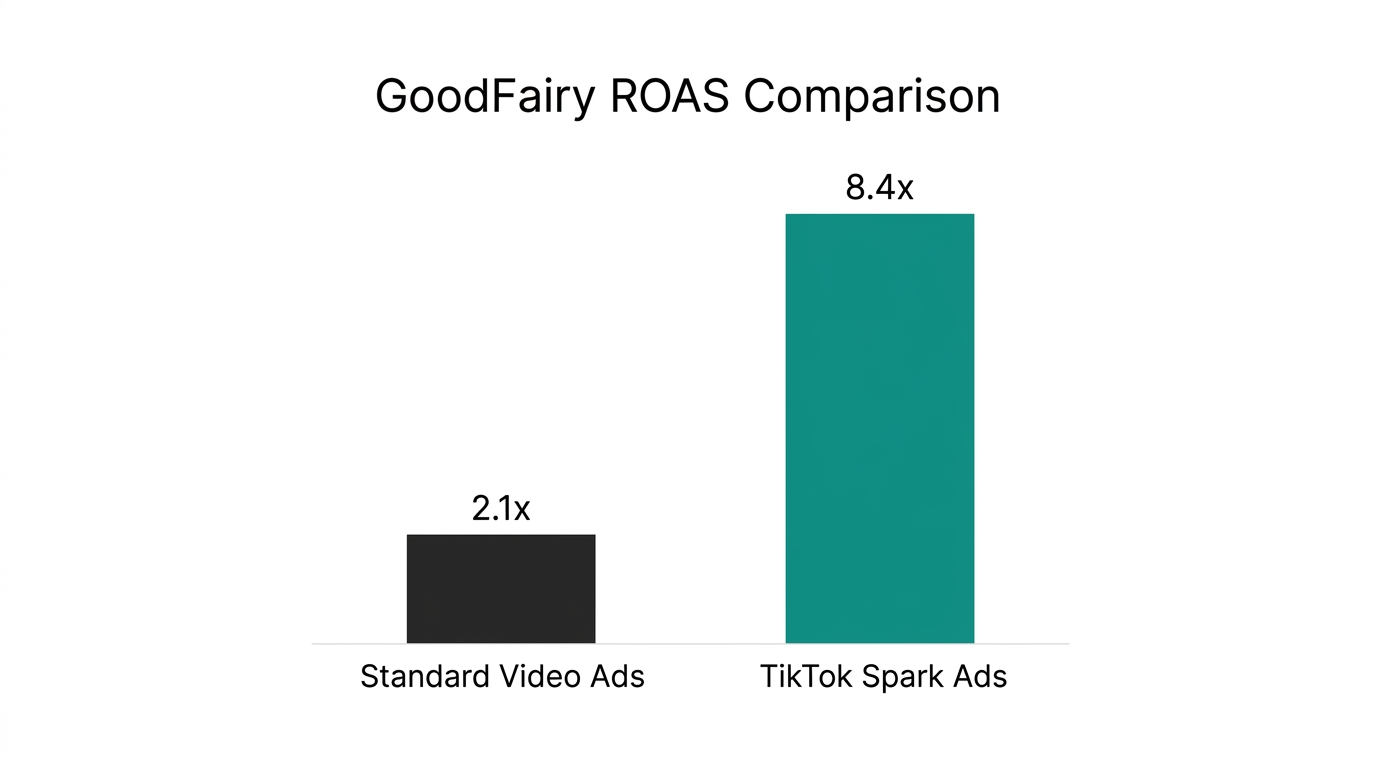
One of the most compelling examples of scaling TikTok ads for ecommerce comes from the brand Goodfairy. By moving away from traditional In-Feed Ads and leaning heavily into TikTok Spark Ads, they saw a transformative shift in their metrics. Spark Ads allow brands to boost organic posts—either from their own account or from a creator's account—while maintaining the social features (likes, comments, shares) of the original post.
According to research from Its Fun Doing Marketing, Goodfairy leveraged TikTok’s native Shopify integration to create a seamless path to purchase. The results were staggering: an 87.2% increase in Click-Through Rate (CTR). By using real testimonials as the ad creative, they lowered the barrier to entry and built immediate trust with their target demographic. This strategy isn't just about the initial click; it’s about building a social commerce performance benchmark that rivals even the highest intent-based channels like Google Search.
Scaling Strategy: Combining Spark Ads and Lookalike Audiences
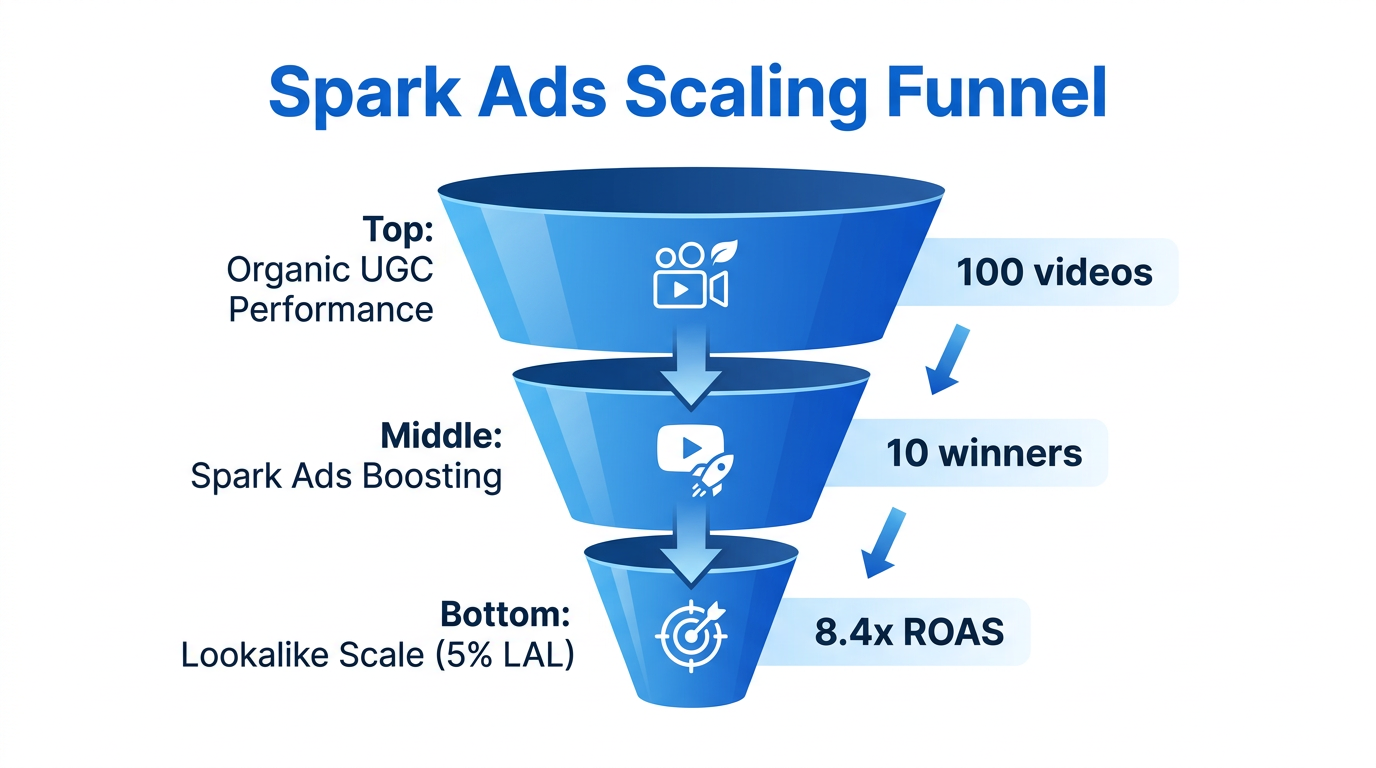
Once you have identified a winning UGC piece, the next step in your TikTok Spark Ads strategy 2026 is aggressive scaling. Scaling is no longer just about increasing daily budgets; it's about audience expansion through intelligent data usage. In 2026, the most effective scaling method involves a two-pronged approach: Spark Ads for engagement and Lookalike Audiences for reach.
Start by creating a custom audience of users who have interacted with your Spark Ads or viewed at least 50% of your UGC videos. Then, build 1%, 3%, and 5% Lookalike Audiences to find similar users. This "warm-start" approach ensures that your ads are served to people who already exhibit the behaviors of your best customers. Brands have used this exact method to achieve high ROAS by first targeting existing fans before moving to broader Lookalikes on Meta Ads Manager.
To manage this complexity at scale, many high-growth startups use Stormy AI to handle the heavy lifting of creator management. The platform’s AI Agent can autonomously discover, outreach, and follow up with creators, ensuring a steady stream of new content is ready for the next scaling phase. This allows marketing teams to focus on strategy and bid optimization while the AI handles the logistics of creator relationships.
Common Pitfalls: Avoiding the "Budget Bleed"
Even the best Meta ecommerce ad spend optimization strategy can fail if the foundation is weak. One of the most common mistakes in 2026 is scaling a "leaky" funnel. If your checkout process is clunky or your site speed is slow, no amount of high-performing UGC will save your ROAS. A site load improvement of just one second can increase conversions by 17%, according to data compiled on Google PageSpeed Insights.
Additionally, beware of the following "budget bleeders":
- Over-reliance on Native Tracking: Meta and TikTok dashboards often self-attribute, leading to overinflated numbers. Always verify with a third-party tool like Ryze.
- Ignoring Negative Keywords: In omnichannel campaigns (like Google Ads PMax), failing to filter irrelevant searches can lead to wasted spend.
- One-Size-Fits-All Bidding: Treating a 10% margin product the same as a 60% margin product is a recipe for disaster. Use tools like Madgicx for more granular control.
- Failing to Account for Shipping: 48% of users abandon carts due to high shipping costs. Ads won't fix a pricing or logistics problem.
"ROAS is a vanity metric if your contribution margin is negative. In 2026, profit is the only benchmark that matters."
The 2026 Playbook: A Path to 8.4x ROAS
To dominate ecommerce in 2026, you must embrace the intelligent commerce era. This means moving away from static ads and towards a dynamic, UGC-driven creative engine powered by TikTok Spark Ads. By focusing on 6-15 second clips, leveraging creator authenticity to reduce CPA by 23%, and scaling through Lookalike Audiences, you can bridge the gap between the median 3.2x ROAS and the elite 8.4x performance tier.
The tools for success are at your fingertips. From the server-side tracking of Elevar to the creator discovery and automated outreach of Stormy AI, the modern growth stack is designed for efficiency. Stop chasing vanity metrics and start engineering outcomes. The brands that win this year will be those that prioritize incrementality, authenticity, and creative-first optimization.