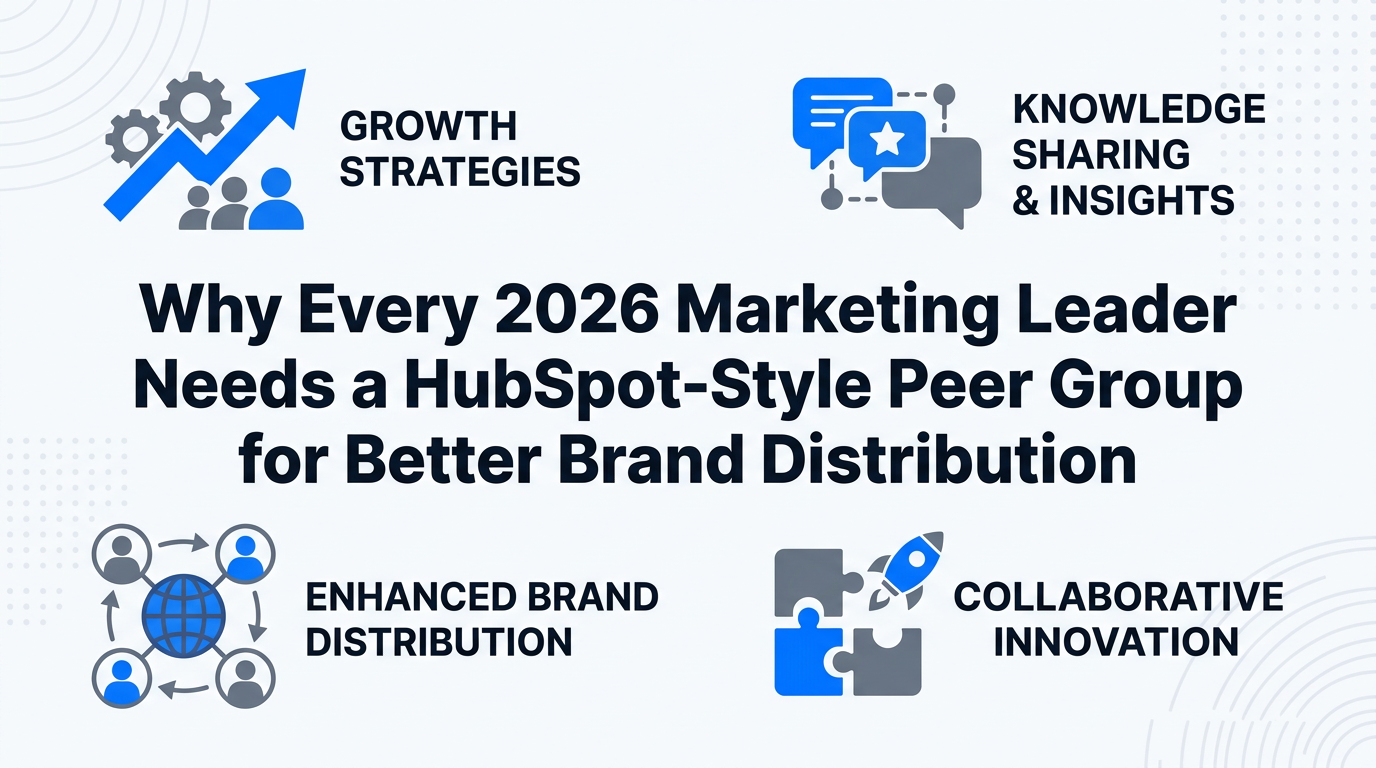
In 2026, the marketing landscape has shifted from a battle of budgets to a battle of high-velocity distribution. As traditional advertising channels become more saturated and AI-driven content floods every platform, the most successful marketing leaders are no longer looking for answers in textbooks or high-priced consultants. Instead, they are turning to something more visceral and effective: peer-to-peer business groups. These curated networks, modeled after the community-driven success of HubSpot, are becoming the secret weapon for scaling brand building 2026 strategies and accelerating the creator economy growth.
The Death of Traditional Mentorship: Why Peer Groups Win
Learn why modern leaders are shifting from one-on-one mentors to collaborative peer groups.
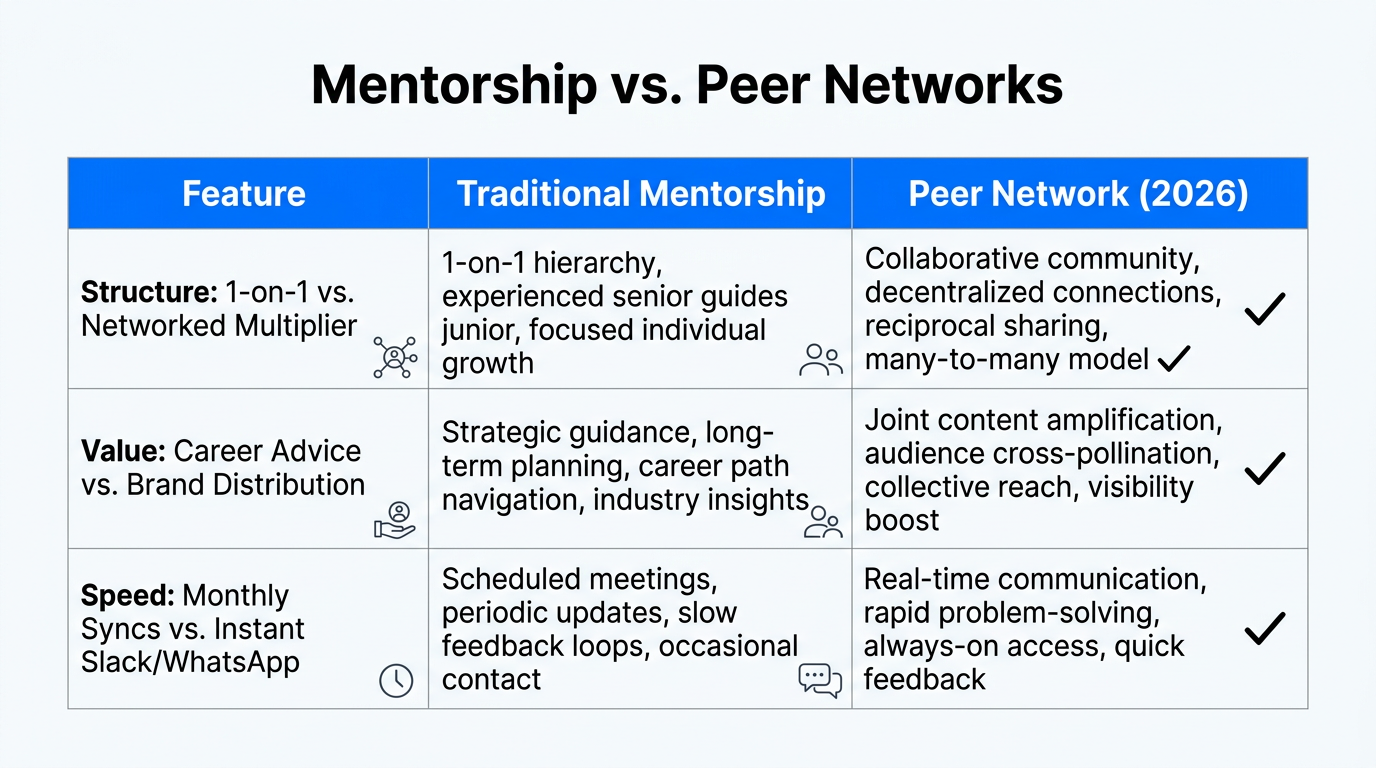
For decades, the standard advice for rising leaders was to find a mentor. While having a senior guide is valuable, 2026 marketing leaders are finding that mentorship often lacks the real-time, lateral insight needed to navigate a volatile market. Research indicates that the "lonely at the top" feeling is real; according to Wharton People Analytics data referenced in recent studies, six out of ten people would start their careers over if they could, often due to a lack of engaged, real-time support. Unlike a mentor who may be several years removed from the day-to-day grind, a peer group consists of individuals currently in the trenches, testing the same influencer marketing strategy and TikTok Ads Manager tactics as you.
High-agency leaders use these groups as a "jetpack." As discussed in industry circles, AI is the engine, but your peer network is the guidance system. If you are stuck, you are stuck—but a peer group allows you to see around corners by leveraging the collective failures and successes of five or six other leaders who are also managing 2026's complex marketing distribution networks.
"AI is like a jetpack for those with high agency. It allows you to learn faster and find people to connect with more efficiently than ever before in history."The Slack and WhatsApp Ritual: Real-Time Market Insights
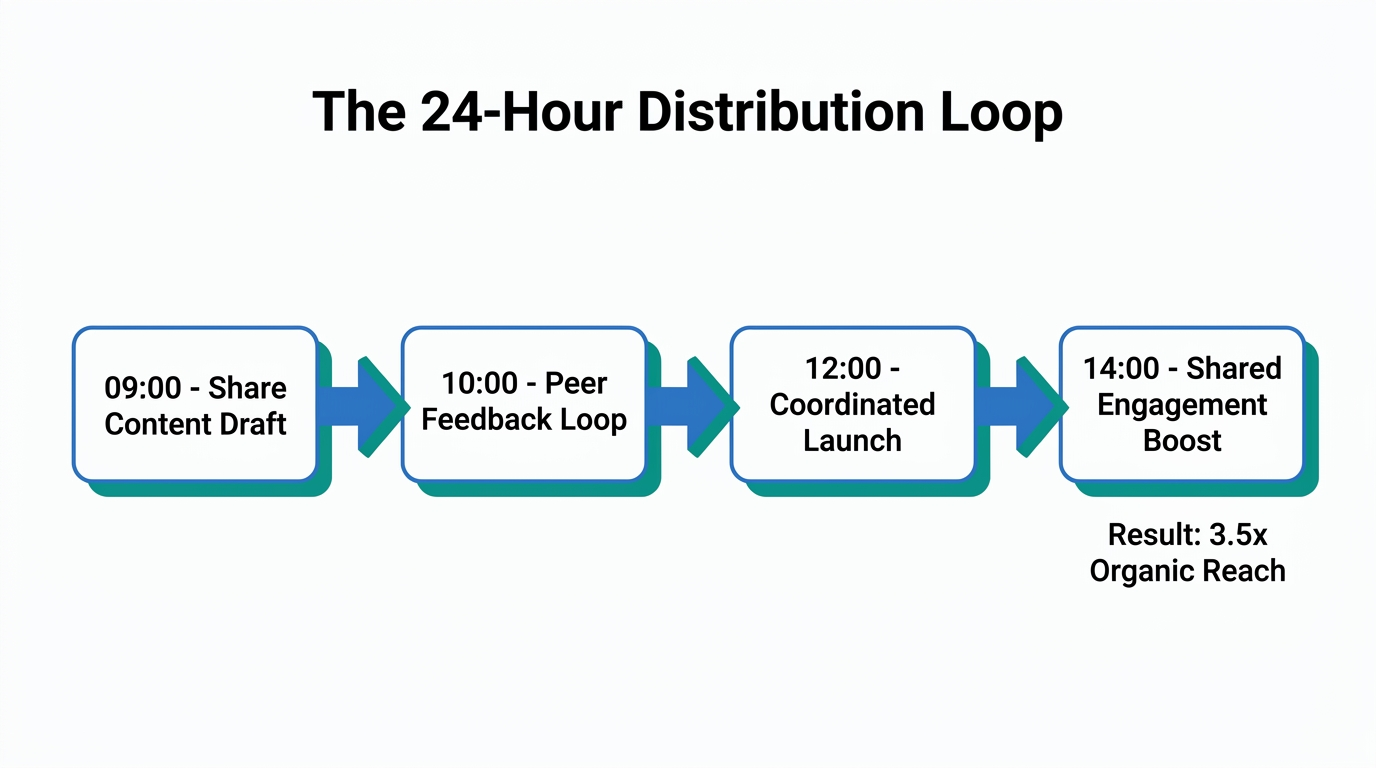
The most effective peer groups in 2026 aren't just meeting for monthly dinners; they are living in private Slack or WhatsApp channels. This creates a ritual of real-time market intelligence. When a new algorithm update hits Instagram or a specific UGC creator’s pricing suddenly spikes, the peer group is the first to know. This "battle carding" approach—testing different career and strategy paths in a safe environment—reduces the risk of inaction, which is often heavier than the risk of making a mistake.
By sharing raw data from tools like Meta Ads Manager or Google Analytics, leaders can avoid the "industrial matriculation" path that keeps many marketers stuck in rigid, outdated workflows. This collective intelligence allows for a "try before you buy" mentality, whether you're testing a new neighborhood for a physical pop-up or a new software stack.
| Feature | Traditional Coaching | Peer Groups (2026 Model) |
|---|---|---|
| Feedback Loop | Slow / Monthly | Instant / Daily |
| Data Sharing | Theoretical | Raw / Real-time |
| Cost | $5k - $20k+ / month | Free to Moderate |
| Network Effect | Linear (1-to-1) | Exponential (Group^2) |
Leveraging Collective Networks to Scale Influencer Partnerships
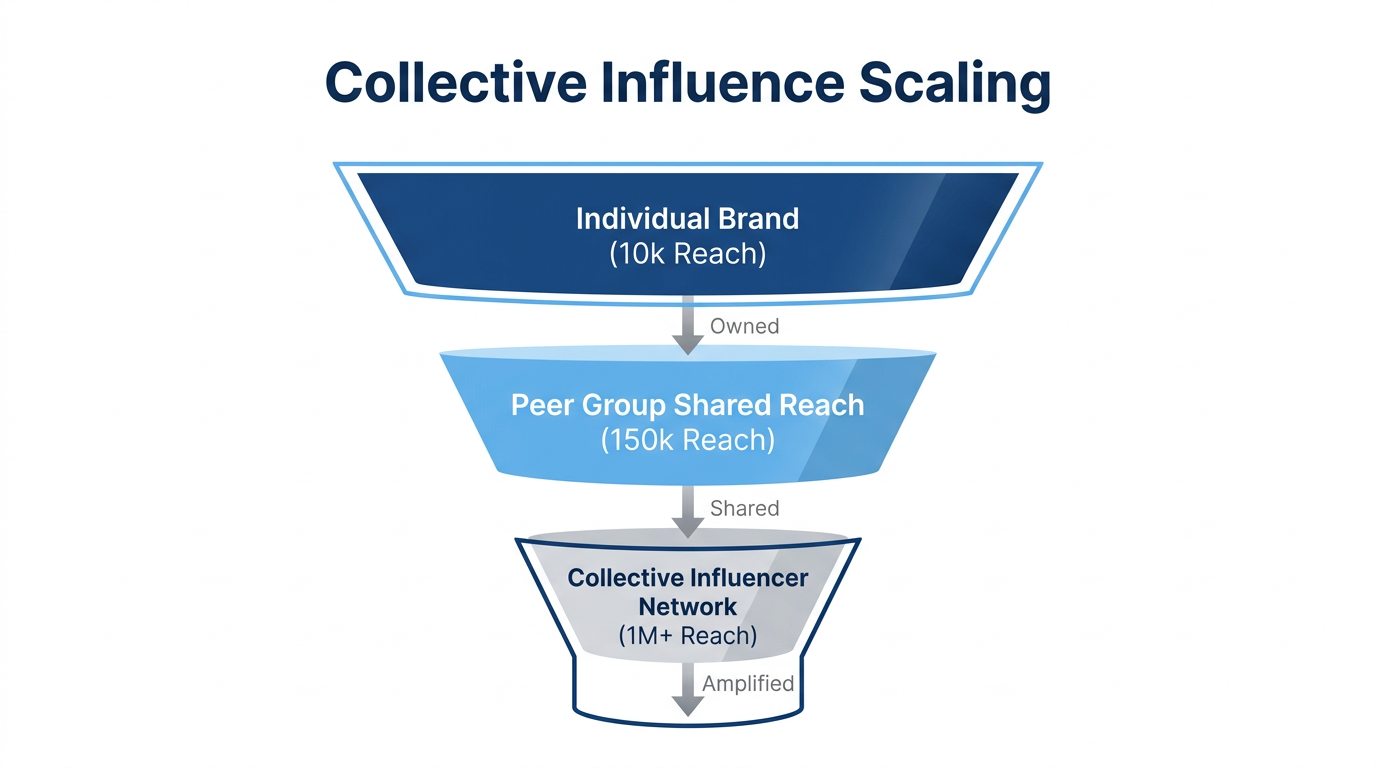
In the creator economy growth era, the biggest bottleneck isn't finding creators—it's vetting them. Every marketing leader has felt the pain of a high-cost collaboration that yielded zero ROI. In a peer-to-peer group, the network effect is accelerated. Your network isn't just yours; it's the combined network of the entire group. When one member finds a creator who delivers 10x ROI for a mobile app install campaign, the entire group benefits.
This is where modern tools meet old-school community. For example, platforms like Stormy AI allow leaders to instantly find and vet influencers using natural language prompts. When a member of a peer group discovers a high-performing niche on Stormy AI, they can immediately share that insight with their circle, allowing the group to dominate a market segment before competitors even realize the trend has started.
"The key insight for 2026 is that your network is now the network of the group. If the group is willing to share introductions and vetted creator lists, your growth becomes exponential."The 'Range' Edge: Why Breadth of Knowledge Wins
Explore the debate between being a specialist versus developing a broad skill set.There is a dangerous trend toward hyperspecialization in marketing. However, the concept of 'Range'—popularized by researchers like David Epstein—suggests that those who reach the top of their fields are 22 times more likely to have a breadth of hobbies and mental models outside their niche. Peer groups are the ultimate antidote to the "rigid mental models" of the specialist.
By joining a group with leaders from different industries—say, an e-commerce founder using Shopify and a SaaS CMO using Linear—you are exposed to diverse management structures and cultures. This breadth of knowledge creates a strategic edge. You start to see how a retention tactic in a subscription-based coffee brand can be applied to a fintech app’s user journey.
The 'Anti-MBA' Model: Implementing Systems Collectively
Many marketing leaders are turning toward an "Anti-MBA" model—reading business books and immediately implementing the systems within their organizations. Rather than a theoretical degree, they use their peer group to hold them accountable to frameworks like Regret Minimization or Determined Optimism. This is similar to the 30-day operating systems seen at major growth companies like HubSpot.
When a group collectively reads a book on leadership or product disruption, they aren't just discussing it; they are sharing how they applied it to their Klaviyo email sequences or their Notion project management workflows. This turn-key implementation is what separates 2026 winners from those still stuck in the 2024 mindset.
"Leadership is hard because you have to run counter-emotionally to the organization. Peer groups provide the support to keep your conviction when the rest of the company is fearful."Step-by-Step: How to Build Your 2026 Peer Distribution Group
Practical steps for forming a weekly group to share insights and scale together.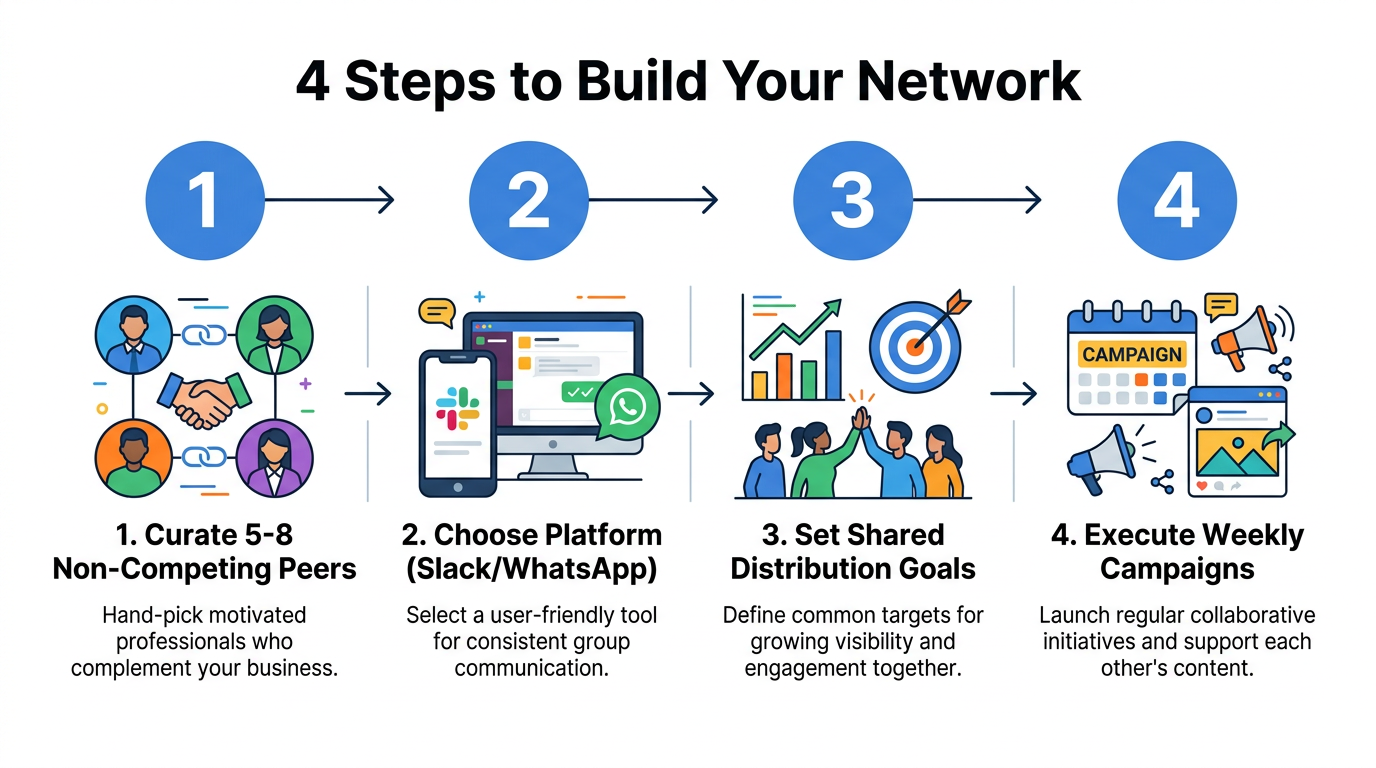
- Identify 4-6 Non-Competitors: Look for leaders at a similar stage of growth but in different niches. This ensures psychological safety and high-trust data sharing.
- Set the Ritual: Whether it's a weekly 30-minute sync or a rolling WhatsApp conversation, consistency is key.
- Define the Tech Stack: Use shared documents in Figma or Notion to track experiments. Use Stormy AI for collective creator discovery and vetting to save dozens of hours on manual research.
- Establish Rules: No "sharp elbows." If someone is only there to take and not give, they are removed. The goal is a high-agency environment where everyone roots for each other's success.
- Embrace Vulnerability: The CEO/CMO role is the loneliest job. Being able to say "I don't know how to handle this AI pivot" to five trusted peers is more valuable than any consulting report.
Conclusion: The Future is Collective
In 2026, you are either a node in a high-powered distribution network or you are a widget in someone else's. By building a peer-to-peer business group, you secure a marketing distribution network that is resilient to algorithm shifts and AI disruptions. You gain the Range necessary to lead effectively and the collective data to scale your influencer marketing strategy with confidence. Don't go it alone—leverage the jetpack of peer groups and modern AI tools like Stormy AI to ensure your brand remains at the edge of innovation.