In 2026, the marketing landscape has shifted from asking AI to "write a blog post" to tasking AI with "executing a full-funnel distribution strategy." But for the better part of the last two years, growth leads have been frustrated by the 'last mile' problem: getting Large Language Models (LLMs) to actually do something meaningful across their tech stack without it breaking. Enter the Model Context Protocol (MCP). This year, MCP has become the bedrock of AI marketing automation 2026, acting as the universal translator that allows your AI agents to interact with your CRM, email tools, and ad platforms as if they were native components of their own neural networks.
Why MCP is the Missing Link for AI Marketing Automation 2026
 8:15
8:15For a long time, LLMs were like brilliant scholars locked in a room with no phone. They could write poetry or explain quantum physics, but they couldn't send a simple email or update a lead status in Stormy AI. We tried to fix this by "gluing" tools together using APIs and automation platforms like Zapier. While effective for simple tasks, these setups were fragile. One API update from a service like Slack or a change in data formatting, and the whole system would come crashing down.
The Model Context Protocol (MCP) solves this by creating a standardized layer between the LLM and the external tools. Instead of every marketing tool speaking a different "language" (different API structures, authentication methods, and data schemas), MCP unifies them. As we look at MCP business growth strategy this year, the focus has moved away from prompt engineering and toward architecture engineering—building a stack where AI has real-time, bidirectional access to your data.
"The evolution of AI marketing isn't about better prompts; it's about moving from LLMs that 'talk' to agents that 'act' via a unified protocol."
From Basic Prompts to Meaningful Execution
Before MCP, an AI was just predicting the next word. If you asked it to "send a follow-up email to all leads who clicked our last link," it would likely apologize and say it couldn't. Then came the era of "LLMs + Tools," where we manually connected things like Klaviyo or Meta Ads Manager to an LLM. This was better, but it required constant babysitting to ensure the AI didn't hallucinate or fail at a specific integration step.
In 2026, autonomous marketing agents powered by MCP can navigate these tasks with "Jarvis-level" precision. Because the MCP server is now often maintained by the service provider themselves (a move popularized by Anthropic), the AI doesn't have to guess how to use the tool. The protocol tells the AI exactly what capabilities are available and how to execute them securely.
The Evolution of AI Integration: A Comparison
5:09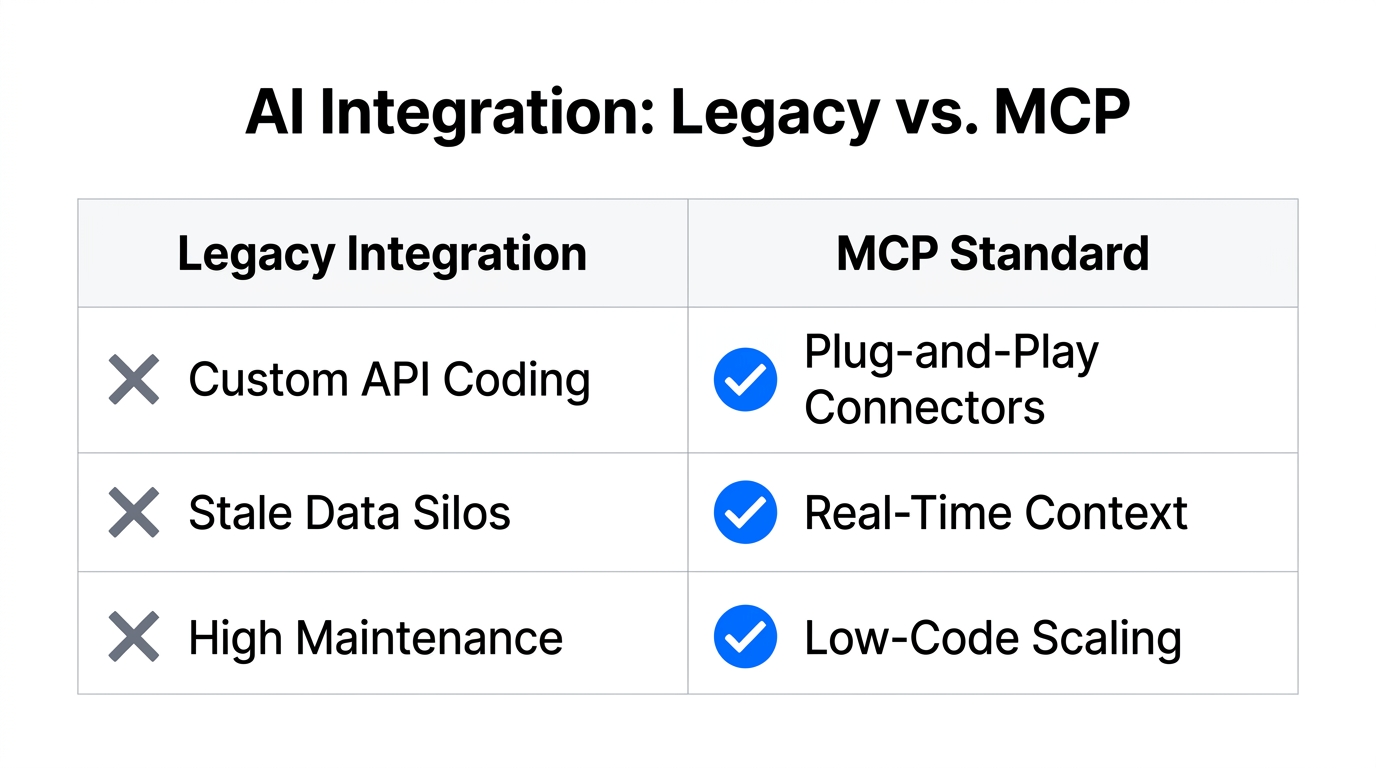
Understanding where we came from helps illustrate why MCP is such a massive leap forward for marketing distribution.
| Phase | Core Capability | Limitation | Marketing Use Case |
|---|---|---|---|
| Phase 1: Pure LLM | Text Generation | No access to real-time data or tools | Drafting social media captions |
| Phase 2: LLM + Tools | API Connections | Fragile, manual "gluing," frequent failures | Auto-posting to Twitter/X via 3rd party |
| Phase 3: MCP (2026) | Standardized Protocol | Requires initial server setup by provider | Autonomous agent managing full email funnels |
Eliminating Hallucinations with Source-of-Truth Data
5:40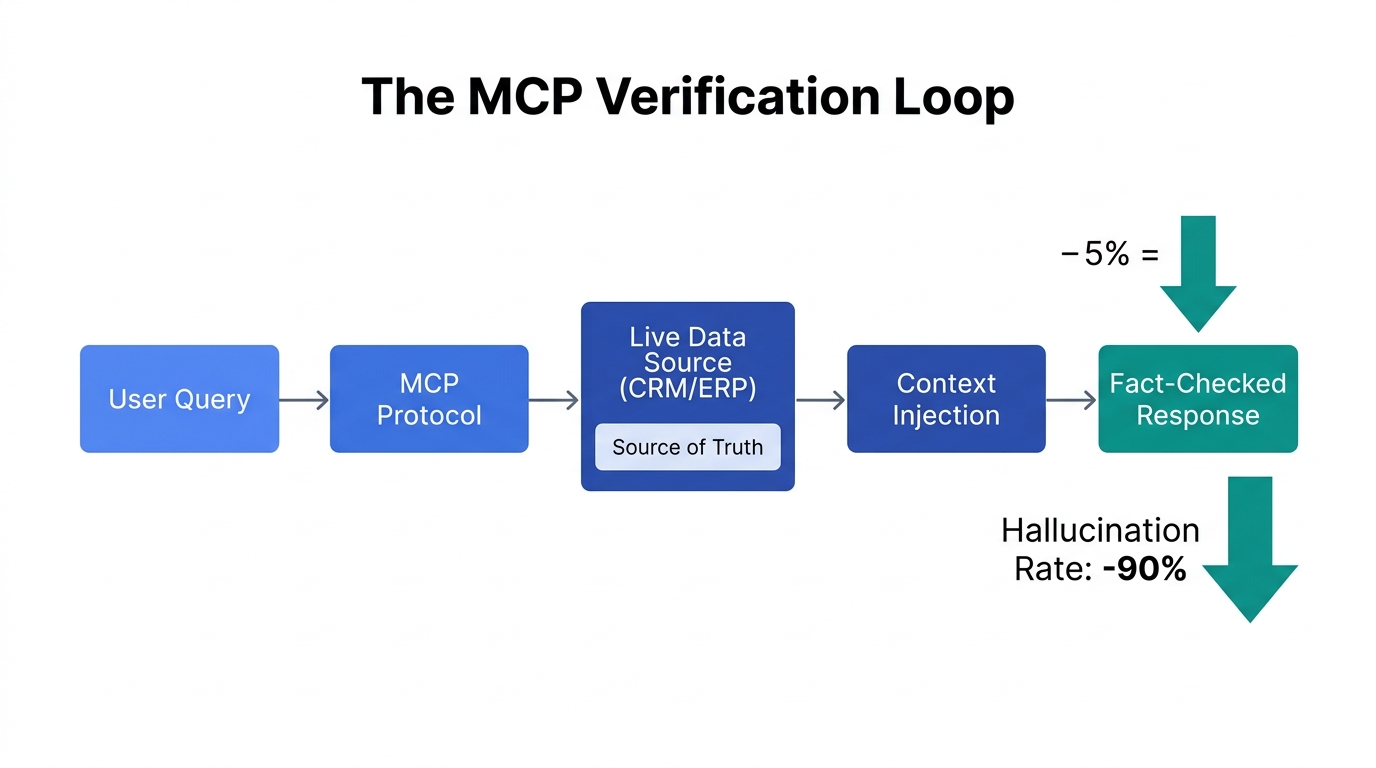
One of the biggest risks in AI marketing has always been hallucinations—the AI confidently stating a fact that is flat-out wrong. This usually happens because the AI is operating on stale data or training material that is months old. MCP provides a real-time bridge to your actual data sources, such as your Google Ads performance or your internal Supabase database.
When an AI agent has a direct, standardized line to your customer data, it no longer has to "guess" who your best customers are. It can query the database, analyze the latest cohort, and then immediately trigger a personalized outreach campaign. For companies using platforms like Stormy AI, this means the AI can discover creators, vet their engagement rates against real-time API data, and initiate outreach without a human needing to manually export and import CSV files.
"Hallucinations are a data access problem. MCP turns AI into a data scientist with a direct line to your source of truth."
The 2026 Playbook: Auditing Your Marketing Stack for MCP
If you want to scale your distribution this year, you need to ensure your tech stack is MCP-ready. Follow these steps to prepare your infrastructure for autonomous growth.
Step 1: Identify Your Data Silos
List every platform that holds "source of truth" data. This includes your CRM (e.g., Pipedrive), your analytics, and your payment processors like Stripe.
Step 2: Check for Official MCP Servers
Most major SaaS providers in 2026 now offer an MCP Server. This is a small piece of software that "exposes" the tool's capabilities to an MCP-compliant LLM. Check the developer documentation for each of your core tools to see if they have a pre-built MCP integration.
Step 3: Deploy Custom MCP Servers for Proprietary Data
If you have a custom-built internal database, you'll need your engineering team to construct an MCP server for it. This is significantly easier than building a custom API from scratch, as it follows the MCP standard. Once deployed, your AI agents can read and write to your database securely.
Step 4: Connect to an MCP Client
Use a professional-grade interface or an AI Agent that supports MCP connections. This allows you to "plug in" your various servers (email, CRM, ads) into one central brain. Platforms like Stormy AI leverage these kinds of automated workflows to allow brands to manage thousands of creator relationships simultaneously with minimal manual oversight.
Scaling Distribution with Autonomous Marketing Agents
11:52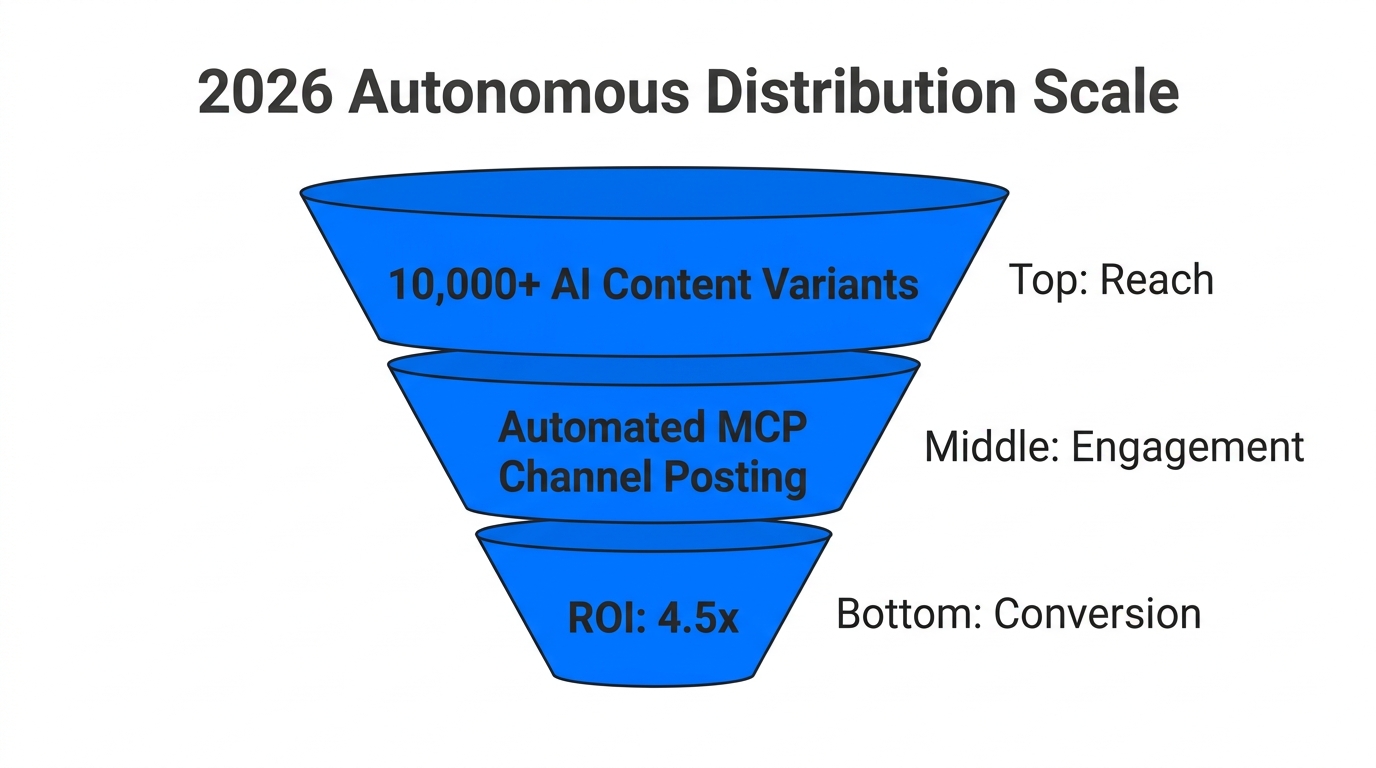
The ultimate goal of MCP business growth strategy is the deployment of autonomous agents that handle the heavy lifting of distribution. In the past, scaling a UGC (User-Generated Content) campaign meant hiring an army of interns to find creators, send emails, and track posts. In 2026, an MCP-integrated agent can:
- Scan platforms like TikTok and YouTube for creators matching your exact niche.
- Query your CRM to see if you've worked with them before.
- Check your Shopify store for inventory levels before offering a product collab.
- Draft and send a hyper-personalized email via your connected Instantly or Gmail account.
- Follow up automatically based on the creator's response.
This isn't science fiction; it's the standard operating procedure for top-tier growth teams this year. By leveraging Model Context Protocol marketing, you are essentially building a scalable, digital workforce that never sleeps and always has access to the most accurate data.
"Distribution is no longer about who has the biggest budget, but who has the most efficient protocol for connecting AI to their market."
Conclusion: The Future is Standardized
The Model Context Protocol is more than just a technical specification; it is a shift in how we think about the "marketing stack." In 2026, the most successful brands aren't the ones with the most tools, but the ones whose tools talk to each other most fluently. By adopting MCP, you eliminate the friction that has historically held back AI marketing automation, moving from static prompts to dynamic, autonomous agents.
As you plan your growth for the remainder of 2026, prioritize tools that embrace this protocol. Whether you are using Stormy AI to automate your influencer discovery or using Notion to house your MCP-accessible knowledge base, the goal remains the same: unified data, autonomous action, and unprecedented scale.